On this date in 1943, young Yugoslav partisan Lepa Svetozara Radic went to a German gallows.
A Bosnian Serb — her village today lies in Bosnia and Herzegovina’s Republika Srpska, steps inside the river that forms its border with Croatia — Lepa Radic was just 15 when Europe’s Axis powers invaded Yugoslavia in April 1941. Her family’s established left-wing affiliations brought them swift arrest by the fascist Ustashe, but Lepa and her sister escaped in December and joined Tito‘s Communist partisans.
In early 1943, Nazi Germany mounted a huge offensive against the partisans. On a strategic plane, the offensive failed: the partisans were able to preserve their command structure and fall back, also decisively defeating in the field their nationalist/monarchist rivals, the Chetniks, which set them up to dominate postwar Yugoslavia.
But for those upon whom the blow fell, it was a winter of terrible suffering. The Germans claimed 11,915 partisans killed, 2,506 captured … and 616 executed.
So it was with Lepa Radic. This Serbian Zoya Kosmodemyanskaya was captured during the engagement trying to defend a clutch of civilians and wounded. They publicly noosed her at Bosanska Krupa after she scorned the opportunity to preserve her life by informing on fellow guerrillas with the badass retort, “my comrades will give their names when they avenge my death.” (Various translations of this parting dagger are on offer online.)
Vietnamese General Nguyen Van Nhung was (apparently) executed on this date in 1964.
He was the victim of a South Vietnamese coup, after having been a key operative in the previous one. Back on 2 November 1963, he’d piled into the back of an armored personnel carrier with the fresh-deposed President Ngo Dinh Diem, and Diem’s brother Ngô Dình Nhu. When the APC arrived at its destination, Diem and Nhu were both dead.
As we rode back to the Joint General Staff headquarters, Diem sat silently, but Nhu and the captain [Nhung] began to insult each other. I don’t know who started it. The name-calling grew passionate. The captain had hated Nhu before. Now he was charged with emotion … [and] lunged at Nhu with a bayonet and stabbed him again and again, maybe fifteen or twenty times. Still in a rage, he turned to Diem, took out his revolver and shot him in the head. Then he looked back at Nhu, who was lying on the floor, twitching. He put a bullet into his head too. Neither Diem nor Nhu ever defended themselves. Their hands were tied. (Source)
Nhung’s turn as executioner — no unfamiliar role; the guy was notorious for tallying his career kills in notches on his gun barrel — made his boss Duong Van Minh the new President … for all of three months. By all accounts he was a useless executive:
the ruling generals were paralyzed by ineptitude. They had formed a military revolutionary council, composed of twelve members who bickered endlessly. Their normal chairman, General Minh, boasted that the collegial arrangement would guarantee against the autocratic excesses of the old regime. In reality, Minh had contrived the committee in order to bolster his prestige without increasing his responsibility. He was a model of lethargy, lacking both the skill and the inclination to govern. As he confided to me one morning as we chatted in his headquarters, he preferred to play tennis and tend to his orchids and exotic birds than to preside over tedious meetings and unravel bureaucratic tangles … In a cable to Washington, [U.S. ambassador Henry Cabot Lodge] described Minh as a “good, well-intentioned man,” but added a prophetic note: “Will he be strong enough to get on top of things?”
On 30 January 1964, Minh was overthrown by another general, Nguyen Khánh, in a bloodless dawn coup. Well, virtually bloodless. The sole casualty was Nguyen Van Nhung, who paid for the assassination of Diem the next day via a pistol shot to the head at a Saigon villa. The official story promulgated by the new regime described him instead committing suicide in shame for the Diem murder.
El Salvador campesino Jose Feliciano Ama was hanged in the town square of Izalco on this date in 1932 during a ferocious repression of the peasantry.
In an environment of desperate economic immiseration for nearly all Salvadorans below the landed oligarchy, the heavily indigenous western peasantry rebelled on January 22, 1932 — aided or led by the Communist Party.*
This fate of this rebellion might be inferred by its historiographical sobriquet, the Salvadoran peasant massacre — or simply la Matanza, the slaughter.
In numerical terms, it ran to well into the tens of thousands, maybe up to 40,000 — indiscriminately visited on peasants of originario complexion in the zone of rebellion, batches of them summarily shot into mass graves they’d been forced to dig for themselves.
In the Pipil town of Izalco, where coffee latifundias dominated the best agricultural land,* up to a quarter of the population was butchered. None of those put to la Matanza were more recognizable nor more vividly recalled than the local rebel leader Feliciano Ama English Wikipedia entry | Spanish), extrajudicially noosed in front of the Izalco church. Today a small plaque in this square honors him as a popular martyr.
On this date in 1774,* in the British official John Malco(l)m was tarred and feathered and mock-executed by enraged Bostonians during the tense run-up to the American Revolution.
Malcom’s militant Loyalism put him sharply at odds with his city’s’s rising Patriot ultras — the sorts of people who, just a month before, had provocatively dumped British East India Company tea into Boston Harbor.
Malcom himself hadn’t been proximate to that event but as a customs official he’d made himself obnoxious on the docks before. In October of 1773, he seized a ship in Falmouth,** threatening “to sheath his sword in the bowels of any one who dared dispute his authority.” The sailors responded by sheathing John Malcom in a coat of tar and feathers and marching him through the streets.
This vigilante justice was meant to come up short of serious physical injury, and it did. But it was a crippling public disgrace, far beyond the streets of Falmouth — an ironic situation since Malcom’s own late brother Daniel was a celebrated Patriot bootlegger.† Back in Boston, Malcom found himself heckled in the streets about the incident to such an extent that he complained to the governor. (The governor told him to suck it up.) And it bubbled right to the surface in the incident that brings today’s post, too.
On January 25 of 1774, one of the Patriot participants in the aforementioned Boston Tea Party named George Robert Twelves Hewes‡ happened across the hated crown agent — “standing over a small boy who was pushing a little sled before him, cursing, damning, threatening and shaking a very large cane with a very heavy ferril on it.” (That’s according to the next week’s (Jan. 31, 1774) Boston Gazette, as are the subsequent quotes in this post.) Apparently the kid had crashed his conveyance into Malcom while out frolicking in the deep winter’s snow.
Hewes interceded for the child, and Malcom rounded on him: “you are an impertinent rascal, it is none of your business!” Flexing his class rank, Malcom further scolded the “vagabond” that he ought not address a gentleman in public. Hewes dissented and after an exchange of barbs cut Malcom to the quick with the retort, “be that as it will, I never was tarred or feathered.” This own brought Malcom’s heavy cane crashing into Hewes’s head, crumpling the Good Samaritan to the cobblestones.
Angry bystanders to the incident trailed Malcom home, and heaven only knows what hard words were traded on the way. He should have been worried and maybe he was, but his blood was up from Hewes’s insult: Malcom stood on the threshold and verbally sparred with his angry neighbors — “you say I was tarred and feathered, and that it was not done in a proper manner, damn you let me see the man that dare do it better! I want to see it done in the new-fashioned manner.” The man’s Falmouth tarring, you see, had been leniently poured over his clothes, which might have been hell on his dry cleaning bills but also minimized the injury that hot tar could do to naked skin. Now he was daring a rougher treatment at the hands of Bostonians who had certainly proven up to that challenge in the past.
Calmer heads knew this situation could spiral out of control and judiciously steered the irate official into his house. But Malcom was not to be stilled; when his wife opened a sash to implore the crowd to disperse, her husband exploited the opening to thrust a sword into the breast of a bystander. Luckily for both parties the blade struck bone, causing only a glancing flesh wound.
Somehow the irascible coot restrained himself in the house long enough for this disturbance to subside, while Hewes shook off his concussion well enough to swear out a warrant.
But by evening, word of this politically charged provocation had circulated in Boston, along with all Malcom’s bluster — “among other things, that he would split down the yankees by dozens, and receive 20l. sterling a head for every one he destroyed.” A crowd started assembling again at Mr. Malcom’s door, now dangerously intent on its purpose.
they got ladders and beating in an upper window, entered the house and took him without loss of blood, and dragging him out put him on a sled, and amidst the huzzas of thousand[s], brought him into King street. Several Gentlemen endeavoured to divert the populace from their intention, alledging that he was open to the laws of the land which would undoubtedly award a reasonable satisfaction to the parties he had abused; they answered he had been an old, impudent and mischievous offender — he had joined in the murders at North Carolina — he had seized vessels on account of sailors having a bottle or two of gin on board — he had in office, and otherwise, behaved in the most capricious, insulting and daringly abusive manner — and on every occasion discovered the most rooted enmity to this country, and the defenders of its rights — that in case they let him go they might expect a like satisfaction as they had received in the cafes of Richardson and the soldiers, and the other friends of government. With these and such-like arguments, together with a gentle crouding of persons not of their way of thinking out of the ring, they proceeded to elevate Mr. Malcom from his sled into the cart, and stripping him to buff and breeches, gave him a modern jacket, and hurried him away to liberty-tree, where they proposed to him to renounce his present commission, and swear that he would never hold another inconsistent with the liberties of his country; but this he obstinately refusing, they then carted him to the gallows, passed a rope round his neck, and threw the other end over the beam as if they intended to hang him: But this manoeuvre he set at defiance. They then basted him for some time with rope’s end, and threatened to cut his ears off, and on this he complied, and they the brought him home.
See, reader, the effects of a government in which the people have no confidence!
* There are a few other dates besides Tuesday, January 25 to be found out there, but newspaper reports from the time clearly place it on that day. Malcom himself later circulated a strange bulletin to Boston churches confirming the date with the words “John Malcom returns thanks to Almighty God, that again he is able to wait on him again in the public worship, after the cruel and barbarous usage of a cruel and barbarous savage mob in Boston, on the 25th evening of January last past confined him to house, bed and room.”
** The town of Falmouth is now Portland, Maine. Its most famous revolutionary war incident was put it to the torch by the British in 1775.
‡ Hewes lived to the ripe old age of 98. Enjoy a public domain 1830s biography drawn from personal conversation with the old veteran here … including Hewes’s recollection of the tarring and feathering, which in his telling was clearly extremely traumatic to his antagonist.
The people, however, soon broke open the door, and took Malcom into their custody. They then took him to the place where the massacre was committed, and their flogged him with thirty-nine stripes. After which, they besmeared him thoroughly with tar and feathers; they then whipped him through the town, till they arrived at the gallows, on the neck, where they gave him thirty-nine stripes more, and then, after putting one end of a rope about his neck, and throwing the other end over the gallows, told him to remember that he had come within one of being hanged. They then took him back to the house from whence they had taken him, and discharged him from their custody.
The severity of the flogging they had given him, together with the cold coat of tar with which they had invested him, had such a benumbing effect upon his health, that it required considerable effort to restore his usual circulation. During the process of his chastisement, the deleterious effect of the frost, it being a cold season, generated a morbid affection upon the prominent parts of his face, especially upon his chin, which caused a separation and peeling off of some fragments of loose skin and flesh, which, with a portion of the tar and feathers, which adhered to him, he preserved in a box, and soon after carried with him to England, as the testimonials of his sufferings in the cause of his country. On his arrival in England soon after this catastrophe Malcom obtained an annual pension of fifty pounds, but lived only two years after to enjoy it.
On relating this adventure, the very excitement which the affront must have wrought upon him, evidently began to rekindle, and he remarked with emphasis, I shall carry to my grave the scar which the wound Malcom gave me left on my head; and passing my finger over the spot to which he directed it, there was obviously such a scar, as must have been occasioned by the wound he had described.
America’s crisis of police violence has produced innumerable horrific snuff films. One of the worst is the January 18, 2016 bodycam footage of Mesa, Arizona cop Philip Brailsford executing Daniel Shaver in the hallway of a La Quinta Inn.
In this nauseating five-minute video we see — classic horror film technique — right down the gunbarrel as Sgt. Charles Langley screams at Shaver and a companion, Monique Portillo. Langley and his partner, Brailsford, are responding to a report of a gun: it’s Shaver’s air rifle, which he uses in the pest control work that has brought him to Mesa on business.
After making both parties surrender themselves, Langley and Brailsford disdain such obvious techniques as “move in and frisk them,” instead choosing to subject their prey to a bizarre impromptu game of Simon Says, repeatedly threatening — one might almost say, relishing the anticipation of — the summary death that they’ll soon deliver.
They’re armed not only with AR-15s and an excess of machismo but with the legal doctrine of “Qualified Immunity”, which protects state officials (including but not only law enforcement) from personal liability when they undertake official acts. Such immunity is supposedly contingent on the act falling somewhere within hailing distance of reasonable. In practice, courts always find that qualified immunity applies in excessive-force situations, especially under the infinitely elastic standard of “officer safety” that permits the most specious and absurd claim of police fear to excuse any degree of force in response: “qualified” immunity is really more like “an absolute shield.”
Brailsford and Langley have been trained on this doctrine, just as they’ve been trained for the kind of situation they’re in. Not so Shaver: the traveling exterminator is going to get one chance, and it’s somehow Shaver’s responsibility to manage the situation to the satisfaction of his prospective murderers. (Shaver is also somewhat drunk here.)
When the terrified man is ordered to push himself from a prone position up to his knees, his legs come uncrossed, violating the previous arbitrary instruction that Langley has given him and causing the armed yahoos to straight-up lose their shit.
A panicking Shaver attempts to placate them by putting his hands behind his back — submissively, he thinks, but of course the voices behind the gunsights here pretend to think he might be going for a weapon and again threaten him with execution. “You do that again, we’re shooting you!” Langley barks. (God, please do it again.) Now sobbing and pleading for his life with two guys who don’t like him and can freely merc him, Shaver attempts to comply with their gratuitously humiliating demand that he crawl towards them, when he’s suddenly wasted by Brailsford. The apparent “provocation” is Shaver’s reaching at his pants to prevent them coming down as he scuffles his knees over the cheap hotel carpet. Officer safety! What if he’d had a gun taped in there like Bruce Willis in Die Hard?
A jury that viewed this very video acquitted Brailsford of second-degree murder (and of the lesser included charge of manslaughter), so now it’s legal precedent that cops can just do this to you. His department quietly re-hired him so that it could pension him off at $2,500 per month for life.
Recommended: on Scott Horton’s radio show, former policeman Raeford Davis discusses the scene and the changes needed in law enforcement to make it a thing of the past.
Argentinian politician Antonino Aberastain was executed on this date in 1861, after the Battle of Rinconada del Pocito.
A polymath barrister from Buenos Aires, Aberastain was cursed to live his days amid the long and terrible civil wars — which pitted liberal centralizers (the Unitarian party) against conservative federalists. Aberastain belonged to the former faction.
After an interesting career that saw him by turns lawyer, judge, newsman, and national minister — and for most of the 1840s, exile abroad in Chile when a Federalist warlod chased him out — Aberastain in 1860 led a putsch that deposed and killed the Federalist governor of San Juan in November 1860.
The Federalist counterattack was settled in battle at a place called La Rinconada* on January 11, 1861, and the reader may well infer the outcome from the presence of the Unitarian commander on this site. The victorious Federal commander had him summarily executed the next day.
With the eventual settlement of hostilities, Aberastain settled in as a heroic Sanjuanino; this monument to him decorates a square that’s named for him in San Juan city.
On this date in 1959, in the city of Santa Clara lately captured by Cuban revolutionaries, Col. Cornelio Rojas Fernández, commander of the city’s defeated government garrison, was shot without trial by the order of Che Guevara.
It was just one among hundreds of vengeful executions being visited in those weeks upon authorities of the deposed Batista regime.
Viewers of the televised public shooting saw the stocky commander — the grandson of a hero of the 19th century Cuban War of Independence — walk unafraid to his death in an armed escort, where he exhorted his onlookers until the firing detail sent his fedora flying.
Rojas’s granddaughter Barbara Rangel remains an energetic advocate of her father’s innocence, from Florida. A kinsman named Pedro Rojas Mir was among those killed in the 1961 Bay of Pigs debacle when anti-Castro exiles mounted a failed invasion of Cuba.
More than one hundred prisoners awaiting their sentence have also been slain in their attempts to escape. Here, too, the official story has been written not to be believable, but rather to show the guerrillas and the political parties that even those who have been acknowledged as prisoners are held on strategic reserve: the Corps Commanders use them in retaliation depending on how the battles are going, if a lesson can be learned, if the mood strikes them.
That is how General Benjamin Menendez, Commander of the Third Army Corps, earned his laurels before March 24: first with the murder of Marcos Osatinsky, who had been arrested in Cordoba, and then with the death of Hugo Vaca Narvaja and another fifty prisoners through various, merciless applications of the escape law; the official story of these deaths was told without any sense of shame. The murder of Dardo Cabo, arrested in April 1975 and executed on January 6, 1977, with seven other prisoners under the jurisdiction of the First Army Corps led by General Suarez Mason, shows that these incidents do not constitute the indulgences of a few eccentric centurions, but rather are the very same policies that you plan among your general staff, that you discuss in your cabinet meetings, that you enforce as commanders-in-chief of the three branches of government, and that you approve as members of the Ruling Junta.
On or very near this date in 1977, Argentinian social activist Dardo Cabo was executed by the Argentine military junta.
Cabo (English Wikipedia entry | Spanish) had public notoriety from a 1966 airplane hijacking, for which he served three years in prison; by the 1970s, he was associated with the Montoneros, a Peronist urban guerrilla/terrorist organization.
Considering his prominence, he was an obvious early arrestee of the Argentina military junta in the first weeks after it overthrew Isabel Peron.
Held at La Plata Federal Penitentiary for the balance of the year, Cabo was removed along with Roberto Rufino Pirles on January 5, 1977 for a supposed transfer to another prison. On January 7, the junta “reported that during the transfer of Cab and Rufino Pirles in Zone 1, ‘subversive elements’ in ten cars attacked the vehicle carrying the prisoners. After a brief, intense firefight, the ‘delinquents’ escaped, minus four who were killed. The two prisoners were alos shot in the firefight.” (Source)
They were just two among a series of high-profile militants being held in that same prison unit who were extrajudicially executed under similar circumstances in those weeks — like Montoneros Angel Alberto Georgiadis and Horacio Rapaport, who “committed suicide” during transfer a couple of weeks later.
On this date in 1573, the Swedish commander of Weissenstein (present-day Paide, Estonia), Hans Boije af Gennäs was executed when his fortress was overrun by Russian troops, during the Livonian War.
A walled city with a Teutonic Knights-built keep, Weissenstein sat at a crossroads in interior Livonia and changed hands several times during this decades-long multilateral conflict involving Russia, Sweden, Denmark-Norway, Poland, and Lithuania — the latter two of which united into a Commonwealth during the war.
Big picture, the Livonian War ran from 1558 to 1583; the stakes were, as one might guess, control of Livonia — essentially, the present-day Baltic states of Estonia and Latvia. Long ago this precinct had been the medieval remit of those same Teutonic Knights; after 1561, it was controlled in the south by the Polish-Lithuanian Commonwealth (that’s Latvia), and in the north by Sweden (that’s Estonia, containing Weissenstein).
To the Livonian chroniclers, the Russians were barbaric, sadistic monsters, whose atrocities they described in graphic, sensational detail. According to Renner, the Russians were cruel, bloodthirsty, and inhumane. They massacred men, women, and children among fishermen. They hanged Livonian women from trees and robbed them of their clothing, silver, and gold. They impaled babies on stakes or sharp picket fences, and hacked little children in two and left them, or hacked adults into pieces. They placed a huge stone on the stomach of a pregnant women [sic] to force her foetus from her womb. They burned alive a woman hiding in an oven. They cut off the breasts of maidens and women and hacked off the hands and feet of men. They threw fifty children into a well and filled it with stones. They flayed a man and cut open his side, poured in gunpowder, and blew him apart. They decapitated captives after flaying them and cutting off their fingers and toes. They massacred peasants young and old. They flayed captives in Moscow with whips of braided flails, marched them five miles to a cemetery and then beheaded them with axes. They drove naked peasants into great fires and nailed one peasant to a post and suffocated him with smoke. They tied a captured noble to a tree, cut open his body, and let his intestines fall out. They nailed a ferryman to a door and then killed him with arrows. They killed an old forest overseer by cutting open his body, nailing one end of his intestines to a tree, and then beating him with whips to make him run, pulling out his intestines and bringing about his death. Peasants were drawn and quartered. They murdered captives by snapping their necks in such a way that they suffered for one, two, or three days before expiring. The Tatars cut out the heart of one prisoner (killing him, of course), and ate it, saying that doing so would give them courage.
Russow adds that Russians committed terrible acts of murder, theft, and arson during their invasion. They tortured and tormented Livonians, massacred them, threw poor peasant, their wives and children to their deaths off city walls, hacked to death servitors of Magnus,* roasted captives on spits for days, stole the blanket off a dead woman, deposited children on the ice to die of overexposure or drown, put out a noble’s eyes before flaying him to death, drowned, tortured, and executed captives, sabered captives, plucked out the heart of the living body of a mayor, ripped a preacher’s tongue from his throat, sold captives into slavery, raped maidens and women, threw captives to their deaths off the walls of conquered cities, and starved captives nearly to death. They left the bodies of their victims for wild beasts to eat …
According to Henning, the Russians were bloodthirsty “ignorant barbarians”, who raged like savages, and tortured and killed their enemies in inhuman fashion, including stretching them and breaking them on the wheel. They cut down even the young and the old, women and children, who surrendered with their hands raised, or subjected them to inhuman barbarities and atrocities, and then barbaric slavery. Everywhere they went, they plundered, slew, roasted, and burned. They hacked pregnant women in two, impaled foetuses on fence stakes, slit men’s sides, inserted gunpowder and blew them up, and slit men’s throats and let them bleed to death. They smeared people with thick pine pitch, bound them, and burned them. They gang-raped women and girls, and sold the survivors into slavery to the Tatars. They tore nursing babes from their mothers’ breasts, chopped off hands, feet, and heads, and gutted the remainder of the bodies, stuck bodies on spits and roasted or baked them, and then ate them to satisfy their “diabolical, bloodthirsty hunger” … They massacred innocent Livonian townsmen, wives, and children in retribution for anti-Russian plots in which they had no part. They butchered poor little schoolchildren. Despite safe-conducts to the surrendered occupants of assaulted cities, they sabered them as they departed. Captives too old or infirm to be led into captivity, even nobles, were killed on the spot. Survivors of a castle whose occupants chose to blow themselves up rather than surrendered were sabered, hacked to bits, mutilated, and left unburied to be eaten by birds, dogs, and other wild beasts.
To skip past various twists of state- and warcraft, the Polish-Lithuanian Commonwealth was taking a breather from the fight in the early 1570s, leaving Russia and Sweden mano a mano.
The Russians invaded Swedish-defended Estonia in 1572 with Tsar Ivan the Terrible personally leading the army, and put the small garrison of Weissenstein/Paide to irresistible siege. Nevertheless, it did resist, and these defenders have the distinction of killing during this siege the sinister operative of the tsar — Malyuta Skuratov, so much the emblem of Ivan’s terrible Oprichnina that in Bulgakov’s Master and Margarita, the titular Margarita at an infernal ball can’t help but notice one “face ringed by a fiery beard, the face of Malyuta Skuratov”.
Considering the flaying and intestine-ripping that mere passersby were liable to expose themselves to, the Swedes earned no quarter from Ivan for compounding their resistance with the death of the tsar’s hand. Our man Hans Boije af Gennais (English Wikipedia entry | Swedish) and his chief aides were all impaled and slowly roasted over flames immediately upon Weissenstein’s New Year’s Day capture.
* Magnus, Duke of Holstein was Ivan’s unsuccessful puppet king in Livonia in the early 1570s, but he lost favor after being repeatedly thumped by the Swedes and eventually outright turned against the Russians. Ivan captured him and (alas for Executed Today) did not put him to death, but gratuitously brutalized anyone in Magnus’s train.
Christmas Day of 1943 witnessed the demoralizing beheadings of four Australian POWs in the Japanese camp near Tacloban on the Philippines island of Leyte.
This camp held Aussie and British war captives, but its definitive account titled The Hotel Tacloban* comes from the mouth of a lone American mixed in among them — witness to the cross-cutting tensions in this little world between the two nationalities, and between enlisted men and officers. Of notable import for this episode is the campwide resentment of the ranking British officer, one Major Roland Leeds Cumyns.
By the account of our American interlocutor, Cumyns “was the most arrogant, most conceited son-of-a-bitch I’d ever come across in my life; an impossible officer who was thoroughly convinced that God was an Englishman.” Worse, he embodied the class snobbishness of the privileged caste from whom British field officers were drawn and shamelessly aligned himself with the Japanese camp commandant Captain Yoshishito. The Australians in particular, for whom British class prerogatives were not imbibed with mother’s milk, abhorred him. “Pampered, primped and preened, the Major wholeheartedly believed that it was his manifest destiny to ascend to the pinnacle of his profession,” sneered our American observer, who fraternized mostly with the Aussies. “The Major took every opportunity to attend to his own creature comforts while flaunting his disdain for the plight of the Australians.”
On Christmas Eve, our four principals — names of Travis MacNaughton, Justice “Jassy” Colby, Larry Whitelam, and Tommy Philips, Aussies all — escaped from the Hotel Tacloban. Maybe they would have acted differently had they but known that the U.S. invasion of the Philippines would begin on the beaches of Leyte itself just ten months hence — but then again, ten months in this particular camp might have been worth the risk of one’s life. U.S. Army rangers who liberated the prisoners apparently wept to behold the “monstrous degradation” of their condition.
So thrilled that night by news of the breakout that the British and Australian sections competed in belting jovial renditions of “It’s a long way to Tipperary” and “Waltzing Matilda”, the camp by Christmas morning was tense with nervous anticipation. And as feared, right around daybreak, all four escapees were driven up on a flatbed truck, “badly beaten, blindfolded and bound in chains.” The entire camp was called to assemble for what came next, not excepting those in the infirmary who were carried out and propped up by their unwilling comrades, for “no ones was to be spared the executions.”
When everyone was present, Captain Yoshishito advanced and stood impassively beside the Major, both of their backs turned indifferently on the open space separating them from the four condemned Aussies on the back of the truck. With Yoshishito was the Executioner, a scabbard hanging from his hip, its tip dragging along the ground, the handle on the ceremonial sword itself almost a foot long and tucked up under his arm. Expressionless, their hooded eyes darting left and right, Yoshishito’s lieutenants stood poised and alert in front of Travis, Jassy, Larry and Tommy.
…
Tommy was reacting the worst; he’d gone completely to pieces. He was crying hysterically and had to be dragged kicking and screaming by the guards. Jassy and Larry were sobbing to themselves, struggling hard not to collapse. Travis was the only man who had not broken down. Standing ramrod straight, no sign of fear visible on his bearded face, he calmly asked that his blindfold be removed. The Major, with Captain Yoshishito’s approval, granted Travis’s request, and one of the Japanese officers untied it and pulled it off. And even though he stared directly into the rising sun, Travis didn’t blink. His eyes were glowing fiery red.
The guards separated the men four paces apart. They motioned for Travis to kneel in the dust with his head bent forward and he did so, without hesitation. The Executioner drew his sword and moved beside him. Dawn cast long shadows across the prison yard — the moment seemed arrested by the level sun.
I wanted to look away as I watched over the shoulder of the man standing in front of me, but there was some crazy compulsion to see. Try as I might, I couldn’t move my eyes from the blade on the ceremonial sword, which was long and slightly curved, but neither heavy nor thick nor ornate. Both hands on the hilt, the Executioner raised it above his shoulder, the sunlight momentarily glinting off the steel, then he brought it down.
I closed my eyes when he hit Travis — I couldn’t watch anymore after that — I just stood there with my eyes shut tight, hating myself and shivering inside, wanting desperately to cover my ears with my hands. But that wasn’t allowed, and three more times I heard that awful sound (the little bastards saved Tommy for last, for the devastating psychological effect), and then there was silence. Merciful silence. And in that absence of sound that followed the beheadings of Travis MacNaughton, Justice Colby, Larry Whitelam, and Tommy Philips, there wasn’t one man, Brit or Aussie, who didn’t know deep in his heart that the Major had to go. Speaking for every man there, Sgt. Major Goodhall, good soldier of the disgraced English Army, a man who’d been turned inside-out by his commanding officer’s treachery, a man who could no longer stand idly by while his honorable world crumbled around him, with utter contempt, turned and spit in the Major’s face.
Stunned speechless, his eyes blinking rapidly and his jaw muscle twitching uncontrolably, the Major quickly wiped the spittle away, then proceeded to strip Goodhall of his rank and ordered him placed under arrest. “Was there to be no end to the insults heaped upon him?” he seemed to be thinking. The man was insane.
Captain Yoshishito was astounded. It was inconceivable to him that ordinary soldiers of any army would demonstrate even the slightest hint of disrespect to their commanding officer. Such acts of defiance ate away at the very foundation upon which the chain of command is structured. Yoshishito stood there bewildered, regarding the situation with total disbelief — genuinely grieved that his brother officer, our lovely Major, had once again been publicly disgraced. Regaining his senses, Captain Yoshishito quickly signalled to his lieutenants, who selected eight Australians at random to dig graves and bury the dead. Then, speaking through a Filipino interpretor, he notified us that we were to be denied the right to conduct funeral services, that there would be no general issue of rice for the next two days, and that only the minimum water ration would be distributed, British officers excluded. The Australian officers were offered the same exemption, but flatly turned it down.
No one waited to be dismissed. Everyone just turned around and walked back to their huts.
The camp’s Aussie enlisted men drew straws the following morning for the responsibility of visiting their collective judgment on Major Cumyns. As night fell on Boxing Day, two of them garroted Cumyns in his tent, while their American adoptive comrade stood lookout.
* The Hotel Tacloban is by the American journalist Douglas Valentine, drawn from his conversations with (and primarily in the voice of) his father, the actual POW — also named Douglas Valentine. It’s a brief and compelling read, and it had an importance to the younger Valentine’s subsequent path quite surpassing the fact that it was his first book: Valentine’s empathetic portrayal of military men and the grim realities of war impressed CIA Director William Colby so much that Colby facilitated Valentine’s requested access to dozens of agents involved in the notorious Vietnam War-era assassination campaign, the Phoenix Program. The resulting interviews in turn led to Valentine’s still-essential tome The Phoenix Program and a subsequent career focus on the Agency which has produced (along with a great many articles) a book about intelligence coordination shaping the War on Drugs titled The Strength of the Pack, and the more recent volume, The CIA as Organized Crime. In Valentine’s own estimation, “Tacloban was key to unlocking the CIA’s door.”


 In an environment of desperate economic immiseration for nearly all Salvadorans below the landed oligarchy, the heavily indigenous western peasantry rebelled on January 22, 1932 —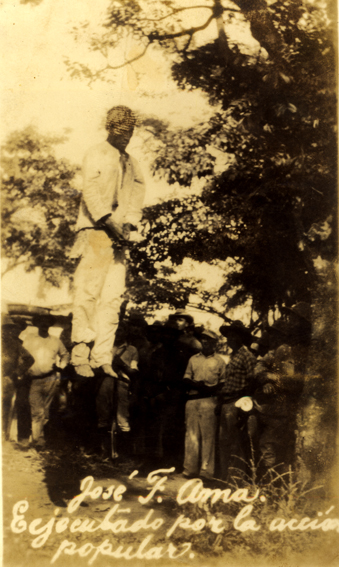


 A polymath barrister from Buenos Aires,
 .jpg)
 On this date in 1959, in the city of


