1842: Charles Stoddart and Arthur Conolly, Great Game diplomats

On this date in 1842,* British diplomats Charles Stoddart and Arthur Conolly were summarily beheaded by a Central Asian potentate as London’s ill-chosen intervention in Afganistan came to a disastrous conclusion.

The backdrop is “the Great Game”,** the long-running chess match for supremacy in Central Asia between an expanding Russian Empire and Great Britain, with its imperial position in India.

Seeking to pre-empt a Russian move into Afghanistan, Britain invaded in 1839. This was the First Anglo-Afghan War: it would have, for the Brits, an inglorious end.

Our day’s featured principals were among the postscript casualties of that catastrophe, never-avenged losses for an empire that had overreached itself.

Stoddart, an intelligence officer, had been dispatched northward to the ancient silk road city of Bokhara intending enlist the allegiance, or at least the benign neutrality, of its emir, Nasrullah Khan. Today Uzbekistan’s fifth-largest city, Bokhara was then an independent state .

[I]n the nineteenth century, the executions carried out there with genuine cruelty, as well as the tales told by travelers gave the city a reputation of being a forbidden, closed, and hostile place. It was “despotic” Bukhara, and the Europeans projected onto it their own oriental fantasies: with citadel, dungeons, palaces, and city walls bolted shut at night, all helping to set the scene.

(Vibe on some the oriental fantasy in the 1911 volume The Emir of Bokhara and His Country, or this volume on Russian Central Asia, which by then included Bokhara.)


Scenic! Bukhara’s historic citadel, the Ark, where Stoddart (and later Conolly) were imprisoned (and later executed). (cc) image from elif ayse.

Into this scene, our Brit entered clumsily, immediately irritating the ruler he intended to supplicate. Reportedly (though the fact has been disputed), he was on the brink of execution when he acceded to save his life to Nasrullah’s formulaic offer of clemency in exchange for conversion to Islam.

In any event, Stoddart languished for years, alternately imprisoned and in the custody of the (better-received) Russian mission. Though the latter had also been charged by its sovereign to retrieve the ill-favored English emissary as a gesture of Great Powers goodwill (and to deprive England of any rationale for intervention that his captivity might offer), Stoddart seems to have been too stubbornly prideful to get out via St. Petersburg while the getting was good.

Instead, he waited on the arrival of countryman Arthur Conolly, who showed up in late 1841 on a mission to secure Stoddart’s release. But Stoddart’s situation little improved, considering Nasrullah Khan’s wary reaction to this second British interloper.

Word has it that the Bukharan prince was piqued that correspondence to him did not arrive over the signature of the British monarch herself, but merely some subcontinental subaltern — as well as, we might think understandably, suspicious at his guests’ motivations and mission.

The captor’s uncertain attitude towards his prisoners was resolved by Britain’s catastrophic loss of Kabul and the subsequent massacre of an entire 16,000-strong army as it attempted to retreat.

Seriously, the whole army. To a man. Except for one guy.


Remnants of an Army, by Elizabeth Butler, depicts the only British subject on retreat from Kabul to reach Jalalabad, William Brydon.

Battles don’t get much more decisive than that.†

Reasoning‡ that the routed British were now of no conceivable threat, nor his prisoners of any conceivable benefit, Nasrullah Khan now accused them of espionage and abused them with impunity.

The two were cast into an Indiana Jones-esque “bug pit,” an oubliette infested with … well, you know.§

Later, finding illicit writing materials secreted on his captives’ persons, the mercurial Nasrullah disposed of them outright.

their quarters were entered by several men, who stripped them, and carried them off to prison … In stripping Colonel Stoddart a lead pencil was found in the lining of his coat, and some papers in his waist. These were taken to the Ameer, who gave orders that Colonel Stoddart should be beaten with heavy sticks until he disclosed who brought the papers, and to whom he wrote. He was most violently beaten, but he revealed nothing; he was beaten repeatedly for two or three days. On Friday, the 8th or 9th (the 7th) of Jemmadee-ool-Eovel (17th of June), the Ameer gave orders that Colonel Stoddart should be killed in the presence of Captain Conolly, who was to be offered life if he would become a Mahomedan. In the afternoon they were taken outside the prison into the street, which is a kind of small square. Their hands were tied across in front. Many people assembled to behold the spectacle. Their graves were dug before their eyes. Colonel Stoddart exclaimed aloud at the cruelty and tyranny of the Ameer. His head was then cut off with a knife.

The chief executioner then turned to Captain Conolly, and said — “The Ameer spares your life if you will become a Mussulman.” Captain Conolly answered, “Colonel Stoddart has been a Mussulman for three years, and you have killed him, you killed Yoosoof too; I will not be a Mussulman, and I am ready to die.” Saying which he stretched forth his neck. His head was then cut off.

London Times, Aug. 22, 1843, reporting the testimony of a dubious local semi-ally

The veracity of this faint bulletin from a distant and inaccessible realm nevertheless remained in some doubt. Friends of the lost men, despairing of obtaining definitive word of their fate, commissioned a strange but courageous missionary named Joseph Wolff to brave his own sojourn to Bokhara to investigate.

Wolff barely escaped with his own life, but seemingly confirmed the sad story and published a Narrative of his travels in 1845 (Part 1, Part 2).

* The initially reported June 17 execution date was subsequently contested by Joseph Pierre Ferrier, who argued that the chronology instead pointed to the next Friday, June 24. The matter appears to me permanently unresolvable.

** Ironically, the sportive phrase “the Great Game” was itself attributed to Arthur Conolly for whom, in the end, events turned out to be quite other than playful.

† Britain recaptured Kabul in reprisal later in 1842, upon which pretext it was able to declare its honor vindicated and depart Kabul (sans massacre), ending the war. Certain latter-day occupations of that “graveyard of empires” might envy their forebear’s talent for declaring victory and leaving.

‡ Correctly. Nasrullah Khan faced no British reprisal for his treatment of Stoddart and Conolly, notwithstanding the attempt by some friends to use their sad fate as some sort of casus belli. This public domain book from 1845 bears a dedication to Queen Victoria in “hope of directing your Majesty’s attention to the cruel sufferings and alleged murder of two British officers … abandoned in an unaccountable manner, by your Majesty’s Government … [in circumstances] degrading to the British nation;” the same man had previously published an “Appeal to the British Nation” in an “endeavour to excite the public sympathy.” Sympathy or no, the two British officers stayed abandoned.

§ Bug tortureenhanced interrogation was actually authorized during the Bush administration for the insect-averse Abu Zubaydah. The gentleman approving that technique, Jay Bybee, is now a federal circuit judge.

On this day..

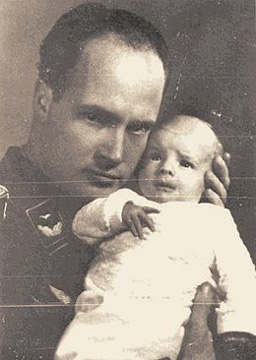
1945: Sigmund Rascher, feared science

It’s on this date in 1945 that Sigmund Rascher is supposed to have been summarily executed in Dachau.

If that’s what happened, it’s no more than Rascher (English Wikipedia page | German) deserved.

This doctor made his Nazi bones by forging a relationship with Heinrich Himmler (he married Himmler’s ex-mistress), and joining Himmler’s SS.

Rascher was doing cancer-cure experiments on animals, but once he had Himmler in his Rolodex he graduated to research on homo sapiens.

From 1941 to 1944, Rascher conducted some of the textbook ethical trespasses of Berlin’s human experimentation regime, using Dachau prisoners in:

  • high-altitude experiments to help fighter pilots, tested by subjecting prisoners to rapid de- and re-pressurization;
  • freezing experiments, tested by subjecting prisoners to freezing water or outdoor exposure, and then attempting by various methods to restore body warmth;
  • blood clotting experiments, tested by giving prisoners major gunshot wounds or other grievous bodily injuries, then monitoring how well a new drug slowed the bleeding.

Class act all the way. Rascher did publish some papers and deliver some conference presentations on aspects of his horrifying science, but in one of those little contradictions of the evil security state, the man was foiled in his bid for an advanced academic credential because much of the research was too secret for his peers to review.

In the end it was a much more mundane breach of ethics that did him in: Rascher and wife were arrested in 1944 for having actually kidnapped the children they claimed were their own.

They were stashed away in separate camps. For unclear reasons — perhaps because Rascher connected all this atrocious research back to Himmler, who was vainly trying to cut a peace deal with the West at this point, or maybe simply because Himmler was annoyed at the embarrassment his protege’s misconduct had given him — the bad doctor was summarily shot in his cell as the Allies bore down on Dachau.

(We will note in passing this argument, and this, disputing that story as well as this execution date. Executed Today is not in a position to contribute to that conversation.)


Elsewhere …


Caption: Polish and Russian forced laborers shot by the SS after they had collapsed from exhaustion during a death march. Wisenfeld, Germany, April 26, 1945.

— National Archives and Records Administration, College Park, Md. Via the U.S. Holocaust Memorial Museum

From the Themed Set: The Death Rattle of the Third Reich.

On this day..

1612: Refried Edward Wightman

“Well, it is so often the way, sir, too late one thinks of what one should have said. Sir Thomas More, for instance — burned alive for refusing to recant his Catholicism — must have been kicking himself, as the flames licked higher, that it never occurred to him to say, ‘I recant my Catholicism.'”

-Edmund Blackadder, Ink and Incapability

On this date in 1612, Edward Wightman became the last person burnt for heresy in England.*

The clothier’s religious dissension had macerated in Puritanism — which was bad enough — and decanted into a heady potion of “the wicked heresies of Ebion, Cerinthus, Valentinian, Arius, Macedonius, Simon Magus, Manichees, Photinus, and of the Anabaptists and other arch heretics, and moreover, of other cursed opinions belched by the instinct of Satan.” Sort of a cafeteria heretic.

All this made a delectable smorgasbord when Wightman went on spectacular public trial late in 1611. Yet even this was not so much the direct outcome of a strict anti-heretic policy as of political rearrangements of the moment: essentially the Calvinist Archbishop of Canterbury George Abbott vs. anti-Calvinists like the future Archbishop of Canterbury William Laud. Laud was involved in Wightman’s prosecution.

As these worthies maneuvered for influence, our irrepressible preacher

was batted back and forth like a shuttlecock between the spring and autumn of 1611 … In the first ten weeks of his imprisonment, Wightman was brought before the High Commission four times before being discharged uncondemned in mid-June 1611; after an initial burst of energy and concern, the court appears to have decided to take no immediate action against the accused heretic who remained imprisoned at the king’s pleasure.**

There had not been a person put to death for heresy since 1589. Elizabeth I — she who eschewed “windows into men’s souls” — rarely hunted citizens for doctrinal difference alone. (Catholicism was constructed, rightly or wrongly, as treason: a crime of the state, rather than of the conscience.)

Wightman made himself a target by publicly flaunting his strange beliefs,† and by late in 16121 the anti-Calvinists had control of the process and a perceived opportunity to score political points by prosecuting him. The trial was a cinch, since Wightman made no bones about his dissension.

One is almost so inured to the hagiographic style of the day, martyr unflinchingly thrusting flesh into flame, that one might well forget how very unpleasant burning alive must be.

Wightman, as the heat of the pyre warmed under him on March 9, shrieked out an agonized recantation, or maybe just something of animal pain that the crowd misinterpreted. Infernus interruptus ensued and the stake was actually doused, with the singed near-executee removed to convalesce and formalize his timely abjuration.

But reprieve recovered the recusant’s recalcitrance, and he soon resumed his error, “every day more blasphemous.” So on this date, Wightman

was caried agayne to the stake where feeling the heat of the fier again would have recanted, but for all his crieinge the sheriff tould hyme he showld cosen him no more and comanded faggottes to be sett to him whear roringe he was burned to ashes.

It was not until 1677 that England abolished the death penalty for all religious offenses.

There’s an alleged family connection from Wightman’s descendants to most of the Wightmans and Whitmans in North America. That would include the 19th century U.S. missionary Marcus Whitman, who pioneered the Oregon trail, triggered a notorious Native American massacre against his homestead, and is the namesake of Walla Walla’s Whitman College.

* Not to be confused with the last-ever burnt, which wasn’t until 1789.

** Ian Atherton and David Como, “The Burning of Edward Wightman: Puritanism, Prelacy and the Politics of Heresy in Early Modern England,” English Historical Review, Dec. 2005. Recommended reading for anyone interested in really unpacking Wightman’s world and outlook.

† According to interrogators, Wightman “affirmed my selfe to be that prophet promised in the 18 of Deuteronomie. And that Elyas in the 4th of Malachie promised to be sent before the great and fearfull day of the Lord. And that comfortor in the 16th of John which should convince the world of sinne of righteousnes and of Judgment.”

On this day..

1992: Johnny Frank Garrett, “kiss my ass because I’m innocent”

On this date in 1992, Johnny Frank Garrett was executed by lethal injection, with the tart last words,

“I’d like to thank my family for loving me and taking care of me. And the rest of the world can kiss my everloving ass, because I’m innocent.”

Although Garrett was only 17 at the time a nun from a neighboring Amarillo convent was raped and murdered, and he may have qualified as developmentally disabled to boot — both factors that today would exclude him from execution — that whole innocence story didn’t have much public traction.

“No, no, not at all,” New Mexico attorney Jesse Quackenbush told this site in an interview. “He was villainized from day one: he was a nun-murderer who needed to be executed. The only sympathy really came from the Pope.”

But two decades on, Garrett’s dying profession is one of the more troublesome skeletons in the Texas execution machine’s closet, thanks in no small part to Quackenbush himself.

Quackenbush directed the documentary The Last Word (viewable free on Netflix), a powerful brief not only for Garrett’s innocence* but against the comprehensive rot of the system that shunted hm off this mortal coil — from the front-line investigators all the way through the Lone Star State’s intentionally broken executive clemency farce.

“It was a system-wide failure that caused this kid to die. It wasn’t just the legal system,” Quackenbush said. “The media played a part. The governor was looking more to her own re-election hopes.* There was a dysfunctional family. The Supreme Court wasn’t morally deep enough to realize that executing 17-year-olds and ‘mentally retarded’ prisoners was wrong. There’s the system in Texas that allowed the prosecutors to hand-pick the pathologists to provide junk science.

“It’s a multifaceted failure, and no one facet is more to blame than the others.”

Garrett, a white teenager, disappeared into a Kafkaesque legal labyrinth, after the alleged supernatural vision of a local soothsayer acclaimed him the culprit in the murder of a nun named Tadea Benz. Corporeal indicia of guilt falls somewhere between circumstantial and laughable: fingerprints in a convent he had visited many times, the inevitable jailhouse snitch, and an unrecorded supposed “confession” that Garrett refused to sign.

As in a preponderance of death cases, especially in Texas (pdf), a meek and all-but-unfunded defense team offered scant resistance as prosecutors made the most of this eminently disputable evidence: once the one-sided trial was in the books and the crucial direct appeals likewise slipped past, the proceedings lay beyond the reach of judicial review.

This novel is inspired by the Garrett case.

For all that, there yet remains one un-litigated piece of evidence.

Around the time of Sister Benz’s death, there was another rape-murder of another elderly Amarillo woman, a crime that authorities publicly described as “too similar” to the Benz case not to be part of the same crime spree.

That case went unsolved … but years after Garrett’s execution, DNA databases matched an old semen sample from that second crime to a Cuban rapist (he was among the criminals and undesirables that Castro expelled to the U.S. during the Mariel boatlift) named Leoncio Perez Rueda.

Suggestive.

More dispositive evidence in the form of still-testable crime scene samples may yet reside in Amarillo’s evidence lockers — semen and blood samples that, in the era of DNA, Quackenbush thinks would exonerate Johnny Frank Garrett.

If testing this sort of thing sounds like a no-brainer, you don’t work for Amarillo.

“The [Garrett] family offered the city of Amarillo complete civic immunity and they still refused to run a DNA test, and threatened to countersue** if the family tried to pursue it,” Quackenbush says. “In the state of Texas there are still only laws protecting DNA access for living people: if you’re already executed, you have no rights.”

Which is a particular pity — since “the chances of executing innocent people are still really high.”

* Quackenbush’s case for Garrett’s innocence is outlined in this legal memo (pdf). This site maintains an extensive archive of resources about the case.

** In this, it’s not unlike the Ruben Cantu case, where post-execution evidence of innocence has also been met with legal threats by the state.

On this day..

1634: Urbain Grandier, for the Loudon possessions

On this date in 1634, a Paris tribunal “declare[d] the said Urbain Grandier duly guilty of the crime of sorcery, evil spells, and the possession visited upon some Ursuline nuns of this town of Loudon and of other laywomen mentioned at the trial, together with other crimes resulting from the above. For redress of these, he has been condemned … to be taken to the Place of Saine-Croix of this said town, to be tied to a post on a pile of faggots that is to be built in the said Place. There his body is to be burned alive … and his ashes are to be scattered to the winds.”

The sentence was immediately enforced.

These Loudon possessions were a disgraceful carnival of simulated enspellment by the local Ursuline nuns engineered to destroy Grandier, a parish priest with a knack for acquiring enemies.

Alexandre Dumas, pere would write about Grandier in his Crimes Célèbres, and later in a stand-alone play. In Dumas’s rendering, Grandier arrived in Loudon as a handsome outsider, eloquent in the pulpit and doubly so in pursuit of a pretty girl,* as inexorable as Shylock in his victorious lawsuits against the local grandees.

Most recklessly of all, he made a foe of Cardinal Richelieu — snubbing him, opposing him politically, and (so it was alleged) authoring a scathing and anonymous lampoon of the Grey Eminence.

When Richelieu’s deputy came to town, the locals got the Ursuline nuns into their fits and got Grandier fast-tracked for hell.

The nuns put on a circus of frothing, profane, hip-thrusting demoniac possession accusing Grandier of bewitchment as they melodramatically underwent exorcism. (Fabulously attended, these public displays of possession and exorcism went on for several years after Grandier’s death as a perverse tourist attraction.)

Richelieu’s guy arranged to try Grandier in his own court (no appeal possible) and threatened to arrest for treason anyone who testified in his defense. In case that were insufficient advantage, a contract with Lucifer — a literal, signed document — was produced for the magistrates’ edification.


In fairness, this “contract” must have been a hell of a lot of fun to forge.

Heck, even nuns who tried to recant were turned away. Must be back under Lucifer’s influence!

Before proceeding to the stake, Grandier was subjected to one last “extraordinary” torture. His holy persecutors, “lest the Devils should have the power to resist the blows of a profane man, such as the hangman was, they themselves took the hammers and tortured the unhappy man” until the bone marrow leaked from his legs. Satan’s subcontractor suffered the blows without confessing or naming an accomplice.

In 1952, Aldous Huxley molded the horrible Grandier story into a non-fiction novel, The Devils of Loudun. Huxley’s take helped to popularize the tale — one that polemicists in the 17th century also recognized as an injustice — for the modern era of flesh minced by ideological madness.

From beginning to end, the trial proved a farce in which the condemnation of the accused was a foregone conclusion. By means of a series of trumped-up charges reinforced by an official philosophy and falsified theological dogmas, the resources of the state were mobilized to crush the offending individual. Huxley is not slow to point to the modern counterpart of such proceedings, notably in Fascist or Communist countries.

-Book review by S. van Dantzich, The Australian Quarterly, June 1954

Evidently, it struck a chord.

A 1971 cinematic adaptation of this book, The Devils, a captivating and sacrilegious tapestry of violent, sexual, and religious iconography, won critical praise and censor board bans, as well as an “X” rating in the United States. It’s hard to find, but worth the trouble.

Huxley’s book also formed the basis for an operatic interpretation, Die Teufel von Loudun (The Devils of Loudun)

* As we’ve seen, French priests making sexy time stood in danger from their game-less counterparts.

On this day..

1510: Richard Empson and Edmund Dudley, tax collectors

On this date in 1510, the new king Henry VIII had his dad’s most hated tax collectors beheaded on Tower Hill.

Better days: Empson (on the left) and Dudley (on the right) pal around with Henry VII.

When Henry Tudor conquered Bosworth Field to emerge from the War of the Roses as King Henry VII, he brought the baggage of being the son of some Welsh squire.

His shaky legitimacy exposed the newborn Tudor dynasty to existential threats from every quarter; even putative allies proved liable to turn against him.

Henry consequently looked for every opportunity to centralize power away from institutions that could check or threaten him and into his own hands — nowhere more notoriously so than in the realm of taxation.* Aggressive tax collection would not only regenerate the crown’s blasted treasury; it would widen his own scope of action.

Whether Henry’s historical repute for cupidity is well-deserved is a topic beyond the scope of this site, but the fact that he does have such a reputation can be attributed in no small degree to this date’s featured players.

These two persons, being lawyers in science, and privy councillors in authority, as the corruption of the best things is the worst, turned law and justice into wormwood and rapine. … Neither did they, toward the end, observe so much as the half-face of justice, in proceeding by indictment; but sent forth their precepts to attach men and convent them before themselves, and some others, at their private houses, in a court of commission; and there used to shuffle up a summary proceeding by examination, without trial of jury; assuming to themselves there to deal both in pleas of the crown and in controversies civil. Then did they also use to inthral and charge the subjects’ lands with tenure in capite, by finding false offices, and thereby to work upon them for wardships, liveries, premier seisin, and alienations … When men were outlawed in personal actions, they would not permit them to purchase their charters of pardon, except they paid great and intolerable sums; standing upon the strict point of law, which upon outlawries giveth forfeiture of goods; nay, contrary to all law and colour, they maintained the king ought to have the half of men’s lands and rents, during the space of full two years, for a pain in case of outlawry. They would also raffle with jurors, and enforce them to find as they would direct, and if they did not, convent [summon] them, imprison them, and fine them. These and many other courses, fitter to be buried than repeated, they had of preyig upon the people; both like tame hawks for their master, and like wild hawks for themselves; insomuch as they grew to great riches and substance.

Francis Bacon‘s History of the Reign of King Henry the Seventh

Richard Empson and Edmund Dudley were two powerful parliamentarians of less than lordly stature who had been elevated to this bad-cop role for their loyalty and aptitude. There, they became lightning rods for public resentment. It’s a path that had once taken a French counterpart from the common stock to the robes of state to (once his patron monarch died) the scaffold. Empson and Dudley trod it exactly.

Even in Henry’s lifetime, his newly intrusive taxes risked fearful public reaction.

The pretender Perkin Warbeck knocked Henry for the “robberies, extortions, the daily pilling of the people by dismes [tithes], taskes [contributions], tallages [tolls], benevolences, and other unlawful impositions and grievous exactions” he imposed, “agreeable to the meanness of his birth.” Tax backlash helped generate at least some of Warbeck’s popular support.

By the twilight of Henry’s rule in the first decade of the 1500’s, he had mastered these threats and could take advantage of political tranquility to really focus on his accounting. And he’d figured out that by ratcheting up enforcement of already-existing levies, he could avoid the dangerous confrontations that might result from summoning Parliament to ask it for money. It’s from this period most of all that he gets his historical Ebenezer Scrooge image, and the tool he employed for it, the Council Learned in the Law, got its extreme unpopularity.

Henry died in April of 1509 at the age of 52, leaving his son Henry VIII an overflowing treasury and countless grievances against the tax collectors who made it happen.

As the Council Learned’s leading lights, Empson and Dudley — “the king’s long arms with which … he took what was his” — immediately became targets once their royal protector was in the ground. They were hailed before the greenhorn king and the Privy Council to justify themselves within days of Henry VII’s death.

Interestingly, because a royal pardon amnestied all crimes except “felony, murder, and treason,” the malfeasance of these two councilors — whose real offense was unimpeachable loyalty to the last sovereign — had to be exaggerated into rather fantastical charges of treason in order to satisfy petitioners against them while avoiding undue embarrassment for the late king or the other aides who had served him.

In the year or so he lay in the dungeon awaiting his fate, “a pson most ignorant, and being in wordlie vexacon and trowble, also wth the sorrowfull and bitter remembrance of death,” Edmund Dudley wrote a treatise on the right arrangement of a society dedicated to the young new master who held Dudley’s life in his hands. The Tree of Commonwealth can be read here.

Yale professor Keith Wrightson introduces an interesting lecture — “Early Modern England: Politics, Religion, and Society under the Tudors and Stuarts” — with Dudley’s Tree of Commonwealth social schema.

Remember both, since now each thrive,
on perquisite ill gotten,
Empson & Dudleys case survives,
when they’re hang’d, dead, & rotten;

-From an 18th century colonial Virginia ballad titled “Remonstrance”, comparing this date’s centuries-old executed to a contemporary politician (Richard Beale Davis, “The Colonial Virginia Satirist: Mid-Eighteenth-Century Commentaries on Politics, Religion, and Society,” Transactions of the American Philosophical Society, Vol. 57, No. 1 (1967))

Update: The History of England podcast covers these two blokes here.

* The phrase “Morton’s fork” comes from Henry’s extractive machinations. Named for his Lord Chancellor John Morton, the original dilemma was a “fork” the crown used to stick taxpayers: those living high on the hog were made to pay up, since they obviously had enough to spare … and those living modestly were also made to pay, since they perforce must have saved enough to spare.

On this day..

1934: Ernst Roehm, SA chief

On this date in 1934, in the coda to Hitler’s Night of the Long Knives purge of the Nazi party, the emerging dictator had his longtime ally shot.

Bavarian World War I veteran Ernst Röhm (Roehm) had been a National Socialist brawler of the earliest vintage: after the armistice, he was among the Freikorps paramilitaries to topple the short-lived Munich Soviet. He joined the NSDAP’s predecessor, the German Workers’ Party, before Hitler himself, and he stood trial with the future Fuhrer after helping Hitler attempt the Beer Hall Putsch. They were so tight, Hitler politely ignored Röhm’s open homosexuality.

But most importantly, Röhm was the energetic organizer of the Sturmabteilung, or SA — the party’s private army ready at arms for street battles with Communists, roughing up Jews, Praetorian Guard duty for party brass, and various and sundry other unpleasantries.


An SA brownshirt tosses a book on the pyre at a May 10, 1933 book burning.

Röhm grew the SA like a weed. At well over 4 million men by the time of Hitler’s Chancellorship, it greatly outnumbered the army itself.

This gave Röhm personal designs on absorbing the army into his paramilitary instead of the other way around, and it gave Röhm the literal boots on the ground to manifest his own commitment to the “Socialist” bits of the “National Socialist” project. His noises about the “second revolution” to come after the Nazis had already obtained state power were most unwelcome.

“One often hears voices in the bourgeois camp to the effect that the SA have lost any reason for existence, but I will tell these gentlemen that the old bureaucratic spirit must yet be changed in a gentle or, if need be, an ungentle manner.”

-Röhm, Nov. 5, 1933 (Source)

Well, those gentlemen weren’t about to wait around to be changed in an ungentle manner. Hitler was induced to sacrifice the man who raised him to power in favor of those who could keep him there, personally arrested his old friend and aide-de-camp as the June 30 purge got underway.

A sucker for nostalgia, Hitler didn’t have Röhm killed outright — the fate of many others in those terrible hours — but instead shipped him to Stadelheim Prison in Munich.* After due consideration, though, the treacherous chancellor did what he was always going to do.

Alan Bullock, in Hitler: A Study in Tyranny, described the final scene.

Hitler ordered a revolver to be left in his cell, but Röhm refused to use it: “If I am to be killed, let Adolf do it himself.” According to an eyewitness at the 1957 Munich trial of those involved, he was shot by two S.S. officers who emptied their revolvers into him at point blank range. “Röhm wanted to say something but the S.S. officer told him to shut up. Then Röhm stood at attention — he was stripped to the waist — with his face full of contempt.”

A nice twist of the Long Knife by its wielders: they justified the purge on the grounds of an imminent coup attempt by the dead SA boss,** branding the murders of Röhm and his comrades … the Röhm-putsch.

* The same prison where the White Rose resistance members were later executed.

** Reinhard Heydrich supplied a dossier implausibly alleging Röhm was on the take from the French.

On this day..

1934: Night of the Long Knives

In the dark hours this date in 1934, a bargain with the devil was sealed in blood.

Months before, even mere hours before, it was still possible for longstanding adherents of the National Socialist Workers’ Party to demand the “Socialist” part of the program.

The SA and the SS will not tolerate the German revolution going to sleep and being betrayed at the half-way stage by non-combatants. … It is in fact high time the national revolution stopped and became the National Socialist one. Whether [the bourgeoisie] like it or not, we will continue our struggle — if they understand at last what it is about — with them; if they are unwilling — without them; and if necessary — against them.

Populist, not Bolshevik. (In fact, stridently anti-communist.) Nevertheless, a distinct menace by the have-nots against the haves.*

Especially so because they were the words not of some impotent scribbler but of Ernst Roehm, commander of the the Nazis’ paramilitary brownshirts. And threatening, too, for Adolf Hitler for this same reason: his ascension the previous year to the Chancellorship had entailed terms with a German elite who needed but mistrusted the man’s mass party. Something was going to have to give.

The Communist exile Leon Trotsky’s 1933 analysis of the infant Nazi Germany’s dynamics proved prescient.

The banner of National Socialism was raised by upstarts from the lower and middle commanding ranks of the old army. Decorated with medals for distinguished service, commissioned and noncommissioned officers could not believe that their heroism and sufferings for the Fatherland had not only come to naught, but also gave them no special claims to gratitude. Hence their hatred of the revolution and the proletariat. At the same time, they did not want to reconcile themselves to being sent by the bankers, industrialists, and ministers back to the modest posts of bookkeepers, engineers, postal clerks, and schoolteachers. Hence their “socialism.”

German fascism, like Italian fascism, raised itself to power on the backs of the petty bourgeoisie, which it turned into a battering ram against the organizations of the working class and the institutions of democracy. But fascism in power is least of all the rule of the petty bourgeoisie. On the contrary, it is the most ruthless dictatorship of monopoly capital. … The “socialist” revolution pictured by the petty-bourgeois masses as a necessary supplement to the national revolution is officially liquidated and condemned.

The Night of the Long Knives this date took those blades to the “socialists”, to the men like Roehm whose dreams of redistribution were reckless enough to picture his working-class militia supplanting the German army proper.

As its price of power, the Nazi leadership purged these dangerous elements.

At 2 a.m. this date, Hitler flew to Munich to personally arrest Roehm on the pretext of averting an imminent coup by Roehm’s SA.** Elsewhere in the Reich, coordinated arrests and summary executions destroyed the Nazi party’s “left”, and throughout this date, and continuing into the next, did not scruple to sweep up whatever other conservative elements Hitler considered unreliable.

It was a dangerous but ultimately decisive move. Albert Speer saw Hitler on July 1, and remembered him ebullient at the triumph.

Hitler was extremely excited and, as I believe to this day, inwardly convinced that he had come through a great danger. … Evidently he believed that his personal action had averted a disaster at the last minute: “I alone was able to solve this problem. No one else!”

The final death toll is uncertain. Hitler copped to 77 in a speech to the Reichstag two weeks later which chillingly claimed that “in this hour I was responsible for the fate of the German people, and thereby I became the supreme judge”; it is likely that the true number is much higher. But its effect went far beyond those immediately killed: it tamed the SA’s independence, and permanently subordinated it to the military; and, it brought Adolf Hitler the dictatorial power that would make the succeeding years so fruitful for this blog.

Among those known to have been seized and executed and/or murdered this date:

Roehm himself died on July 2, initially spared for his many good offices for the Nazi cause before Hitler realized he could not leave him alive.

The armed forces, apparently the day’s big winner, would pay a price of their own for the arrangement.

“In making common cause with” the murderous purge, observed William Shirer in The Rise and Fall of the Third Reich, “the generals were putting themselves in a position in which they could never oppose future acts of Nazi terrorism.” As the quid for the quo, soldiers were soon required to swear “unconditional obedience” to Adolf Hitler, and this oath would give countless Wehrmacht officers sufficient reason or excuse to eschew resistance to their leader until much too late.

Barely a month after the Night of the Long Knives, the ancient German President Hindenburg died in office. Hitler, who now commanded the clear allegiance of his nation’s elites and had savagely mastered his own party besides, succeeded the powers of Hindenburg’s vacant office along with those of his own Chancellorship and became the German Fuehrer.

* When the Nazis were knee high to the Weimar Republic, their party program sought such radical stuff as abolition of rentier income, generous old-age pensions, and nationalizing trusts.

** The historicity of any actual coup plot is generally dismissed, although the event is still known in German by the expedient sobriquet the Nazi leadership gave it, Roehm-putsch.

On this day..

1786: David Nelson, but not William Horbord

This date in 1786 offers us the fine legal salami-slicing of how to stanch a race war with a noose.

Our salami’s name is David Nelson, a furloughed veteran of the Queen’s Rangers in the late American Revolution relocated to the environs of Fredericton, New Brunswick.

There, he and a fellow veteran named William Horbord or Horboard shot dead a native Maliseet for stealing their hog.

This brought neighboring peoples to a deadly tense standoff. The Maliseet demanded justice for their victim; white Canadians demanded … well, the right to shoot Maliseet without fear of their own neck.

Nelson and Horbord went right on trial, but how to finesse the situation?

According to an exhibit that unfortunately seems to have vanished from the Virtual Museum of Canada, natives “camped out around the presiding Judge Kingsclear’s home.” That must have got his commute off to an awkward start each day.

So a Solomonic compromise obtained: after the two were duly convicted and doomed to hang, Nelson, the principal offender, was measured for his coffin … while Horbord, deemed less culpable, received a pardon.

Now that’s gallows diplomacy.

On this day..

1766: Thomas Arthur de Lally-Tollendal, undiplomatic

On this date in 1766, a refugee noble with more honor than sense lost his head in Paris.

Thomas Arthur, comte de Lally, baron de Tollendal — more efficiently known as Lally, or as Lally-Tollendal, though he’s not to be confused in this with his son, a French Revolution bit player — entered this world in County Galway, the child of a minor lord.

Since said lord hewed to the Jacobite party favoring restoration of the Stuarts to the English throne, the family found itself relocated with the exiled Pretender to a continental power whose spiritual and temporal interests were similarly inimical to the Hanoverian king.

Our man landed himself, like a proper retainer of his adoptive liege, a gig in the French army in which capacity he actually served at the Jacobites’ last doomed British hurrah, the 1746 Battle of Falkirk.

But his problems came from his Bourbon service much further afield — in India.

There, his expeditionary force suffered reversal after reversal at the hands of the hated Brits, even then in the process of appending India to their dominions.

Our general’s military misadventures were compounded by impolitic high-handedness towards his officers and men, and to the locals whose alliances he needed. He was, in the main, a man ill-suited to the job entrusted to him. As the Memoirs of Sanson remark, “his temper, his obstinacy, and especially his contempt for all means of action except brutal strength, were destined to lead him into mistakes in a position demanding more knowledge of politics than science of war. Sixteen years before Lally-Tollendal’s appointment, Dupleix, with scanty forces, at enmity with the Company, receiving neither help nor subsidies from the mother country, had held in check English power in the Indian peninsula by mere diplomatic proficiency. Lally knew how to conquer; but he was incapable of studying and detecting the secrets of Dupleix’s policy.”

By the time the bad news that established all this hit France, the subcontinent was pretty much Britain’s to command — just another piece of the imperial butt-kicking France suffered in the Seven Years’ War.

And Lally’s enemies were holding him personally responsible as a potential traitor. After all, he was conveniently now in English custody.

Incensed at having his honor impugned, Lally unwisely obtained English parole to return to repel these charges. He proved no more diplomatic with the barristers than he had been with the Hindus:

he was so convinced of his own innocence that he was imprudent enough to impeach the officers who had served under his orders, together with the administrators of the colony. He charged them with such violence that his death and condemnation became indispensable for their justification … When the accused appeared before his judges, he was no more able to control his temper than when he was in India … answering, fuming, retorting, stigmatising the cowardice of some, the cupidity of others, and hinting that the only guilty party was the powerless Government.

Just the sort of vindication liable to appeal more to posterity than to said government. Louis XV, another man unequal to his position, was by this autumn of his reign plumbing the nadir of his unpopularity; for the officer who had risked his life in battle under French colors throughout adulthood, Louis calculated more profit in severity (or expedience) than in clemency. Hey, it had worked for the English.

And really, for a Stuart adherent, sacrificial execution was kind of an apt fate.

We guess it worked.

“The people were pleased with all that made his punishment ignominious: the cart, the handcuffs, and the gag,” recorded aristocrat-of-letters Madame du Deffand (Source) “He was a great rascal, and besides he was very disagreeable.”

Thomas Carlyle, in his The French Revolution, spared in Lally’s defense a few sentences of delicious invective for the rotting regime that did him in.

The Parlement of Paris may count itself an unloved body; mean, not magnanimous, on the political side. Were the King weak, always (as now) has his Parlement barked, cur-like at his heels; with what popular cry there might be. Were he strong, it barked before his face; hunting for him as his alert beagle. An unjust Body; where foul influences have more than once worked shameful perversion of judgment. Does not, in these very days, the blood of murdered Lally cry aloud for vengeance? Baited, circumvented, driven mad like the snared lion, Valour had to sink extinguished under vindictive Chicane. Behold him, that hapless Lally, his wild dark soul looking through his wild dark face; trailed on the ignominious death-hurdle; the voice of his despair choked by a wooden gag! The wild fire-soul that has known only peril and toil; and, for threescore years, has buffeted against Fate’s obstruction and men’s perfidy, like genius and courage amid poltroonery, dishonesty and commonplace; faithfully enduring and endeavouring,–O Parlement of Paris, dost thou reward it with a gibbet and a gag?

There’s a public-domain 19th century lecture on our man’s adventurous career here. And there’s a monument back home near Tuam, Ireland.

On this day..