2002: Aileen Wuornos, Monster

“Thanks a lot, society, for railroading my ass!”
-Aileen Wuornos

On this date in 2002, the tragically, horrifically iconic serial killer Aileen Wuornos checked out at Florida’s Starke Prison (and into an afterlife as an Academy Award-winning role) with the appropriately bizarre last words,

“I’d just like to say I’m sailing with the rock, and I’ll be back like Independence Day, with Jesus June 6. Like the movie, big mother ship and all, I’ll be back.”

Her sensational FBI-bestowed reputation as America’s “first” female serial killer rests on exaggeration,* but there’s something of the larger-than-life about prostitute/manslayer Aileen Carol Wuornos.

Heck, Aileen herself sold rights to her story within weeks of her arrest. So did investigators who worked the case. A year before our day’s perp faced lethal injection, her surname titled “the world’s first opera about a lesbian prostitute serial killer survivor of child abuse who is now on death row.” (Here’s the opera’s home page.)

That’s not the sort of legacy usual for a seven-time murderer. But there wasn’t much usual about Aileen Wuornos.

Wuornos — “Lee,” to her friends — projects for all her trail of bodies an irrepressibly humanity; Charlize Theron played her in Monster as the most sympathetic serial killer ever put to celluloid, her crime spree a desperate and impossible cry after human love that her life’s many travails had warped but never drained.

Still professing love for the lover who had sold her out and thereby ducked prosecution, Wuornos resigned her appeals and went her own way out this date in 2002.

Books and Films about Aileen Wuornos

* Or, if you like, a precision of definition not likely shared by the majority of her headline-reading public. What made Wuornos distinctive was killing strangers in a pattern over time; the stereotypical female multiple-murderer kills in a single spree, and/or for distinct pecuniary motives, and/or kills family members or other intimates.

Part of the Themed Set: Women Who Kill.

On this day..

Themed Set: Women Who Kill

These pages have noticed many women to fall under the executioner’s shadow.

We have noticed too how remarkably women’s crimes and women criminals and women’s sentences are “gendered”.

In matters of patriarchy, familial behavior, sexual incontinence and resistance … it’s unsurprising to find women marked as such.

Yet even in run-of-the-mill criminal scenarios — what would be run-of-the-mill for a man — female offenders stand to attract the prurient gaze, from breathless media to academic masturbation.

When we last paused to consider the mystique of the executed woman, we focused on political criminals whose deaths were a matter of state. (Though as we have seen, even in a political purge gender can be a weapon.)

Join Executed Today this time to consider a few women of less exalted criminality … and our own response to seeing them as scaffold-fodder.

On this day..

2007: Five women in Hoiryeong Public Stadium

On this date in 2007, according to the Daily NK, five women were publicly tried, then immediately shot, in Hoiryeong Public Stadium in North Korea’s North Hamkyung province.

Their crime, “prostitution”, is supposed to be a euphemism for aiding refugees escaping to China in the area that also generated an infamous execution film broadcast on Japanese television in 2005. (And other death sentences earlier in 2007. North Korea is not enthusiastic about escapees.)

As usual with the insular state, details are hard to come by. The North Korean Human Rights Infringement Center claimed Pyongyang carried out 901 public executions in 2007; that figure would potentially make it the world’s #2 (after China) death penalty user, though Amnesty International doesn’t even venture a tally of North Korean executions.

On this day..

1536: William Tyndale, English Bible translator

“Lord, open the King of England’s eyes!” cried William Tyndale at the stake this date in 1536 … just before he was strangled and burned.

“Translated the Bible into English,” reads Tyndale‘s epigraph; in the Protestant blossoming, this Herculean academic labor was also of itself a dangerous religious and political manifesto.

As with Martin Luther’s translation of the Bible into German, Tyndale’s English version threatened, and was intended to threaten, papal ecclesiastical authority. In undertaking the work, Tyndale defied the 1408 “Constitutions of Oxford”, an English clerical pact further to the suppression of the Lollards and kindred post-John Wycliffe heresies which expressly prohibited rendering scripture in the vernacular.

In Protestant hagiographer John Foxe‘s Book of Martyrs, a young Tyndale exasperated with a Romish divine memorably declared,

“I defy the pope, and all his laws;” and added, “If God spared him life, ere many years he would cause a boy that driveth the plough to know more of the Scripture than he did.”

Tyndale would give his life to, and for, that ploughboy.

On the lam in Protestant Germany, Tyndale produced an English New Testament, and then an Old Testament, of startling poetry.

The scholar also kept a reformist voice in the day’s robust theological pamphleteering — trading fire, for instance, with Sir Thomas More.

Even when the once-staunch Catholic Henry VIII broke with Rome over Anne Boleyn, the English manhunt for Tyndale continued: Henry’s reformation did not share radical Protestant objectives like scriptural authority, and the king was not shy about enforcing his version of orthodoxy.

Tyndale was equally stubborn in defense of his life’s mission to put a Bible in the hands of the English ploughboy. Offered the king’s mercy to return and submit, Tyndale countered by offering his silence and martyrdom if Henry would but publish the Good Book in English.

I assure you, if it would stand with the King’s most gracious pleasure to grant only a bare text of the Scripture to be put forth among his people, like as is put forth among the subjects of the emperor in these parts, and of other Christian princes, be it of the translation of what person soever shall please his Majesty, I shall immediately make faithful promise never to write more, not abide two days in these parts after the same: but immediately to repair unto his realm, and there most humbly submit myself at the feet of his royal majesty, offering my body to suffer what pain or torture, yea, what death his grace will, so this [translation] be obtained. Until that time, I will abide the asperity of all chances, whatsoever shall come, and endure my life in as many pains as it is able to bear and suffer.

Luckily for posterity, the English crown wasn’t biting, leaving Tyndale’s mellifluous rendering of Holy Writ to enter the English tongue.

And leaving Tyndale, eventually, to enter the martyrs’ ranks.

In 1536, an English bounty hunter befriended the fugitive translator and betrayed him to the authorities in Vilvoorde, near Brussels. It was the Catholic Church and the Holy Roman Empire that did the dirty work of their rivals in the Isles.

And — the Lord works in the mysterious ways, they say — Tyndale’s dying prayer was indeed answered.

By the end of the decade, a Bible in English drawn from Tyndale’s version (revised by former Tyndale assistant Myles Coverdale under Thomas Cromwell‘s direction; prefaced by Thomas Cranmer) was by regal authority placed in every parish of the Church of England.

The Tyndale Bible became the basis for the King James Bible that remains for many authoritative to this day … and Tyndale’s work lodged in the textual DNA of the evolving English Bible(s) in the five centuries since his death. (The wonderful site The King’s English deals with the linguistic legacy of the King James Version; many of the examples in fact trace back to Tyndale.)

Works by and about William Tyndale

Audiophiles should consider this podcast from a Protestant perspective, located here.

[audio:http://www.bethanybaptist.co.uk/mp3/2008-05-09-pm-Brian-Edwards.mp3]

On this day..

1949: Yoshio Kodaira, soldier turned serial killer

Sixty years ago today, Yoshio Kodaira counted himself “fortunate to be able to die on such a calm and peaceful day.”

For the year after Japan’s wartime surrender to the World War II Allied powers (beginning slightly before that surrender), former Imperial Navy soldier Yoshio Kodaira terrorized Tochigi and Tokyo with a rape-murder binge believed to have claimed ten victims.

Even our monsters — especially our monsters — are creatures of their own milieu.

For Kodaira, that was the Japanese occupation of China, where he slew an unknown number of Chinese soldiers and civilians in his official capacity under the banner of the rising sun … followed by the “anarchy of the postwar years.”

(In between the two, he served a jail term in the 1930’s for killing his father-in-law in a berserk rage when his wife left him.)

Expat author David Peace novelized the 1945-46 Kodaira crime spree in Tokyo: Year Zero, musing (in the voice of the killer),

You know, none of it makes much sense to me … they give us a big medal over there for all the things we did, but then we come back here and all we get is a long rope.

(Here’s an interview with the author.)

On this day..

1917: Jesse Robart Short, Etaples mutineer

On this date in 1917, Jesse Robart Short was shot in Etaples, France, for mutiny.


Jesse Robart Short’s sentence, as confirmed by General Haig, from the UK National Archives. (Transcribed more legibly.)

The fraught relationship between the enlisted and the officers had boiled over in the Etaples Mutiny just a few weeks before, which saw military police fire into a crowd of troops protesting the heavy-handed arrest of a fellow for slipping into the town of Etaples for a little (unauthorized, but widely practiced) R&R.

The shooting left a man dead and the camp in an uproar for several days, with some enraged rank-and-file men trying to break into army facilities hunting for MPs.

The excellent, but now defunct, site Shot At Dawn had a thorough recounting of the Etaples mutiny, still archived at the Wayback Machine.

Short, whose disciplinary record was otherwise clean, was picked out seemingly more or less arbitrarily to be the demonstration execution for this affair. He was doomed for an (unsuccessful) incident of incitement to mutiny, described by the officer thus:

“The picket was armed as regards 150 & the remainder were unarmed. At about 9.10 pm a lot of men, about 70 or 80 with notice boards torn away from the camps and waving flags which were handkerchiefs of all colours including red attached to sticks approached me. These men pushed through, the picket practically standing on one side … officers who stood out were also pushed aside. The picquet was absolutely unreliable at that moment so I called the officers together & made them fall their men in by Regts. I then addressed the picket & whilst doing so … [Short] came back from the crowd of men who had just broken through & told the men they were not to listen to men. ‘What you want to do to the Bugger is to put a stone round his neck & throw him into the river’… he told the men to fall out & join the mob who had just broken through.”

On this day..

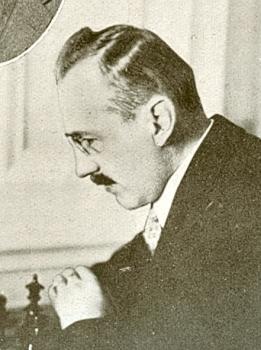
1941: Karel Treybal, Grand Master

On this date in 1941, chess grand master Karel Treybal was shot in occupied Czechoslovakia as a suspected subversive for illegally stockpiling weapons.

The Bohemia-born Treybal was one of the great Czech players from the turn of the century.

Competing as an amateur — his day job was as a barrister — his attacking play made him one of the world’s best for most of his adult life. (Chess aficionados can browse his big matches here and here, or take in some Treybal chess puzzles. It says here that Treybal once played countryman Franz Kafka.)

Like everyone else standing between the great imperial powers come wartime, grand masters were just so many pawns.

The particulars of Treybal’s death seem murky: whether or not he received a nominal Nazi trial before his execution; whether there was anything to the weapons charges against him. Word, nonetheless, got right around.

According to a UP report datelined this very day that ran in the New York Times on Oct. 3,

German occupation forces have executed nearly 1,000 persons in Europe, in some cases shooting them by the carloads, in reprisal for a mounting tide of violence in the occupied countries, a compilation showed tonight.

German dispatches said eighteen persons were executed in Bohemia-Moravia today [Thursday, Oct. 2 -ed.], and thirty-nine yesterday. Six were executed Sunday, twenty Monday and fifty-eight Tuesday, according to earlier German announcements, making the total so far this week 141.

Those executed today were said to include Josef Benes, manager of the Farmers’ Association at Raudnitz; Anton Kvarda, manager of the trades school at Rakonitz; Karel Treybal, salesman; Josef Smrkovsky, business man, and Manzel Svoboda, former Czech Army lieutenant.

From Norway to Greece the executions have been Germany’s answer to all forms of opposition — sabotage, espionage, armed resistance, murder, treason, arson, aiding the enemy, listening to the foreign radio, operating illegal markets, dynamiting and the ill-inclusive “Communist” activity.

A postwar tournament was played in tribute of Treybal and the great Czech women’s champion Vera Menchik.

On this day..

1788: William “Deacon” Brodie, Dr. Jekyll and Mr. Hyde inspiration

On this date in 1788, the real-life Dr. Jekyll and Mr. Hyde was hanged at Edinburgh.


The Execution of Deacon Brodie, by Alexander Hay Ritchie.

William Brodie, respectable burgher by day, Deacon of the Guild of Wrights, wasn’t the type for the gallows. Actually, the upright citizen is said to have proposed an improvement in the old Tolbooth gallows, replacing the old-school ladders with a forward-thinking drop mechanism.

“Brodie,” says Traditions of Edinburgh, “was the first who proved the excellence of [the] improvement … He inspected the thing with a professional air, and seemed to view the result of his ingenuity with a smile of satisfaction.”*

Insouciance in the face of mortality … but Brodie had plenty of practice in compartmentalization.

With a gambling habit, a couple of mistresses, and five kids, Brodie the oleaginous society man had a double life, or treble, or more. By and by, the well-known tendency of such profligate pastimes to lead a man to venture his neck in order to keep up appearances worked its will upon Brodie, who began using his contracts with Edinburgh’s upper crust to case their houses and copy their keys … returning at night to burgle his employers.

It was taking on partners that did in the budding master thief; inevitably, someone flipped to dodge the gallows himself. Brodie’s cover was blown, and he hanged with his confederate George Smith, keeping up appearances to the very end.

A century later, native Edinburgher Robert Louis Stevenson would tap this extraordinary local history (and maybe some similar predecessors) as inspiration for that classic novelistic exploration of the soul’s duality, The Strange Case of Dr. Jekyll and Mr. Hyde.

In fact, prior to that work’s 1886 publication, Stevenson (who grew up with Brodie furniture in the house) co-wrote a play called Deacon Brodie, or The Double Life.

That earlier composition hasn’t been entrusted to celluloid, to my knowledge (though there is a Deacon Brodie film of recent vintage). But Jekyll and Hyde has been.

Brodie’s striking case does not live on only through his literary doppleganger(s); you can enjoy the company of the hanged criminal to this day on Edinburgh’s Royal Mile at Deacon Brodie’s Tavern.

Brodie himself is supposed to have made his own bid to live on by surviving the hanging. William Roughead in Classic Crimes describes these machinations whose generally attested failure is now and again disputed anew.

Of the plans, various and futile, formed for the resuscitation of the Deacon there are two contemporary and competing versions. One is that the hangman was bribed to tamper with the rope, so as to give a short fall and avoid dislocation of the vertebrae. But by an excess of caution that officer first made it too short and then too long. The body, when cut down, was placed in a cart and driven furiously round the back of the Castle to the Deacon’s woodyard at the foot of Brodie’s Close, so that animation might be restored as in the historic case of “half-hangit Maggie Dickson,” a lady whose departed spirit was recalled by similar Jehu methods. In his own workshop his veins were opened by a French surgeon, whose services had been retained to that end; but all the resources of science could not bring the Deacon back to life. According to another account, he had, before leaving his cell for the last time, been supplied with a small silver tube for insertion in his throat at the final ceremony in order to prevent suffocation, and wires were carried down both his sides from head to foot to counteract the jerk of the fall. In spite of these precautions and of subsequent bleeding by a surgeon, his friends had reluctantly to admit that “Brodie was fairly gone.”

* This “tradition” of Edinburgh is kin to a folkloric subgenre and should not at all be presumed dependable. Roughead:

Of the many picturesque legends of old Edinburgh which, in defiance of truth, cling like ivy about her vanished past, one of the most persistent is that Deacon Brodie was the first to suffer upon the new drop which he himself designed. This myth, upon research, I found myself reluctantly compelled to disprove. He may have planned the “moveable platform for the execution of criminals,” which the Town Council caused to be erected in 1786 at the west end of the Tolbooth; but it was certainly not of his construction, nor was he the first to benefit by its ingenuity. The place of execution was the roof of a low building which projected from the west gable of the prison — roughly where the Buccleuch statue now stands. A beam was drawn out from an aperture in the wall above the platform and from this depended the fatal rope.

On this day..

1630: John Billington, signer of the Mayflower Compact

On this date in 1630, Massachusetts’ Plymouth Colony held its first hanging — of a guy who’d come over on the Mayflower.

In this unfinished epic poem of the American experience by Stephen Vincent Benet, Billington is mourned at the foot of his gallows as “a man who came with the first and should have thriven.”

John Billington‘s John Hancock is on the Mayflower Compact, but he and his progeny had an ill reputation from the start.

Billington’s son almost torched the Mayflower while the pilgrims were still living in it; the old man himself achieved the distinction of “the first offence since our arrival … for his contempt of the captain’s lawful command with opprobrious speeches, for which he is adjudged to have his neck and heels tied together; but upon humbling himself and craving pardon, and it being the first offence, he is forgiven.”

(It wasn’t all bad. Another Billington kid gave the family name to an inland pond. (pdf))

Billington was condemned for shooting a neighbor.

This year John Billington the elder, one that came over with the first, was arraigned, and both by grand and petty jury found guilty of wilful murder, by plain and notorious evidence. And was for the same accordingly executed. This, as it was the first execution amongst them, so was it a matter of great sadness unto them. They used all due means about his trial and took the advice of Mr. Winthrop and other the ablest gentlemen in Bay of the Massachusetts, that were then newly come over, who concurred with them that he ought to die, and the land to be purged from blood. He and some of his had been often punished for miscarriages before, being one of the profanest families amongst them ; they came from London, and I know not by what friends shuffled into their company. His fact was that he waylaid a young man, one John Newcomen, about a former quarrel and shot him with a gun, whereof he died.
-Plymouth Gov. William Bradford (Source)

Billington is supposed to be a distant ancestor to American President James Garfield.

On this day..

1503: Anacaona and the caciques of Xaragua

Sometime around this date in 1503, the Spanish destroyed the independent territory of Xaragua on Hispaniola in a bloodbath of native caciques — capped with the ignominious public hanging of the Taino queen Anacaona.

The widow of the chief Caonabo (Spanish link), who had been captured and shipped to Spain by Christopher Columbus himself, Anacaona inherited leadership of one of the principle Taino realms of Hispaniola, present-day Haiti and Dominican Republic.

Spain had the werewithal to be extremely crappy to the Hispaniola “Indians”, but it would take a few years to have sufficient presence to conquer them all.

By 1503, after a decade’s slaughter and disease had decimated the native populace, villainous Spanish Governor Nicolas de Ovando was ready to dominate the whole island.

Calling a meeting with the Xaragua caciques, Ovando’s troops enjoyed the Taino hospitality. Bartolome de las Casas describes the festivities:

Xaraqua is the Fourth Kingdom, and as it were the Centre and Middle of the whole Island, and is not to be equalled for fluency of Speech and politeness of Idiom or Dialect by any Inhabitants of the other Kingdoms, and in Policy and Morality transcends them all. Herein the Lords and Peers abounded, and the very Populace excelled in in stature and habit of Body: Their King was Behechio by name and who had a Sister called Anacaona, and both the Brother as well as Sister had loaded the Spaniards with Benefits (pdf) and singular acts of Civility, and by delivering them from the evident and apparent danger of Death, did signal services to the Castilian Kings. Behechio dying the supreme power of the Kingdom fell to Anacaona: But it happened one day, that the Governour of an Island, attended by 60 Horse, and 30 Foot (now the Cavalry was sufficiently able to unpeople not only the Isle, but also the whole Continent) he summoned about 300 … noblemen to appear before him, and commanded the most powerful of them, being first crouded into a Thatcht Barn or Hovel, to be exposed to the fury of the merciless Fire, and the rest to be pierced with Lances, and run through with the point of the Sword, by a multitude of Men: And Anacaona herself who (as we said before) sway’d the Imperial Scepter, to her greater honor was hanged on a Gibbet. And if it fell out that any person instigated by Compassion or Covetousness, did entertain any Indian Boys and mount them on Horses, to prevent their Murder, another was appointed to follow them, who ran them through the back or in the hinder parts, and if they chanced to escape Death, and fall to the ground, they immediately cut off his Legs; and when any of those Indians, that survived these Barbarous Massacres, betook themselves to an Isle eight miles distant, to escape their Butcheries, they were then committed to servitude during Life.

Horror followed horror. Washington Irving‘s History of the Life and Voyages of Christopher Columbus:

Contemporary writers … have concurred in representing Anacaona, as remarkable for her native propriety and dignity. She was adored by her subjects, so as to hold a kind of dominion over them, even during the lifetime of her brother; she is said to have been skilled in composing the areytos or legendary ballads of her nation, and may have conduced much towards producing that superior degree or refinement remarked among her people … After the massacre ot Xaragua, the destruction of its inhabitants still continued. The favourite nephew of Anacaona, the cacique Guaora who had fled to the mountains, was hunted like a wild beast, until he was taken, and likewise hanged. For six months the Spaniards continued ravaging the country with horse and foot, under the pretext of quelling insurrections; for, wherever the affrighted natives took refuge in their despair, herding in dismal caverns and the fastnesses of the mountains, they were represented as assembling in arms to make a head of rebellion. Having at length hunted them out of their retreats, destroyed many, and reduced the survivors to the most deplorable misery and abject submission, the whole of that part of the island was considered as restored to good order; and in commemoration of this great triumph, Ovando founded a town near to the lake, which he called Santa Maria de la verdadera Paz. (St. Mary of the true Peace.)

Such is the tragical story of the delightful region of Xaragua, and of its amiable and hospitable people. A place which the Europeans, by their own account, found a perfect paradise, but which, by their vile passions, they filled with horror and desolation.

The martyred artist-queen continues to inspire art of her own.

(More — in Spanish — about this Cheo Feliciano song.)

On this day..