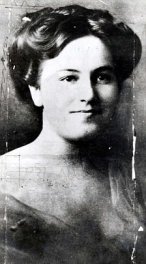
1915: George Joseph Smith, Brides in the Bath murderer

(Thanks to Meaghan Good of the Charley Project for the guest post. -ed.)

On this day in 1915, serial uxoricide George Joseph Smith was hung by the capable John Ellis at Maidstone Prison in the UK.

Smith had committed three murders and various forms of larceny as well; he’d earned his noose several times over.

Two things tend to trip people up when they’ve seemingly committed the perfect crime: either they brag about it to impress others, or they repeat the crime using the same methodology as before, since it worked so well the first time. Either of those actions greatly increases the risk of the criminal’s getting caught.

Smith made the latter mistake. He was in a sense a victim of his own success.

Smith was born on January 11, 1872. His criminal record began when he was sent to a reformatory at nine and served a seven-year sentence. In young adulthood he was in and out of prison on theft- and fraud-related convictions.

His complicated marital career began when he married Caroline Beatrice Thornhill, a domestic servant, in 1898. Smith persuaded her to steal from her employers. Caroline served time in prison as a result, and implicated her husband, who got two years for his role in the thefts.

After George Smith’s release, Caroline thought it wise to put a few thousand miles between herself and her estranged husband, and so she left the UK for Canada. She never filed for divorce, however.

Smith remained legally married to her for the rest of his life, so none of his numerous other marriages were legal.

Unlawfully Wedded …

The guy wasn’t good-looking, but he could charm like any good con artist. A year after his marriage to Caroline, Smith bigamously married another woman. He cleaned out her saving account and then deserted her.

Between 1908 and 1914, he married no fewer than seven additional women, usually under an alias, and deserted most of them after a short time, sometimes only a matter of days — but not before he helped himself to their possessions and bank accounts.

As true crime writer Harold Schechter tells it in his book The Serial Killer Files: The Who, What, Where, How, and Why of the World’s Most Terrifying Murderers:

Smith initially limited himself to scamming gullible spinsters out of their life savings by luring them into bigamous marriages … The moment Smith had his hands on his new bride’s money, he would disappear. Usually telling her he was going out on an errand — to pick up a newspaper or buy a pack of cigarettes — he would never return. On one occasion, he brought his newlywed wife to the National Gallery of Art and, after viewing some paintings, excused himself to go to the bathroom. She never saw him — or her life savings — again.

That particular bride was named Sarah Faulkner. Smith had already plundered £350 in cash from her and her jewelry as well, and while she was waiting for him to return from the loo he was back at their hotel, swiping her clothing and the rest of her money.

The only wife that didn’t fit this pattern was Edith Pegler.

Smith was away from her side for months at a time on “business trips” and when he returned it was always to ask for money, but he never left her for good and they remained together for seven years. As to whether he actually harbored some form of affection for her or whether he just didn’t want to kill his cash cow while it was still milkable, we can only speculate.

Yet all these women were, in a sense, lucky.

Smith may have broken their hearts and taken their cash, but he left them their lives.

… ‘Til Death Do Us Part

The first unlucky wife was Bessie Mundy, whom Smith murdered on July 13, 1912.

They’d married in August 1910, but he left her after persuading her to give him £150 in cash. On the way out the door, he accused her of giving him a venereal disease.

Eighteen months later, Bessie ran into Smith on the street. Somehow, the charmer got his ex to forgive him and resume their relationship.

In fact, Smith wanted to get his hands on Bessie’s £2,500 inheritance, but it was in trust and he couldn’t touch it.

After their reunion, the couple drew up mutual wills, naming each other as beneficiaries. Bessie willed her husband £2,579. Less than a week later, she was mysteriously dead.

Smith rented a house for them in Herne Bay and had a new cast-iron bathtub installed. Tragically, Bessie drowned in the bath. Her husband said he’d been out buying dinner and returned to discover the body.

Since Smith claimed his bride suffered from epilepsy and that she’d had a seizure the day before she died, it was easy to believe she’d simply had an unfortunate accident.

In spite of his newfound wealth, Smith had Bessie consigned to a pauper’s grave and even returned the slightly-used bathtub to the ironmonger for a £1 17s. refund.

This, perhaps, is where Smith might have counted himself lucky and checked out of the homicide business — or at least thought about a different m.o. Instead, hubris and habit got him hanged.

The Brides of Bath murder victims: from left to right, Bessie Mundy, Alice Burnham, and Margaret Lofty.

Next to go was Alice Burnham, who was making a goodly living as a nurse. Smith married on November 4, 1913, and became her widower on December 13.

Alice and her new husband were honeymooning at a seaside boardinghouse in Blackpool when she drowned in the bathtub while he was supposedly out getting eggs.

Smith, who claimed she had a weak heart, had insured her life for £500. She too was buried on the cheap.

Margaret Elizabeth Lofty died in her London home a little over a year later, on December 18, 1914. Newspapers reported she had drowned in the bathtub while her husband — identified as Robert Lloyd — was out buying tomatoes. He and the landlady found the body. Lofty and “Lloyd” had married only the day before and, appropriately enough, the ceremony was performed in the city of Bath.

Although it was initially classified as death by misadventure, Margaret’s murder ultimately lead to Smith’s downfall.

Rotten luck, it was: Alice Burnham’s father read an account of her death in the newspaper and, even though the husband had a different name, he couldn’t help but notice that Margaret’s death was suspiciously similar to his daughter’s.

Joseph Crossley, who was the couple’s landlord at the time of Alice’s death, noticed the same thing. Since both the Burnhams and Crossleys had taken a dislike to Smith from the get-go, they both wrote the police, asking them to open an investigation.

Authorities quickly determined that George Joseph Smith and Robert Lloyd were the same man. They sure had the same playbook.

Margaret had made out a will just hours before she died, naming her husband the sole heir to her estate. She had also withdrawn her life savings from the bank the same day, and three days before she had taken out a £700 life insurance policy on herself, with her husband as the beneficiary. Ka-ching.

When the grieving widower showed up at the insurance office to collect on Margaret’s policy, he was arrested. Lloyd/Smith was initially charged with putting a false name on a marriage certificate, but bigamy and murder charges would follow fast.

When news of the arrest was published, a police chief from Kent read the story and told the London police about Bessie Mundy’s death, which was strikingly similar to the other two.

Forever Hold Your Peace

But how could he could have drowned the women in the tub, without leaving marks of violence on their body?

Margaret had only a small bruise on her elbow. For answers, the police turned to renowned pathologist Bernard Spilsbury. The first thing he did was exhume the bodies to determine whether the women had, in fact, drowned. They had.

After experimenting with the very same bathtub Margaret Lofty died in, he determined how it might have happened. John Brophy, a crime writer, describes it chillingly:

With honeymoon playfulness he would enter the room where his bride was already in the bath, admire her naked beauty, bend over her fondly, and, still murmuring endearments, hold her feet. Suddenly, he would tug her feet upward, jerking her head at the end of the bath, below the water, so that in a few moments she would be drowned with no bruises on the body or other signs of assault or resistance.

Effective. Actually, you can see why he stuck to his system.

When Smith went to trial, it was only for the murder of Bessie; British law didn’t permit him to be tried for multiple murders in one go. However, the prosecution wanted to bring evidence in the Lofty and Burham deaths into the trial, arguing that they indicated a criminal “system.”

The judge allowed it, setting a precedent that would be used in later criminal cases.

In pretrial investigations later described in court, Spilsbury demonstrated his murder theory using Bessie’s bathtub and a female police officer in a bathing suit. It worked all too well: she lost consciousness immediately and they had to drag her out of the tub and perform artificial respiration to revive her.

No wonder the jury was only out for twenty-two minutes before it delivered a guilty verdict.

Caroline Thornhill, Smith’s legal wife, returned to Britain for his trial. She married a Canadian soldier the day after his execution.

The “Brides in the Bath” case has remained vividly alive in British memory.

The historian Harold Nicholson compared Smith’s behavior to Adolf Hitler’s in his 1939 book, Why Britain is at War; Smith was mentioned in novels by Evelyn Waugh, Agatha Christie and Dorothy Sayers, and in 1952 the case was made into an episode for the true-crime radio show The Black Museum.

[audio:http://www.archive.org/download/OTRR_Black_Museum_Singles/BlackMuseum-03-TheBathTub.mp3]

More recently, in 2003 the murders were featured into made-for-TV movie called The Brides in the Bath.

Warning: Video contains NSFW naked ladyparts. Oh, and homicide.

At least two plays, Tryst and The Drowning Girls, are based on the story. In 2010, the author Jane Robins published a book about the case, called The Magnificent Spilsbury and the Case of the Brides in the Bath.

Part of the Themed Set: Branded.

On this day..

1828: William Corder, for the Red Barn Murder


This nostalgic emblem of bygone pastoral idylls doubles as a great place to dump a body. (cc) image from boodie131.

This date in 1828, throngs of thousands at Bury St. Edmunds saw the climax of the Red Barn Murder case in the form of the public hanging of William Corder.

This broadside blockbuster got its start in a Suffolk village, where a local ladies’ man and his paramour plotted a rendezvous at the titular shed for the purpose of elopement — she having become pregnant by the young man’s offices.

When the meeting was over, Corder had vanished from town … and Maria Marten had just plain vanished.

Almost a year later, Maria Marten’s stepmother began reporting dreams that the poor girl had been murdered and stashed in the barn. And sure enough, when they searched it, there lay Maria — with William Corder’s handkerchief around her neck. Corder was found in London living with his new wife.

(About the stepmom: she was just a year older than her “daughter”, and considering her essential role in divining the body’s location, has to be considered suspect herself. It’s not too hard to picture her as Maria’s rival for the tomcatting Corder. She never faced any charges, though.)

In a standing-room-only trial that commenced a mere four days before the hanging — papers reported shortages of post-horses owing to the influx of rubberneckers — Corder failed to persuade anyone that he merited the least bit of mercy with his cockamamie story that Marten done shot herself through the eye.* He was doomed by the jury with 35 minutes’ deliberation.

The Red Barn murder is one of dozens in Judith Flanders’ The Invention of Murder (Review)

The London Times (Aug. 11, 1828) waxed unctuously pleased with this circumstance.

We congratulate the country on a manifest improvement in the condition of its moral feeling, since the sickly sensibility of the press, and of the multitude to whose foul taste it ministered, was wont to declare itself on the side of ruthless and treacherous murder, and to stifle at once every movement of honest compassion for the victim, and all reverence for the principles by which justice is vindicated and human society held together.

Another base ruffian has now equalled or exceeded Thurtell in guilt, and is about to follow him in the experience of lawful retribution. To the honour of the people, we have not yet heard one ejaculation of unnatural pity for the miscreant who deliberately butchered the mother of his infant on pretence of accompanying her to the altar. Corder has united in this one deed of horror — if it be his only one — whatever the heart revolts at most in the conduct of man to woman. He seduced — then betrayed — then massacred the wretched creature, in cold blood; and providential were the means of his detection, as his crime was hateful to God and man.

Why will not unhappy females bethink themselves before it be too late, that he who is depraved enough to corrupt their innocence, has already made no small advance in that course which ends too often in his exacting from them the only remaining sacrifice?

Corder left the scaffold just as he had reached it, corrupting females all the way down.

Seated on a wall, which gave a commanding view of the whole scene, were several ladies, dressed in the first style of fashion. I mention this fact because it shows the intense curiosity prevalent in this county respecting every action of Corder: for nothing else could have brought respectables females to behold a catastrophe so uncongenial with the usual kindness and benevolence of the female character.

–London Times, Aug. 12, 1828

An account of the trial is long since in the public domain and available free from Google books; especially recommended is the collection of dozens of Victorian-Craigslist notes Corder received when he advertised for a wife upon reaching London.

Also of interest: this journal article comparing popular ballads around the case, and even linking to a recorded performance.

As befits such a magnetic public spectacle, Corder’s body was slated for a long afterlife as a macabre totem of the principles by which justice is vindicated.

His corpse was publicly displayed — some 5,000 people are reported to have filed past it — and the hanging rope sold off in increments. Gruesome relics from the case — Corder’s scalp, his death mask, a book bound in his skin — were harvested for exhibition. (Tourists also poured into Corder’s village of Polstead, stripping souvenirs from the red barn and chipping Maria Marten’s gravestone down to the nub.)

The murderer’s skull was one of these trophies, but its owner became convinced it was cursed and had it buried. The rest of Corder was anatomized, as was the style at the time, and its skeleton remained on public display until just a few years ago with that of 18th century crime lord Jonathan Wild.

While the traditional ballads are to be expected …

this venial crime among commoners has sustained popular memory of sufficient longevity to put the Red Barn Murder onto such unanticipated media as the silver screen …

… and Tom Waits’ somber blues/rock.

* Corder confessed before his execution.

Part of the Themed Set: Branded.

On this day..

1573: William Kirkcaldy of Grange, former king’s man

On this date in 1573, William Kirkcaldy of Grange was hanged at Edinburgh. A marker at Edinburgh Castle honors the man who “held this castle for Queen Mary from May 1568 to May 1573 and after its honourable surrender suffered death for devotion to her cause.”

It’s a surprising epitaph.

The fellow’s father, James Kirkcaldy, was one of the realm’s prominent Protestants, and young William worked in France as an English secret agent in the 1550’s while that same Queen Mary held court there as the consort of crown prince turned underprepared child-king Francis II.

After Francis died in 1560, his widow returned to Scotland — not only as Mary, Queen of Scots but as a potential Catholic champion for the throne of England itself.

Kirkcaldy was a natural enemy in a confusing political situation. Scotland in the 1560s slid into civil war between the “Marian” party and the (more Protestant, more pro-English) “king’s men” supporting the regents governing in the name of Mary’s son, James VI.*

As one might expect, Kirkcaldy was a king’s man. He beat Mary in battle in 1567 and took her prisoner, helping force her abdication; after she escaped and had another go at it, he beat her again, and Mary fled to England, never to see Scotland again.

But a funny thing happened to Kirkcaldy on his way to the winner’s circle. In the jockeying that followed Mary’s flight, a fellow pol pulled him over to the Marian party.

Kirkcaldy’s considerable talents now strained themselves for the return of the monarch and the curtailment of the regents. He lost.

When it came again to open conflict, the king’s men (backed by aid from England) trapped Kirkcaldy in Edinburgh Castle and besieged it until the man was forced to surrender to the scanty mercy of his captors and the immortality of that latter-day plaque.

* James is notable in these pages for his adulthood penchant for witch hunting.

On this day..

1947: Three Jewish terrorists and two British hostages

On this date in 1947, three members of an Irgun commando team who had engineered a massive prison break of Zionist terrorists were hanged for the affair.

The Acre Prison Break was a meticulously coordinated operation by the Zionist underground in British Mandate Palestine that, a Conservative MP later charged, “reduced British prestige to a nadir.”

A team of guerrillas attacked the prison from the outside, coordinating with imprisoned Irgun and Stern Gang operatives who had explosives smuggled into their cells to help detonate their way through the walls. Hundreds of prisoners — most of them Arabs availing the opportunity — escaped.

According to the London Times (May 6, 1947), 16 escaping prisoners were slain in the affray, with eight British guards and police wounded.

More crucially for our purposes, five of the guerrillas who assailed the prison were captured. Three — Haviv Avshalom, Yaakov Weiss, and Meir Nakar — were taken armed, and sentenced to death by the British.

To browse the contemporaneous western press coverage is to visit a Holy Land very familiar to the present-day reader, filled with “terrorists” and “extremists” and “fanatics” and “murderers” abetted by “those who incite them from a safe distance and supply the funds and the weapons which they put to such deadly use.”* Except that this discourse was directed at Jews, not Arabs.

One good way to earn such an imprecation would be to kidnap two British soldiers and hold them hostage against the execution of the sentence. That’s exactly what the Irgun did.

The British searched for their men, but disdained to stoop the majesty of the law at the pleasure of some seditious blackmailer. So, early this morning at that same Acre Prison they had lately helped to liberate, Avshalom, Weiss, and Nakar went to the gallows.


Left to right: Avshalom, Weiss, and Nakar.

Palestine awaited with anxiety the expected discovery of two kidnaped British sergeants whom the Irgunists have vowed to kill in retaliation. The Mosaic law of vengeance applies and any show of clemency would be regarded by the extremists as evidence of cowardly submission.

–New York Times, July 30, 1947

The Irgun had already applied that Mosaic law of vengeance.

On the evening of that same July 29, it hanged its two hostages, intelligence corps sergeants Clifford Martin and Marvin Paice. The bodies were moved and strung up in a Eucalyptus grove near Netanya, to be discovered the next day, booby-trapped with a land mine. A scornful note announced their condemnation for “criminal anti-Hebrew activities.”


The bodies of Sgts. Clifford Martin and Marvin Paice, as discovered on July 31, 1947, hanging from Eucalyptus trees.

Moderate, mainline Zionists were horrified.

Of all the crimes that took place till this day on this land, this is the most grievous and disgusting one and will stain the purity of our peoples struggle for freedom. May this act of hanging remain as a sign of Cain on the doers of this disgraceful deed! The heavens and the earth are my witnesses that most of our population took desperate measures to free the hostages and prevent this shame.

-Netanya Mayor Oved Ben Ami

Said disgraceful deed-doers were far from apologetic.

And you could say they had a point, since although the threat did not prevent the death sentences at hand from being carried into execution, its example proved to be a lively deterrent: Avshalom, Weiss, and Nakar were the last Zionists executed by the British. Then-Irgun leader, and later Israeli Prime Minister, Menachem Begin made no bones about the trade.

The Brits were a little less sanguine about “the sergeants affair”.

A Times editorial for Friday, Aug. 1 fulminated against “the violent deeds of the Palestine terrorists [that] will not readily be effaced,” comparing them to “the bestialities practised by the Nazis themselves.”**

Over the ensuing long weekend’s summer bank holiday, racist riots against Jews shook Britain. Jewish businesses, cemeteries, and synagogues were smashed up and vandalized all over the island, to the horror this time of milquetoast liberals like the Manchester Guardian, with again-familiar lines like: “to answer terrorism in Palestine with terrorism in England is sheer Hitlerism. We must be desperately careful to see that we do not let ourselves be infected with the poison of the disease we had thought to eradicate.”

Fine points for debate in Britain, which within months was bugging out of the Levant as open war engulfed Palestine — the violent birth pangs of modern Israel and its embrace of its own subject populace with its own frustrated national ambitions pursued by its own violent extremists.

* London Times editorial, May 21, 1947.

** Irgun propaganda’s riposte: “We recognize no one-sided laws of war. If the British are determined that their way out of the country should be lined by an avenue of gallows and of weeping fathers, mothers, wives, and sweethearts, we shall see to it that in this there is no racial discrimination.”

On this day..

Unspecified Year: Tess of the d’Urbervilles

On an unspecified July date in an unspecified late-19th century year, the title character of Thomas Hardy‘s Tess of the d’Urbervilles was hanged for murder.

Recent film adaptations of Tess of the D’Urbervilles. The book is available free from Gutenberg.org.

The heroine, “goodness made interesting” — or “A Pure Woman Faithfully Presented,” in the words of the subtitle — has been torn between the man she loves, Angel Clare, and one she loathes, Alec d’Urberville. Alec’s early, unwelcome attentions lead him to forcibly deflower young Tess, and the revelation that she is not a virgin ultimately shatters her prospectively happy marriage to Angel.

Years later, Angel returns from seeking his fortune in Brazil to find Tess miserably wed to her onetime rapist. But no sooner has Tess sent Angel away than she chases him down in the streets of Sandbourne.

“Angel,” she said, as if waiting for this, “do you know what I have been running after you for? To tell you that I have killed him!” A pitiful white smile lit her face as she spoke.

“What!” said he, thinking from the strangeness of her manner that she was in some delirium.

“I have done it — I don’t know how,” she continued. “Still, I owed it to you, and to myself, Angel. I feared long ago, when I struck him on the mouth with my glove, that I might do it some day for the trap he set for me in my simple youth, and his wrong to you through me. He has come between us and ruined us, and now he can never do it any more.”

The two flee together overland, intending to wait out the search that must pursue them and slip away to a ship. They have a few days’ idyllic refuge in an abandoned house, and at once blissful and tragic, Tess foreshadows her fate:

“I fear that what you think of me now may not last. I do not wish to outlive your present feeling for me. I would rather not. I would rather be dead and buried when the time comes for you to despise me, so that it may never be known to me that you despised me.”

Finally forced to move on, they cinematically take their rest at Stonehenge — Tess literally sleeping on an altar.


One of the illustrations of the original serialized version of Tess.

There they are captured — on a pagan shrine, their love long frustrated in its licit form, at last fulfilled on the lam. (“Fulfillment” is the title of the novel’s last section.)

Hardy wastes no words on his heroine’s travail with the judiciary, which is merely inexorable.

The city of Wintoncester, that fine old city, aforetime capital of Wessex, lay amidst its convex and concave downlands in all the brightness and warmth of a July morning. The gabled brick, tile, and freestone houses had almost dried off for the season their integument of lichen, the streams in the meadows were low, and in the sloping High Street, from the West Gateway to the mediæval cross, and from the mediæval cross to the bridge, that leisurely dusting and sweeping was in progress which usually ushers in an old-fashioned market-day.

From the western gate aforesaid the highway, as every Wintoncestrian knows, ascends a long and regular incline of the exact length of a measured mile, leaving the houses gradually behind. Up this road from the precincts of the city two persons were walking rapidly, as if unconscious of the trying ascent — unconscious through preoccupation and not through buoyancy. They had emerged upon this road through a narrow, barred wicket in a high wall a little lower down. They seemed anxious to get out of the sight of the houses and of their kind, and this road appeared to offer the quickest means of doing so. Though they were young, they walked with bowed heads, which gait of grief the sun’s rays smiled on pitilessly.

One of the pair was Angel Clare, the other a tall budding creature — half girl, half woman — a spiritualized image of Tess, slighter than she, but with the same beautiful eyes — Clare’s sister-in-law, ‘Liza-Lu. Their pale faces seemed to have shrunk to half their natural size. They moved on hand in hand, and never spoke a word, the drooping of their heads being that of Giotto’s “Two Apostles”.

When they had nearly reached the top of the great West Hill the clocks in the town struck eight. Each gave a start at the notes, and, walking onward yet a few steps, they reached the first milestone, standing whitely on the green margin of the grass, and backed by the down, which here was open to the road. They entered upon the turf, and, impelled by a force that seemed to overrule their will, suddenly stood still, turned, and waited in paralyzed suspense beside the stone.

The prospect from this summit was almost unlimited. In the valley beneath lay the city they had just left, its more prominent buildings showing as in an isometric drawing — among them the broad cathedral tower, with its Norman windows and immense length of aisle and nave, the spires of St Thomas’s, the pinnacled tower of the College, and, more to the right, the tower and gables of the ancient hospice, where to this day the pilgrim may receive his dole of bread and ale. Behind the city swept the rotund upland of St Catherine’s Hill; further off, landscape beyond landscape, till the horizon was lost in the radiance of the sun hanging above it.

Against these far stretches of country rose, in front of the other city edifices, a large red-brick building, with level gray roofs, and rows of short barred windows bespeaking captivity, the whole contrasting greatly by its formalism with the quaint irregularities of the Gothic erections. It was somewhat disguised from the road in passing it by yews and evergreen oaks, but it was visible enough up here. The wicket from which the pair had lately emerged was in the wall of this structure. From the middle of the building an ugly flat-topped octagonal tower ascended against the east horizon, and viewed from this spot, on its shady side and against the light, it seemed the one blot on the city’s beauty. Yet it was with this blot, and not with the beauty, that the two gazers were concerned.

Upon the cornice of the tower a tall staff was fixed. Their eyes were riveted on it. A few minutes after the hour had struck something moved slowly up the staff, and extended itself upon the breeze. It was a black flag.

“Justice” was done, and the President of the Immortals, in Aeschylean phrase, had ended his sport with Tess. And the d’Urberville knights and dames slept on in their tombs unknowing. The two speechless gazers bent themselves down to the earth, as if in prayer, and remained thus a long time, absolutely motionless: the flag continued to wave silently. As soon as they had strength, they arose, joined hands again, and went on.

Among the numerous potential inspirations for the character of Tess was a woman we have already met in these pages: Elizabeth Martha Brown, an battered wife who slew her husband. The teenaged Hardy saw her publicly executed one rainy morning in Dorset in 1856.

On this day..

1588: Nicholas Garlick, Robert Ludlam, and Richard Simpson

On this date in 1588, three Catholic priests were hanged, drawn, and quartered at St. Mary’s Bridge in Derbyshire.

Though we find Catholic proselytizers at risk of their lives throughout the Elizabethan period, at few moments was the profession of the Old Faith more fraught than during the summer of 1588.

Elizabeth’s Catholic rival Mary, Queen of Scots had lost her head just the year before, having been the focal point of one too many Catholic plots to overthrow Elizabeth. England’s support for Dutch Protestants rebelling against Spain had drawn the Spanish Armada, a feared invasion force even at this moment beginning to engage the English navy a couple of weeks ahead of its ultimate defeat. Even the French Wars of Religion were running white-hot, with an ultra-Catholic pogrom in Paris that spring.

If ever the wrong religion constituted treason, this was the time.

This also made it a great moment for zealous local authorities to crack down on suspected Catholics. When that happened in Derbyshire, a raid of a recusant‘s property (prompted by a tip from the target’s nephew) turned up two Popish clerics living in the lovely medieval manor house on-site, Padley Chapel.


Padley Chapel. (cc) image from kev747.

Fathers Nicholas Garlick and Robert Ludlam were condemned within days to a traitor’s death for endeavoring to “seduce” the Queen’s subjects to Catholicism.* Their few hours left in this vale of tears were sufficient to firm the resolve of a wavering fellow-priest, Richard Simpson, who joined Garlick and Ludlam on the scaffold.

A hagiography of these men — they have all since been beatified — notes that the less steely Simpson “suffered with great constancy, though not with such (remarkable) signs of joy and alacrity as the other two.” But considering he was out there getting disemboweled for God and you’re just sitting around reading some blog, you probably ought to cut him a little slack.

When Garlick did the ladder kiss,
And Sympson after hie,
Methought that there St. Andrew was
Desirous for to die.

When Ludlam lookèd smilingly,
And joyful did remain,
It seemed St. Stephen was standing by,
For to be stoned again.

And what if Sympson seemed to yield,
For doubt and dread to die;
He rose again, and won the field
And died most constantly.

His watching, fasting, shirt of hair;
His speech, his death, and all,
Do record give, do witness bear,
He wailed his former fall.

There are still pilgrimages made in honor of the “Padley Martyrs” every year on the anniversary of the priests’ arrest, July 12.

* Garlick, at least, had been a specific target of priest-hunters for some time; he appears in reports to Francis Walsingham‘s spy network, where he is once accursed as “the demonite,” presumably for taking part in some well-publicized exorcisms in 1585-1586. (These exorcisms seem to be reflected in Shakespeare’s King Lear.) There’s a very large pdf touching the “demonite” reference: a scan of the public-domain 19th century tome The Troubles of our Catholic Forefathers.

On this day..

1403: Thomas Percy, Earl of Worcester

On this date in 1403, Henry IV made sauce of the Earl of Worcester after the Battle of Shrewsbury.

Thomas Percy was the uncle of northern rebel Sir Henry Percy, evocatively known as “Hotspur”.*


Rampant: statue of Hotspur Harry Percy at Northumberland’s Alnwick Castle. (cc) image from Bootneck Photography.

This Northumberland lord, whose name hints at his reputation for for ferocity and impetuousness, was not necessarily incensed in principle at Henry Bolingbroke‘s usurpation of the English crown as Henry IV. In fact, he took an appointment to put down the anti-Lancastrian rebellion of Welsh troublemaker Owain Glyndwr. (Percy didn’t succeed.)

But this royal imposter didn’t pay off Percy richly enough in either coin or respect.

Hotspur left Wales to whomp the Scots at the Battle of Humbleton Hill, but King Henry’s demand that he turn over the big-name prisoners taken in that battle (instead of ransoming them for profit) — coupled with Henry’s own refusal to ransom Hotspur’s brother-in-law Edmund Mortimer from Welsh captivity — provoked a furious row between “king” and “subject”. Henry IV is supposed to have denounced Henry Percy a traitor and drawn a blade on him.

“Not here,” Hotspur raged, “but in the field!”

Alas: the field wasn’t kind to the Percies this time.

A revolt raised by a guy named Hotspur should hardly fail for want of ambition, and this one was the hottest of spurs: the Percies (with our day’s principal, Uncle Worcester) made a pact with Glyndwr (still going strong in Wales) and Glyndwr’s hostage-turned-son-in-law Edmund Mortimer (who was the uncle of the kid who should have been king) to give Bolingbroke the boot and carve up the realm between them.

Shakespeare represents this argument at the start of Henry IV, Part 1, and the conflict it engenders will drive that play’s story. This is Hotspur privately fuming after Henry has refused to help Mortimer (Act I, Scene 3):

let my soul
Want mercy, if I do not join with him: [i.e., Mortimer]
Yea, on his part I’ll empty all these veins,
And shed my dear blood drop by drop in the dust,
But I will lift the down-trod Mortimer
As high in the air as this unthankful king,
As this ingrate and canker’d Bolingbroke.

Orson Welles’ Chimes at Midnight abridges this and several other Shakespeare plays, and its opening action — after the Falstaff and credits — sets our stage. Worcester here is played by French Connection villain Fernando Rey.

Shrewbury was the result, a battle that up to the moment it commenced seemed amenable to mediation. Worcester himself negotiated face to face with King Henry, but refused to submit himself trusting the sovereign’s mercy. “On you must rest the blood shed this day,” Henry told him.

Some of that blood was Hotspur’s, as a result of a freak combat injury: he took a fatal arrow to the face when he raised his armor’s visor to get some air.**

Worcester didn’t outlive him by much — as depicted in Act V, Scene 4, he was summarily executed shortly after the battle:

KING HENRY IV

Thus ever did rebellion find rebuke.
Ill-spirited Worcester! did not we send grace,
Pardon and terms of love to all of you?
And wouldst thou turn our offers contrary?
Misuse the tenor of thy kinsman’s trust?
Three knights upon our party slain to-day,
A noble earl and many a creature else
Had been alive this hour,
If like a Christian thou hadst truly borne
Betwixt our armies true intelligence.

EARL OF WORCESTER

What I have done my safety urged me to;
And I embrace this fortune patiently,
Since not to be avoided it falls on me.

KING HENRY IV

Bear Worcester to the death and Vernon too:
Other offenders we will pause upon.

(Vernon was one of two knights executed with Worcester in Shrewsbury.)

* Yes, the English football club Tottenham Hotspur is named for the dashing Henry Percy. “Audere Est Facere” is the team’s motto, “to dare is to do” … even though that totally didn’t work out for Hotspur himself.

** Oddly enough, Hotspur’s opposite number Prince Henry (the future victor of Agincourt, Henry V), also got shot in the face in this battle.

On this day..

1915: Private Herbert Burden, memorial model

On this date in 1915, Private Herbert Burden was shot for desertion — at age 17, still too young to even legally enlist in the Northumberland Fusilliers he’d deserted from.

This teenager rashly joined up at the outbreak of hostilities, fudging his age up by two years to qualify. It’s more than likely that he, and his real age, were known to the recruiters who signed him up. (He wasn’t the only child soldier in that war.)

A few months on into this less-noble-than-advertised perdition, with friends and comrades becoming burger meat all around him at the dreadful Battle of Bellewaarde Ridge,* the kid panicked and ran.

Burden is the “model” for the memorial statue a later, more soft-hearted British Empire put up in 2001 commemorating 306 British and Commonwealth soldiers shot during the first World War for desertion and cowardice.

* Here’s a book about an Irish battalion that was nearly annihilated in the battle.

Shot at Dawn memorial/Herbert Burden likeness photo (cc) Noisette.

On this day..

1776: Jamaican slave rebels

In our late constant disputes at our tables (where by the by every Person has his own waiting man behind him) we have I am afraid been too careless of Expressions, especially when the topic of American rebellion has been by the Disaffected amongst us, dwelt upon and brandished of with strains of Virtuous Heroism.

…

what mind of a Slave will not recoil and burn into Resentment; when he shall have been the frequent witness of Sedition and Ingratitude in the Conduct of his Master — when he shall hear the Obligation of a subject to his Lord spurn’d at — the Blood spilt by Rebells extoll’d … Obedience to Laws and Authority upon all these Occasions mentioned with a strong Idea of Slavery. And Men toasted into Immortal Honours for Encountering Death in every form, rather than submit to Slavery let its Chains be ever so gilded.

Dear Liberty has rang in the heart of every House-bred Slave, in one form or other, for these Ten years past — While we only talk’d about it, they went no farther than their private reflections upon us & it: but as soon as we came to blows, we find them fast at our heels. Such has been the seeds sown in the minds of our Domestics by our Wise-Acre Patriots.

–Rev. John Lindsay, Hanover Parish, Jamaica

On July 3, 1776, as tensions between the North American colonies and England came to a head, the garrison at Hanover, Jamaica sailed from Lucea to reinforce General William Howe.

The departure of this regiment was the pre-arranged signal for the parish’s slaves — both imported Coromantee and, more ominously for the slaveholder, the generally less-rebellious Creoles — to mount a general rising.

The only reason it didn’t happen was because it was sniffed out — after the regiment left, but before the date planned out by slaves passing word from estate to estate.

For a century or so, lucrative sugar and coffee cultivation on the island (and elsewhere around the thought to have been imported to Jamaica before the slave trade was abolished in 1808.

Planters reaped stupendous profits from this harvest of misery, but perpetually stood in danger of reaping the whirlwind, too. At the time of the intended rebellion, there were 20 or more slaves for every white around Hanover. A Hanover militia officer said in the days after the plot was uncovered that he was “deeply Concerned in the Intended Insurrection, the Number of the Troop is small and the Duty severe, Our apprehensions are great upon the occasion as we know not where it will end.” As the number of implicated slaves mounted past 100, a planter lamented that “there appears to be no end to this horrid affair.”

As jumpy as they were, the authorities managed to keep a lid on this situation through the usual methods, which gives this site its excuse to notice the affair.

We have try’d — found Guilty and Executed Yesterday the following Conspirators, Blue Hole Harry, and Leander of the Spring Estate, Charles of the Baulk, Peter of Batchelors Hall, Prince belonging to John Priest of Lucea, and Quamino to Sir Simon Clarke, these are the Chief Ring-leaders and the most Active in Promoting the Intended Insurrection and We propose proceeding tomorrow in trying the Other Chiefs.

-Report to Sir Basil Keith from the magistrates of Hanover, Jamaica, July 20, 1776

Slavery persisted in Jamaica, dogged by regular rebellions, for another 57 years, until Samuel Sharpe’s revolt helped finally convince Parliament to ban it. Whether that past is really past … that’s another question.

For more, see Richard B. Sheridan, “The Jamaican Slave Insurrection Scare of 1776 and the American Revolution,” The Journal of Negro History July, 1976, which is the source of the quotes in this article.

On this day..

1798: Henry Joy McCracken

On this date in 1798, Henry Joy McCracken was hanged by the British for that year’s Irish Rebellion.

The Belfast Presbyterian and cotton trader co-founded the republican Society of United Irishmen in 1791, and spent that revolutionary decade trafficking in ideas that the British crown did not approve at all.

He got busted in 1796 for his radical politics, but ill health prompted his release from prison shortly before the misfortunately ill-organized rising.

McCracken led an attack on Antrim — he dated his call to arms with a French Revolution-esque calendar reboot, “the first year of liberty” — but lost the fight and was captured a few weeks later.

He spurned offers of clemency in exchange for informing on his comrades and was parted at the gallows from his sister, Mary Ann McCracken — herself one of Ireland’s best renowned social reform activists. (She lived to the ripe old age of 96, a furious anti-slavery activist to the end.)

Say what you will about those Irish Republican revolutionaries, they know how to commemorate a body in song:

On this day..