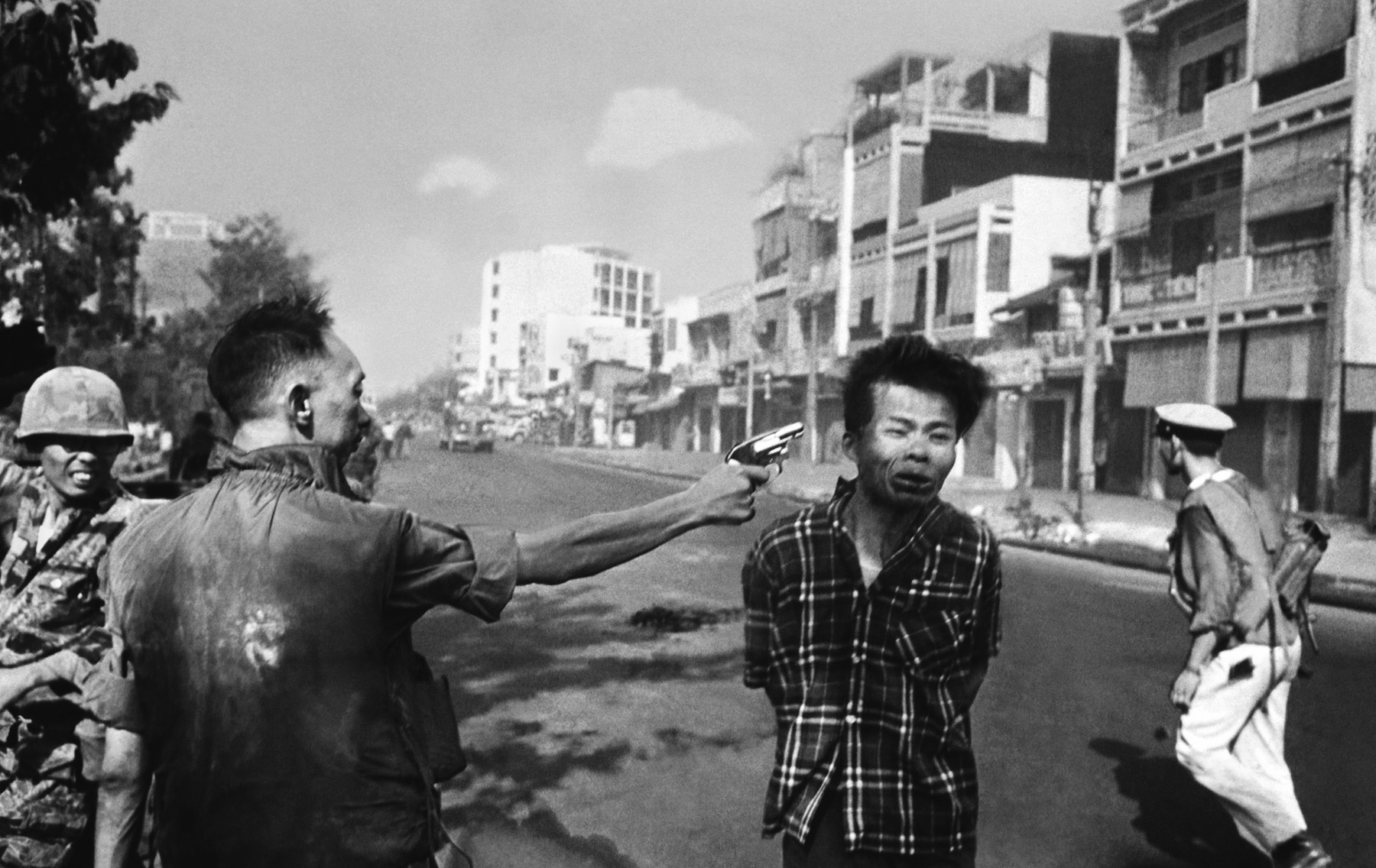
1948: Witold Pilecki, Auschwitz infiltrator

On this date in 1948, Polish resistance hero Witold Pilecki was shot by Poland’s Communist government for a variety of subversions.


Witold Pilecki as an officer (top), imprisoned in Auschwitz (middle), and at his fatal trial (bottom).

A former cavalry officer turned Home Army figure,* Pilecki authored one of the Great War’s most daring (and oddly obscure) covert escapades. In 1940, he volunteered to infiltrate Auschwitz — whose operations were then largely opaque to the Polish resistance — and allowed himself to be rounded up by the Gestapo.

Pilecki spent 31 months in the notorious concentration camp, organizing an inmate resistance network and shipping intelligence about the camp’s operations to the Polish resistance and (through them) the western Allies.

Though his pleas for a raid to liberate Auschwitz were in vain, Pilecki’s report catalogued the today-familiar horrors of the camp.

One bit, as it turned out, was a bit of foreshadowing.

The fourth and most heavy kind of punishment was an execution by shooting: death effected quickly, how much more humane and desired by those undergoing torture. “Execution” is not the right term; the right one would be “shooting dead,” or just “killing.” … The butcher Palitsch** — a handsome boy, who did not used to beat anybody in the camp, as it was not his style, was the main author of macabre scenes in the courtyard. Those doomed stood naked in a row against the Black Wall, and he put a small calibre rifle under the skull in the back of their heads, and put an end to their lives.†

Pilecki escaped Auschwitz in 1943, rejoined the Home Army, and had the good fortune to wind up in Italy at war’s end.

Instead of retiring to write his memoirs, he slipped back into Poland to spy on the postwar Communist government … but the man who had lived through Nazi internment couldn’t pull the same trick on the reds, who were in the process of rooting out anti-Communist resistance elements.

Polish Prime Minister (and fellow Auschwitz survivor) Jozef Cyrankiewicz provided testimony against Pilecki in his show trial (Polish link) on espionage and arms charges.

Pilecki was executed May 25, 1948, at Warsaw’s Mokotow Prison just as he had seen so many killed at the Black Wall — with a single shot to the back of the head.

Pilecki was posthumously rehabilitated by the post-Cold War Polish government, and honored with the country’s highest decoration

* Pilecki co-founded an early resistance organization, the Secret Polish Army (Tajna Armia Polska, or TAP), subsequently absorbed by the Home Army.

** Gerhard Palitsch — or Palitzsch — was a notorious SS roll-call man thought to have personally executed some 20,000 people in the manner described by Pilecki.


An illustration of Gerhard Palitsch executing prisoners at the Black Wall, by Polish inmate Jan Komski

Disliked by camp commandant Rudolph Hoess, Palitsch’s proclivity for taking inmate mistresses eventually got him busted for race defilement, whereupon he himself landed in the camp’s confinement, obliged to “[beg] inmates who used to tremble before him for bread.” (People In Auschwitz)

He was not for the ovens or the Nuremberg trials, however, and instead found himself mustered to the eastern front, eventually dying in action against the Red Army in Hungary. This page (in Polish) assembles various inmate recollections of Gerhard Palitsch.

† As the translation in the cited source is a tad uneven, I’ve taken the liberty of cleaning it up a bit.

On this day..

1826: Matthew Brady, gentleman bushranger

On this date in 1826, “gentleman bushranger” Matthew Brady was hanged in the Hobart jail for one Australia’s most colorful outlaw careers.

Shipped from England on penal transportation, Matthew Brady was repeatedly flogged for escape attempts before he successfully busted out of Macquarie Harbour prison in 1824.

He made for the bush and began an 18-month spell as an outlaw, self-consciously constructing the persona of the gentleman outlaw — polite to his victims, never violent towards women, that sort of thing.

Among Brady’s best-known exploits: after the colonial governor George Arthur posted a reward for his capture, Brady posted a public counter-offer:

It has caused Matthew Brady much concern that such a person known as Sir George Arthur is at large.
Twenty gallons of rum will be given to any person that can deliver his person to me.

The authorities hunted him doggedly, and he was at last captured by settler John Batman, later famous for his founding role in the history of Melbourne.

The love letters and gifts that filled his cell attested his place in the folklore, but his fate was never in question. Ever the gentleman, Brady’s main protest was sharing his scaffold with (among several other bushrangers) the murderous cannibal Mark Jefferies.

On this day..

1865: Not George S.E. Vaughn

On this date in 1865, Abraham Lincoln had a date for Ford’s Theater — and with John Wilkes Booth’s single-shot Derringer pistol.

Abraham Lincoln was famous for his clemencies.

But Honest Abe had one last order of business to attend to before his carriage called him away to destiny: the pardon of a convicted Confederate spy due to be shot in St. Louis two days hence. Lincoln’s handwritten clemency for George Vaughn was the last official act of his presidency.

Lincoln in Story (“The Life of the Martyr-President told in Authenticated Anecdotes,” a light 1901 volume for popular consumption) relates:

Before the war Vaughn, with his wife and children, lived in Canton, Mo. He was a friend of Martin E. Green, a brother of United States Senator James S. Green, both strong pro-slavery men. At the opening of the war Martin E. Green recruited a regiment and received a colonel’s commission from the Confederate Government. George Vaughn enlisted under Green’s command and fought through the war.

After a period of fighting, Green and Vaughn crossed into Mississippi from Tennessee, camping at Tupelo, Miss. Not having heard from his family, Green was anxious to hear from his old home, so he delegated Vaughn to go on the mission of delivering letters to his wife.

Vaughn had almost completed his trip, having reached La Grange, six miles south of Canton, when he was captured by a squad of Federal troops.

They searched his person, and, finding letters and papers concealed about him, he was tried as a spy and sentenced to be shot. John B. Henderson, Senator from Missouri, finally succeeded in getting an order from the President for a retrial, but the verdict remained as hitherto. Again Henderson appealed to Lincoln, who granted a third trial, with the same result.

Henderson was not disconcerted, and again went to Lincoln. It was on the afternoon of April 14, 1865 — a melancholy date — that the Senator called at the White House. He called the attention of Lincoln to the fact that the war was practically closed, and said: “Mr. Lincoln, this pardon should be granted in the interest of peace and conciliation.”

This story gravitates naturally to the clemency of “the Great Heart” (as, for instance, D.W. Griffith called Lincoln). Far be it from us to say otherwise, but this is also self-evidently a story of the unusual prerogatives of the well-connected: not just any accused spy could get two trial do-overs and then a pardon free and clear ordered straight from the White House.

Mr. Lincoln replied: “Senator, I agree with you. Go to Stanton and tell him this man must be released.”

Henderson went to the office of the Secretary of War. Stanton* became violently angry, and swore that he would permit no such procedure.

Vaughn had but two days to live, and Henderson hastened to make one more stand. After supper he went to the White House. The President was in his office, dressed to go to Ford’s Theatre, when the Senator entered and told of the meeting he had had with Stanton.

Lincoln turned to his desk and wrote a few lines on an official sheet of paper. As he handed it to Senator Henderson he remarked: “I think that will have precedence over Stanton.”

It was an order for an unconditional release and pardon — the last official paper ever signed by Abraham Lincoln.

Lincoln was dead within hours. Vaughn passed away in 1899 in Maryville, Mo.

* Stanton is supposed to have delivered the remark as Lincoln’s deathbed, “now he belongs to the ages” … an alleged epitaph whose actual content is subject, like all biography, to textual uncertainty and ideological redefinition.


Update: The excellent tale of a different soldier pardoned on this same date has recently been debunked by the National Archives in an academic scandal: in January 2011, researcher Thomas Lowry confessed to altering the pardon order for one Patrick Murphy from the true (and much less dramatic) date of April 14, 1864 to April 14, 1865.

Vaughn was actually pardoned just before Lincoln went to Ford’s Theater; Murphy (totally unconnected to Vaughn) was pardoned 365 days prior.

On this day..

1699: William Chaloner, Isaac Newton’s prey

(Thanks to Thomas Levenson of the Inverse Square Blog. Prof. Levenson is head of the Graduate Program in Science Writing at MIT, and author of the forthcoming Newton and the Counterfeiter.)

Early in the morning of March 22, 1699, William Chaloner raged.

Chaloner, a convicted coiner, refused the Newgate Jail Chaplain’s plea to show proper penitence, shouting with “more Passion than Piety,” of his wronged state and unmerited destination (according to his anonymous biographer in the one surviving account of his life). In time, he calmed sufficiently to accept the sacrament, and so proceeded to the execution convoy to be borne from Newgate to the hanging tree at Tyburn (now Marble Arch, just to the west of the old City of London).

There Chaloner’s fury mounted again, and he shouted to the crowd, drawn as always to the spectacle of public hanging days, that “he was murder’d … under pretence of Law.” He mounted the ladder to the top of Tyburn’s gibbet. He prayed, and then pulled the hood over his eyes without aid. When the moment came, the executioner’s men pulled the ladder out of the way and Chaloner dangled, twitching and jumping (the “hangman’s dance”) as long as it took –- minutes, at least — for life to choke out of him. Richer men often paid the hangman to pull on their legs to speed death. Not the destitute Chaloner. He had to choke till he drooped, to the greater amusement of the crowd.

The investigator who had sent Chaloner to the noose was not present; or at least nowhere in his copious notes and letters did he admit to curiosity about the fate of a man whose pursuit occupied him for almost three years. The Warden of His Majesty’s Mint had more pressing duties to perform, and so Isaac Newton allowed the date of Chaloner’s death to pass unmarked.

Isaac Newton? That Newton?
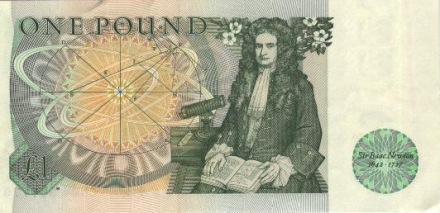

Appropriately, Newton himself wound up on the currency.

The accidents of place and time that brought the man who was recognized in his own day as the greatest mind of the age into conflict with Chaloner, an uncommonly gifted common criminal have fascinated me since I first learned of them through reading Chaloner’s last, piteous letter to the implacable Newton, written days before the hanging. In it Chaloner begged, writing “O dear S[i]r nobody can save me but you O God my God I shall be murderd unless you save me.”

What I wanted to answer was the obvious question: how and why did Isaac Newton come to pass judgment on the life of any other man? I had always thought of him as the nearly cloistered scholar of Trinity College, Cambridge, his home for more than thirty years. It was there he performed the experiments and the calculations that led him, in 1687, to write his masterwork, Philosophiae naturalis principia mathematica the Mathematical Principles of Natural Philosophy — better known simply as the Principia -– as well as pursuing his decades-long program of alchemical research.

So how, I wondered, did he end up in London, wallowing in the muck with the capital’s criminal underground?

Not to put too fine a point on it, finding out has turned into a book Newton and the Counterfeiter, published by Houghton Mifflin Harcourt and scheduled for release on June 4. But, to anticipate that longer story, here is the gist: Newton, after Principia found himself an international celebrity, and, as one of Cambridge University’s representatives to the Convention Parliament of 1689 that legitimized William of Orange‘s seizure of the English throne from the deposed Stuart King James II, he had nearly a year to enjoy the acclaim of London and Europe’s thinking and political elites before returning to the quiet of Cambridge, then a small town of about 5,000 inhabitants. It was an intellectual backwater too, especially compared to the big city in which he encountered figures like Robert Boyle, John Locke, Robert Hooke (whom he despised), Samuel Pepys (whom he did not) and so on. So he started, with Locke’s help, to seek a patronage appointment that would allow him to live comfortably in London. It took six years to find the right one, but ultimately he was offered the Warden’s post at the Mint. That job was supposed to be a sinecure, a nearly no-show position that would pay him a very comfortable wage.

And so it would have turned out were it not for the terribly debased state of England’s silver coinage, which had deteriorated to about half its legal weight for a whole host of reasons. So Newton arrived at a time when (a) the Mint was attempting to recall and recoin the entire stock of silver money for the entire country –- all the smaller units of money essential to everyday transactions –- and (b) coining, counterfeiting, was flourishing as enterprising men and women set out to get rich by filling in the gaps in the money supply with coins that never felt the stamp of an official Mint die. As Warden, it became Newton’s duty to see that legal money was produced fast and fairly, and to pursue all those who set up on their own.

Of those who did none were more technically skilled or ambitious than William Chaloner. His is a fascinating story, told at much greater length in my book, in which you see the currents of rapid economic change, class and ambition all converge within this one, barely remembered life. He was born desperate poor, a weaver’s son in Lincolnshire. He ran from his first apprenticeship to London, where he started out at the very bottom of the criminal ladder, hawking porn on street corners. He rose rapidly, first with his clearly impressive gift of gab, and then, after falling in with someone who knew how to gild surfaces, as the central figure in a series of ever grander schemes to counterfeit gold and silver money. He had sidelines as an informer, betraying conspiracies that he would himself set up, but his central gift and fascination was in the creation of fakes. Ultimately, he was one of the first to recognize the power of paper, and he started to counterfeit a variety of the early experiments with paper money and bank instruments.

In this sense Chaloner’s career –- and Newton’s urgent pursuit of him –- offer a window into the birth of the modern idea of money, of finance. And one of the things that fascinated me about this case is the degree to which this old story tracks some of our immediate problems. England’s and Europe’s economies were in rapid revolution in the late seventeenth century. The old idea of money as a chunk of metal with a pretty picture on it could no longer come close to accommodating the kind of enterprises governments and individuals wanted to undertake, from war to the funding of global webs of trade. And so people came up with all kinds of different ways of trying to represent value and exchange and even the idea of the changing worth of an investment over time. And the people making these experiments did not fully understand the implications of each expedient they tried. The last piece of paper Chaloner counterfeited was called a Malt Lottery Ticket, and it was at once simply paper money, a bond, and a gamble. Traders attempted to value these kinds of things in embryonic financial markets -– which would in a couple of decades blow up in a financial collapse that possess some striking similarities to our current predicament. Newton himself would lose a considerable fortune in that collapse, a sum worth a couple of million pounds, maybe more, in 21st century money.

It was that sense of precariousness that made the pursuit of counterfeiters so urgent in the midst of the late 17th century; England’s money supply was genuinely at risk, and no one had a good grasp of what it would take to make both the daily experience of small transactions and the high finance of war and trade go smoothly. So anyone threatening either or both levels of money was public enemy number one.

Of those who tried their hand at currency crime, Chaloner was the most accomplished, and notorious. By his own admission he counterfeited on the order of 30,000 pounds worth of currency over a seven- or eight-year career, an enormous fortune for the day. His big mistake, though, was to challenge Newton directly, accusing him in public of incompetence or fraud in his management of the recoinage of silver money between 1696 and 1698. He laid that charge both in testimony to Parliament and in a pamphlet he had printed for public distribution, and the scandal could genuinely have wounded Newton, were it not for the influence of his friends in power in Parliament at the moment.

It was enough, certainly, to propel Newton into an extraordinary investigation, an exercise of what may be seen as true non-fiction scientific detection. He set up a net of agents and informers throughout the worst neighborhoods and pubs in London, tracking any instance of coining he could find, interrogating suspects at the Tower or in jail, trying to build a web of connections around Chaloner. That story is contained within a collection of several hundred depositions and summaries of interrogations, all signed by Newton, that have survived, largely unexamined until now. Those records show that it took Newton almost two years in all, but aided in the end by listeners whose lives he held at his disposal inside Chaloner’s cell at Newgate, he managed to collect a sufficient weight of testimony to ensure that he could convict a prisoner clever enough to have escaped several previous attempts at prosecution.

The trial itself was something of a sham. Chaloner had feared being charged on the Malt Lottery Ticket forgery, (as we know from the accounts in Newton’s files of informers in the cells) but Newton actually presented evidence of a coining spree that almost certainly did not take place as described. Among other confounding facts, Chaloner was supposed to have made six different denominations of both silver and gold coins in a single day, which would have involved an enormous confusion of tools and materials that ran counter to basic counterfeiting practice.

No matter: the sheer volume of precise detail that Newton’s witnesses were able (or convinced) to provide produced a conviction within a very short time –- the whole trial took no more than an hour or so on March 3, 1699. There was a truncated appeal process -– really just a request for clemency from the crown, which was denied, and Chaloner’s sentence came down.

Formally, he had been found guilty of high treason, an assault upon the crown in the form of the king’s likeness and authority represented on the face of England’s coins. The punishment for high treason was essentially that suffered by William Wallace of Braveheart fame: to be strangled to the point of death, to be disemboweled whilst still living, to be beheaded and then quartered. By the date of Chaloner’s execution, the punishment had eased this far: convicted coiners were drawn to the place of execution on a rough sledge, subject to all the filth and abuse London’s open-sewered streets possessed; then hung until dead, and then, on rare occasions, to suffer post-mortem dismemberment. Chaloner himself was not, so far as any records revealed, actually cut into pieces. (As a gesture to public decency, women convicted of coining or other capital crimes were not supposed to be hung, lest their twitching at rope’s-end seem lewd. So they were burnt instead – though by the eighteenth century it was common to strangle them to death before lighting the pyre. Mercy, after the fashion of the times.)

Levenson lectures on his book at the MIT Writer’s Series.

One last note in a post gone much too long: Newton was involved in a number of counterfeiting investigations, and by some reckonings at least two dozen people went to their deaths as a result. Some historians, notably Frank Manuel, have speculated that Newton pursued this work with implausible eagerness, out of a kind of frustrated blood lust born of his abandoned and unhappy childhood.

This seems to me to be nonsense. The specific historical context matters here: Newton did not author the bloody code, nor did he send everyone he could to the gallows. Rather, the record of his depositions shows him to be simply a relentless practical man doing his job. He used little fish to catch big fish, and at least some of those low on the ladder received their escape from the gibbet. What you can see here, surprisingly, is the birth of a modern idea of a civil service. The Warden -– even Isaac Newton — was simply a man in a job doing the functions of that job, which included organizing the investigation and prosecution of counterfeiters.

What’s striking, of course, is that this civil servant, this bureaucrat, happened to possess the greatest scientific mind in history. And that’s the real sting in this tale. There is a connection between Newton’s pursuit of counterfeiters and his attempts to understand nature. He did employ the same resources of concentration and logical organization in his criminal investigations that he did when he tackled any problem. But more than the commonality of work habits, there is, I think this link: Newton can be seen as many people: the mathematician, the theoretical physicist, the empirical experimentalist, the alchemical mystic, the heretically devout religious thinker –- and the government functionary too.

And yet he was, of course, a single man, one with many interests, but ultimately with a consistent ambition, to reduce to order the complexity of any problem which was posed to him. Newton did not expect as Warden to have to chase crooks; when he found out that was part of the job he wrote a rather whiny letter to the Treasury to see if he could wriggle out of the duty. When he found he could not, he responded as he always had to the job at hand.

As one consequence, on this day three hundred and ten years ago, William Chaloner died.

On this day..

1836: The defenders of the Alamo, much remembered

On this date in 1836, Mexican forces commanded by President Antonio Lopez de Santa Anna overran the Alamo — and executed those few of its defenders who survived the day’s battle.

“Remember the Alamo!”

This most memorable battle of the Texas Revolution has since retained its place in the founding mythology of Texas and its draw as a tourist destination in San Antonio, no matter the complexities on the ground. (You can watch the earliest surviving film treatment, The Martyrs of the Alamo, free online. D.W. Griffith made it the same year he made Birth of a Nation.)

That Alamo of blood and legend, and the countervailing interpretations it eclipses, are much beyond our scope here, but we are attracted to notice the reputed summary execution of five to seven defenders who had surrendered or otherwise been captured during the fight. (A few dozen mostly civilian noncombatants in the former mission also survived, and were not executed.)

According to Robert Scott, Santa Anna was empowered by a Mexican resolution holding (not without cause) that

“foreigners landing on the coast of the Republic or invading its territory by land, armed, and with the intent of attacking our country, will be deemed pirates.”

Who counted, at this moment, as “foreigners” among the Anglo settlers trying to break away from Mexico and their supporters among from the United States to which Texas would eventually attach poses a historiographical riddle. But then, Santa Anna wasn’t there to write a dissertation, but to win a war — and he was said to be sorely annoyed at the defenders having tied him down for a week and a half.

King of the Wild Frontier

Covered by most any definition of “foreigner” would have been the Alamo’s most famous defender, Tennessee frontiersman and former U.S. Congressman Davy Crockett. He had arrived in Texas just a few months before, on a rendezvous with destiny.*

It’s a matter of dispute whether Crockett was among those last few executed; in an event this emotionally remembered, every version of the Crockett death scene — from “found dead of injuries amid a heap of Mexican casualties” to “cravenly bargained for his life” — gores someone’s ox.

Even if the account of Crockett’s presence among the executed derives from a disputed source — well, this blog has not scrupled to highlight the fictional and the mythological, those executions whose resonance transcends factual accuracy.

And even if Davy Crockett was not among those anonymous souls put to death this day, it is by his name that they have their tribute, as in the 2004 film** The Alamo:

* Destiny by way of Walt Disney.

** This Disney film diddles with the Crockett legend that Disney helped to inflate in the 1950’s — to the annoyance, of course, of traditional-minded Alamo partisans.

On this day..

1870: Thomas Scott, “take me out of here or kill me”

On this date in 1870, a troublesome Anglophone was shot in Fort Garry by the rebellious Metis provisional government.

The Red River “Rebellion” pitted the Métis people — Francophone mixed-race descendants of Europeans and natives, constantly referred to as “half-breeds” in the period’s literature — of the inland plains against the Canadian government that had just bought the rights to their land from the Hudson’s Bay Company.

Needless to say, this sale was not effected with reference to the consent of said land’s inhabitants, which makes the term “rebellion” something of a misnomer — rightful authority was not clearly constituted, and in this period it would be negotiated on the fly.

Distrustful of the Ontario government and the Red River Settlement’s own minority of Anglo settlers, Louis Riel led a headquarters in Upper Fort Garry.* Riel’s negotiations with Canadian authorities set the parameters for the future province of Manitoba.

Parallel to the diplomatic overtures, however, were skirmish-level military hostilities.

Scott, an Irish-born Orangeman of fiercely anti-Catholic disposition, was captured with a few dozen Anglos attempting to mount an assault on Metis holdings and imprisoned in Fort Garry. He escaped with some of the other prisoners, but was re-arrested making a return trip to attack the fort again and liberate the remaining captives.

Scott’s execution this day helped inflame anti-Metis sentiment and contributed to the Riel government’s collapse a few months later.** But the guy makes a bit of a problematic martyr because — and we want to be fair here — he seems to have been an unmitigated prick.

The leader of Scott’s fatal expedition, Charles Boulton, was likewise condemned by the Metis, but Riel pardoned Boulton and even offered to bring him into Riel’s own government. Scott, by contrast, let no one be mistaken about his contempt for the half-breeds and abused his captors; his particular sentence was procured on the grounds of having defied the provisional government’s authority and threatened Riel.

Since Riel was looking for someone to make an example of, he was the guy.

As so often with firing squads, the execution was a botch … and upon that botch was laid, according to the testimony of a Metis opponent of Riel quoted by Boulton, a downright sadistic final chapter. (It must be noted that both the original source and the man citing it have an interest in maximizing the alleged brutality of Riel.)

Six soldiers had been chosen to shoot Scott. I have here again to write the name of a man whose behaviour in that circumstance reflects on him the greatest honour. Augustin Parisien, one of the six soldiers, declared openly that he would not shoot at Scott; in fact, he took off the cap from his gun before the word of command ‘present’ was given. Of the five balls remaining, only two hit the poor victim, one on the left shoulder, and the other in the upper part of the chest above the heart. Had the other soldiers missed the mark undesignedly, or had they intentionally aimed away from Riel’s victim, it is not known. However that may be, as the two wounds were not sufficient to cause death, at least sudden death, a man, named Guillemette stepped forward and discharged the contents of a pistol close to Scott’s head while he was lying on the ground. This ball, however, took a wrong direction. It penetrated the upper part of the left cheek and came out somewhere about the cartilage of the nose. Scott was still not dead, but that did not prevent his butchers from placing him alive and still speaking, in a kind of coffin made of four rough boards. It was nailed and plated in the south-eastern bastion, and an armed soldier was placed at the door. This would seem like a story made at one’s ease, if there were not several credible witnesses who, between the hours of five and six in the evening, heard the unfortunate Scott speaking from under the lid of his coffin, and it was known that he had been shot at half-past twelve. What a long and horrible agony, and what ferocious cruelty was this on the part of his butchers. The words heard and understood by the French Metis were only these ‘My God, My God!’ Some English Metis, and those understanding English, heard distinctly these words: ‘For God’s sake take me out of here or kill me.’ Towards 11 o’clock — that is, after ten and a half hours of frightful agony — a person, whose name I shalt withhold for the present, went into the bastion, and, according to some, gave him the finishing stroke with a butcher’s knife, with a pistol, according to others. After having inflicted the last blow on poor Scott, that person said, as he was coming back from the bastion: ‘He is dead this time!’ The corpse was left for a few days in the south-eastern bastion, being guarded by the soldiers, relieving each other in turn.

* The site — most of the fort is demolished — is now in downtown Winnipeg.

** Riel himself had a colorful career ahead of him, which ultimately delivered him too to the annals of the executioner.

On this day..

1968: Nguyen Van Lem

Around noon of February 1, 1968, in the opening days of the communist Tet Offensive, South Vietnamese General Nguyen Ngoc Loan summarily executed a Viet Cong prisoner on the streets of Saigon — and photographer Eddie Adams captured perhaps the war’s most unforgettable image.

An American cameraman also captured it in on celluloid. Caution: This clip shows … well, a man being shot in the head at point-blank range.

Though the image brought Adams the Pulitzer Prize, he would express discomfort with it later in life, and eulogized General Loan in Time magazine when he died in the U.S. in 1998.

The general killed the Viet Cong; I killed the general with my camera … photographs do lie, even without manipulation.

For Adams, the lie was the omission of context — that the plainclothes Lem had allegedly just been caught having murdered not only South Vietnamese police but their civilian family members; that Loan was a good officer and not a cold-blooded killer.

Adams’ editor has said that many such summary executions were taking place during the Battle of Saigon — a broader context to the image no matter its specific fairness to the executioner.

But of course, the shot gained its deeper resonance from the growing disgust with the Vietnam War … and from its concise tableau of a century’s brutality. Here is a frozen image of Orwell’s boot stamping on a human face, forever.

Like any great work of art, Adams’ serendipitous photograph took on a life of its own … and a tapestry of meanings richer than its creator could ever have intended.

On this day..

1781: Mutinous ringleaders of the New Jersey line

On this date in 1781, George Washington quelled a dangerous mutiny in his starving Continental Army with a couple of salutary summary executions.

Weeks before, the Pennsylvania Line had mutinied for better pay — successfully. (When approached by British agents offering hard currency should they turn coat, the mutinous troops patriotically arrested the agents.)

General Washington had cause to fear widespread discontent in his chronically undersupplied army, however. He circulated to Congress and to several state governors an urgent appeal (.pdf) for more aid to hold up morale.

The aggravated calamities and distresses that have resulted from the total want of pay for nearly twelve months, the want of clothing at a severe season, and not unfrequently the want of provisions, are beyond description … it is vain to think an army can be kept together much longer under such a variety of sufferings as ours has experienced … unless some immediate and spirited measures are adopted to furnish at least three months’ pay to the troops in money, which will be of some value to them, and at the same time ways and means are devised to clothe and feed them better … the worst that can befall us may be expected.

Washington vowed in the meantime to “continue to exert every means I am possessed of to prevent an extension of the mischief.”

The mischief, however, extended.

The New Jersey line at Pompton imitated — and the imitation was reportedly explicit — the Pennsylvania line. They had legitimate grievances, like nearly everyone in the Continental Army, and that was precisely the problem: if mutiny became the means to resolve grievances, Washington wouldn’t have a Continental Army much longer.

Washington detailed Gen. Robert Howe to make an example.

Sir: You are to take the command of the detachment, which has been ordered to march from this post against the mutineers of the Jersey line. You will rendezvous the whole of your command at Ringwood or Pompton as you find best from circumstances. The object of your detachment is to compel the mutineers to unconditional submission, and I am to desire you will grant no terms while they are with arms in their hands in a state of resistance. The manner of executing this I leave to your discretion according to circumstances. If you succeed in compelling the revolted troops to a surrender you will instantly execute a few of the most active and most incendiary leaders.

And as Washington reported this afternoon to New Jersey Governor William Livingstonsuccess.

Dr. Sir: I have the pleasure to inform your Excellency, that the measures concerted for quelling the mutiny in the Jersey line were this morning carried into full execution. The mutineers were unexpectedly surrounded and awed into an unconditional surrender with little hesitation and no resistance. Two of the principal actors were executed on the spot, the rest pardonned. The spirit of mutiny seems now to have completely subsided and to have given place to a genuine repentance. This was very far from being the case previous to this step, notwithstanding the apparent submission which the assurances of redress had produced; they still continued insolent and refractory and disobedient to the commands of their officers.

A general pardon was promised by Colonel Dayton, on condition of an immediate and full return to duty. This condition was not performed on the part of the mutineers and of course they were not entitled to the benefit of the promise; besides which the existence of the Army called for an example. I have the honor etc.

That second paragraph of the letter hints at a bit of ass-covering from Washington. The officer on the scene, Elias Dayton, had, according to Charles Patrick Neimeyer, already smoothed the disturbance by promising that a state commission would adjudicate discharge claims.

The placated “mutineers” were therefore surprised to be roused from their beds at Ringwood, N.J., by Howe’s forces and forced to form a firing squad to execute their own sergeants. (Neimeyer also claims that the first six-man squad intentionally missed.)

This in-the-field execution to enforce military discipline was a precedent later cited by Alexander Mackenzie to justify hanging Philip Spencer, Samuel Cromwell and Elisha Small at sea for mutiny.

On this day..

1795: Unspecified Robespierrists

On this date in 1795, a Balzac story La Comedie humaine reaches its climax as the tumbrils of the Thermidorian Reaction wind their way to the scaffold.

In “An Episode Under the Terror”, a mysterious man appears to a priest in hiding and prevails upon him to say a secret mass for the recently executed Louis XVI.

It transpires in an exchange between the two that the stranger’s own conscience is somehow troubled.

“Remember, my son, [said the abbe] that it is not enough to have taken no active part in the great crime; that fact does not absolve you. The men who might have defended the King and left their swords in their scabbards, will have a very heavy account to render to the King of Heaven — Ah! yes,” he added, with an eloquent shake of the head, “heavy indeed! — for by doing nothing they became accomplices in the awful wickedness—-”

“But do you think that an indirect participation will be punished?” the stranger asked with a bewildered look. “There is the private soldier commanded to fall into line — is he actually responsible?”

We have no more answer in the text than we have in life.

Spoiler (That You Saw Coming) Alert

The stranger returns on the anniversary of the king’s martyrdom, but he remains enigmatic, until the abbe is caught up in a crowd watching the procession to the guillotine.

“What is the matter?” [the abbe] asked Madame Ragon.

“Nothing,” she said; “it is only the tumbril cart and the executioner going to the Place Louis XV. Ah! we used to see it often enough last year; but to-day, four days after the anniversary of the twenty-first of January, one does not feel sorry to see the ghastly procession.”

“Why not?” asked the abbe. “That is not said like a Christian.”

“Eh! but it is the execution of Robespierre‘s accomplices. They defended themselves as long as they could, but now it is their turn to go where they sent so many innocent people.”

The crowd poured by like a flood. The abbe, yielding to an impulse of curiosity, looked up above the heads, and there in the tumbril stood the man who had heard mass in the garret three days ago.

“Who is it?” he asked; “who is the man with—-”

“That is the headsman,” answered M. Ragon.

Meaning (though unnamed as such by Balzac), the phenomenally prolific Sanson.

On this day..

1803: George Foster, and thence to the reanimator

It’s not too often that a typical convicted murderer becomes a source for not just law, but also literature and science. George Foster (sometimes spelled George Forster despite few, if any, contemporaneous spellings as such) managed just that on this date in 1803, and his legacy lives on to this day.

Foster’s case was, in the annals of capital punishment, unremarkable.

He was accused in the drowning of his wife and youngest child in the Paddington Canal, one of the many canals being improved at the time to connect various parts of England by water. Foster was found guilty based on circumstantial evidence and sentenced to hang at Newgate Prison on 18 Jan 1803.

Shortly after 8 a.m., Foster was executed; minutes later, he was a science experiment.

Professor Giovanni Aldini was the nephew of biological electricity guru Luigi Galvani, and he wanted to electrify a body. Galvani had shown that frog legs responded to electricity, twitching when current was passed through the muscle, and he was in academic competition with his associate and sometime dissident Alessandro Volta over why this occurred. Galvani claimed that an electrical fluid flowed through the corpse, activating the muscles; Volta said that the cells passed electrical signals between one another. It was this latter assertion that led to the development of Volt’s first battery, a voltaic pile.* Aldini was convinced that his uncle was right about electrical fluid, but he was keen on Volta’s ideas for creating portable electricity.

His stated reason for delving into what was known as galvanic reanimation was to aid the recently drowned, who, he said, might be resuscitated. Galvani leaned on some earlier experience with beheaded victims in Bologna, as well as animal experiments, to convince British government agents of the viability of the plan. As one witness to those events stated:

A very ample series of experiments were made by Professor Aldini which show the eminent and superior power of galvanism beyond any other stimulant in nature. In the months of January and February last, he had the courage to apply it at Bologna to the bodies of various criminals who had suffered death at that place, and by means of the pile he excited the remaining vital forces in a most astonishing manner. This stimulus produced the most horrible contortions and grimaces by the motions of the muscles of the head and face; and an hour and a quarter after death, the arm of one of the bodies was elevated eight inches from the table on which it was supported, and this even when a considerable weight was placed in the hand.

Which is not to say it was really difficult to get permission.

Aldini’s experiments were a very public roadshow demonstration of Galvani’s ideas. London’s Royal College of Surgeons was, at that time, fascinated with the boundaries of life and death, and Aldini was more than happy to offer his services. As well, the 1751 (or 1752) Murder Act would not allow hanged criminals to be buried, and their corpses were often used for scientific discovery. Foster’s body, which had hung for an hour in slightly sub-zero temperatures, was the first complete corpse Aldini acted upon, but he wasn’t the first to get a chance.**

The Newgate Calendar summarizes the events:

On the first application of the process to the face, the jaws of the deceased criminal began to quiver, and the adjoining muscles were horribly contorted, and one eye was actually opened. In the subsequent part of the process the right hand was raised and clenched, and the legs and thighs were set in motion. Mr Pass, the beadle of the Surgeons’ Company, who was officially present during this experiment, was so alarmed that he died of fright soon after his return home.


An illustration of Aldini’s experiments with executed corpses. His notes of George Foster record that “the jaw began to quiver, the adjoining muscles were horribly contorted, and the left eye actually opened … The action even of those muscles furthest distant from the points of contact with the arc was so much increased as almost to give an appearance of re-animation … vitality might, perhaps, have been restored, if many circumstances had not rendered it impossible.” (cited in Mary Shelley: Her Life, Her Fiction, Her Monsters)

Aldini’s act was yet another public showcase of strange new technologies, this time sparking the imaginations of the Brits. Within a generation, Scottish experimenters were performing similar feats, and the College of Surgeons had, after further attempts similar to Aldini’s, revived the heart of another convicted murderer, John Bellingham. It was the first recorded heart shock revival in modern medical history.† (Even today’s scientists turn to electricity to instantiate life’s precursors in trying to solve the riddle of abiogenesis.)

But even more than that was the effect these results had on popular culture, where Mary Shelley, well aware of Aldini’s work (as well as that of Erasmus Darwin, a proponent of evolution well before the concept of “natural selection” was framed by his more famous grandson), used the idea of reanimation — such as was attempted on her husband’s first wife after she drowned — to inspire her signature characters, Victor Frankenstein and his “monster.”

As a cultural icon, Frankenstein did exceedingly well. Considered a true Gothic novel, the story was remade for stage as early as 1887, turned into a variety of films which were subsequently parodied (c.f. The Rocky Horror Picture Show, “Treehouse of Horror II”, The Re-Animator, etc.), retold on radio, brought up in song, and re-written in novels.

Galvanization was never mentioned directly in that book, but the studies at the College of Surgeons were clearly an inspiration. And galvanization transcended that book, striking a chord in the public imagination. It continued to pop up in publication for decades after the Aldini/Foster event, for instance in the 1836 illustration “A Galvanized Corpse”, in which the editor of the Washington Globe, Francis Preston Blair, is shown being “galvanized” by two demons, who represent the interests of Andrew Jackson.

* The Voltaic pile was originally used to disprove Galvani’s fluids theory. However, the two were largely non-adversarial, so Volta actively advanced Galvani’s name through the word “galvanism” and, by the time of Foster’s death, “galvanize.” The term “galvanized” metal refers to a conductive element coated with something non-conductive and dates from the late 1830s. Volta, of course, is the recognizable source of the the electrical potential unit of the “Volt.”

** Indeed, the College of Surgeons was receiving all hanging victims from London since 1752, and most were put through rigorous postmortems. Such scientific experimentation is also often blamed for the revival of Patrick Redmond in 1767, who received a windpipe incision following his hanging in Cork, Ireland; Redmond, however, was documented as hanging for just nine minutes, only slightly longer than the average person takes to die if deprived of oxygen.

† Those interested in the history of cardiology in general should take a look at Louis J. Acierno’s The History of Cardiology; those interested in the use of human remains in medical science should seek out Human Remains: Dissection and Its Histories by Helen MacDonald.

On this day..