What I done, I did in self-defense, or I would have been killed myself. Where I was I could not overcome it.
-Lena Baker’s final statement
The state of Georgia has only ever electrocuted a single woman: African-American maid Lena Baker, put to death on this date in 1945 for murdering her abusive employer.
Baker was a sharecropper and a former sex worker hired to care for white mill owner Ernest Knight as he recuperated from a broken leg. This, as Baker’s biographer Lela Bond Phillips puts it, “developed into a sexual relationship.”
Both Knight and Baker were alcoholics, and the Knight liked to keep his domestic in the gristmill for days on end.*
As an interracial liason, it was also entirely taboo; Knight’s son tried everything to separate his dad from this scandalous arrangement, including moving the family and beating up Baker.
Knight pere was even more committed to keeping her.
On the night of April 29-30, 1944, the elder Knight locked Baker up in the mill, after she’d attempted to flee him. Baker testified that after Knight got back from church — it was Sunday, after all — Baker tried to leave over Knight’s threats. The two fought over Knight’s pistol, and the fight ended when the pistol discharged through Knight’s head. As to how it went off or who pulled the trigger, Baker said she didn’t know.
Although the irascible, hard-drinking Knight wouldn’t have won any popularity contests among his white neighbors, this breach of the color line was prosecuted both vigorously and speedily: a one-day trial that August (the all-white, all-male jury goes without saying, right?) sufficed to send the maid to her death.**
** In 2005, the Georgia Board of Pardons and Paroles — which turned down Baker’s clemency application in early 1945 — issued a posthumous pardon suggesting that a non-death penalty manslaughter charge would have been the more appropriate conviction. Baker’s family and defenders read that as vindication; there’s a detailed NPR story about it here.
On this date* in 1561, the once-powerful Cardinal Carlo Carafa was put to death by strangulation in Rome’s Castel Sant’Angelo — victim of deadly Vatican politics.
Fruit of a powerful Neapolitan noble house — it was a Carafa who stuck fig leafs on Michelangelo nudes — Carlo Carafa went out on campaign in the dynastic wars chewing up the peninsula in the 16th century. In some outlandish vindictive pique, he elevated an offense from a Spaniard into not only a reason to switch sides to the French, but a reason to do stuff like massacre Spaniards in a captured hospital. Class act all the way.
When the boy’s (similarly pro-French) Carafa clansman ascended St. Peter‘s throne as Pope Paul IV in 1555, Carlo Carafa beat his sword into a galero as the Catholic Church’s newest cardinal-nephew.**
In this capacity, he had the whip hand in Vatican foreign policy in the late 1550’s … until the growing reports of his reprobate lifestyle led Paul IV to demote him. Virulently anti-Protestant, the obnoxiously upright Paul had been preoccupied intensifying the Inquisition. He took personal umbrage once convinced of his relative’s unworthiness: “He had planned to make his reign the period of great reforms,” writes Kenneth Meyer Setton. “The corruption of Cardinal Carlo Carafa had made a travesty of his efforts.”
now you should mourn
handsome Ascanio himself, Ascanio, O pity!
Ascanio, whom Carafa loved more than his own eyes:
Ascanio, whose face was handsomer
than that of the Trojan cupbearer, who pours for the gods
(Carafa had a plentiful menu of heterosexual scandals attributed, too. And other good stuff like starting an idiotic war of choice — with Spain, of course — that despoiled Church coffers and reversed the Vatican’s strategic interests.)
In such a state of disgrace — and more importantly, having been stymied in their anti-Spanish foreign policy — the Carafa house and faction was in line for something more serious than public humiliation when the disappointed octogenarian pontiff passed away later in 1559.
Upon the succession of a rival Medici pope, Pius IV, Carlo Carafa was hailed before a kangaroo court with his brother and partner-in-dissipation Giovanni on a rap sheet with every real and imagined indiscretion of their wild years.† Carlo was strangled and Giovanni Carafa beheaded.
Despite the nephews’ undoubted viciousness, their executions were basically about power and policy.
And though they had also screwed up policy, the next pope decided to look forward-backward, not backward-backward. In 1567, Pius V posthumously rehabilitated the naughty dead Carlo; today, you’ll find his now-vindicated remains interred at the family chapel in Rome’s Santa Maria sopra Minerva cathedral.
“The people wish to be deceived; let them be deceived.”
Last year, the Rhode Island General Assembly approved a measure posthumously pardoning John Gordon — who on February 14, 1845 was the last man executed in that state.
Gordon’s hanging, for the murder of a prominent industrialist who had bad blood with Gordon’s brother, was long notorious in Rhode Island as one secured on highly uncertain evidence in an atmosphere of anti-Irish prejudice.
Executed Today is pleased to welcome on this occasion University of Rhode Island labor historian Scott Molloy, author of Irish Titan, Irish Toilers and a major advocate of the Gordon pardon.
ET: Can you set the scene — what’s going on in Rhode Island at this time, and what are the tensions surrounding Irish immigrants?
SM: Rhode Island was the site of the first factory in America in the 1790s, called Slater Mill. It really changed the face of Rhode Island and eventually the rest of the US.
In Rhode Island, curiously, as more and more people left the farms to work on the mills, they had an unusual requirement that really didn’t make any difference years earlier: in order to vote, you had to have so much land. (Specifically, $134 worth of land.)
By 1840, not only were the usual suspects not able to vote — women, people of color, Native Americans — 60% of native-born white male Rhode Islanders were also unable to vote. It meant that just a handful of people ruled the state, compared to the time of the American Revolution when just about every white male could vote. And immigrants in particular — and in those days, that was the Irish — were basically precluded from voting. You had a residency requirement, a property qualification. It made Rhode Island almost unique in New England, almost like a southern state.
A group of reformers came to the forefront, a guy named Thomas Wilson Dorr, a blueblood aristocrat, Harvard-educated, one of the best legal minds of the country. He threw his lot in with the reformers to try to get people the right to vote. It really polarized the state in 1842.
The Irish were sympathetic, but Irish priests tried to keep them out of it because they wanted to acclimate. But because a lot of the animosity toward people having the right to vote was directed at Irish immigrants. People blamed the Irish even though the Irish didn’t get particularly involved in the Dorr War.
Often times they got blamed for everything whether they did it or not. And of course we face the same situation with immigrants today.
What was the crime and how did the Gordons come to be the focus of the prosecution?
In 1843, a Yankee industrialist out in Cranston by the name of Amasa Sprague was found on New Year’s Eve 1843 bludgeoned to death in what today we might call a hate crime. He had a gold watch still on him, he had money in his poket, and he had been beaten to death.
Amasa Sprague was a very influential guy. His older brother who helped run the mill with him and was the US Senator from Rhode Island had the local city council lift the liquor license from the Gordon family’s business, which for all intents and purposes ended their livelihood. This was Nicholas Gordon’s shop: John Gordon had only just crossed over from Ireland.
When Sprague was found dead about six months after the license was lost, they focused on the Gordon family. The authorities formed a posse and they went after this Irish family.
How did anti-Irish sentiment manifest itself at trial?
The juries in all three trials had no Catholics and no Irish that I’m aware of. There was a lot of religious and socioeconomic animosity.
At the time, the Supreme Court of the state would sit in on the whole trial just because it was a capital trial, and the trial judge would say in the transcript — which is still available (pdf) — he basically says to the jury, if you find testimony that contradicts itself between a Yankee and an Irish witness, you should give the Yankee testimony more credence.
Doesn’t the fact that John Gordon’s brothers were not convicted militate against the notion of overwhelming anti-Irish prejudice?
You can’t go overboard on these things. The juries — all three of them — they found one Gordon innocent and in the other case they had a hung jury. I don’t want to say they were completely prejudiced, because they weren’t, but almost everything else in Rhode Island at that time was stacked up against them.
The earlier Irish who came in the 1820s and 1830s were a little bit better off, a little bit better-educated [compared to later Irish immigrants after the potato famine]. The animus against the Irish was still intense; the Irish were seen as criminal, unskilled, uneducated, ignorant. The Protestant majority at the time, mostly of English heritage, kind of brought that over with them even though they had been there for a long time.
So how did the legal proceedings play out?
They put two of the recently immigrated brothers up for conspiracy for murder, but not the oldest brother. So John Gordon and his brother William go on trial first.
The jury came back with a guilty verdict for John Gordon, who didn’t have much of an alibi, but a not guilty verdict for William, who did have an alibi. So you’ve got a conspiracy conviction with only one conviction.
Then they put Nicholas Gordon on trial, and the jury comes back deadlocked. His second trial is not going to be until the spring of 1845. In the interim, his brother John was to be hanged, Valentine‘s Day 1845 — rather than wait to see what happened at Nicholas Gordon’s trial and whether there even is a conspiracy.
The defense petitions the governor and the general assembly to hold off the execution until after the trial of the oldest brother. The governor washes his hands of it, and the general assembly votes very narrowly to go ahead with the execution.
So they hang him, and what’s interesting in that part of it is an itinerant, traveling Catholic priest — a guy named Father John Brady — hears John Gordon’s last confession.
Well, they invite the elite of providence inside the prison to watch the hanging. (There’s about 1,000 Irish outside the prison in support of John Gordon.) When they put the noose around his neck, the priest is with him, and the priest berates the elites and authorities, and he says, John, you are going before a just God who has seen way too many of your countrymen.
I always argue in my writings that this guy, he’s an immigrant, he’s uneducated, he’s just been in America for a few months. I just can’t believe that this guy would ever lie to the priest hearing his last confession, and the priest would never berate the elites unless he’d heard a confession of innocence.
After John Gordon’s hanging, his brother Nicholas goes on trial as planned, and they come back with another hung jury — this time, with a majority voting him as innocent. They were going to try him again except about 18 months later, Nicholas dies of natural causes.
I’ve seen a lot of people describe growing up hearing unambiguously that this was a wrongful execution. Is that how it was perceived right from the start? How universal was/is that perception?
There was such a collective feeling of guilt about this that in 1854, Rhode Island abolished the death penalty and John Gordon was the last person ever executed there.
There’s one flaw in the law. This was added late in the 20th century, that anyone convicted of killing a prison guard during an escape could still be killed. And there was an incident, I remember it as a kid maybe 30 years ago, but they still didn’t condemn even that person to death. But Rhode Island has never changed that.
None of us who ever testified ever said categorically that John Gordon was innocent, because we just can’t prove that. But we did say that he never got a fair trial, just like Sacco and Vanzetti in the 1920s.
We did in our research was come up with two or three suspects who had much better reason to assassinate Sprague. But there were no witnesses to the case. It was all circumstantial evidence. I have to say, every time I look at the case — there are some pieces of evidence that would make the Gordons look very guilty. There are other aspects of it that make them look very innocent. If it was in today’s world, the police would interrogate them as people of interest.
It’s not as cut-and-dried as some people make it. All I know is that they got an unfair trial.
Gordon was posthumously pardoned last year. How did that campaign get going, and how receptive were folks in the capitol?
The problem was a lot of people had forgotten the case. I had been writing for a number of years op-ed pieces in the Providence Journal, and mentioned John Gordon from time to time.
But it was an 80-year-old guy named Ken Dooley, and he grew up a couple miles from the murder site near Cranston, and he was a playwright. He came back home and remembered his grandmother singing some little ditty of a song 70 years ago saying something like “Poor Johnny Gordon”, and so he researched it, and he wrote a play.
And they put it on in Cranston, and over the couse of the month several thousand people saw it. A state representative, an Irish guy, saw the play four or five times and then introduced that into the general assembly trying to obtain a posthumous pardon — just to say that the evidence didn’t support the execution.
And Gov. Chaffee, who comes from an ancient Yankee family in Rhode Island, signed the damn thing. It was that play that this guy wrote and we were all amazed that this kind of came out of the blue. We held a lot of events around it — had church services, put up ceremonial headstones. I always tell people that I want this on my headstone: that I had a hand in getting John Gordon pardoned.
There are some excellent resources already available online concerning the Gordon case, including:
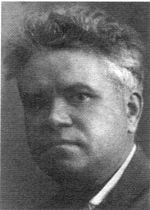
A journalist and agitator from way back, Kostov was a casualty of the postwar political chasm between east and west.
He’d been the number three man in Bulgaria’s communist hierarchy at the time of his fall in January of 1949, but had also been considered close to Yugoslavia’s independent socialist leader Josip Broz Tito. Like Tito, Kostov was a little too into his own country’s national economic sovereignty as against the purported greater good of a Soviet-dominated eastern bloc.
So a propagandist could write, comparing Kostov to the Hungarian minister who had swung for Titoism just weeks before, that
[i]f Laszlo Rajk could be regarded as the right arm of Tito’s plans for Eastern Europe, Traicho Kostov, member of the Bulgarian Politburo and Deputy Premier, was certainly his left arm. I sat in a crowded court in Sofia in December, 1949, heard and watched Traicho Kostov and ten other accused and dozens of witnesses testify to a Yugoslav plan for Bulgaria every whit as diabolical and bloodthirsty as that for Hungary. In reality there was only one overall strategic plan with “Operation Rajk” and “Operation Kostov” as tactical moves.
Specifically, “Operation Kostov” entailed spying for western (plus Yugoslavian) powers and plotting to overthrow the People’s Republic.
Although his enemies had browbeaten Kostov into political self-denunciation at party summits, the man stoutly repudiated guilt at trial — which was not necessarily the norm in the show trial genre.
Kostov’s ten fellow defendants received prison terms rather than the rope, and some of them were alive to enjoy the official rehabilitation that followed Stalin’s death.
On this date in 1915, a quintet of African Americans died in South Carolina’s electric chair during a 70-minute span.
Joe Malloy was put to death for killing two white men four years before; the other four executed on this date were convicted together of murdering 73-year-old Confederate veteran John Q. Lewis. They were John Crosby, Nelse Brice, and — our principal concern today — Thomas and Meeks Griffin.
In this case, and even though public opinion was predictably inflamed at the aged veteran, the Griffins weren’t lynched: indeed, prominent white people in the community, such as the mayor and the sheriff, rose to the Griffins’ defense to the extent of signing a petition for executive clemency. They didn’t believe then that the thief whose accusation condemned the brothers was credible.
More than likely they suspected Lewis’s 22-year-old black mistress, Anna Davis, and/or her husband — and undoubtedly, they would have known exactly why this scandalous angle was not pursued in court.
Still, South Carolina’s governor reckoned that they’d had their day in court, the victims deserved closure, and whatever other equivalents of the familiar modern-day rationales one might care to name.
Almost surely, this distant injustice would be lost to time were it not for the Griffins’ famous great-nephew, the radio host Tom Joyner.
Joyner only recently discovered (via Henry Louis Gates Jr.‘s research for a PBS documentary*) his kinship with these executed men; his grandmother had moved away to Florida to bury the family tragedy.
But the broadcaster exhumed it with gusto, and, two years ago, was able to secure a posthumous pardon from South Carolina based on the weakness of the original case. It’s thought to be the first official posthumous pardon the state has granted to any executed persons.
But we do want to extend the Palmetto State the credit due to all its sons whose signatures graced the disregarded clemency petition way back when. More than that: The State editorialized, confusedly but forcefully, against the manifest racial discrepancies in capital sentencing on the occasion of this quintuple-execution. (Oct. 1, 1915) These questions, ever present, are more sincerely grappled with in this column than we can manage today.
* You can watch the big reveal when a flabbergasted Joyner first hears about his ancestors: it’s quite a moment.
On this date in 1937, Elena Aleksandrovna Vasilieva arrived to Moscow’s Lefortovo Prison to visit her husband, “peasant poet” Pavel Vasiliev.
“He’s been transferred to another place,” she was told.
He had been: six feet under, that very day.
Vasiliev hailed from a Cossack family in Kazakhstan, and he would fight his short life’s literary battles with a pugnacity reflecting his youthful work as a sailor and gold miner in Siberia. He was renowned for his boozing and carousing.
While the Futurists waxed eloquent over the wonders of the new machine age, the peasant writers and poets were moved by a strong revulsion for industrialization … [and glorified the village and longed to return to the simple life of rural Russia. At the same time the futility of their dream was evident even to them, and their writings are often of a tragic bent.
And bents tended towards tragedy in the 1930s.
A little too outspoken for his own good, Vasiliev openly defended Nikolay Bukharin (arrested in February 1937) as “the conscience of peasant Russia,” and characterized the politically expedient denunciations made by fellow scribblers as “pornographic scrawls on the margins of Russian literature.”
It’s a remark that would age a lot better than the man who uttered it.
The admiration of many contemporaries — Pasternak considered Vasiliev brilliant (see this Russian biography; most of the information about Vasiliev online is in Russian) — could hardly aid a man coming under official fire for “kulak bohemian ideology.” Vasiliev did prison stints (Russian again) in the early 1930s for counter-revolutionary writing, and then for “malicious hooliganism” after whaling on a former friend who had denounced him in print.
I accept the title of a rumbler,
If the brattle of gusli is thunder.**
Pavel scorned the warning, leaving his widowed Elena to husband his many unpublished verses until they could finally be published (and the poet rehabilitated) in the 1950s, after Stalin died.
* The most famous poet of this school was Sergei Yesenin, whose death at the end of a hangman’s rope at age 30 is unfortunately not eligible for this site … since Yesenin put up the rope himself. Live fast, die young, and leave a beautiful corpse.
On this date in 1938, a Soviet purge claimed (among others*) Yakov (Jacob) Peters, former Cheka executioner and once the subject of a headline-grabbing trial in England.
Peters was a trusted (and ruthless) operator in the Soviet internal police from the start of the Revolution: he helped interrogate Lenin‘s would-be assassin Fanya Kaplan in 1918.
And he was the guy Trotsky had on speed-dial when Cheka founder Felix Dzerzhinsky was arrested by the Left SRs during their abortive 1918 uprising against their erstwhile revolutionary allies, the Bolsheviks.**
Dzerzhinsky was disarmed and locked in a room. his assistant, M.I. Latsis, was captured in the Cheka Lubianka headquarters. “No point in taking him anywhere, put this scum against the wall!” shouted a sailor, but one of the leaders, Alexandrovich, intervened, saying, “There is no need to kill, comrades; arrest him, but do not kill.” Dzerzhinsky’s assistant Yakov Peters was urgently summoned by Trotsky, who ordered him to crush the uprising by attacking the Left Eser headquarters. Alexandrovich was caught at a railway station, and Latsis, whom he had saved from execution, personally shot him. Mass executions in Cheka prisons followed. (Source)
Like a lot of old Bolsheviks, Peters’s early service to the cause didn’t age too well. He ran afoul of some bureaucratic intrigue or point of party discipline or other and caught a bullet in 1938. (Khrushchev rehabilitated him.)
For anyone in England watching the fate of this distant apparatchik, the proximity to bloodbaths would have had a familiar hue.
Peters was one of a gang of Latvian revolutionaries who came to cinematic public attention in London when, in the course of being rounded up for a December 1910 murder, they engaged the police in a stupendous East End firefight on January 2, 1911 — the Siege of Sidney Street. (It’s also known as the Battle of Stepney.)
Armed like soldiery, the Latvians easily outgunned the bobbies who had them hemmed into a cul-de-sac, and they fired on John Law with ruthless effect. This necessitated a call to the Scots Guard — whose deployment was okayed by Home Secretary Winston Churchill, the latter captured on film that day awkwardly milling about the scene of the urban combat.
(Translated directly to the city’s cinemas as soon as that same evening, Churchill’s image came in for public catcalls owing to his support for a relatively open immigration policy for eastern Europeans.)
This incident was a landmark in crime, policing, media — recognizably modern in its trappings of nefarious immigrant terrorists, politicized state funerals for policemen, and of course, the live-on-the-scenes camera work.
Since Britain was a ready hand with the noose at this time, one might think an execution would have been just the denouement.
However, responsibility for the policememen slain in the affray had been officially assigned to a different gang member, George Gardstein — who was killed when the besieged house burned down — and there was little usable evidence against those who were finally put on trial for the gang’s various crimes. Most of the witnesses were dead, fled, or completely unreliable, so the surviving Latvians all walked.
(Since the identity of one of the first guys to start shooting when the police rang always remained murky, there are some theories — such as in this out-of-print book — that Peters himself had been one of the gunmen on-site, and/or that he could be identified with the absconded and never-captured gang leader “Peter the Painter”.)
Whatever the exact measure of blood on Yakov Peters’s hands from Sidney Street, there would be a lot more where it came from.
While Peters went off to his different fate in revolutionary Russia, the dramatic scene he left behind has naturally attracted continuing retrospective attention in England. The testimony of witnesses, who also recollect the shootout’s anti-immigrant fallout, is preserved in this BBC Witness radio program:
On this date in 1940, the former Soviet People’s Commissar for Agriculture was shot for treason.
The 1930’s were a scary time in the USSR, but the agricultural posts — forced collectivizations, production quotas, and screw-ups that starved thousands — were particularly fraught.
R.I. Eikhe inherited the job from a fellow purged in the trial of the 21. And, unsurprisingly, he went the same way.
It was another former agricultural commissar (of Ukraine), Nikita Khrushchev, who managed to succeed Stalin.
When, in 1956, Khrushchev made his “secret speech” denouncing the savagery of his predecessor, the fate of his old comrade Eikhe was lamented in detail.
Excerpted below is the relevant portion of Khrushchev’s report, as cited here.
The great modesty of the genius of the revolution, Vladimir Ilyich Lenin, is known. Lenin had always stressed the role of the people as the creator of history, the directing and organizational role of the party as a living and creative organism, and also the role of the central committee.
…
Lenin never imposed by force his views upon his coworkers. He tried to convince; he patiently explained his opinions to others. Lenin always diligently observed that the norms of party life were realized, that the party statute was enforced, that the party congresses and the plenary sessions of the central committee took place at the proper intervals.
In addition to the great accomplishments of V. I. Lenin for the victory of the working class and of the working peasants, for the victory of our party and for the application of the ideas of scientific communism to life, his acute mind expressed itself also in this that lie detected in Stalin in time those negative characteristics which resulted later in grave consequences. Fearing the future fate of the party and of the Soviet nation, V.I. Lenin made a completely correct characterization of Stalin, pointing out that it was necessary to consider the question of transferring Stalin from the position of Secretary General because of the fact that Stalin is excessively rude, that he does not have a proper attitude toward his comrades, that lie is capricious, and abuses his power. . . .
Vladimir Ilyich said:
“Stalin is excessively rude, and this defect, which can be freely tolerated in our midst and in contacts among us Communists, becomes a defect which cannot be tolerated in one holding the position of the Secretary General. Because of this, I propose that the comrades consider the method by which Stalin would be removed from this position and by which another man would be selected for it, a man, who above all , would differ from Stalin in only one quality, namely, greater tolerance, greater loyalty, greater kindness, and more considerate attitude toward the comrades, a less capricious temper, etc.”
As later events have proven, Lenin’s anxiety was justified …
…
Stalin originated the concept enemy of the people. This term automatically rendered it unnecessary that the ideological errors of a man or men engaged in a controversy be proven; this term made possible the usage of the most cruel repression, violating all norms of revolutionary legality, against anyone who in any way disagreed with Stalin, against those who were only suspected of hostile intent, against those who had bad reputations. This concept, enemy of the people, actually eliminated the possibility of any kind of ideological fight or the making of one’s views known on this or that issue, even those of a practical character. In the main, and in actuality, the only proof of guilt used, against all norms of current legal science, was the confession of the accused himself, and, as subsequent probing proved, confessions were acquired through physical pressures against the accused. . . .
Lenin used severe methods only in the most necessary cases, when the exploiting classes were still in existence and were vigorously opposing the revolution, when the struggle for survival was decidedly assuming the sharpest forms, even including a civil war.
Stalin, on the other hand, used extreme methods and mass repressions at a time when the revolution was already victorious, when the Soviet state was strengthened, when the exploiting classes were already liquidated, and Socialist relations were rooted solidly in all phases of national economy, when our party was politically consolidated and had strengthened itself both numerically and ideologically. It is clear that here Stalin showed in a whole series of cases his intolerance, his brutality, and his abuse of power.
…
Stalin’s willfulness vis-a-vis the party and its central committee became fully evident after the 17th party congress, which took place in 1934. . . .
It was determined that of the 139 members and candidates of the party’s Central Committee who were elected at the 17th congress, 98 persons, that is, 70 percent, were arrested and shot (mostly in 1937-38). [Indignation in the hall.] . . .
…
The majority of the Central Committee members and candidates elected at the 17th congress and arrested in 1937-38 were expelled from the party illegally through the brutal abuse of the party statute, because the question of their expulsion was never studied at the Central Committee plenum.
Now when the cases of some of these so-called spies and saboteurs were examined it was found that all their cases were fabricated. Confessions of guilt of many- arrested and charged with enemy activity were gained with the help of cruel and inhuman tortures. . . .
An example of vile provocation of odious falsification and of criminal violation of revolutionary legality is the case of the former candidate for the central committee political bureau, one of the most eminent workers of the party and of the Soviet Government, Comrade Eikhe, who was a party member since 1905. [Commotion in the hall.]
Comrade Eikhe was arrested on April 29, 1938, on the basis of slanderous materials, without the sanction of the prosecutor of the USSR, which was finally received 15 months after the arrest.
Investigation of Eikhe’s case was made in a manner which most brutally violated Soviet legality and was accompanied by willfulness and falsification.
Eikhe was forced under torture to sign ahead of time a protocol of his confession prepared by the investigative judges, in which he and several other eminent party workers were accused of anti-Soviet activity.
On October 1, 1939, Eikhe sent his declaration to Stalin in which be categorically denied his guilt and asked for an examination of his case. In the declaration he wrote:
“There is no more bitter misery than to sit In the jail of a government for which I have always fought.”
On February 2, 1940, Eikhe was brought before the court. Here he did not confess any guilt and said as follows:
“In all the so-called confessions of mine there is not one letter written by me with the exception of my signatures under the protocols which were forced from me. I have made my confession under pressure from the investigative judge who from the time of my arrest tormented me. After that I began to write all this nonsense. The most important thing for me is to tell the court, the party and Stalin that I am not guilty. I have never been guilty of any conspiracy. I will die believing in the truth of party policy as I have believed in it during my whole life.”
On February 4 Eikhe was shot. [Indignation in the hall.] It has been definitely established now that Eikhe’s case was fabricated; he has been posthumously rehabilitated.
Update: Embargoed as of this post’s publication, Joe Arridy’s growing ranks of supporters had submitted to Colorado Gov. Bill Ritter an application for a posthumous pardon. On January 7, 2011, Gov. Ritter granted that pardon — a fitting conclusion to a cinematically heart-rending story.
“Granting a posthumous pardon is an extraordinary remedy. But the tragic conviction of Mr. Arridy and his subsequent execution on Jan. 6, 1939, merit such relief based on the great likelihood that Mr. Arridy was, in fact, innocent of the crime for which he was executed, and his severe mental disability at the time of his trial and execution. Pardoning Mr. Arridy cannot undo this tragic event in Colorado history. It is in the interests of justice and simple decency, however, to restore his good name.”
-Gov. Bill Ritter
On this date in 1939, Joe Arridy “walked to his death with the faith of a child” (Los Angeles times, Jan. 7, 1939) up “Woodpecker Hill” — where the victims of Canon City, Colorado’s gas chamber (since retired) were buried.
Shortly before execution, Joe Arridy gives away the toy train he received from warden Roy Best to a fellow prisoner.
A young Syrian-American with the mental age of a six-year-old riding the rails during the Depression, Arridy was picked up for a teenage girl’s rape-murder in a literal lynch-mob environment: he was nearly pulled from his cell for summary punishment.
Instead, the good citizens let justice run its course to the same conclusion.
The damnable thing — well, the other damnable thing — is that we have about as much reason to believe Joe Arridy committed the crime as we do you or I.
He was linked to the murder by nothing but an evolving series of unreliable confessions fed by the sheriff to his suggestible prisoner (and, later, a single “matched” hair with a suspicious chain of custody; matching hair without DNA is still an unreliable forensic technique today). The real murderer was even in custody, and was executed for the same crime while Joe Arridy’s appeals ran their futile course.
“Believe me when I say that if he is gassed, it will take a long time for the state of Colorado to live down the disgrace,” Arridy’s appellate lawyer pleaded to a deaf court.
This post is an edited version of Perske’s affidavit to the governor’s office in support of the pardon.
On March 28, 1992, Sociologist Richard Voorhees sent me a poem from an out-of-print book that described a warden weeping as he watched a man in a death row cell playing with a toy train before being walked to a gas chamber (“The Clinic” (.doc) by Margeurite Young in Moderate Fables, 1944).
“The man you kill tonight is six years old,
He has no idea why he dies,”
Yet he must die in the room the state has walled
Transparent to its glassy eyes.
I sent a copy of the poem to Watt Espy, Director of the Capital Punishment Archives, in Headland, AL. Espy researched and responded with information that tied the poem to the life and trials of Joe Arridy who at age 23 was executed on January 6, 1939.
During the next two years after receiving the poem, I traveled up and down the Eastern Slope of the Rocky Mountains from Cheyenne to Pueblo, and to Grand Junction on the Western Slope. News stories were discovered from the reading of old microfilm rolls in The Pueblo Chieftain, The Denver Post, The Rocky Mountain News (Denver), The Daily Sentinel (Grand Junction) and Wyoming Tribune (Cheyenne). Archivists and historians were interviewed at The Regional History Division of Western Colorado (Grand Junction), Wyoming State Archives (Cheyenne), District Archives of the Pueblo Public Library, Local History Center of the Cañon City Public Library, and the Colorado State Archives (Denver).
Joe Arridy’s Earliest Years
Joe Arridy was born to non-English speaking Syrian immigrants in Pueblo, Colorado on April 29, 1915. He attended the first grade in Bessemer Elementary School. At the beginning of his second year, the principal called on the Arridy family and told them that their son could not learn and asked them to keep him at home. The parents reported that for the next four years, Joe stayed around the house. He was a passive but happy child. According to his parents he was the happiest when he was alone playing all by himself. His favorite pastime was making mud pies.
Intelligence Testing and Institutionalization
At age 10, Joe was committed to the Colorado State Home and Training School for Mental Defectives, in Grand Junction. He was administered the Binet-Simon Test. The results showed that he was unable to repeat four digits (4-3-7-9). When shown the color red, he said it was black and that green was blue. He usually spoke in incompete two or three word sentences. As the questions became harder to answer, he remained silent. The examiner listed him as “an imbecile with an IQ of 46.” Later his institutional records showed no critical incident reports. For the most part he was a shy and quiet loner.
Nine months later, Joe’s father missed his son. He asked for his son to be returned home. The request was granted. Upon his return, he tended to take lonely walks all over town. These walks continued for three years.
At age 14, the walks came to an end when a probation officer caught a gang of boys performing sexual acts on him. The officer wrote an angry letter to the court, labeling Joe as “one of the worst mental defective cases that I have ever seen.” The court ordered his immediate return to the institution in Grand Junction.
During the next seven years at the institution, his records show that he was incapable of working on the farm crews or sitting in classrooms. Therefore, he was given a “day activity,” working side by side with a kindly kitchen worker, “Mrs. Bowers.” The worker reported that Joe was only capable of “Tasks of not too long duration, can wash dishes, do mopping of floors, can do small chores and errands. He depends on others for leadership and suggestions.”
Railroad Boxcar Riding
At age 22, he and a few other inmates watched men riding on top of railroad boxcars that passed the institution. So together they wandered off the institution grounds and also jumped on boxcars. They took the 24-hour ride through the mountains to Pueblo. Later they took the trip back. Joe was last seen in Grand Junction on the evening of August 13, 1936. He was believed to have jumped onto a boxcar either that night or on the next morning.
After that, Arridy disappeared from sight until he walked up to the kitchen car of a railroad work gang on August 20, in the East Railroad Yards of Cheyenne, Wyoming, dirty and hungry.
Rape and Murder in Pueblo
On Saturday evening, August 15, 1936, slightly before or after midnight, Dorothy Drain, 15, and Barbara Drain, 12, were bludgeoned about their heads while sleeping together in the same bed, at 1536 Stone Avenue in Pueblo. Dorothy was raped and beaten to death. Barbara was near death, but survived. Later, she identified Frank Aguilar as the attacker at his trial. She was not present at Joe Arridy’s trial. She did not even identify Joe Arridy as a co-attacker.
Sheriff Gets a Confession from Arridy Even Though the Real Killer is Already in Custody
On August 26, 1936, Joe Arridy was arrested by two railroad detectives and turned over to Sheriff George Carroll. Carroll, like all law officers in all of the towns up and down Colorado’s Eastern Slope, was actively picking up suspects and interrogating them regarding the attacks on the Drain girls in Pueblo.
After an hour and a half of questioning, Carroll called a reporter and told him that he had just received a complete confession for the Pueblo crime from Arridy. He recited to at least one reporter a long series of wordy, complete sentences that Arridy purportedly uttered. According to Carroll, Arridy was the lone killer and he committed the crime with a club.
At first, when Pueblo Police Chief J. Arthur Grady received news of the confession, he was shocked. The real killer, Frank Aguilar, a former WPA worker who had been supervised by the Drain girls’ father, had already been arrested for the crime.
Aguilar had been arrested during the funeral of Dorothy Drain. The Pueblo police had even recovered the weapon used in the crime. It was the head of a hatchet with nicks that matched the wounds on the girls. The Pueblo police kept all this evidence in silence because Aguilar vehemently denied committing the crime.
Following that, Sheriff Carroll changed his story. After conducting another interrogation, he then reported to the press that a hatchet—not a club—was used in the crime. He also claimed that Arridy did not do the crime alone. According to Carroll, Arridy said he did it “with Frank.”
Sheriff Carroll was a famous but loquacious individual who was known to talk long and loud about being in the posse that finally caught up with and finished off the notorious Barker gang.
Now with his regular announcements to the press he remained at his long-worded best. Carroll had been so totally verbal in his interrogations of Arridy, nothing was written down on paper. Nor was any confession signed. Consequently the confessions and changes in them were dictated daily to reporters.
Later, in the trial of Arridy, Sheriff Carroll became the star of the case. He spoke in his heroic, over-wordy style. According to the press, he did not speak from a single note. He simply testified from memory.
Frank Aguilar is Quickly Convicted
Aguilar’s trial came quickly, starting on December 15, exactly four months after the crime. It ended seven days later. His executed came quickly, too: on August 15, 1937, just two days short of the anniversary of Dorothy Drain’s murder.
Aguilar Identified as Lone Murderer in an Identical Crime in the Same Neighborhood
After the death sentence, Aguilar was brought face to face with Mrs. R. O. McMurtree, 58, who identified Aguilar as the lone attacker in a similar crime that happened two weeks earlier and just three blocks away from the Drain crime. She and her aunt, Sally Crumply, 72, were sleeping in the same bed when Aguilar attacked. He beat them on the heads as he had done in the Drain home. Like Dorothy Drain, Sally Crumply was bludgeoned to death.
Sheriff Carroll Assumes Leadership in all Aspects of the Arridy Investigation
After announcing Arridy’s first confessions to reporters and Chief Grady, two Pueblo detectives sped through the night to Cheyenne. The next morning, they joined in an added interrogation with Carroll leading it. Then they drove back to Pueblo.
Later that day, Carroll drove Arridy to Pueblo. He was present at the Pueblo Police Station when Arridy and Augilar may have been brought together. He took leadership when Arridy was taken to the Drain home and the crime was reenacted. He was present at the prison in Cañon City when Aguilar gave a signed confession that marginally included Arridy’s initials in a lower left column. That confession was printed in its entirety in the Pueblo Chieftain but was withdrawn and was never heard in a court.
Sheriff Carroll Became Chief Presenter of Evidence Against Arridy
During the prosecutor’s evidentiary presentations, Sheriff Carroll took the stand five different times. The transcript shows how Carroll was allowed to launch forth as a riveting story teller. He testified that Arridy was in complete control of his thoughts, and speaking in clear sentences that described the colors on the walls in the bedroom and the colors of nightgowns that the girls wore, and even the colors of the dresses the girls would be wearing when they went to the Sunday church services.
The Joe Arridy that Carroll described was a far cry from the Arridy who often spoke in unfinished sentences and did not know who Franklin Delano Roosevelt was. Nor did he know what a hatchet was or that his own father was present in the courtroom.
The Defense Loses in a Sanity Hearing, and Eschews an Evidentiary Defense
The defense argued at a pre-trial sanity hearing that Arridy was “Not Guilty by Reason of Insanity”. The question before the court: “Does Joe Arridy have the capacity to tell good from evil and right from wrong?” If not, he should be found to be insane and not guilty. Three psychiatrists testified that Arridy did not know right from wrong, but they hedged by saying that he was not insane. According to them, one needed to be normal first before ever being insane, and they claimed that Arridy had never been normal.
The jury deadlocked at six to six, but an hour later, voted that Arridy would have to go on trial for murder.
As strange as it may seem today, the defense attorney had conducted no investigation in the case. At the beginning of the trial he announced that he would not present an evidentiary defense and would only cross-examine witnesses for the prosecution.
He then requested that the judge set aside the earlier sanity trial verdict and that he be given permission to argue a sanity case one more time. He furthermore requested permission to make his opening argument only after the prosecution had completed with its evidentiary case. The judge agreed to all of these conditions.
The same three psychiatrists (joined by a fourth) gave the same testimony once again.
But Sheriff Carroll voiced his views unchallenged. After touting his 30 years of experience and claiming that he interrogated Arridy for “six or seven hours,” the prosecutor asked him, “Based on your experience [is] Joe Arridy capable of distinquishing right and wrong?” Carroll responded, “I think there is no doubt, whatever, but what he is”.
A verdict of “guilty” was rendered on April 17, 1937, and Arridy was sentenced to death.
On August 13, 1937, Frank Aguilar was executed, and on the same day, Sheriff Carroll and two railroad detectives received a $1000 reward for making the arrest of Joe Arridy in Cheyenne.
For a year and a half, a pro bono “Citizen Lawyer” Gail Ireland fought valiantly to save the life of Joe Arridy. During that period, Ireland managed to win at least six stays.
On January 6, 1939 at 6:15 p.m., the Colorado Supreme Court voted 4-3 to deny the last petition. Governor Teller Ammons called the warden at 6:30 p.m. and ordered that the execution be carried out.
The chaplain administered the Roman Catholic Church’s “Last Rites for a Child.” It called for the Chaplain to recite each phrase of “The Lord’s Prayer,” one at a time with Arridy repeating it, all the way to the “Amen.”
Joe Arridy’s rusty motorcycle plate served as his grave marker for 71 years, until it was replaced with a headstone reading Here Lies an Innocent Man
This volume by Perske addresses the criminal justice system’s (mis)handling of the developmentally disabled. He’s written a number of other books, fiction and nonfiction, humanizing this.
Robert Perske also graciously agreed to address a few additional questions that we had for him.
ET: How did you come to this case?
RP: It’s almost a magical thing to me. Back in 1991, I got a poem from a valued colleague of mine who is a professor, a sociologist. He was digging through some old books in Greenwich Village, and he found a poem about a warden weeping before the pellets were dropped and all of that, and how the warden cried, and how he complained about how this man playing with a toy train would die.
And I got ahold of it and went down to my buddy Watt Espy [of the Espy file -ed.], and he found it. He really dug for me, what a guy, and he found it and I headed for Pueblo and dug and dug and dug from 1991 to 1995.
What motivated me was that after coming out of World War II, I went to school and became a chaplain at an institution for mentally disabled people in Kansas. I worked my ass off to be a good pastor to them, and so when I found this much, I really started digging.
Did they lead him into the confession?
Oh, yes. He was arrested in the railyard by Sheriff George Carroll. And Carroll was a swashbuckler. He was a hero, and he was a mouthy sonofagun, and he pretty well set up the case.
As soon as he got the so-called confession, he [Carroll] didn’t call the police chief first — he called the press. He said he had the guy who did it.
But they already had the guy in Pueblo, Frank Aguilar.
Was there outright misconduct by the investigators here? Did they realize, or should they have, that they might be railroading someone?
Here’s the deal. People with so-called mental retardation were seen as nobodies in those days. They didn’t have community services, so they all went like Joe, to the institution.
In the year I was born, 1927, Oliver Wendell Holmes issued his ruling that all such people could be sterilized.
Carroll knew he had somebody like that in Joe. There was a lynch mob starting to form in Pueblo, because this head of the WPA was a good solid citizen, and when his daughters were hit, and one killed and raped, there was a lot of hiding of people.
I’ve known a lot of Joes. And he’s lovable, and he’s trusting, and he’s naive, and he’s concrete-thinking, so half of the things he says, he doesn’t really understand. But on the other hand, very dependable, and very lovable. Nobody in Pueblo saw that, but [Warden Roy] Best picked it up, and then the inmates in prison picked it up too.
In their hearts of hearts, yeah, they knew. But they figured he wasn’t worth anything. He was retarded, mentally defective was the word they used. They knew they had the real killer, but they go back and get Joe to amend the confession and now he was there “with Frank”.
If you’ve got a serious mental limitation and you’re facing a capital charge in the criminal justice system today, what’s going to happen to you?
In the year 2002, Atkins v. Virginia, they banned the death penalty in those cases. And they played around with the IQ number, but in some states they’re going farther than that because you have all kinds of other disabilities. I’d say by and large, except for Texas, people are looking at these people — not more kindly, but not looking at them as people who should be executed.
If we would have had that for Joe, he would not have been executed.
Can you give us a lay definition of developmental disability?
The most prominent one I’ve seen when I worked in the institution, and yet today when I work the streets and agencies and group homes and that sort of thing, is the inability to abstract from concrete things. For example, I’ve had guys say to me, I’d say, “why did you waive the right?” and they say, “you’ve got to waive it the right, you can’t waive it the wrong.”
Barry Fairchild, down in Arkansas — Barry thought that the reading of the rights was some kind of opening prayer.
These people survive on the basis of having abstract thinkers as their friends and protectors, so consequently guys like Richard LaPointe had cops as their friends, because they leaned on authority figures. And of course the police department are committed to secure the safety of the neighborhood, but then if there’s a terrible murder and somebody starts to blame them, they’re going to cooperate with that.
I’ve got one where, on a tape recorder, they’re saying, “if you tell us, we’ll all go home”. So that’s concrete thinking that my guys usually have.
Richard Lapointe is still in prison, not on death row. He has hydrocephalus, it’s called Dandy-Walker syndrome, so he’s a guy with all kinds of disabilities. He’s not athletic at all and gets dizzy when he stands up or stops suddenly, and yet they got him to confess to a highly athletic murder of a woman with multiple violent stab wounds and moving the body.
(Thanks to Michael Baney for the guest post. -ed.)
On this date in 1991, a Peruvian death squad showed up at the wrong party, and altered its country’s history.
In 1980 the Communist Party of Peru, better known as the Shining Path, launched its “People’s War,” which was never actually supported by the majority of Peruvians. Latin America had had its share of Marxist revolts, but this one was different from the others. There was nothing romantic about the revolutionaries, who wore plain clothes rather than uniforms, attacked the civilian population rather than invest significant capital to win them over to the Shining Path cause, and rose up in an effort to overthrow a democracy rather than a dictatorship.
The Shining Path was based mainly in Andean villages, but once they began to take serious losses in their own territory, they made a concerted effort to accelerate the war by pushing into the capital city, Lima. Both the Shining Path and the Peruvian military were committing deplorable human rights violations by the time Alberto Fujimori was elected president in 1990, although the vast majority of the violence had been confined to the hinterlands of the country up until then.
With Fujimori’s election, more urban-based death squad activities began. Perhaps the most famous was the November 3, 1991 massacre in the Barrios Altos neighborhood of Lima, a poor barrio only a few minutes’ drive away from the Congress and the Presidential Palace.
This date’s incident occurred when members of Grupo Colina (English Wikipedia entry | Spanish), a death squad that was part of the Army Intelligence Service, believed that they had identified a group of Shining Path militants having a pollada, which is a traditional fundraiser in Peru where a party is held so that chicken and beer can be sold to the neighbors. (Here’s a description, in Spanish)
A Grupo Colina squad drove to the building where this terrorist pollada was supposed to be taking place, lined the partygoers up, and extrajudicially executed them with submachine guns with silencers that the army had provided the group for the operation. Then the leader of the group, Santiago Martin Rivas, shot a young child who came running over to the body of his father. The troops got back into their vehicles, turned on their sirens to appear like they were the police in an effort to shift blame over the killings, and got drunk at the beach to celebrate.
Almost immediately it became clear that the death squad members had completely screwed up their hit.
The people who had been murdered were indeed having a pollada … not to fund the Shining Path’s Maoist agrarian war, but to fix the pipes in their building
And it transpired that that fateful night of Nov. 3, there was a differentpollada being held on a different floor in the very same building. The participants of that other party fled the building, never to return. There were reports that upon searching the rooms of those who fled, police uncovered many issues of El Dario, the Shining Path newspaper.
If Grupo Colina indeed crashed the wrong party, then it not only slaughtered a bunch of innocent people — it helpfully tipped the Shining Path to the fact that the army was onto them.
In any event, the executions became a media spectacle and the police had to at least go through the motions of investigating them. At first, the government suggested that the murders might have been actually carried out by the Shining Path, and as evidence of this theory they showed that one of the people who had been killed was previously a member of a Ronda, which is a peasant patrol group that fought against cattle rustling and, in some cases, the Shining Path. But it later turned out that the man had been a member of the Rondas many years before and hundred of miles away from the killings, and it seemed extremely improbable that the Shining Path would even bother to target him.
By December 4, 1991, the US embassy in Lima was informing the Secretary of State that the Peruvian government lacked the political will to investigate the murders, and had lied about whether or not the guns used in the extrajudicial executions were equipped with silencers in “an apparently deliberate attempt to obfuscate the situation.”
The Congress created a committee to investigate the crimes, which was a real threat to the Fujimori government because the Fujimoristas did not have a majority in Congress.
This ceased to be a problem on April 5, 1992, when Fujimori suspended the Congress, permanently disbanded the Senate, and fired a good number of the judges in the country, all in total violation of the Constitution. That ended the investigation.
Under pressure from the international community, a new Congress stacked with Fujimoristas was convened to write a new Constitution, and the investigation of the Barrios Altos killing nominally restarted. When the Congress called Nicolas Hermoza Rios de Bari, the Chairman of the Joint Command of the Armed Forces to testify, he took the oppotunity to remind the Congress that the military would never tolerate being “insulted.” When hearings continued, Hermoza Rios held an impromptu tank parade directly in front of the Congress. The few brave Congressmen and women who actually desired to expose the truth about the killings got the message loud and clear: the case would never go anywhere as long as Fujimori remained president.
When it finally looked like the perpetrators might be punished, for example, Fujimori rammed a law through the Congress that provided a general amnesty to everyone who had violated human rights “in defense of the fatherland.” When a judge ruled the amnesty law unconstitutional, Fujimori’s Congress stripped the power of judicial review from the courts in cases of amnesty laws.
In a very real sense, the Peruvian government had legalized illegality. Fujimori created a system in which there was no way to punish — or even investigate — murder so long as someone, somewhere considered the crime to have been committed for patriotic reasons.
All that changed in 2000, however, when Fujimori’s government collapsed amid scandal.
An opposition figure who vowed to create a Truth and Reconciliation Commission was sworn in as into office, and Peru reaffirmed its commitment to the American Convention on Human Rights. In 2001, in a groundbreaking decision, the Inter-American Court of Human Rights ruled in its Barrios Altos case that countries cannot issue an amnesty for “serious human rights violations.” The amnesty was thrown out and Grupo Colina members were arrested.
In 2007, Alberto Fujimori was extradited from Chile, where he had traveled, to Peru. In 2009, the Peruvian courts convicted Fujimori of a number of human rights abuses, including ordering the Barrios Altos murders. Just last month, justice was finally served when the members of Grupo Colina were convicted of murder, kidnapping, forced disappearance, and conspiracy, and were given various sentences ranging up to 25 years of prison. After 19 years, the Peruvian government has finally acknowledged that the extrajudicial executions that took place during that country’s cold war were crimes that must not go unpunished.

 The state of Georgia has only ever electrocuted a single woman: African-American maid Lena Baker, put to death on this date in 1945 for murdering her abusive employer.
 Fruit of a powerful Neapolitan noble house — it was

 A journalist and agitator from way back, Kostov was a casualty of the postwar political chasm between east and west.

 “He’s been transferred to another place,”
 Peters was a trusted (and ruthless) operator in the Soviet internal police from the start of the Revolution: he helped interrogate


