1813: W. Clements, War of 1812 deserter

(Thanks to Meaghan Good of the Charley Project for discovering the original June 1813 broadsheet we reprint here.)

LINES

COMPOSED ON THE EXECUTION OF

W. CLEMENT’S: [maddening sic]

Who was SHOT for Desertion, on Fort Independence, Feb. 18
having been four times Pardoned, but having last Deserted his Post, was condemned to die.

The thoughts of death to every mind,
Most sad reflection’s [sic] brings;
But when man’s life is seek’d for crimes,
Then conscience gives its stings.

No cheering hope attends the soul,
Which with black guilt is stain’d;
The waves of trouble o’er it roll,
And seldom peace is gain’d,

Alas! that man should treasure woe,
And bring upon his head,
The curse of heaven, the curse of man.
To strike his comforts dead.

Ah! how the bosom of a wife,
Must throb with anxious care,
When once the object of her love,
Is caught in guilt’s dire snare.

His children raise their little hands,
Compassion to implore;
But oh! the father whom they love
Shall never see them more.

Condemn’d for crimes his life to pay,
The fatal hour draws nigh;
Stern justice heard no widow’s moans,
Nor heeds the orphan’s cry.

His comrads [sic] silent stand around,
And heave the mournful sigh,
Their bosoms heave with mingled grief,
No eye from tears is dry.

And now the solemn dirge begins,
They march towards the spot
Where he receives his crimes reward,
And meets his dreadful lot.

For him, perhaps a mother sighs,
And hopes relief to come;
He’ll never bless her longing eyes,
But hear the muffled drum.

And now the holy man of God,
To Heaven addresses prayer
And bids the poor unhappy man,
For his sad doom prepare.

And now the solemn drum rebounds.
His last funereal hymn,
Again the trumpet slowly sounds,
Each eye with grief is dim.

Advancing to the fatal spot,
Still sadder flows the strain;
Ah! now the dreaded scene is o’er,
The corps returns again.

See, see him welt’ring in his blood,
His spirit now has fled,
His life has paid the fatal debt,
He’s number’d with the dead.

Learn, then, ye who for Freedom fight,
To stand firm by your post,
To vindicate your country’s Right,
Nor let your fame be lost.

O! let poor CLEMENT’S [sic] awful fate,
A warning be to all,
Remember he who duty slights,
Will meet a dreadful fall.

On this day..

1942: Matvey Kuzmin, modern-day Ivan Susanin

On this date in 1942, German troops in Russia’s Pskov Oblast summarily executed 83-year-old peasant Matvey Kuzmin for leading them into an ambush.

World War II’s real-life Ivan Susanin was conscripted as a guide for the occupying Wehrmacht intending to approach a Soviet position at the village of Makino.

Kuzmin cunningly sent his son ahead to Malkino to alert his countrymen of the attack while guiding the Germans circuitously. By the time Kuzmin et al reached the outskirts, a Soviet ambush was waiting for them.

An enraged German officer shot Kuzmin during the ensuing firefight.

Since Kuzmin’s feat of resistance was not at all anonymous, he was transmuted into a parable of national heroism almost immediately. Kuzmin was posthumously honored as a Hero of the Soviet Union; the Moscow visitor to this day can behold his statuary’s valorous stance at the Partizanskaya metro station, opposite the martyred guerrilla Zoya Kosmodemyanskaya.

On this day..

1945: Anacleto Diaz, Philippines Supreme Court Justice

Supreme Court justice Anacleto Diaz and his two sons were among 300 Filipinos machine-gunned by the Japanese on this date in 1945 during the Battle of Manila.

The distinguished 66-year-old jurist had served in his youth in the forces of independence fighter Antonio Luna. Diaz was captured by the Americans, and honed his English so well as a POW that he later built a career as a legal scholar in the American-governed archipelago. He was appointed to the Philippines Supreme Court by U.S. President Franklin Delano Roosevelt.

Diaz and his comrades were far from the only civilians to suffer during the bloody monthlong Battle of Manila: Japanese troops conducted intermittent atrocities both wholesale and retail, collectively known as the Manila Massacre. Japan’s commanding general, Tomoyuki Yamashita, was hanged as a war criminal in 1946 due to the Manila Massacre in a highly controversial case — since the Manila Massacre’s atrocities couldn’t be attributed directly to Yamashita’s own orders. But the U.S. war crimes tribunal found, and the U.S. Supreme Court agreed, that the subordinate troops’ actions redounded to the account of their superiors who “fail[ed] to discharge his duty as a commander to control the acts of members of his command by permitting them to commit war crimes.”

This is one of the foundational cases for that opportunistically observed precedent known as “command responsibility” (indeed, this is the “Yamashita Standard”).

As one might guess by the late date and the juridical aftermath, this Battle of Manila ended in an American victory reconquering a now-devastated Philippines capital, and driving the Japanese from the Philippines — making good Gen. Douglas MacArthur‘s famous promise to return there.

On this day..

1943: The last five Young Guards shot in Krasnodon

On this date in 1943, days before their city was liberated, five members of the anti-occupation resistance were shot in Krasnodon in the Donbass.

That eastern Ukrainian city* had fallen under German-Italian-Romanan occupation in July 1942.

In response, some 100 local teens banded together into an anti-fascist underground — the Molodaya Gvardiya, or Young Guard. (English Wikipedia entry | Russian) Most of their number would give their lives in resistance.

During the few months of occupation, the Young Guards managed an impressive record of sabotage operations and propaganda coups. It busted 90 people out of the Germans’ concentration camp, and got the hammer and sickle hung up on government buildings to mark the silver anniversary of Red October. In December, the Young Guards managed to destroy the labor bureau (and its list of intended conscripts) on the eve of a planned deportation, sparing 2,000 people that dreadful fate.

The Germans finally got their hooks into the Young Guards and started mass arrests at the start of January. They brought in most of the Young Guards for torture and execution — smashing up the organization in their very last weeks in town.

The five put to death this date were the last of those martyrs, and the more tragic in that the occupiers were even then gearing up to evacuate as the Red Army closed in. (The Soviets took the city on February 15.) They were:


Oleg Koshevoy’s interrogation. Image from MolodGuard.ru’s stupendous images collection.

In September 1943, three Soviet citizens were publicly executed in the liberated city on charges of having aided the Germans in suppressing the Young Guards.

The Young Guards’ youth and intrepidity made them extremely congenial to the Soviets’ wartime demand for martyrs. At the urging of his Ukrainian deputy Nikita Khrushchev — who himself hailed from the Donbass — Stalin approved a number of the Young Guards (including this date’s Koshevoy and Shevtsova) as Heroes of the Soviet Union.

The Guards valorized in a 1945 novel, and then a 1948 film based on that novel. (Russian links, both.)

They’ve featured in postage stamps, public artwork, and every manner of patriotic commemoration ever since. They’ve even come in for a bit of post-Soviet “ownership” conflict (over the Guards’ degree of Communist Party affiliation) between Ukraine’s Russian- and Soviet-leaning east and the nationalist-sympathizing west.

Today the “Molodaya Gvardiya” brand might be most immediately recognizable as a youth organ of Vladimir Putin’s party — no connection to the young partisans, of course.

* Not to be confused with the Russian city of Krasnodar.

On this day..

1601: Starina Novak, hajduk

On this date in 1601, Serbian-Romanian hajduk Starina Novak was slow-roasted in Cluj with two of his captains.

The hajduk in the Balkans was a romantic figure who mixed traits of the “social bandit” outlaw with those of anti-Ottoman guerrilla. Colorful characters answering the archetype persisted into the 20th century.

Novak, who was around 70 by the time of his death, is still celebrated for his feats of arms on the soldiering side of the ledger in a running conflict with the Ottomans. Most of the sites about Starina Novak are in Serbian, like this one.

He emerges as a commander of Serbian and Bulgarian auxiliaries fighting with Michael the Brave in the 1590s to carve out of the Ottoman realm a kingdom of Wallachia, Transylvania, and Moldavia — roughly, present-day Romania plus Moldova. The enterprise was as glorious as its destiny was tragic.

By 1601 an Italian officer aptly christened Giorgio Basta had had enough of his erstwhile allies and double-crossed hajduk and upstart king alike.

The former he shopped as a traitor to Michael’s Hungarian allies, who put him to the stake in Cluj and made sure to throw water on the burning partisan throughout in order to prolong the ordeal. (The charred corpses of Novak and his associates were then impaled.) A few months later, Basta had Michael the Brave assassinated, and placed himself at the head of Michael’s hard-won kingdom.


A statue of Starina Novak keeps vigil in the city where he died. (cc) image from Bogdan Pop.

Being a national hero means your prior career in brigandage gets a little Robin Hood elbow grease.

In the Serbian epic “Starina Novak and Knez Bogosava” — translated here by polyglot friend of the site Sonechka — Novak attributes his turn to banditry to the impositions of his rulers, specifically (and ahistorically) blaming the 15th century despot’s wife Jerina for overtaxing him.

Novak and Radivoj are imbibing wine
By the brisk waters of Bosna,
At a certain Prince Bogosav’s.
And having sated themselves with wine,
Prince Bogosav began to talk:
“Brother, Old Novak,
Tell me straight, as if confessing,
Why did you, brother, become a hajduk?
What compels you
To break your neck, to wander the forest
As a brigand, pursuing your ignoble employ,
Unto your senescence, when your time has passed?”

Replies Old Novak:
“Brother, Prince Bogosav,
When you ask, I answer in earnest —
It was truly not my wish.
If you could recollect
The time when Jerina was building Smederevo
And ordered me to toil.
I labored for three years,
I pulled the trees and carried stones,
All on my own cart and oxen.
And in three years term,
I gained not a dinar,
Not even opanci to put on my feet.
But that, brother, I would have forgiven!
Having built Smederevo,
She began to mount towers,
To engild the gates and windows,
And imposed the duty on the vilayet,
For each house – three measures of gold,
Which is three hundred ducats, brother!
Those who had, gave her the treasure;
Those who gave, stayed.
I was a pauper,
With nothing to give,
I took my pickax, which I toiled with,
And with this pickax I turned to banditry,
No longer could I linger anywhere
In the domain of cursed Jerina,
But ran away to the icy Drina,
Then reached stony Bosnia.
And when I neared Romania,
I met a Turkish wedding party –
Escorting a noble girl,
All passed in peace,
Save for the Turkish groom.
On the great dark brown steed,
He did not want to pass in peace.
He pulls his three-tail whip
(encumbered with three bolts of weight)
And lashes me across my shoulders.
I begged him thrice in the God’s name:
‘I beg you, Turk,
So blessed you with fortune and heroism,
And happy joviality,
Go on, proceed along your way with peace —
Do you see that I am a poor man!’
Withal the Turk would not budge.
And ache had grasped me,
And the anger grew,
I pulled my pickax from my shoulder
And struck the Turk, mounting on his brown steed.
The blow was so light
That it threw him off his horse,
I came upon him,
Hit him twice, and then again three times
While rending him asunder.
I rummaged through his pockets,
And found there three bags of treasure;
I stashed them in my bosom;
Untied his sword,
Having untied it from his belt, I have attached it to my own;
In place I left the pickax,
So that the Turks will have a tool with which to bury,
And thenceforth I mounted his brown steed,
And headed straight to the Romanian forest.
This all was witnessed by the wedding party
That dared not pursue me.
They wanted not or dared not.
It happened forty years back.
I grew more fond of my Romanian forest
Than, brother, of a palace;
Because I guard the mountenous road,
I wait for young Sarajevans
And take their gold, and silver,
And finer cloth, and satin;
I dress myself and the gang;
So I can come and flee,
And stay in horrid places —
I fear nothing but God.”

For Bosnian-Serbian-Croatian speakers with a lot of time on their hands, here’s a reading of the original:

On this day..

2015: Sajida al-Rishawi and Ziyad Karboli, Jordan’s revenge on ISIS

This morning at Swaqa prison south of Amman, Jordan executed two operatives of al-Qaida in Iraq in retaliation against ISIS for the murder of a captured Jordanian pilot.

ISIS yesterday posted a video showing a caged and gasoline-drenched Lt. Muath al-Kaseasbeh shrieking as flames devour him. The slickly produced 22-minute piece with the stomach-turning climax can be found online here, but don’t say we didn’t warn you. It’s nightmarish.

The unfortunate pilot had been used as a prop in ISIS’s provocative hostage diplomacy along with the Japanese captive Kenji Goto, who were both offered in exchange for Sajida al-Rishawi, a terrorist already on Jordan’s death row Jordan’s death row who had been widely forgotten. Video of Goto’s beheading came out several days ago.

Jordan last week agreed to trade al-Rishawi, if ISIS could prove that al-Kaseasbeh was still alive. Jordanian television has reported that the almost jeering video reply was actually filmed on January 3, indicating that the “hostage” negotiations had been a sham all along. (And/or deflecting some of the public anger away from the government; initial reports today had some crowds chanting against Jordan’s King Abdullah, who hastened home from meetings in Washington, D.C. after news of Lt. al-Kaseasbeh’s fate surfaced.)

Al-Rishawi, an Iraqi woman condemned to death in 2005 for taking part in a suicide bombing,* was promptly hanged in revenge by an enraged Jordan. Her crime predated ISIS, of course, but here’s guessing it was a public relations maneuver for the Islamist quasi-state to involve the al-Rishawi gratuitously and invite Jordan to martyr a female prisoner who turned terrorist after she lost a husband and three brothers killed fighting American troops.


Sajida al-Rishawi

Jordan has vowed an “earth-shaking response” extending far beyond hanging al-Rishawi and Ziyad Karboli, another al-Qaida in Iraq prisoner who was also executed.

“While the military forces mourn the martyr, they emphasize his blood will not be shed in vain. Our punishment and revenge will be as huge as the loss of the Jordanians,” a spokesman said in a prepared statement today.

“My son’s blood is worth more than those two,” Lt. al-Kaseasbeh’s father agreed — adding that Jordan’s true revenge must be “to destroy this terrorist group.”

* Her explosive vest failed to detonate, but the attack killed 57. Despite the notoriety of the bombing, al-Rishawi was understood as a small-timer by Jordanians who widely favored setting her free if that could actually secure the release of the lieutenant.

On this day..

1944: Zinaida Portnova, Komsomol hero

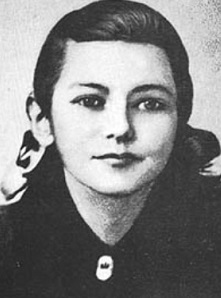
On this date in 1944, Soviet partisan Zinaida Portnova was executed by the Germans occupying Belarus.

The youngest-ever female Hero of the Soviet Union (she was posthumously decorated in 1958), the Leningrad-born Portnova had a rude start in insurgency when the German blitz swept past her summer camp in Belarus and trapped her behind lines.

Said to have been radicalized when occupying soldiers struck her grandmother, the girl joined the youth arm of the local resistance, dubbed the “Young Avengers”.

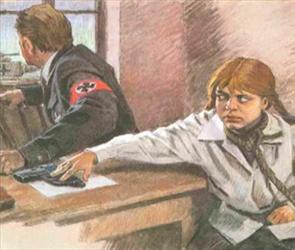
From surveilling enemy troop deployments and assembling weapons caches, Zinaida Portnova graduated to sabotage and ambushes … and capture. Even then she pulled off an action hero escape by snatching a gun and shooting her way out of custody, only to be re-arrested shortly thereafter.

She was shot a month shy of her 18th birthday.

A large number of Pioneer youth groups were subsequently dedicated to Zinaida Portnova, as was a museum of the Komsomol underground and a public monument in Minsk. She remains to this day an honored martyr of the Great Patriotic War.

On this day..

1945: Karolina Juszczykowska, who couldn’t say no

(Thanks to Meaghan Good of the Charley Project for the guest post. -ed.)

On this date in 1945, Polish Gentile Karolina Juszczykowska was executed at the prison in Frankfurt am Main for her attempt to save two Jewish men in Tomaschow, Poland, the previous year. She was 46 years old.

The people she tried to rescue have never been identified; only their first names, Paul and Janek, are known. According to Karolina, she met them on the street and they offered her 300 zloty a week to hide them. She kept them in her home and locked them inside when she went off to work during the day; they slept on the floor at night.

The arrangement lasted only about six weeks before they were betrayed.

The Gestapo raided Karolina’s home on July 23, 1944 and found Janek and Paul hiding in the cellar. Karolina was arrested and the two men were summarily executed.

Karolina emphasized that she only took them in because she needed the money to support herself. The judges who presided over her case seemed to believe her and, although they issued the mandatory death sentence, recommended clemency, writing, “The accused is in a difficult financial situation and succumbed to the temptation to improve her life.”

Karolina was indeed poor. “I have no assets,” she said in her statement to the police, “and don’t expect to have any in the future.” She’d worked menial jobs her whole life: farm work, construction, domestic service, and most recently in the kitchens of Organization Todt, the Third Reich’s civil and military engineering division. She had never been to school and was completely illiterate; she signed her police statement with three crosses.

But, as Yad Vashem points out when writing of her case, no matter what she said, it’s highly unlikely that Karolina Juszczykowska’s reasons for hiding Jews were primarily mercenary.

The wartime Polish economy had shattered, inflation had soared, and 300 zlotys wouldn’t have even been enough to cover the costs of feeding two extra people. No rational person would risk her life for that — the sentence for a Pole caught helping Jews was nearly always death.

What, then, motivated our Gentile rescuer?

Psychologist and filmmaker Eva Fogelman wrote a book called Conscience and Courage: Rescuers of Jews During the Holocaust, wherein she examines the many and various motivations of rescuers. “Many rescuers,” she writes,

found it impossible to explain to anyone who did not live through those times why they acted as they did. In war, there were no rules. The familiar seemed strange, and the bizarre seemed normal. In retrospect, rescuers’ behavior, in some instances, was not understandable even to them. How could they have endangered their families? How could they have done what they did or said what they said?

In Fogelman’s estimation, many rescuers were motivated by simple morality, either of a religious or purely personal kind.

Moral rescuers had a strong sense of who they were and what they were about. Their values were self-sustaining, not dependent on the approval of others. To them, what mattered most was behaving in a way that maintained their integrity. The bystanders who ultimately became rescuers knew that unless they took action, people would die …moral rescuers typically launched their rescuing activity only after being asked to help or after an encounter with suffering and death that awakened their consciences. Scenes of Nazi brutality touched their inner core and activated their moral values … For the most part, when asked for help, moral rescuers could not say no.

We will never know for sure, but it could have happened like this: In 1943, Karolina, while working for Todt, either witnessed or heard about the liquidation of the Tomaschow Ghetto and the accompanying violence and brutality. Most of the ghetto’s Jews were sent to Treblinka in January 1943; the last few hundred were taken away in May. Janek and Paul went into hiding and managed to stay off the radar for a year or so, but by the time they met Karolina they’d been run to ground and were desperate. They asked for her help. She couldn’t say no.

Although Karolina’s judges recommended she be pardoned, the death sentence was carried out anyway. There were no survivors and all we know about this case comes from court documents. But her sacrifice did not go unnoticed.

On May 17, 2011, over 65 years after her death, Israel recognized Karolina Juszczykowska as Righteous Among the Nations, its official honorific for Gentiles who aided Jews during the Holocaust.

On this day..

1865: Henry Regley and Charles King, General Sheridan’s deserters

On this date in 1865, two Union soldiers were shot as spies at Winchester, Virginia.

Union General Philip Sheridan and his famed Napoleon complex* were wintering in Winchester, Va. where he had recently clinched northern control of the Shenandoah Valley, and put its fertile farmlands to the torch to cripple the rebel army.

Sheridan, who had in the course of that campaign made his lasting fame by rallying his troops after an initially devastating Confederate surprise attack, was highly concerned at the prospect of rebel spies and infiltrators.

Our two poor fellows, Henry Regley and Charles King, were actually nothing of the sort — just bounty jumpers who donned the blue uniform to collect a cash reward for joining up, and then deserted at the first opportunity. Given the state’s primitive tools in the 1860s for monitoring individual citizens or verifying identity, many bounty jumpers simply repeated the enlistment-desertion cycle several times.

Being shot as a deserter was one of the occupational hazards — a small one, but a real one. But being shot as a spy? Well, General Sheridan was on the lookout.

These deserters on their way out of camp happened to bump into a patrol of “Confederates”: actually a Union detail Sheridan had uniformed like the enemy for sneaky reconnaissance. What ensued next was your basic comedy of mistaken identity … with a double execution at the end.

The following is a newspaper dispatch filed a few day later by one of their fellow soldiers writing under the pen name “Manatom” for the Newark Daily Advertiser; it comes from New Jersey Butterfly Boys in the Civil War: The Hussars of the Union Army

Henry Recli [sic] of Co. L and Christian A. Gross, alias Charles King of the same Company, a German by birth, left the regiment while at the present camp. A party of scouts led by Major [Young] of Gen. Sheridan’s staff, at their head, dressed in rebel uniforms met these men up the valley, a number of miles outside the picket lines. As they conversed with them, the deserters supposing them to be genuine rebels, gave them the contraband information, and stated that they had been trying to desert for some time. They assented to a proposal to exchange clothing, and then were arrested.

I am informed by Chaplain John L. Frazee, whose trying duty it was to be with the condemned during their last hours, that both persisted in their innocence to the last. When told by the Provost Marshall Lee, that they were to die at noon, they said they knew that the night before, when they were in Winchester, at which place Gross, who had always signed his name as Charles King, wrote a letter to friends in Philadelphia, signed Christian A. Gross, in which he expressed his doubts of the carrying out of the sentence. The chaplain believes this idea deceived them until the last moment, although they yielded a sort of mechanical compliance with the solemn services held with them in private, and kneeled in prayer before being taken from prison.


Private Friederich Jaeckel’s drawing in his diary of the two deserters, again via New Jersey Butterfly Boys. Though that book’s caption places this on January 6, 1864, context suggests this must in fact be our 1865 incident; there is no indication I can find of an executed pair in the army dating to exactly one year before.

The details of the execution of this kind are terribly formal and impressive. Fully three thousand cavalrymen were drawn upon three sides of a square upon a gentle slope a little way from headquarters. Each regimental and brigade staff was with its organization and centrally stationed was Gen. Custer and his staff and body guard. When the Division was arranged, Provost Marshall Lee gave orders that the condemned should be brought forth, and thoroughly unused as I was to seeing death in that shape, the memories clustering about that slow moving group, seem as if burned in my brain.

The Provost Marshall, preceded by the band, with a small body guard, led — then the firing party, made up of twelve picked men from our own regiment. A large open wagon, drawn by four white horses, came next — in which there were two coffins, upon each of which sat a doomed man riding backwards, with feet ironed and hands tied behind. Each had a long white scarf about the head. Besides these rode the Chaplain and a proper guard dismounted closed the rear.

The fine brigade band, which had marched in silence until near the Division, when the first side of the square was reached, began playing a Dead March, and thus did this little group march slowly around inside the whole army, and at last halt at an open grave — dug in the center.

The men were now lifted from the wagon, the Coffins duly placed, and the men seated as before facing the whole Division. Marshall Lee then, from his horse, read the order and warrant … brief religious services were held, the Chaplain reading a portion of the burial service, and offering prayer for the condemned. Neither had anything to say, and the Chaplain retired a few paces. The faces of the men were then covered, and the firing party quickly drawn up in line with pieces previously carefully loaded and placed in their hands. One of the twelve had, by a merciful regulation in the Articles of War, a blank cartridge, and each comrade had the hope that he should send no fatal ball.

More rapidly than I can trace this account was the preparation done. Ten paces off stood the line — each man sternly appreciative of his fearful duty.

“Attention” Ready! Aim! Fire! The report was almost as if one carbine had responded. Two bodies fallen backwards and dead were all that remained of Recli and Gross. The surgeon in a few moments pronounced life extinct; and the scene closed by marching the whole body of troops past their Coffins, lying as they fell — this most solemn warning one can imagine to the soldier — to be faithful to himself, his oath and his Country. MANATOM

* Abraham Lincoln’s hilarious description of the 1.65-meter (5′ 5″) “Little Phil”: “A brown, chunky little chap, with a long body, short legs, not enough neck to hang him, and such long arms that if his ankles itch he can scratch them without stooping.”


General Sheridan

On this day..

1945: An unfortunate woman, name and nationality unknown


AP caption: “The expression on the face of this Hun posing for the camera standing by the gallows from which a woman is hanging, Jan. 3, 1945 shows a lack of concern. The name and nationality of the unfortunate woman is unknown. One of the many victims of Nazi terror. The German soldiers seem to be quite used to this kind of sights for them a picture like this is just a souvenir.” (Via)

On this day..