1984: Elmo Patrick Sonnier, Dead Man Walking

On this date in 1984, Elmo Patrick Sonnier was electrocuted in Louisiana’s Angola Prison for abducting and murdering two teens in St. Martin Parish.*

Elmo and his brother Eddie posed as police officers and handcuffed two high schoolers parked at a local makeout point. Then they raped the girl, and shot both of them dead.

Both were given death sentences for the crime.

Eddie managed, as he said, to “give it back” on the grounds that Patrick was the one who did the shooting.

Once Eddie was clear of the death penalty, he tried to cop to the shooting after all, in order to save his little brother.

The appellate life of this case involved unedifying revisions of the “who shot whom” story. Ultimately, Eddie’s later claim to have been the triggerman, though quite possibly true, is not likely to win very much sympathy for his brother. It didn’t help him in the courts, either.

Just the 17th person executed since reinstatement of the death penalty, Sonnier learned that his longshot bid for clemency had been denied straight from the man who denied it — colorful, corrupt Louisiana Gov. Edwin Edwards, who personally phoned Sonnier to give him the bad news.

Little did Sonnier know that he had equally famous company meeting him in his cell.

Sonnier was the first condemned inmate to receive the spiritual ministration of Sister Helen Prejean.

The then-obscure Louisiana nun would later write the bestseller Dead Man Walking about her experiences with Sonnier and a second death row prisoner, Robert Lee Willie. Prejean remains among the most well-known death penalty opponents in the world today.

While the book Dead Man Walking treats Sonnier and Willie in a nonfiction vein, the film adaptation (review) amalgamated those people into a single character, the fictional “Matthew Poncelet”. It’s apparent from the flashbacks in Dead Man Walking‘s execution scene, however, that Sonnier is the predominant influence on “Poncelet”.

Dead Man Walking is an interesting movie. Though its principals were all vocal death penalty opponents, the film itself is much better art than propaganda. Arguably, the doomed criminal attains a sort of personal redemption — finally admitting responsibility for a crime he had denied for much of the film; seeking the forgiveness of his victims’ surviving family — only because the death penalty awaits him.
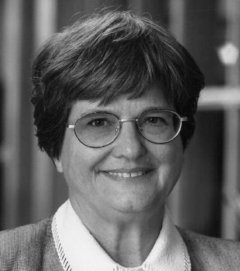
The real-life Sister Helen. Her most recent book is The Death of Innocents:An Eyewitness Account of Wrongful Executions.

Susan Sarandon won an Oscar for Best Actress for her turn as Sister Helen. Note that while Sonnier was in fact put to death in the electric chair (as was Robert Lee Willie), director Tim Robbins opted to portray a lethal injection because, as Helen Prejean herself put it,

we don’t want to give people the moral out whereby people could say ‘oh well, we used to do electrocution but that’s too barbaric so now we are humane and inject them’

* The murder that led to this date’s execution took place in the same area where Willie Francis survived a trip to the electric chair: the very chair that killed Patrick Sonnier.

On this day..

1985: Stephen Morin, serial killer convert

On this date in 1985, Texas executed serial killer Stephen Morin for murdering and robbing Carrie Marie Scott in 1981 — one of at least three, and up to thirty, of his victims, most of whom were (unlike Scott) abducted for rape and kindred brutalizing.

Just the sixth person executed in Texas under its modern death penalty regime, Morin was an IV drug addict.

Death chamber technicians required 40-plus minutes to bore through the resultant scar tissue well enough to poison Morin. He’s been a bullet point on the anti-lethal injection brief ever since. (Oddly, Morin’s execution is not on this list of recent botches.)

But Morin’s most prominent afterlife is a very different object lesson: not medical ethics, but spiritual warfare.

It seems the last woman he kidnapped, Margy Mayfield, survived the encounter by converting the desperate fugitive to evangelical Christianity; this story is still stocked and sold by Focus on the Family. This is Mayfield’s own account of their meeting.

[audio:http://withusisgod.org/wp-content/uploads/audio/margy-mayfield.mp3]

To judge by his last statement, Morin took his conversion to the gurney.

But others who knew Morin better in life (and, creepily, helped him soundproof his murder-mobile) … are a bit more skeptical about him.

On this day..

1986: Mamman Jiya Vatsa, warrior-poet

On this date in 1986,* Nigerian Major-General Mamman Jiya Vatsa was shot (along with nine others) by command of his childhood friend — the dictator Ibrahim Babangida, whom Vatsa was allegedly plotting to overthrow.

A gifted writer since youth, Vatsa was just a nameless twenty-something junior officer in the early 1970s when he emerged onto the national literary scene.

In the 15 years before his death, Vatsa churned out 20-plus volumes, mostly poetry. He had a special inclination for writing for children.

Simultaneously, his star ascended in his professional sphere.

Risen to General, Vatsa was part of the Supreme Military Council of the previous dictator.

But by December of that year,
Vatsa and dozens of others were arrested.

Testimony against them — much of it of the speculative or torture-induced variety — described a ring of officers piqued at the Babangida coup (Vatsa was out of the country when it occurred) and keen to undo it. The scheme would have been only one of many such hatched or imagined in an unstable political situation that surely made the new big man nervous.

In the end, “only” ten (the nine others are named here) were stood up against the wall for the alleged plot. Many others, however, were imprisoned or purged, a lasting injury to the Nigerian brass that particularly crippled its air force.

Babangida, of course, rejected clemency appeals from the Vatsa family he knew well. He has since justified his harshness by arguing that Vatsa would have continued plotting against him in prison or in forced retirement. “Rawlings did it in Ghana,” Babangida said. “And you know Vatsa was very stubborn.”

The fatal tribunal’s judge** is less certain, and is hardly the only one to doubt Vatsa’s guilt outright.

I don’t know, nobody ever asked.
That was how some heroes died.
They died.

-Vatsa, “They Died” (Voices from the Trench)

* Some sources give March 6 as the execution date, but contemporaneous western press reports (admittedly an impeachable source) prefer the 5th. For instance, the March 6 Chicago Tribune says the executions occurred on “Wednesday” (the 5th).

** Ironically, Vatsa himself had once sat on a tribunal for another group of failed putschists, the 1976 Dimka coup.

On this day..

1983: John Eldon Smith, mafioso Willy Loman

On this date in 1983, Georgia’s electric chair* got its first use in 19 years.

The Headsman is not a theologian, but does believe John Eldon Smith’s quotable last words

Well, the Lord is going to get another one.

— would be conditioned on the Lord’s policy on crimes like this:

Joseph [Ronald] Akins’ former wife, appellant Rebecca Akins Smith Machetti, together with her husband, appellant John Eldon Smith, a/k/a Anthony Isalldo Machetti, a/k/a Tony Machetti** … plotted the death of Joseph Akins with the intent of redeeming the proceeds of Akins’ insurance policies, and other benefits, the beneficiaries of which were Mrs. Machetti and her three daughters by her marriage to Akins … appellant Tony Machetti drove to Macon, Georgia … contacted Ronald Akins and lured him into the area of the crime, ostensibly to install a television antenna … when he and his wife arrived at the appointed time the appellant Tony Machetti killed both of them with a shotgun.

Trial testimony against Smith said that the insurance salesman was hoping with his shotgun-slaying prowess to become a made man.

And the supposed last words, it should be noted, are not apparent on the secret audio recording of the execution, available here, although the religious theme presents itself in the form of a Catholic benediction. The rest is all clinical efficiency, a far cry from the next year’s dreadful botch.

The Dec. 16, 1983 New York Times report — executions were still oddities that drew national coverage at this time — quoted a witness remarking on the “antiseptic and sterile” process, which the Times writer described thus:

A square of material was draped over Mr. Smith’s face and a leather-strapped cap containing an electrode was placed over his head.

So tightly was he strapped to the chair, witnesses said, it was difficult to tell when the three unidentified executioners pressed three small buttons, one of which sent 2,000 volts of electricity through the condemned man’s body for two minutes. According to prison tradition, none of the executioners knew if his was the lethal button.

Far more noteworthy than either the day’s procedure or its subject was the context of a noticeably accelerating execution pace.

From resumption of executions in 1977 through 1982, there had been only six people put to death in the U.S.; Smith capped a year with five more, including back-to-back days (Robert Wayne Williams had been electrocuted in Louisiana on December 14).

Anti-death penalty lawyer and activist Henry Schwarzschild was quoted in the article bemoaning “a new period where executions are utterly likely” and prophesying 30 to 50 in the year ahead thanks to prisoners’ appeals expiring.

There were, in the event, 21 American executions during the ensuing twelvemonth, almost tripling the country’s total up to that time; the annual total has never since 1983 returned to single digits.

* One of several electric chairs named “Old Sparky”

** The non-wiseguy name’s similarity to a John McCain alias is presumably pure coincidence.

On this day..

1982: Suriname’s “December murders”

This was the date in 1982 of the “December murders” (“Decembermoorden”), when 15 opponents of Suriname’s military dictatorship were shot at Fort Zeelandia.

(The 15 people shot each have an entry on the Dutch Wikipedia, accessible through its Decembermoorden entry.)

Though the killings weren’t secret at the time, their circumstances have always been murky, beyond the plain fact of being murders of political dissidents — “counterrevolutionaries,” in the parlance of the “Socialist Republic”.

President Desi Bouterse had seized power in a coup in early 1980, and some of the casualties this day might have been suspected of plotting to pull the same trick on him: at least, several were made to read statements to that effect. Others were regime opponents of a less existential menace: dissident university professors; critical journalists; a prominent former footballer. (When in Paramaribo, take in a match at Andre Kamperveen Stadion, which is named for him.)

Bouterse took political responsibility for the slaughter while claiming not to have ordered it. But it’s long been said that Bouterse was actually present for the shootings, personally interviewing/interrogating/”judging” the prisoners. (That’s what the massacre’s lone survivor, the since-deceased Fred Derby, said. (Dutch link))

Decades later, Bouterse — now an ex-dictator — is finally facing trial for the December murders, including fresh evidence of his involvement in the day’s notorious affair.

On this day..

1989: Henri Zongo and Jean-Baptiste Boukary Lengani

This evening in 1989, the number two and three men in Burkina Faso’s military government were seized and summarily executed for allegedly plotting a coup of their own.


Lengani and Zongo

Henri Zongo and Jean-Baptiste Boukary Lengani certainly had the pedigree for it; they’d conspired along with Blaise Compaore in the 1983 putsch that brought Thomas Sankara to power … and then Zongo, Lengani and Compaore had overthrown Sankara four years later.

On this date, a triumvirate increasingly strained by personal rivalries and economic disagreements was unilaterally dissolved.

According to the official announcement, Zongo and Lengani planned to seize the airport while President Compaore was out of the country, shooting down his returning plane if necessary.

Whether accurate or pretext, their elimination (along with two other conspirators) helped Compaore consolidate his hold on Burkina Faso — a country he still governs to this day.

On this day..

1986: Andrew Sibusiso Zondo and two other ANC cadres

On this date in 1986, African National Congress cadre Andrew Sibusiso Zondo was hanged in Pretoria nine months after bombing a shopping center near Durban, with five white fatalities.

Zondo claimed he had intended to non-fatally target the South African Airways office at Amanzimtoti’s Sanlam Centre, but couldn’t find a functioning, available telephone in time to phone in his attempted bomb warning. Did we mention that he was 19?

Zondo, it turned out, had been radicalized by South African security forces’ indiscriminate violence against claimed ANC “strongholds” — and specifically by a still-infamous attack, the “Matola raids,” on neighboring Mozambique.

The apartheid regime wasn’t out to win hearts and minds. And it didn’t.

[T]here have never been any ANC bases or camps in Mozambique. There are residences … and if the qualification to make a home a base is only that the people in it can use a gun, then let us be told now: because every white man in South Africa can use a gun and there are weapons in every white household. Are these bases too? (ANC Acting President Oliver Tambo)

The bomb (actually a mine) was planted three days after a South African raid on Lesotho. One of Zondo’s accomplices later turned state’s evidence in exchange for immunity.

Both the ANC, which had an official policy of avoiding civilian casualties, and Zondo himself portrayed the affair as a regrettable rogue operation carried out unofficially by an understandably frustrated cadre.

It was not the last word in the bloody tit-for-tat

Two other persons suspected of being involved in the Amanzimtoti blast, Mr Phumezo Nxiweni and Mr Stanley Sipho Bhila, were [extrajudicially] executed by Security Branch members after they were acquitted in court … At Andrew Zondo’s memorial service, his brother was so severely assaulted that he developed epilepsy, which subsequently killed him. Two mourners were shot dead leaving his parents’ home after the memorial service. Lembede, one of the security policemen involved in the killing of Zondo’s alleged accomplice, was himself later killed, allegedly by members of MK.


Hanged along with Zondo were two unrelated ANC cadres, plus three unrelated common criminals.

I have no information about the criminals, but the other revolutionaries to swing were Clarence Lucky Payi and Sipho Brigitte Xulu (or Sipho Bridget Xulu — but a guy, by either name).

Payi and Xulu assassinated another ANC agent, Benjamin Langa, the brother of present-day South African Chief Jutsice Pius Langa.

South Africa’s post-apartheid Truth and Reconciliation Commission has officially attributed the murder to a false flag operation conducted by Pretoria — whereby a mole in the ANC ordered the killing and, with its perpetrators’ subsequent execution, achieved for the white government “a triple murder … without firing a single shot themselves.”

A murky affair by any standard, and one that may not be entirely buried. There’s been some attempt (hotly disputed) to establish a sinister (if vague) alternate hypothesis linking current South African President Jacob Zuma himself to the Langa murder.

On this day..

1984: Ernest Dobbert, child abuser

At 10:09 a.m. this morning in Starke Prison, 46-year-old Ernest Dobbert threw a wink to his minister and was electrocuted for torturing his nine-year-old daughter to death.

The gist of the offense is described by the Gainesville Sun:

He was a child abuser, dating back to 1969. With his wife in prison for kiting paper, his four children obviously got on his nerves. His daughter, age 9, he tortured by beating with boards and belts, by kicking, by poking in her eyes, and by holding her head underwater in the toilet. He celebrated New Year’s Eve of 1971 by dressing her poor abused body in the finest garb on hand, placing it in a garbage bag and concealing it in the attic.

No chauvinist, he. Within weeks, he had done much the same with his son, aged 7. With the help of another terrorized son, age 12, he buried them both out in the scrub somewhere, with their bodies not yet found.

An unsympathetic character deservedly forgotten a quarter-century later, Dobbert interestingly illustrates some of the wide legal and ethical gray area in the real-life application of the death penalty for the many prisoners who are guilty yet not the like of Ted Bundy.

The Sun editorial cited urges Dobbert’s commitment to a mental institution on the nicely circular grounds that “no person is truly sane who tortures — much less kills — the fruit of his own loins.” This might bespeak an impoverished appreciation of human psychology’s potential.

More legally serious is the matter of intent and premeditation, ambiguous here as it so frequently is in life. Dobbert was convicted of only second-degree murder for killing his son; for slaying his daughter, the jury convicted him of capital murder but recommended only a life sentence, unsure of his degree of calculation.

But Ernest Dobbert is on this blog because Florida law allowed a judge to overrule the jury’s recommendation, opining,

this murder of a helpless, defenseless and innocent child is the most cruel, atrocious and heinous crime I have ever personally known of — and it is deserving of no sentence but death.

Maybe so … maybe no. In a 2000 paper* that undoubtedly plays better for an academic audience than a popular one, death penalty expert (and opponent) Michael Radelet points out that if one does suppose Dobbert’s intent to be less than fully formed, a case like his could be held to constitute a species of “wrongful execution” notwithstanding his guilt for the crime.**

The cases of those wrongly sentenced to death and who were totally uninvolved in the crime constitute only one type of miscarriage of justice. Another (and more frequent) blunder arises in the cases of the condemned who, with a more perfect justice system, would have been convicted of second-degree murder or manslaughter, making them innocent of first degree murder. For example, consider the case of Ernest Dobbert, executed in Florida in 1984 for killing his daughter. The key witness at trial was Dobbert’s 13-year-old son, who testified that he saw his father kick the victim (this testimony was later recanted). In a dissent from the Supreme Court’s denial of certiorari written just hours before Dobbert’s execution, Justice Thurgood Marshall argued that while there was no question that Dobbert abused his children, there was substantial doubt about the existence of sufficient premeditation to sustain the conviction for first-degree murder. “That may well make Dobbert guilty of second-degree murder in Florida, but it cannot make him guilty of first-degree murder there. Nor can it subject him to the death penalty in that State” (Dobbert v. Wainwright, 468 U.S. 1231, 1246 (1984)). If Justice Marshall’s assessment was correct, then Dobbert was not guilty of a capital offense, and—in this qualified sense—Florida executed an innocent man.

For Justice Marshall, of course, all executions are wrongful.

For those otherwise inclined, like Joshua Marquis, an Oregon district attorney with a dim view of overhyped innocence claims, Marshall’s interpretation figures to look downright “startling”.

Florida Governor Bob Graham agreed.

Ernest Dobbert has been executed because of his brutal actions toward his own children. I hope that this indication of the seriousness of child abuse will be an example of the value which the people of Florida place upon the lives of infants and young people in our state, and a measure of the lengths the people of Florida are prepared to go to prevent and punish such crimes.

* “The Changing Nature of Death Penalty Debates,” Annual Review of Sociology, vol. 26, August 2000.

** Fellow anti-death penalty academic Hugo Bedau on people whose murders are “arguably not … capital murder”:

We rarely think about this category when discussing innocence and the death penalty, but it is relevant and extremely important. The problem has been with us for at least two centuries, ever since the invention of the distinction between first-degree (capital) murder and second-degree (noncapital) murder.

On this day..

1986: The Stoning of Soraya M

It was on this date, according to French-Iranian journalist Freidoune Sahebjam’s The Stoning of Soraya M, that 35-year-old mother Soraya Manutchehri was stoned to death in an Iranian village.


In a scene from The Stoning of Soraya M, the titular character awaits her titular fate.

In Sahebjam’s telling, a journalistic trip to the Islamic Republic chances upon a mountain village with a terrible secret.

The story he uncovers features one Ghorban-Ali, nasty husband par excellence who grows tired of the arranged wife he’s spent 22 years beating and (falsely) accuses her of adultery in order to put her out of the way so that he can remarry a younger bride.

With the complicity of the local mullah, the impolitic silence of the accused, and the structural misogyny of the law, Soraya Manutchehri quickly finds herself condemned to death on this date, and stoned within hours — Soraya’s own father casting the first stones.

This powerful story, officially denied by Tehran, has just been released in cinematic form. The Stoning of Soraya M. (movie homepage) features an unsubtle dramatic tableau, a stomach-churning 20-minute stoning sequence, and Iranian-American actress Shohreh Aghdashloo as Soraya’s aunt Zahra Kahnum, fearlessly giving the foreign journalist this explosive story

As it happened, this cinematic condemnation of the reduced status of women in the Ayatollah’s Iran made its American debut the same week that cell phone footage of Neda Agha-Soltan, bleeding to death after being shot dead during protests against Iran’s recent election results, became an Internet sensation.

On this day..

1987: Jimmy Glass, electrocution appellant

On this date in 1987, Jimmy L. Glass died in Louisiana’s electric chair — having come one vote short of having the device declared unconstitutional by the Supreme Court.

The 20-year-old Glass escaped from a parish jail with fellow inmate Jimmy Wingo on Christmas Eve, 1982, robbing and murdering an elderly couple in the process. Each blamed the other; both got the chair.*

But should they have?

Glass would lend his name to a landmark 1985 Supreme Court decision contesting Louisiana’s method of execution.

By a 5-4 decision, the high court held that electrocution, still at that point the country’s prevailing method of execution despite its medieval reputation for grisly botches, remained a constitutional method of inflicting death.

Liberal Justice William Brennan‘s vigorous dissent from that judgment is not for the squeamish. (For readability, I’ve added emphasis and removed the many citations in the original.)

[E]vidence suggests that death by electrical current is extremely violent and inflicts pain and indignities far beyond the “mere extinguishment of life.” Witnesses routinely report that, when the switch is thrown, the condemned prisoner “cringes,” “leaps,” and ” ‘fights the straps with amazing strength.’ ” “The hands turn red, then white, and the cords of the neck stand out like steel bands.” The prisoner’s limbs, fingers, toes, and face are severely contorted. The force of the electrical current is so powerful that the prisoner’s eyeballs sometimes pop out and “rest on [his] cheeks.” The prisoner often defecates, urinates, and vomits blood and drool.

“The body turns bright red as its temperature rises,” and the prisoner’s “flesh swells and his skin stretches to the point of breaking.” Sometimes the prisoner catches on fire, particularly “if [he] perspires excessively.” Witnesses hear a loud and sustained sound ” like bacon frying,” and “the sickly sweet smell of burning flesh” permeates the chamber. This “smell of frying human flesh in the immediate neighbourhood of the chair is sometimes bad enough to nauseate even the Press representatives who are present.” In the meantime, the prisoner almost literally boils: “the temperature in the brain itself approaches the boiling point of water,” and when the postelectrocution autopsy is performed “the liver is so hot that doctors have said that it cannot be touched by the human hand.” The body frequently is badly burned and disfigured.

The violence of killing prisoners through electrical current is frequently explained away by the assumption that death in these circumstances is instantaneous and painless. This assumption, however, in fact “is open to serious question” and is “a matter of sharp conflict of expert opinion.” Throughout the 20th century a number of distinguished electrical scientists and medical doctors have argued that the available evidence strongly suggests that electrocution causes unspeakable pain and suffering. Because ” ‘[t]he current flows along a restricted path into the body, and destroys all the tissue confronted in this path . . . [i]n the meantime the vital organs may be preserved; and pain, too great for us to imagine, is induced. . . . For the sufferer, time stands still; and this excruciating torture seems to last for an eternity.‘ ” L.G.V. Rota, a renowned French electrical scientist, concluded after extensive research that

“[i]n every case of electrocution, . . . death inevitably supervenes but it may be very long, and above all, excruciatingly painful . . . . [T]he space of time before death supervenes varies according to the subject. Some have a greater physiological resistance than others. I do not believe that anyone killed by electrocution dies instantly, no matter how weak the subject may be. In certain cases death will not have come about even though the point of contact of the electrode with the body shows distinct burns. Thus, in particular cases, the condemned person may be alive and even conscious for several minutes without it being possible for a doctor to say whether the victim is dead or not. . . . This method of execution is a form of torture.”

At least neither the juridical near miss nor Brennan’s graphic description of his impending manner of death dented Jimmy’s sense of humor. Asked for his last words, the “swaggering” inmate, already strapped in the chair, replied

Yeah, I think I’d rather be fishing.

Luckily for Carlisle United, he’s not the same guy as journeyman goaltender Jimmy Glass, who in 1999 improbably struck home one of the greatest goals in English football history.

* Wingo was put to death four days after Glass.

On this day..