Themed Set: More like Drop-shire

On moonlit heath and lonesome bank
The sheep beside me graze;
And yon the gallows used to clank
Fast by the four cross ways.

A careless shepherd once would keep
The flocks by moonlight there,*
And high amongst the glimmering sheep
The dead man stood on air.

They hang us now in Shrewsbury jail:
The whistles blow forlorn,
And trains all night groan on the rail
To men that die at morn.

There sleeps in Shrewsbury jail to-night,
Or wakes, as may betide,
A better lad, if things went right,
Than most that sleep outside.

And naked to the hangman’s noose
The morning clocks will ring
A neck God made for other use
Than strangling in a string.

And sharp the link of life will snap,
And dead on air will stand
Heels that held up as straight a chap
As treads upon the land.

So here I’ll watch the night and wait
To see the morning shine,
When he will hear the stroke of eight
And not the stroke of nine;

And wish my friend as sound a sleep
As lads I did not know,
That shepherded the moonlit sheep
A hundred years ago.

A.E. Housman, A Shropshire Lad

In English crime as in culture and commerce, the capital city can’t help but throw its shadow over the rest, and small wonder. Who could deny London her laurels as one of the world’s great hives of true crime: haunt of gallant highwaymen and underworld kingpins, skulking servants and reprobate lords, fantastical escape artists and the mysterious Whitechapel murderer. So it is for executions, too, although a site like ours might attribute London’s primacy as much to the convenient digitization of Old Bailey records as to the notoriety of the Tyburn tree or the Dickensian ribaldry under Newgate’s gallows or the legend of Jack Ketch.

Suffice to say that, wherever one lays the reasons, London’s gravitational force drags the eyeballs.

For this week’s series, it’s time to do justice to the everyday criminals who plied their trades outside the Great Wen. Specifically, we’ll be off to the Welsh frontier to meet some Shropshire malefactors whose long-ago crimes waft the moldy bouquet of that West Midlands county’s distinctive cheese.

The sequence of March execution dates upon which this post series hangs (ahem) is more than coincidence, for the pattern of executions in Shropshire — as is generally true outside of London — tracks sittings of the intermittent assizes.

This juridical innovation predated the Magna Carta and somehow persisted until disco: traveling judges commissioned by the state to hold courts of oyer and terminer in six different regional circuits. Shropshire was part of the Oxford circuit with Berkshire, Oxfordshire, Worcestershire, Staffordshire, Herfordshire, Monmouthshire, and Gloucestershire; typically, Shropshire’s assizes were held in its centrally located county town, Shrewsbury, twice per year — once during Lent, and again in the summer. At these assizes the mobile barristers would plop down, straighten their wigs, and in the course of a few weeks try all the pending felony cases that had stacked up since their last visit. Then they would pick up and move to the next county in the circuit.

When there were many capital cases in the queue, assizes could turn downright bloody — but in more normal times, their product was predictability. Thanks to the assize schedule, 18th and 19th century Shropshire hangings almost all take place in either March-April, or July-August. Head over to capitalpunishmentuk.org and browse their logs of historical executions: see what I mean?

With due appreciation to the court’s metronomic regularity, the next few days will be dedicated to a selection of Salopean March noosings … common crimes, to be sure, and maybe a bit out of the way — but for those who touched them every bit as rich with malice and majesty and madness as ever a London footpad could design.

* Keeping sheep by moonlight: a euphemism for hanging in chains.

** This fate befalls the titular tortured scientist in Frankenstein: he wastes three months in prison on suspicion of murdering his friend awaiting “the season of the assizes”, at which point “I was obliged to travel nearly a hundred miles to the county-town, where the court was held.”

On this day..

1824: Richard Overfield, wicked stepfather

(Thanks to Meaghan Good of the Charley Project for the guest post. -ed.)

On this date in 1824, only three days after his indictment, Richard Overfield was hanged in Shrewsbury, England for the murder of his three-month-old stepson, Richard Jr.

The child died on September 21 the previous year. Overfield’s wife, Anne, rushed to the doctor’s after finding her little son in apparent agony. When she kissed the baby, she noticed his lips were white-colored and blistered and tasted bitter.

Little Richard Jr. died later that day in spite of the doctor’s attempts to save him.

“Overfield, it turns out,” notes Samantha Lyon in her book A Grim Almanac of Shropshire,

worked in a carpet factory and so had access to sulphuric acid. This he stole to administer to the baby. The already terrible picture this forms is made all the more grotesque when you know how sulphuric acid kills: the acid is so corrosive that it burns the mouth, throat, esophagus and stomach when ingested. It can, and often does, cause the sufferer to experience severe thirst and to have difficulty breathing.

The motive came out during the trial: Overfield knew when he got married that Anne was pregnant with another man’s child. This was, in fact, why he married her in the first place.

The parish didn’t want to pay out welfare for yet another illegitimate baby, so they offered Overfield a lump sum of money to marry its mother. Any baby born more than a month after marriage would be considered legitimate and its purported father would have to support it.

Overfield accepted the parish’s offer, but although the baby bore his name, he told Anne he would never accept her son as his own. And since he already had the lump-sum payment, well …

“There seems to have been absolutely no step-paternal feelings on the elder Richard’s part,” notes David J. Cox’s book Foul Deeds and Suspicious Deaths in Shrewsbury and Around Shropshire:

[He] was heard to frequently express a hatred for the infant and on several occasions was reported as stating that he would not support his wife or her ‘bastard child.’

Matters came to a tragic head …

At his trial Overfield tried to blame the family cat: he’d seen it lying on top of the baby’s face, he said, and shooed it away, and little Richard started choking shortly thereafter.

Beyond that, he had little to say for himself. The jury showed its contempt for his so-called defense by convicting him after only five minutes’ deliberation.

Overfield made a full confession and expressed public repentance for his crime. He calmly accepted his fate.

Part of the Themed Set: Shropshire.

On this day..

Unspecified date: Mariotto Mignarelli, proto-Romeo

On a never-specified date in 15th century Siena, the tragic lover Mariotto Mignarelli was beheaded in Masuccio Salernitano‘s story Mariotto and Ganozza — the apparent wellspring (via an English interlocutor) for Shakespeare’s Romeo and Juliet.


Mid-16th century translation of Romeus and Juliet by Arthur Brooke. (via)

Masuccio’s tale is itself an Italian Renaissance gloss on an old Ovid story; its outline will be instantly recognizable to devotees of the Capulets and Montagues. But instead of dueling suicides, Masuccio ends one of the star-crossed lovers with an executioner’s blade.

In Mariotto and Ganozza, which can be enjoyed for free in the original Italian here or here, the young lovers secretly wed only to find “that wicked and hostile fortune reversed all their present and future desires.”


These violent delights have violent ends
And in their triumph die, like fire and powder …

“Fortune’s” inscrutable hand turns out to be that of Mariotto himself, who gets into a fight with some other nobleman and, slaying him, must flee into exile. Posterity must excuse Mariotto/Romeo his hotheadedness, for were he not the type to wreck his own life by murdering a guy in a street fight he also wouldn’t be the type to pursue forbidden tragic romance. That’s art.


Fortune’s fool …

“How great was the supreme grief of the two most wretched lovers, so lately wed, and how bitter their tears at the thought of what they believed to be their endless separation, he alone who has been pricked by such wounds can truly tell.” (Translation source.)

“So deep and bitter it was, that at their last parting, they seemed for a long while to have died in each other’s arms.”

It next comes to pass that Gianozza’s father, ignorant of her secret marriage to the town fugitive, arranges a match for her. This development leads our Juliet figure to seek out the aid of the friar who has secretly wed them in a scheme that is precisely Shakespearean.

The friar “made up a certain water with certain concoctions of various powders that, when the draught was ready and she had drunk it, it would not only make her sleep for three days, but seem to be really dead.” With this potion they stage Gianozza’s death; then, the friar secretly steals her hibernating “corpse” from its tomb, revives her, and packs her off to find her beloved.

He, of course, has separately received word of Gianozza’s death — and (also of course) the courier that had been dispatched pre-death elixir to clue him into the plan has been waylaid by pirates and left his essential plot spoilers at the bottom of the sea.

Disconsolate, Mariotto returns to Siena with the unproductive object of mooning over Gianozza’s grave and “weep[ing] as if their lives were ended.” Don’t worry, he has a backup plan! “If by misfortune he was recognized, he thought he would gladly be condemned as a murderer, knowing that she was already dead whom he loved more than himself and who loved him with equal love.”

This works as well as you expect, albeit with less panache than Shakespeare’s crypt climax: Mariotto gets caught in a transport of the macabre trying to break into Gianozza’s sepulcher, and is recognized as a condemned outlaw.

Before dawn, all Siena was full of the news, which reached the ears of the Court, who ordered the mayor to go and arrest him and quickly do that which the laws and the State commanded.

So, a prisoner in fetters, Mariotto was led to the palace of the mayor. When he was flogged, without needing long tortures, he faithfully confessed the cause of his desperate return. Though all alike had the greatest pity for him, and amongst the women he was bitterly wept for and thought the only perfect lover in the world, and each of them would have willingly redeemed him with her own life, yet he was at once condemned by the law to be beheaded. When the time arrived, without his friends or parents being able to aid him, the sentence was carried out.

Three days later, Gianozza — having reached Mariotto’s former refuge of exile and there learned of his misapprehension — turns up in Siena again only to discover that she is too late. Rather than stabbing herself to death right then and there as the Bard’s heroine would do, she shuts herself up in a convent “with intense grief and tears of blood and little food and no sleep, continually calling for her dear Mariotto, [and] in a very short time ended her wretched days.”


Prokofiev’s unwilling balletic finale

On this day..

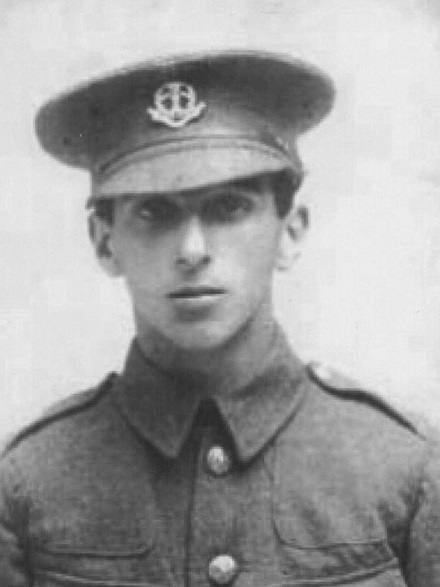
1916: Abraham Bevistein, child soldier

One century ago today, a Polish Jew from east London named Aby Bevistein was shot for cowardice in Calais — four weeks shy of his 18th birthday.

Abraham Bevistein was among an estimated quarter-million Brits who bore arms as minors in World War I. Fired by patriotism, these boys dodged the military’s 18-year-old minimum by … telling their recruiters they were 18. No documentation necessary.

Bevistein, whose family had moved to London from Warsaw when he was a small child, was British through and through enough to surge into the army with the first wave of pie-eyed volunteers in September 1914. He had 16 years and four months, and if he was like many of his new comrades in arms he probably reckoned on being back home by 17 — a bonny hero of a speedy war.

Instead, he spent most of 1915 navigating the labyrinth of trenches in France, and all their attendant horrors. He was wounded in December of that year but soon passed fit for duty again. On February 12-13, 1916, shellshocked and deafened by German grenades, he again sought medical help but was directed back to the lines by a harried medical officer. Instead, Bevistein wandered away to the rear, and took temporary refuge at a French farm.*

“We were in the trenches and I was ill so I went out,” he wrote to his mother by way of all-too-nonchalant explanation. “They’ve taken me to prison and I’m in a bit of trouble now.”

Anti-war suffragette Sylvia Pankhurst took up Bevistein’s cause when she learned about his execution, prominently publishing a sympathetic feature story in her newspaper, Women’s Dreadnought. Like 305 other British and Commonwealth soldiers shot at dawn during the Great War, Bevistein was posthumously pardoned and added to war memorials in the 21st century.

* The farm owner’s later testimony to Bevistein’s court-martial that the young tommy had expressed an intent to return to England sealed his fate as a deserter.

On this day..

1875: Jesse Fouks, for murdering the Herndon family


Sunderland (U.K.) Daily Echo and Shipping Gazette, April 6, 1875.

A despatch from Brentville, Prince William County, Va., dated March 19, says: —

Jesse Fouks, the negro who murdered the Herndon family, consisting of Jeremiah Herndon, his wife, and a coloured boy named Addison Russell, near Cedar Run, in the lower part of this county, on the 4th of last December, was hanged this morning.

The circumstances of this murder were very horrible. Mr. Herndon, a well-to-do farmer, was about 70 years of age, his wife was a few years younger, and the coloured boy about 18 years old.

On the morning after the murder, Mr. Summerfield Herndon, a son of the venerable couple, who resided not far from their farm, went to pay a visit to his parents. Entering their yard, he saw bloody footprints, which led to the door of the dwelling. Passing into the house, a ghastly spectacle was presented to his view. Upon a pallet on the floor the coloured boy Russell lay cold in death, with his head split open. Upon the bed lay Mrs. Herndon, weltering in blood. A little later Mr. Herndon was found lying in a field about 400 yards from the house, barefooted and bareheaded, with his head and face cut and bleeding in many places.

On being asked who had done this deed, Mr. Herndon, who seemed bewildered, said he did not know who had done it; that he had been walking about all night, and felt cold when he went into the water.

He was taken to his house, and there told a clearer story to Justices Horton and Woodyard of a quarrel with Jesse Fouks, who had been hauling wood for him.

It was ascertained, on searching the house, that 235 dols. had been taken by the murderer. Fouks was arrested on suspicion at the house of a neighbour the day after the murder.

Both Mr. and Mrs. Herndon lingered some days, Mrs. Herndon dying on the Wednesday following, and Mr. Herndon on the succeeding Friday. Fouks was tried, found guilty, and duly sentenced to be hanged.

On the 31st of last January he made an attempt to escape from gaol. He burned a hole through the partition of his cell, and got out into the passage, where there was nothing to prevent his escape except an iron-grated door, which was unlocked, and the outer door.

On his appearance at the outer door, he was met by the gaoler’s wife, who, with great presence of mind, seized him and called for help, but he managed to get free and got away.

He was captured on the following day in a straw rick, about six miles from Brentsville.

He acknowledged his guilt, and said that on the evening of the murder he took some meat, and that Mr. Herndon threatened to prosecute him; that he went into the house to try to induce the old man not to prosecute him; that he refused to retract, and that they then began quarrelling, and Mr. Herndon took up the axe and threatened to knock his brains out.

Fouks retreated to the door (the door being open), seized the axe handle, and to use his own words, “Old Satan was in me. I struck Mr. Herndon; took da axe from him, and den struck de old woman twice wid de axe. I did’nt strike her wid nuffin else, and den I struck Add (the coloured boy) twice wid de axe also.”

About 1,000 persons were present at the execution. The prisoner exhibited the utmost self-composure, and warned his hearers to escape the effects of bad passion.

Last Tuesday Fouks gave his body to a physician of Fauquier County, saying that the doctors would get it anyhow.

On this day..

1752: Helen Torrence and Jean Waldie

Helen Torrance and Jean Waldie were executed this day, for stealing a child, eight or nine years of age, and selling its body to the surgeons for dissection. Alive on Tuesday, when carried off, and dead on Friday, with an incision in the belly, but sewn up again.

Tolbooth’s log for March 18, 1751/2*

This date in 1752 marks a milestone in the mutation of the Enlightenment’s piercing medical gaze into the beginnings of a macabre and sordid niche industry that kept doctors well-supplied with cadavers into which to gaze.

The March 18 hanging in Edinburgh of Helen Torrence and Jean Waldie appears to be the first known execution for an anatomy murder.

In the bad old days when dissection subjects were so hard to come by that medical students were known to snatch fresh bodies from the grave like Dr. Frankenstein, the Scots Magazine reported that the two women “frequently promised two or three surgeon-apprentices to procure them a subject” in exchange for a small fee. That fee really was quite small: two shillings, and a few extra pence they haggled for, not at all a favorable rate to sell one’s soul and maybe little more than enough to cover their costs.

Torrence and Waldie were supposed to obtain the subject while sitting on a ceremonial death watch with a dead child, but having no such deceased moppet to hand and really needing a couple of shillings, the ladies went the far more perilous route of snatching a real live eight-year-old while his parents were away. They plied little John Dallas with ale and suffocated his breath away, and Torrence even schlepped the cadaver to the apprentice surgeons in her own apron for an added tip.

The prisoners’ hair-splitting defense, a masterpiece of legal black comedy, was that they could only be shown guilty of kidnapping a living child and then selling a dead child — and neither of these acts constituted a capital crime. Considering the deep-rooted public loathing of resurrectionists’ grave-raiding, the court readily made free to infer from the juxtaposition of these circumstances the hated women’s culpability for John Dallas’s demise.

* 1752 was the last year that England maintained the old Julian calendar, and with it, the recognition of New Year’s Day on Lady Day (March 25) rather than January 1, so the documents of the time make this execution March 18, 1751. The change to the Gregorian calendar took place that summer.

On this day..

1706: Matthias Kraus, Bavarian rebel

On this date in 1706, Bavarian butcher Matthias Kraus was beheaded and quartered for an anti-Austrian rebellion.

This commoner was the victim at several orders’ remove of distant imperial politics; as such, he will enter this story only as a coda. Instead, we begin in the 1690s, in Spain, with the approaching death of the childless Spanish king Charles II.

The question of who would succeed Charles presented European diplomats the stickiest of wickets: there were rival claims that augured civil war, which was bad enough, but such a war’s potential winners could themselves be scions of the French Bourbons or the Austrian Habsburgs … which meant that Spain’s world empire could become conjoined with that of another great European power and unbalance everything.

Now, it just so happened that the Elector of Bavaria Maximilian II Emanuel had a ball in this game — because his marriage to a Habsburg princess had produced a kid who could plausibly receive the throne, Joseph Ferdinand of Bavaria. (The mom died in 1692, but had she been alive, she would have stood to inherit Charles II’s throne.)

For a while this whelp looked like the answer the continent’s schemers were searching for, since neither the state of Bavaria nor his father’s House of Wittelsbach was already a great power — and thus, they could be elevated without creating a new hegemon. But in 1699, months after the infirm Charles had designated the little boy “my legitimate successor in all my kingdoms, states and dominions,” Joseph Ferdinand too dropped dead.

The boy was only seven years old — but he had lived long enough to whet his father’s appetite for a more substantial patrimony. When Charles II finally died in 1700 with the inheritance situation still unresolved, Max Emanuel entered the resulting continental war — the War of Spanish Succession — allying himself with France with the intent of supplanting the Habsburg dynasty on the Austrian throne.

This was a bold gambit to be sure but in the war’s earliest years it looked like it might really work. The Elector of Bavaria parlayed his strong position on the Danube (and ample French support) into a menacing thrust into Austria that threatened to capture Vienna. For the Wittelsbachs, this would mean promotion to a higher plane of dynastic inbreeding; for France, it would mean a lethal blow to the rival Austrian-English-Dutch “Grand Alliance”.

But things went pear-shaped in 1704.

Marlborough mounted a famous march to Austria’s rescue and trounced the Bourbons and Bavarians at the Battle of Blenheim, completely reversing the tide of events. Bavaria now came under Austrian occupation, as Max Emanuel hightailed it to the Low Countries.

All this statecraft brings us as a postscript the unhappy fate of our butcher, Herr Kraus.

The Austrian occupation of Bavaria — complete with punishing wartime levies — triggered in 1705 a peasants’ revolt grandly titled the Bavarian People’s Uprising. Matthias Kraus was a leader in this rising.


Matthias Kraus in Kelheim (Via)

Like the Wittelsbach pretension writ small, Kraus was intrepid but doomed. Having seized the town of Kelheim with a force of 200 or so, he held it for just five days. Austrian forces appearing at the gate negotiated for a peaceful surrender of the city, but as soon as they got the gates open they ran amok in a general massacre.

Kraus himself, interrogated under torture in Ingolstadt, was returned to Kelheim for public execution — his body’s quarters to be mounted around the city as a warning.


Detail view (click for a full image) of an Austrian leaflet publicizing the fate of the rebellious Kraus.

His martyrdom at the hands of a foreign occupation has stood Kraus in good stead in posterity. There is a Matthias-Kraus-Gasse in Kelheim, as well as a fountain memorial put up to celebrate the 1905 bicentennial of his his fleeting moment of heroism.

On this day..

1868: Eleven samurai, for the Sakai Incident

On this date in 1868,* eleven samurai committed seppuku before the French consul in Japan spared their nine comrades.

The affair was stunning punishment for what’s known as the Sakai Incident — an offense eight days prior that occurred during Japan’s Boshin War, a last rearguard battle of loyalists to the (now officially ended) Tokugawa Shogunate against the rising imperial party of the Meiji Restoration.

What’s noteworthy for our purposes in this period is that the Meiji espoused an anti-foreigner policy — one that was not the less intently felt by the Meiji base for being entirely insincere on the part of elites.

It was in this tense context that a boat full of French sailors from the corvette Dupleix called on March 8 at Sakai — a port city whose shogunate forces had routed. It had been recently occupied by imperial troops.

Japan had only been opened to the west 15 years before, and access was still quite restricted; there might have been a misunderstanding between the French sailors and Sakai’s Tosa clan occupiers over whether this city was open at all. There was definitely a misunderstanding once the tourists ran into samurai on shore, and before you know it high words and suspicious glares turned into a street skirmish that left eleven Frenchmen dead.


Illustration from Le Monde Diplomatique (1868)

This Sakai Incident (English Wikipedia entry | French) incensed western powers, and not only the French: the British, Dutch, Prussians, Italians, and Americans all pulled down their embassy colors in solidarity pending adequate satisfaction for the French. Japan at this moment was not at all in a position to take a stand against foreign gunships over this dust-up, and it met the conditions — which consisted of some personal groveling by a state minister, the payment of a 150,000-piastres indemnity, and the execution of the officers and soldiers involed. The punishment would be self-administered by seppuku at a Sakai shrine. This set the scene for a powerful climax, in which the soldiers one by one tore out their own guts in a ceremony that must have played as defiance no less than submission.

Quoting the Moniteur, the London Morning Post of May 19, 1868 (news was slow in those days) describes the operatic punishment.

On the 15th [a Japanese] high functionary brought a written reply from his Government conceding all the satisfaction required. On the following day Captain du Petit-Thouars, commander of the Dupleix, landed at Sakai to witness the execution of two officers, a subaltern, and 17 Japanese soldiers, condemned to death as the principal authors of the aggression. The two chiefs were the first put to death, after which nine others perished successively. Captain du Petit-Thouars then seeing that the Japanese Government was decided on carrying out its engagements to the end, and ceding to a feeling of humanity, stayed the execution, declaring that he considered the reparation sufficient, and that he proposed to ask the Minister of France to intercede for a commutation of punishment in favour of the other condemned.

The last nine beneficiaries of the captain’s clemency were sent into internal exile instead.

The Japanese writer Mori Ogai wrote a short story about this affair, Sakai Jiken. (See Suicidal Honor: General Nogi and the Writings of Mori Ogai and Natsume Soseki.)

* There are some citations that give the date as the 23rd. The original reporting I have located unambiguously asserts that the execution occurred on the 16th.

On this day..

1988: Dmitri Polyakov, Cold War spy

Although it would not be publicly known until two years later, the retired Soviet Gen. Dmitri Polyakov was on March 15, 1988 executed for treason.

A World War II artillerist, Polyakov (English Wikipedia entry | Russian) was a military intelligence officer working as an embassy attache when he made contact with American agents in New York in 1961. For the next quarter-century — across assignments to Burma, India, the U.S., and back in Moscow — he would ship to the CIA and FBI some of its choicest morsels of the Cold War.

“Polyakov was the jewel in the crown,” former CIA chief James Woolsey lamented of his loss. Polyakov-supplied documents underscoring the extent of Russia’s split with China have been credited with spurring Richard Nixon’s overtures to Beijing.

The spy code-named Bourbon, Roam, and Top Hat had idiosyncratic motivations; he was not an ideological true believer like a Sorge nor a man afflicted by demons like a Vetrov. He accepted only a little bit of money from his handlers, mostly to support an innocuous wordworking hobby.

This Russian article indulges a variety of hypotheses — contempt for Khrushchev, the death of a son, an appetite for risk-taking — but nothing his U.S. contacts could learn of him rebutted the presentation he made of himself as a Russian patriot chagrined at the prospect that the corrupt Communist state could win the Cold War.

His revelations did much to check that possibility.

Polyakov retired as a general in 1980, having operated under the Kremlin’s nose for a phenomenally long period of time. (His U.S. contacts made sure to feed him some career-advancing secrets, too.) But he was betrayed in the 1980s by the USSR’s own moles, Robert Hanssen and Aldrich Ames and arrested in 1986.

His fate, imposed by the Military Collegium of the Soviet Supreme Court, thereafter was a mystery to his former handlers. Two months after his secret execution, U.S. President Ronald Reagan sought Polyakov’s pardon or his exchange for a captured Soviet mole at his May-June 1988 arms control summit with Mikhail Gorbachev. The solicitation was politely deferred.

On this day..

1808: Thomas Simmons

(From contemporary newspaper accounts, principally The Bury and Norwich Post, Wednesday, March 09, 1808)

Thomas Simmons was indicted, for that he, at Broxbourn, on the 20th of October last, did make an assault on Sarah Hummerstonne, and wilfully gave her a mortal wound in the neck with a knife, of which she instantly died. [This is the case of the inhuman wretch who murdered the two unfortunate women at Hoddesdon, and the Court was crowded at an early hour in the morning to hear the trial. It did not last long, as the facts lay in a very narrow compass.]

Mr. Pooley, as Counsel for the prosecution, intreated the jury to dismiss from their minds all that they had heard elsewhere, and attend only to the evidence which would be laid before them. He then stated the facts as below detailed, and called the following witnesses:

Samuel James, a surgeon at Hoddesdon, deposed, that on the 20th of October, he went to the house of Mr. Boreham, at Hoddesdon. On going to the house, he saw Mrs. Hummerstone leaning against the paling near the door; she was then alive, but died in three minutes after, of a wound in the neck, near the spine.

Sarah Harris, servant of Mr. Boreham, said she had lived four years with him: Simmons, the prisoner, had lived there three years, and quitted at last Michaelmas: the prisoner wished to marry her, but her mistress disapproved of it; they had quarreled before he quitted the service, on which occasion he beat her; and when he had done he said he did not care if he had killed her. He had often said he would make away with her, because she would not marry him. About half past eight in the evening of the 20th of October, he came to the house; she was in the kitchen, and heard him coming along the yard; he was swearing violently. He came up to the window, and struck at her through the lattice, and swore he would do for them all. She desired him not to make a noise, as they had company: he said he did not care for the company, he would do for them all. Mrs. Hummerstone, hearing the noise, opened the room-door, and came to the yard. She told him to go away. He gave her a blow on the head, which knocked off her bonnet; she ran into the house, and he immediately followed her. The witness immediately heard the shrieks of murder, but did not know from whom. All the family were in the room, viz. the three young ladies; Mr. Boreham’s daughter, Mrs. Warner, the married daughter; Mr. Boreham and his wife, and Mrs. Hummerstone. In a very short time, the prisoner came to the wash-house to her: she shut the door, and cried out murder. The witness ran into the sitting-room. She there saw some one lying under the window — she ran from thence down a passage — the prisoner followed her. She there met her master with the poker in his hand; in running hastily, her master, who is a very old and feeble man, was knocked down. The prisoner caught her, and threw her down, and drew a knife on her. He threw her across Mrs. Warner, who was lying dead, as she believed. He drew a knife across her throat, but she guarded it with her hand, which was cut. He made a second blow, when she wrested the knife out of his hand. He immediately ran away, and she saw no more of him.

Sarah Cakebury said, she lived near Mr. Boreham, and heard the cry of murder. She passed Mrs. Hummerstone, and went into the house; she saw Mrs. Warner lying dead under the window.

Thomas Copperwheat went in search of the murderer. He discovered Simmons concealed under some straw in a crib in the farm-yard; he had on him a smock frock, very bloody; the place where he was found was about 100 yards from the house.

Benjamin Rook, Coroner, said, when the evidence of Harris was read to the prisoner, he said it ws very true, he had murdered them, and no one else. He added, that he did not intend to have murdered Mrs. Hummerstone, but he went with the intention of murdering Mrs. Boreham, Mrs. Warner, and Harris, the maid-servant.

The Constable who carried him to prison, deposed to the same effect. The prisoner also told him, that when he had got Betsy down, he heard something fluttering over his shoulders, which made him get up and run away.

The prisoner being called upon to know if he had any thing to say, answered in a careless tone — No!

Mr. Justice Heath told the Jury, the case was so very clear, that it must be unnecessary for him to address any observations to them; the prisoner, as they had heard, had more than once voluntarily confessed his guilt.

The Jury found him Guilty; and the learned Judge immediately pronounced the sentence of the law — that he should be hanged on Monday next, and his body anatomized.

This unhappy wretch has a very young look, and a good countenance, being rather a well-looking young man than otherwise. He heard the sentence of death with great indifference, and walked very coolly from the bar. The young girl, whom he attempted to murder, was in great agitation, and was obliged to be supported while she ws in Court.

Simmons ws convicted through the exertions of Mr. W. White, Mr. B. Fairfax, of the Bull Inn, Hoddesdon, and Mr. J. Brown, the church warden of that place, the Quakers refusing to come forward as prosecutors.


Execution — Simmons was executed on Monday, pursuant to his sentence, at half past eleven o’clock in the forenoon, between Hertford and Ware. He behaved with that air of indifference which marked his conduct during his trial. He shook hands with three persons who accompanied him to the scaffold, and whispered a few words to the gaoler beffore he was turned off.

On this day..