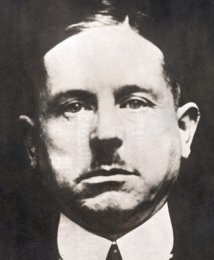
1936: Mary Frances Creighton and Everett Applegate

(Thanks to Meaghan Good of the Charley Project for the guest post. -ed.)

On this date in 1936, onetime lovers Everett C. Applegate (referred to in some accounts as “Edward” or “Earl”) and Mary Frances Creighton, who went by her middle name, were electrocuted in Sing Sing Prison for the murder of Ada Applegate, Everett’s wife.


Mary Frances Creighton (top) and Everett Applegate.

Newspapers of the time referred to Frances as the Long Island Borgia. The murder came about as a result of, depending on your point of view, a Jerry Springer-type sensation or horrific child sexual abuse or both: In 1934, Frances and her husband and their two children were living with the Applegates and their daughter in Nassau County, New York.

By January 1935, Everett Applegate was having an affair with Frances. He was also interested in the Creightons’ blooming teenage daughter, Ruth. By June of that year the thirty-something man was sleeping with her also, with the knowledge of — and in at least one case, in sight of — Ada, whose obesity kept her mostly confined to bed.

Ruth was delighted with her new boyfriend, who drove her anyplace she wanted to go, gave her money and and bought her clothes and other gifts. But when Frances found out about the relationship in July, she was furious and humiliated.

Not only was Everett in the arms of another, but he was making her, Frances, look like a bad mother. Ruth was going to school dressed like a harlot, even wearing lipstick. Suppose she became pregnant? This would bring terrible shame upon the family.

In mid-September, Ada Applegate became violently sick, with diarrhea and bilious vomit. She spent a few days in the hospital and was discharged, without a diagnosis but feeling much better.

Immediately after she got home, however, her symptoms returned, and she died two days later, on September 27. The cause of death was listed as “coronary occlusion” — in other words, a heart attack.

Frances was a bit of a hard case and no stranger to murder. She and her husband John were living with his parents, as well as her teenage brother, Raymond Avery, in New Jersey in 1920 when Anna and Walter Creighton suddenly sickened and died, one after the other.

In 1923, Raymond too became ill with the same symptoms and rapidly expired, and his sister and brother-in-law collected his $1,000 life insurance policy. Frances and John were charged with his murder after the autopsy, held in spite of their objections, found arsenic in young Raymond’s body.

After the autopsy, deeply suspicious investigators exhumed the elder Creightons’ bodies while their son and daughter-in-law were in jail. No arsenic could be found in Walter’s system, but Anna’s contained a lethal dose, and Frances (but not John this time) was charged with murder even before she came to trial for her brother’s death. She’d never gotten along with her in-laws or they with her, and just before Anna became ill, Frances had made ominous statements that the old woman would shortly “destroy herself.”

The Creightons’ four-day trial for Raymond’s murder resulted in acquittal for both defendants. John went home and Frances remained in custody for another two weeks until she faced her next trial, for the death of Anna Creighton. The prosecution was unable to prove she had personally purchased any poison, and the 24-year-old defendant, an attractive nursing mother who was keeping her infant son in her cell with her, presented a sympathetic picture. Once again, she heard a jury announce a murder acquittal.

But she didn’t take warning from her two near escapes.

Twelve years later, Ada Applegate became the third person close to Frances Creighton who died of arsenic poisoning. Goodness knows how many more she might have ventured.

The police knew about Frances’s relatives’ proclivities for mysterious deaths, and were deeply suspicious. An autopsy revealed three times the lethal dose of arsenic in Ada’s corpse, and it didn’t take long for Frances to crack under questioning.

She admitted to poisoning Ada, but also implicated Everett, saying he’d known about the crime all along and had helped her. She also claimed he used his knowledge of her past to blackmail her into having sex with him.

Frances killed Ada, Frances said, so Everett would have a chance to make an honest woman out of Ruth, and because Ada had been gossiping in the neighborhood about her husband’s affair with the girl.

Frances Creighton and Everett Applegate found themselves arrested. Only then did a bewildered John find out about the sexual improprieties that had been going on for months right under his nose. Remarkably, he stood by Frances and said he believed her to be innocent of murder.

He was the only one.

A look into Frances’s past revealed some very additional suspicious incidents apart from the deaths in her family. Relatives of a neighbor she quarreled with got extremely ill after having tea with Frances, and although they pulled through, later on, the neighbor’s house burned down.

The fire was arson and Frances had been the prime suspect, but there was insufficient evidence to arrest her.

As for Everett Applegate, the case against him was far less persuasive.

Frances made three statements: in the first, as told above, she implicated her erstwhile lover. In the second, she said she’d done the murder all on her own and Everett was not involved. The third time she went back to blaming him: he had mixed the poison, and she had given it to his wife.

To this shaky accusation add the ill feeling engendered by Everett’s caddish mores, and it was enough for an indictment. (Everett was also charged with criminally assaulting Ruth. At his arraignment he attempted to plead guilty to this, saying, “I want to marry this girl.” The judge refused to accept the plea.)

By the time of the trial, Frances had gone all-in on blaming Everett. She claimed the lothario had “made” her poison Ada. Her defense portrayed her as a weak woman who had been lead astray by an evil, domineering male. But Everett’s lawyer made sure the jury heard about the deaths of her brother and parents-in-law in New Jersey, and her conviction was a foregone conclusion.

The main evidence against Everett was Frances’s testimony, the fact that he was known to have purchased the rat poison that wound up in Ada’s eggnog, and his despoiling the teenage daughter of his paramour. Everett’s defense attorney agreed their client was a scumbag and a pervert, but denied that he was a murderer.

In his concluding arguments, the attorney asked the jury to acquit Everett of killing his wife and convict him instead of the rape of Ruth. It didn’t work: the jury convicted him on both counts.

While the two condemned awaited their fate, Ruth, who had been sent to a girls’ reform school, would later write a letter to the authorities. She said her mother was innocent and she had heard Everett say he wanted to do away with Ada so he could marry her. No one believed her story.

On the day of their executions, Frances was given the first slot in hopes that she might make a final statement exonerating Everett. Alas, she was in no condition to give any statement at all; suffering from hysterical paralysis, she had to be taken to the chamber on a wheelchair, and some reports state that she was completely unconscious when they strapped her into it. She was the first executee at Sing Sing in 45 years who was unable to walk on their own to their death.

Everett, still protesting his innocence, followed her ten minutes later.

On this day..

1927: Three persistent escapees

On this date in 1927, Illinois conducted a public triple hanging, actually among the last public hangings in the state’s history.*

Charlie Duschowski, Walter Stalesky, Charles Shader, Roberto Torrez, Gregario Rizo and Barnardo Roa had busted out of the old Collins Street Prison in Joliet, along with a seventh man named James Price. In the process, they killed Assistant Warden, and former policeman, Peter Klein.

This has dirty Chicago politics from the Prohibition era all over it.

The events angered much of the general public, but among Chicago Mexicans, the fugitives became heroes. Will County officials investigated allegations that Klein belonged to a parole-selling ring headed by Will Colvin, chairman of the Board of Pardons and Paroles. The newspapers also reported that Chicago police had arrested Klein for selling bootleg liquor while still warden and for allowing prisoners to leave the prison and commit robberies so they could raise money for paroles. (Source)

At any rate, six of the men — all but James Price — were recaptured and condemned to die.

However, friends and relatives of the “doomed” Mexican trio began smuggling in saw blades with their care packages, and by March 1927, Rizo and Roa were hard at work sawing through their bars while the songbird Torrez covered them by belting out La Paloma for days on end.

Roa made a clean getaway, but Rizo and Torrez were taken after a few days in a south Chicago shootout. Now the proposed gallows club was down to five.

Nothing daunted, the three white folk in the party attempted their own breakout by picking their cell lock — joined by Rizo, who would find that the third time was not the charm. Taking sheriff Alfred E. Markgraf hostage, they attempted to drive out of the jail yard: Rizo was shot dead in the resulting fusillade, but somehow Charles Shader managed to scramble away in the mayhem as his compatriots were being re-arrested.

So now, with Shader, Roa, and Price on the lam and Rizo on the ice, only three guys remained to hang.

Left to right: Duschowski, Stalesky, and Torrez.

Notwithstanding the abysmal retention percentage, the prospect of a public triple hanging was a tremendous draw — no less so for the elusive desperadoes’ talent for grabbing headlines afresh every few weeks. A raucous crowd pressed around a sizable detail of riflemen who had good reason to suspect one last bid for freedom. (In a failure of showmanship, that did not happen.) The widow of the original victim even petitioned to throw the trap to drop them. (Ditto.)

So nothing remained but to visit justice upon them.

But not only upon them.

According to the July 17, 1927 Chicago Tribune, the curiosity of the spectacle made it an irresistible lure to yet another fugitive. What was it about Illinois jails in the Roaring Twenties?

Lincoln, Ill., July 16. — (AP) Albert “Blackie” Logan, escaped prisoner from the Logan county jail, is under arrest again here today, awaiting trial for safecracking. Logan ventured from concealment to see the three murderers of Deputy Warden Peter Klein hanged at Joliet. He was recognized by the sheriff.

As for the three escapees:

  • Shader was recaptured and hanged on October 10, 1928. It was the last hanging in the state’s history.
  • Price made it to New York, where he eventually wound up in prison for robbery. Illinois got him back in 1937, gave him a long prison term, and eventually paroled the guy in the 1960s.
  • Roa made it to Mexico, dodged a couple of near-miss extradition attempts, and was never returned to the tender mercies of Illinois. His fate after 1948 (the last time he was arrested, and an extradition fell through) is unknown.

* They were also the first executed in July of 1927, which was important because July 1 was the date Illinois adopted a switch to the electric chair. The change was not retroactive to crimes before that date, however, so it was the gallows for these fellows and several others into the following year.

On this day..

1949: Jake Bird

(Thanks to Meaghan Good of the Charley Project for the guest post. -ed.)

Contrary to what all the slasher films would have you believe, an ax does not make a very good murder weapon. Axes are big. They are heavy. They are difficult to conceal. When used they create a big mess. And if you are caught with one, it’s hard to come up with a suitably innocuous explanation for it.

Nevertheless, this was Jake Bird’s weapon of choice on October 30, 1947, when he broke into Bertha Kludt’s home and killed her and her seventeen-year-old daughter, Beverly June.

Perhaps if he had used a different weapon, things would have turned out differently. As it was, the two women’s screams — and that’s another problem with the ax: unless you can wield it like Gimli, the victim is going to survive the first blow and start hollering — attracted two police officers, who apprehended Bird after a foot chase.

This excellent History Link article provides a thorough account of Bird’s life and crimes. 45 years old at the time of his arrest, he was a drifter and a ne’er-do-well with an extensive criminal record. He’d spent a third of his life in prison for various offenses. Bird openly confessed to the Kludt killings, saying the murders were the result of a botched burglary.

One of the police officers who testified at the trial admitted he beat the daylights out of Bird after his arrest. Naturally, the defense moved to throw out the murder confession on the grounds that it was obtained under force, but the judge ruled that the police brutality and Bird’s statements were “unrelated” and so the confession was admitted into evidence.

This was the attorney’s only attempt to defend his client; he called no witnesses and presented no evidence at the trial.

In all fairness, it must be said that Bird was spattered with gore when he was arrested, they found his fingerprints in blood at the crime scene and on the ax, and he’d left his shoes at the Kludt house. So the confession didn’t figure to be exactly decisive.

This would be a fairly unremarkable murder case, but shortly after his arrival on Death Row, Bird suddenly discovered he had an excellent singing voice. For the next several months he detailed 44 murders from all across the country which he claimed he’d committed during his wanderings. Most of his victims were women.

Bird’s claims, if true, would make him one of America’s most deadly serial killers, right up there with the much more famous Ted Bundy and the Green River Killer, Gary Leon Ridgway. One inevitably wonders if all of his statements were genuine. Henry Lee Lucas, another violent drifter much like Bird, admitted to hundreds of homicides and captivated police from all over the nation before it was discovered that many of his confessions were lies.

Police in several states did find Bird credible, though. Bird was calm and ready for his hanging, which went off without a hitch. He willed his estate, valued at $6.15, to his appeals attorney.

On this day..

1708: Anne Harris, twice a hempen widow

On this date in 1708, a twenty-year-old shoplifter Anne Harris was hanged at Tyburn for serial larceny.

This young woman (“bidding adieu to everything that looked like virtue,” in the words of her Newgate Calendar entry) had picked up the tricks of her trade at least in part from two paramours who had already preceded her to the gallows. Signature trick: freebasing ale in a spoon, our subject would burn it down to a sticky syrup, which she could apply to her hands for a useful spidey-grip.

At age 14, she ditched her impoverished St. Giles family to cohabit with a thief 10 years her senior by the scabrous handle of “Jemmy the Mouth”, who was hanged for burglary in 1702. Nothing daunted, Anne moved on to one “Norwich Will”, who also had a good decade on her; this one swung in 1705 for a lucrative highway robbery.

Perhaps from their examples of excess greed, Anne seems to have picked up another useful trick: thieving modestly. Hangings required stealing goods in excess of a certain value, and while the threshold was heartbreaking low, it did exist. (Juries loath to hang a certain defendant for a mere property crime would often intentionally construe the value of stolen objects to only a sub-capital level.)

Anne Harris had been caught before for purloinings of a sub-felonious nature, and frequently: she was “so often burned in the face that there was no more room left for the hangman to stigmatise her.” In just her few years in the trade, almost every inch of her face had been burnt and scarred.

Accordingly, although her fatal crime likewise appears to have been only a minor theft, “the Court thought fit to condemn her for privately stealing a piece of printed calico” on the grounds of incorrigibility.

Update: via Althea Preston and Two Nerdy History Girls, clarification on the apparent context for Anne’s former sentences of facial burning.

From 1699 until 1707/8, England used a facial-burning sentence for minor thefts when the offender could claim benefit of clergy. After 1691, this benefit was fully available to women, and from 1706 it was even available for both men and women without the classical literacy test.

Since the point of the benefit by this time — long past the sell-by date of its ecclesiastical foundation — was to go easy on first-time offenders, it’s a bit surprising that Anne Harris might have had it several times. More than likely that again underscores the trifling value of her previous thefts. After the change in law early in 1708, it would be the hand that got branded instead … but as a repeat recidivist, Anne apparently was past the help of this little loophole regardless of the body part mutilated.

Incidentally, the reason England so quickly gave up on its experiment in branding small-time criminals with a prominent, visible-to-everyone stigmata was that “it hath been found by experience, that the said punishment hath not had its desired effect, by deterring such offenders from the further committing such crimes and offences, but on the contrary, such offenders being rendered thereby unfit to be intrusted in any service or employment to get their livelihood in any honest and lawful way, become the most desperate.”

On this day..

1833: Frankie Silver, Morganton legend

On this date in 1833, a young woman named Frankie Silver was hanged in Morganton, North Carolina for murdering her husband Charles.

The cover of Perry Deane Young’s book (available at Amazon.com) shows actress Amanda Ladd in the title role of Young’s play Frankie. Young can be contacted at www.perrydeaneyoung.com or by e-mail at pyoung3@bellsouth.net

Silver is a staple of North Carolina folklore, supposed to have assassinated her spouse in a jealous rage and checked out singing her confession from the gallows.

But the reality, as best one can discern from the distance of time, is quite a bit murkier; indeed, quite a bit more dark and dramatic.

Executed Today is honored to mark the occasion by interviewing author Perry Deane Young.

Young’s acclaimed The Untold Story of Frankie Silver: Was She Unjustly Hanged? debunks many of the fables surrounding this old time true crime.

ET: Just by way of orientation, what’s the baseline legend of Frankie Silver that Appalachian children learn? And how exactly did this particular hanging come to be so richly preserved in ballads and folklore and the like?

PDY: The legend is that this true story was the basis for the black blues song, Frankie and Johnny.

Frankie killed her man out of revenge cause he done her wrong. The legend is that she was the first — or only white — woman ever hanged in North Carolina, that she sang a confession from the scaffold. This was the story I heard as a child; only later would I learn that none of this was based on facts.

Most historians now think the song, Frankie and Johnny, was based on a murder in St. Louis, although several folklore collections published in the 20th century say it was based on Frankie and Charlie Silver.

What is it that drew you to this case in the first place?

Most people’s mothers tell them stories about Winnie the Pooh and, oh my, Tigger the tiger. My mother told me about a woman who cut her husband’s head off with an axe and burned his body in the fireplace.

As a writer, I’ve always been grateful for that.

Your book makes the case that she was wrongly executed, and not only that — but that “the true story, the facts … are even more interesting than the story as it has been passed down by so many ballad singers, folklore specialists, storytellers and newspaper columnists”. What’s the most important misconception people have about Frankie Silver? What surprises you most about the story?

There are many misconceptions, starting with the murder itself. There is ample evidence from the time to prove that her husband was loading his gun to kill Frankie and she picked up the axe to defend herself.

She did not sneak up on him as he lay sleeping; she killed in self defense.

She was not the first or only woman ever hanged in North Carolina, she was one of at least 15.

She did not read or sing a confession from the scaffold.

A young school teacher plagiarized a Kentucky ballad, “Beacham’s Lament,” had it printed and handed out at the hanging. It is this ballad, in which Frankie laments her guilt, that has come down as factual. However, when I was a college student, I came across 17 different letters and petitions to the governor asking for a pardon for Frankie. In these documents, it is clearly spelled out that Charlie Silver was a drunk, abusive husband and Frankie killed him in self-defense.

Hindsight is 20/20, of course … but it doesn’t seem to require hindsight to think that her lawyer would have been expected to introduce evidence of domestic violence even if that wasn’t the main thrust of his defense. Would it also have seemed that way to the reasonable barrister in the 1830s, or was there good reason for him to avoid it? Can we say that she was hanged for poor lawyering?

The late Sen. Sam Ervin was, like me, a great believer in Frankie’s innocence. A letter he wrote me explaining why is reproduced in the new edition of my book. He explained to me that at the time she was tried, the accused was deemed an incompetent witness and could not take the stand in her own defense. The law was changed in North Carolina in 1859 so that, as now, you can choose to defend yourself but you still cannot be compelled to testify against yourself.

Frankie’s lawyer, perhaps at the insistence of Frankie’s father, pleaded innocence. In other words, he could not introduce evidence of extenuating circumstances such as spousal abuse if he was saying she didn’t do it in the first place. In the book, I note that a man named Reuben Southard beat his wife to death that same year in the same county and got off with court costs. In one of the petitions, Frankie’s neighbors assert that it has often happened that a man murdered his wife with no legal consequences. In an article for his local newspaper, Ervin blamed Frankie’s lawyer for the outcome of the trial, not realizing that her lawyer was his own great great uncle.

Over the longer arc, it’s surprising to me that the claim by a woman who killed her husband that he was an abusive spouse — especially if that claim attracted a lot of support at the time — would go underground in the historical recollection of the case. In its essentials, this is one of the stock templates we have for thinking about a domestic crime. What happened in Morganton, and with the families’ descendants, over the years to shape the popular memory of the event? And does it suggest any larger lessons to you about the way we construct our histories?

The explanation is quite simple. All that survived over the years was this ridiculous “ballad,” in which Frankie confessed her guilt. She had nothing to do with that ballad.

Fayetteville Observer, July 30, 1833

But, in fact, she did write out a confession.

The confession itself has never been found but we know from other sources that it explained that she killed in self defense. The documents that detailed Charlie’s abuse and other details about the case remained hidden in the governors’ papers in the North Carolina Archives until I discovered them in 1963 when I was a student at the University of North Carolina at Chapel Hill.

In 2001, Frankie was finally allowed to have her say in a play which I wrote with William Gregg and which was produced by the Southern Appalachian Repertory Theatre in August 2001.

In the play, a minister who is working to save Frankie from the gallows, overhears a young man singing the silly ballad. He is asked if a hundred years from now people will still be singing that ballad, not knowing what really happened. He answers: “People would rather believe a simple lie than a difficult truth.”

Compounding the historical image of Frankie has been the fact that her family was ashamed of having a convicted murderer in their midst. It was Charlie’s family that became the keeper of the legend and all its misconceptions. The Silvers kept alive the fake ballad “confession” and did everything they could to preserve the image of Charlie as a faithful husband who was killed by a spiteful wife.

Do you find that here in 2012, there are still people whose oxen are gored if your research contradicts their own version of the story — especially if you present Charlie as a violent husband?

You betcha! The Silvers to this day are rather vehement in defense of their Charlie.

It was a historic moment when I was invited to speak in the old church house near the murder scene for the Silver family reunion. In the basement of the church, they have created an extraordinary archive on the murder story and the family in general.

By this time, they have accepted that Charlie may not have been the innocent victim they’ve been told about. Many in the family are serious about their historical researches and want to know the facts. However, a contemporary Charlie Silver also said, “I just wish people would stop talking about it.”

You’re working on a program for Discovery channel’s “Deadly Women”. Does it hold any new revelations about this intriguing historical case?

The chief revelation came to me after being questioned by a very bright young woman named Colette Sandstedt for the program. She had done her homework exceedingly well. By the time we had gone over all the historical evidence I had collected over the past 50 years, I was ready for her last question: “What is the most shocking aspect of this case to you?”

I answered: “The most shocking aspect of the case is the way this poor woman has been misrepresented for almost 200 years.”

On this day..

1952: Chester Gregg

On this date in 1952, 58-year-old Chester Gregg nonchalantly died in Ohio’s electric chair for killing his wife the previous year.

Gregg shotgunned Alma Colliday Gregg, his estranged spouse and the head of the “lonely hearts” club through which the pair oiginally met, in her Kenton apartment after she filed for divorce.

As that killing made him a two-timer — he’d been paroled from a 1927 murder rap in Kentucky; the daughter of that victim petitioned unsuccessfully to attend Gregg’s execution — his clemency prospects were remote.

Although he’s of no known relationship to the namesake of the landmark Gregg decision returning death penalty to the U.S. in 1976, Chester has managed to find his way into the news of late.

Apparently, he was acquainted with an Ohio child named Jay Chapman (newspaper reports have termed Gregg Chapman’s “childhood friend”, but Chapman would only have been about 13 at this time: we intend no derogation to intergenerational friendship in saying that this is not the connotation of “childhood friend”). And Chapman would go on, as Oklahoma’s medical examiner in the 1970s, to play a subtle but important role in the modern death penalty: he invented the “traditional” lethal injection three-drug cocktail.

Dr. Chapman, who at least has the comfort of not having the lethal needle named after him a la Joseph Guillotin, knocked out the standard sodium thiopental-pancuronium bromide-potassium chloride sequence at the request of legislators looking for a less unpleasant alternative to that ubiquitous 20th century contraption, the electric chair. (That’s also how Gregg was put to death.)

But apparently, Chapman assumed that trained medical personnel who knew how to administer IVs and measure drugs would be conducting the procedure.

In fact, as executions “medicalized”, professional medical associations like the AMA barred members from participating as a breach of professional ethics. More recently, supply interruptions for lethal drugs have made a mess of the entire process. The upshot has been some high-profile botches — including Ohio itself outright failing in a recent lethal injection attempt — necessitating a 20072008 U.S. execution moratorium to sort out legal challenges to the needle.

It’s a far cry from Chapman’s vision of a litigation-proof method: “We felt that by going with this type of regimen, no one could suggest that it was cruel and unusual because people undergo this very protocol every day for anesthetic for surgery world-round,” he said in 2009.

The doctor’s own interest in the subject was merely instrumental: fewer appeals avenues mean more executions. “I’m an eye for an eye person,” Chapman told the London Guardian.* “The lethal injection is too easy for some of them.”

For that reason, Chapman is quite alright with the switch his home state an others have recently made to conducting lethal injections with only a single massive overdose of a single drug, either sodium thiopental or pentobarbital. Whatever gets the case out of courts, and onto the gurney.

As for the ghost of Chester Gregg, he really doesn’t enter the picture either way.

“It’s a totally separate thing,” Chapman said of his executed former neighbor. “It’s just an experience I had along the way.”

* There are some May 2010 photos of Chapman in the Guardian magazine archive.

On this day..

1691: Jack Collet, sacrilegious burglar

On this date in 1691, Jack Collet was hanged for “sacrilegious burglary.”

This little-known highwayman ditched an apprenticeship with a Cheapside upholsterer to take the road, and carved a niche as the guy what robbed while dressed up as a bishop. (Once having lost his ecclesiastical garb at dice, he re-robed by sticking up a churchman on the road and forcing his victim to dis-.)

“As if he had been determined to live by the Church,” clucks the Newgate calndar, “he was at last apprehended for sacrilege and burglary, in breaking open the vestry of Great St Bartholomew’s, in London, in company with one Christopher Ashley, alias Brown, and stealing from thence the pulpit cloth and all the communion plate.”

For this bid to render un-from God, Caesar rendered Collet unto Tyburn.

On this day..

1931: Peter Kürten, the Vampire of Düsseldorf

On this date in 1931, the “Vampire of Düsseldorf” was beheaded for that city’s most infamous serial murder binge.

It was, perhaps, the logical end of a terrible journey.

A factory moulder and World War I deserter in his late forties, Peter Kürten commenced a series of uncommonly bestial rape-murders in early 1929 … the harvest of a lifetime’s twisted brutality.

He’d been the oldest of 11 children stuffed in a hellish one-room apartment with a violent drunk of a father who battered the children and openly raped their mother. Well, “if they hadn’t been married, it would have been rape,” in Peter’s words.

The future vampire took his refuge turning his own abuse on younger siblings and, with the help of a degenerate dogcatcher in the neighborhood, on obliging animals he could lay his hands on — which creatures he was soon learning to torture, and to rape, alongside more conventional human delinquencies like arson and burglary.

Kürten is known to have strangled at least one ten-year-old prior to World War I (he would also claim to have surreptitiously drowned a couple of school chums in his boyhood) but it was on the far side of the Great War — which he’d spent mostly in miserable prisons, nursing increasingly twisted fantasies of vengeance — that the beast truly emerged.

The spree that carried him to these pages began in Febuary 1929, when he slew an eight-year-old, attacked a middle-aged woman, stabbed a mechanic to death. Kürten’s crimes were irregular, but distinguished by a fiendish wrath: he abducted one young woman and hammered her to death in the woods outside town; he stabbed a five-year-old to death with scissors as he achieved his orgasm; he asked a teenager to run off and get him some cigarettes, so he could use her absence to slit her younger sister’s throat; he stabbed strangers randomly.

“I derived the sort of pleasure from these visions” of mayhem and cruelty, he said, “that other people would get from thinking about a naked woman.”

Düsseldorf endured a year of terror, finally aborted when Kürten’s own wife — whom he seems to have loved genuinely — turned him in, at Kürten’s own request, for the reward money.

At a packed trial, the accused’s accumulated hatred for the sadistic world poured out in words just as it had done in deeds over the months preceding.

I said to myself in my youthful way ‘You just wait, you pack of scoundrels!’ That was more or less the kind of retaliation or revenge idea. For example, I kill someone who is innocent and not responsible for the fact that I had been badly treated, but if there really is such a thing on this earth as compensating justice, then my tormentors must feel it, even if they do not know that I have done it …

Never have I felt any misgiving in my soul; never did I think to myself that what I did was bad, even though human society condemns it. My blood and the blood of my victims will be on the heads of my torturers. There must be a Higher Being who gave in the first place the first vital spark to life. That Higher Being would deem my actions good since I revenged injustice. The punishments I have suffered have destroyed all my feelings as a human being. That was why I had no pity for my victims.

-Kürten

Amateurs though we are, we incline to doubt the sufficiency of the tit-for-tat explanation. Kürten might well have believed that about himself, but the “vampire” moniker gets at an essential, organic sensuality about his crimes whose roots go quite a bit deeper than revenge.

“Tell me,” the doomed murderer is supposed to have asked a prison doctor shortly before facing the guillotine, “after my head has been chopped off will I still be able to hear; at least for a moment, the sound of my own blood gushing from the stump of my neck?”

The doctor indeed thought it possible the head might survive a few seconds.

“That,” mused the killer, “would be the pleasure to end all pleasures.”

Kürten is one of several predatory sex-slayers — also see the likes of Fritz Haarman and Carl Grossman — who prospered in interwar Germany, and helped to inspire Fritz Lang’s cinematic classic M. (Kürten is often thought the most direct model for that movie’s murderer, played by Peter Lorre. Lang denied that was the case, but in some countries’ releases it went out under the title not of M, but of The Vampire of Düsseldorf.)

Sources:

Murderpedia

TruTV

On this day..

2010: Michael Perry, Herzog subject

It was on this date in 2010 that Texas executed Michael Perry by lethal injection for his part in a triple homicide that netted a cherry-red Camaro.

Perry is the subject of the 2011 Werner Herzog documentary Into the Abyss; being a Herzog film, it comes recommended.

Abyss is “not an issue film; it’s not an activist film against capital punishment,” Herzog has said. “In this particular case, with this very senseless crime, so senseless it’s staggering, what fascinated me was that it points to a decay in family values and the cohesion of society, all these things that looked so big and beyond this case.”

Trailer:

Interview with Herzog:

Full movie, if it remains available:

On this day..

1954: George Robertson, the last hanged in Edinburgh

This date in 1954 marked the last execution in the city of Edinburgh.

By the jaw-droppingly horrific murder he committed, George Robertson certainly earned the distinction.

Not actually topical save to George Robertson’s milestone as Edinburgh’s literal last drop; this Last Drop Pub is at the city’s Grassmarket where historic public hangings (long gone by Robertson’s day) were conducted. Image (c) Sh0rty and used with permission.

His ex-wife, Elizabeth McGarry, had recently kicked him out of the house after an attempted reunion led right back to the prolific domestic abuse that had ended their marriage in the first place. She was an unwed, unemployed mother of two teenage children, but anything beats being tied up and threatened with a hatchet.

Mother and children — 18-year-old son George Jr., and 16-year-old daughter Jean — lived in waking terror of the vengeful ex-patriarch; in the days before restraining orders, they kept doors constantly bolted and jammed with chairs under the doorknobs, and a poker within reach whenever possible.

According to this retrospective — and read the whole thing for a slasher film in prose — the estranged George managed to get into the house on the night of February 28, 1954, while everyone was asleep.

He summoned his former spouse to the kitchen and knifed her to death, then attacked young George Jr. when he arrived, too. Then he mounted the stairs — where Jean was desperately trying to escape out a window — carrying

the blood-drenched body of his ex-wife, a gaping hole in her stomach and a white handkerchief stuffed in her mouth, hands bound together.

George Alexander Robertson was just in the midst of trussing up Jean and stabbing her to death when the mangled George Jr. distracted the killer by reviving well enough to burst out onto the balcony and into the public quadrangle below. There, he

threw himself through a neighbour’s kitchen window, where he begged for help.

Following him, just yards behind, enraged and still clutching his knife, came his father.

The Hay family, whose quiet home was now about to become a murder scene, cowered in terror as blow after blow rained down on the terrified teen as he screamed for help.

Defenceless against his father’s brutality, young George finally slumped to the floor, dying.

Job done, his father threw his body over his shoulder and strolled home leaving a bloody trail across Tron Square.


View Larger Map

The savage “brainstorm” to which he would later attribute this wild spree must have been abating. As he returned to his former domicile, he didn’t bother finishing off Jean, but stuck his head in the kitchen gas oven, where responding police found him.

The obviously unbalanced paterfamilias attempted to plead guilty to avoid the spectacle of the trial (no dice: two days of horror from the witness box riveted the city) and did not attempt to fight the inevitable sentence once imposed. He was dead within 15 weeks of the bloodbath, at the skillful hands of Albert Pierrepoint.

Only three other Scottish executions anywhere — two in Glasgow, and one final hanging in Aberdeen — followed it before death penalty abolition.

On this day..