1938: A pig, experimentally

EXECUTION TEST MADE WITH PIG

San Quentin’s Lethal Chamber Tried Out

SAN QUENTIN, March 19 [1938]. (AP) A runt pig* died today in a slow-motion test of San Quentin’s lethal gas chamber.

The test required thirty-five minutes before the pig was formally pronounced dead, but prison officials said “nowhere near that time” would be necessary for execution of a condemned convict in the gas chamber.

The trial execution was conducted in slow motion to enable prison officials and guards to learn details of the operation. The test was conducted by representatives of the manufacturers of the chamber.

* According to the Los Angeles Times (whose March 24, 1938 edition captions a photograph of Warden Court Smith peering inquisitively through the gas chamber’s window), it was “a little thirty-pound brown pig.” According to the backgrounder in When You Read This, They Will Have Killed Me — which concerns an altogether more famous gas chamber subject — the swine was “a 155-pound pig named Oscar, raised on the prison farm.”

On this day..

1613: Ivan Susanin, a life for the tsar

On an uncertain date in February (perhaps) 1613 — so says a cherished Russian national legend — a villager met a Polish army intent on deposing the Russian tsar, offered to guide it on a “shortcut,” and proceeded to lead it into a forest or fen where it succumbed to the elements.

A monument to Ivan Susanin in Kostroma. Image courtesy of Barbara Partee (Barbara adds: to help prevent future executions of the wrongly convicted, check out the Innocence Project.)

That peasant, Ivan Susanin, is supposed to have been put to death as the army realized its folly and imminent doom — the fate one would expect, although also not the sort that would leave a lot of corroborating witnesses.

Though the particulars are of doubtful veracity, Susanin’s son-in-law was awarded estates for the man’s tortures by enemy armies seeking the tsar — so the story is not completely baseless.

It was tsarist public relations, however, that gave us Susanin in his dramatic, familiar* form with the trackless wilderness.

This Susanin embodies the Russian people’s sacrificial love for their autocrat … and more specifically, since this was the Time of Troubles when the Russian crown’s succession was contested, for the Romanov dynasty whose first scion chosen in February 1613 would have been the Poles’ target.**

Thus, Glinka’s 19th century opera A Life for the Tsar.

But Glinka and Ivan proved up to the shifting needs of authority as the tsar gave way to the Politburo, and that to the post-Soviet state.

In a fascinating 2006 academic disquisition,† Marina Frolova-Walker dissects A Life for the Tsar‘s transmutation into Ivan Susanin, a Stalin-era opera with the same score but a libretto altered to expunge the tsar — and the success this adaptation of a national classic enjoyed vis-a-vis Soviet artists’ original creations under the impossible aesthetic and political restrictions of official censorship.

Not only did this now-nationalist composition thrive in the USSR, it has been successfully re-staged in its Soviet form, or as a fresh amalgamation of Stalin and Glinka, in the Putin era.‡

From the days of serfdom via the days of the gulag past the fall of the Iron Curtain, here’s Ivan Susanin‘s stirring finale performed by the Russian army at the Vatican, and broadcast on Russian television.

* Familiar to Russians, certainly, and you can call one who gets you lost “susanin”.

** And we all know how they left the throne.

† Marina Frolova-Walker, ‘The Soviet opera project: Ivan Dzerzhinsky vs. Ivan Susanin’, Cambridge Opera Journal (2006), 18:2:181-216

‡ In the Yeltsin era, the opera was staged in its pre-Soviet form. Frolova-Walker argues that the version incorporating Stalinist edits actually speaks to contemporary Russia more aptly than the original, an operatic mirror of the state’s re-adopting the Stalinist national anthem after having used a tsarist piece (written by Glinka!) during the 1990’s.

The reappearance of these cultural tokens is occurring because high Stalinism provides the most easily assimilable model for Russian nationalism today: it is less remote than its nineteenth-century counterpart … The eclectic and confident nationalist of the new Susanin contains the appropriate message for those Russian citizens wealthy enough to attend the Bolshoi today.

On this day..

1703: 47 Ronin forced to commit seppuku

On this date in 1703, Japan’s most renowned epic of bushido vengeance reached its endgame with the condemned ronin who had avenged their executed master forced to commit seppuku.

So compelling an allegory of conflicting loyalties could hardly have been so skillfully constructed as outright fiction. The 47 Ronin owed personal fealty to a daimyo who drew his blade when provoked by the insolence of a shogunate official, and was condemned to death for the offense.

For the shogun, it was a just assertion of a central state’s prerogatives.

For the samurai made ronin by the death of their lord, it was a test of honor.

Knowing that the offending shogun retainer would be well-defended on the lookout against retribution, forty-seven of them (or possibly more at first; in any case, not the entirety of the samurai force) feigned dissipation and indifference for over a year … then raided his palace and slew him once he dropped his guard.

The ronin were condemned to death, but authorities “allowed” them the more honorable route of seppuku — which they committed to a man.*

Theorists of bushido honor may dicker over whether this plot fulfilled the demands of honor, but less philosophically exacting interlocutors have made the tale among the most beloved in Japanese history — like these illustrations of a traditional adaptation, or several films.

Their graves can be honored by the discerning Tokyo visitor at the popular Sengakuji Temple.

* Actually only 46 of the 47; the other was sent as a messenger, or perhaps fled, but was otherwise separated from his party, and ended up spared.

On this day..

1968: Nguyen Van Lem

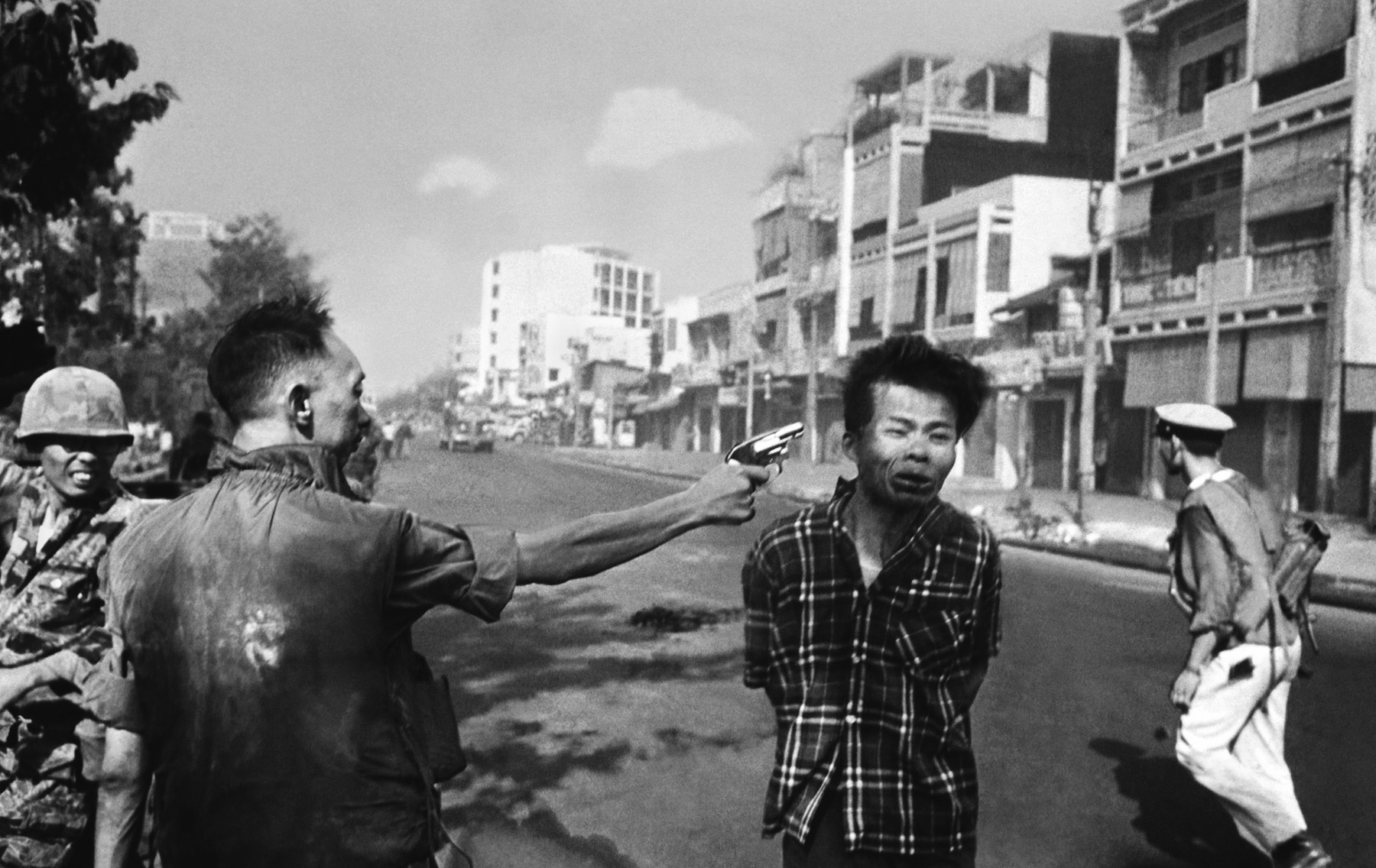
Around noon of February 1, 1968, in the opening days of the communist Tet Offensive, South Vietnamese General Nguyen Ngoc Loan summarily executed a Viet Cong prisoner on the streets of Saigon — and photographer Eddie Adams captured perhaps the war’s most unforgettable image.

An American cameraman also captured it in on celluloid. Caution: This clip shows … well, a man being shot in the head at point-blank range.

Though the image brought Adams the Pulitzer Prize, he would express discomfort with it later in life, and eulogized General Loan in Time magazine when he died in the U.S. in 1998.

The general killed the Viet Cong; I killed the general with my camera … photographs do lie, even without manipulation.

For Adams, the lie was the omission of context — that the plainclothes Lem had allegedly just been caught having murdered not only South Vietnamese police but their civilian family members; that Loan was a good officer and not a cold-blooded killer.

Adams’ editor has said that many such summary executions were taking place during the Battle of Saigon — a broader context to the image no matter its specific fairness to the executioner.

But of course, the shot gained its deeper resonance from the growing disgust with the Vietnam War … and from its concise tableau of a century’s brutality. Here is a frozen image of Orwell’s boot stamping on a human face, forever.

Like any great work of art, Adams’ serendipitous photograph took on a life of its own … and a tapestry of meanings richer than its creator could ever have intended.

On this day..

2006: A female spy by al Qaeda

On this date three years ago — or at least, so says the date in the camera’s viewfinder — a female spy was “tried” and “executed” in Iraq by al Qaeda affiliated terrorists for spying.

Warning: This is (by design) a graphic and chilling video. I have little information beyond the assertion of the video posters as to its veracity. Whether or not it may be relied upon factually or dated reliably, it’s a gut-twisting video of a woman being shot in the head.

[flv:http://www.nothingtoxic.com/mediar.php?552d90ab9f59a971705f6bf3300da297.flv 440 330]

A longer version is on a very not-safe-for-work site here.

On this day..

1961: Patrice Lumumba

No brutality, no torture has ever made me plead for mercy, because I prefer to die with my head up, with unshakable faith and deep confidence in the destiny of my country, rather than live in submission and spurning of scared principles.

-Patrice Lumumba’s last letter to his wife

One person’s “murdered under controversial circumstances” is another person’s “executed.” By most unbiased accounts, Patrice Lumumba was both.

A strident anti-colonialist caught in the most inflammatory of Cold War power struggles, Lumumba remains a controversial figure.

In 1956, Patrice Lumumba was a mail clerk in Belgian Congo recently out of prison for embezzlement of post office funds. Though previously involved with the Liberal Party of Belgium, a colonialist political party, after prison, he helped found the Mouvement National Congolais, a pro-independence national party (an important distinction at the time, as most pro-independence parties were at least partially tribal in nature).

Convicted in 1959 of inciting an anti-colonial riot and sentenced to 6 months in prison, Lumumba was released early as Congo won its independence and the MNC became an important political force. Just how important became apparent the following June, when the 35-year-old Lumumba was ratified as the newly independent Congo’s first prime minister.

From criminal to high statesman in just over a year, Lumumba took his new power in stride, and watched in disgust as the deposed King Baudouin of Belgium attended the new nation’s first Independence Day celebration, and before a fawning international media condescendingly congratulated Belgium’s colonial beneficence to its former slave plantation.

Struck from the day’s official celebrations in favor of the the lukewarm exhortations of the new President Kasa-Vubu, Lumumba found time on the day’s unofficial program. Strident, emotional, and unabashed in its anticolonialist, nationalist, and pan-Africanist bent, Lumumba’s famous speech was roundly criticized by the domestic and foreign press, but well-received by the crowd and ultimately delivered directly to history.

Lumumba’s tenure as prime minister was short-lived, however.

Mere weeks after independence, a mutiny on army bases broke out in reaction to Lumumba’s ill-fated decision to leave the military out of a government pay raise. The resulting anarchy quickly spread throughout the country, and the province of Katanga, with the support of King Baudouin and powerful mining companies, declared independence. As United Nations troops failed to quell the situation, Lumumba appealed to the Soviets, whose intervention succeeded only in causing Lumumba’s political support to crumble.

Kasa-Vuba dismissed Lumumba in September; in response, Lumumba declared Kasa-Vuba deposed — quite illegally, as it happens — and appealed to the Senate, from whom he managed to win a vote of confidence.

At this point, in the heat of the Cold War, things got interesting.

Deposed again, this time in a CIA-endorsed coup, Lumumba found himself under house arrest and under the protection of UN troops. Not certain whether to trust the rule of the various laws surrounding him, Lumumba slipped out under the cover of night and escaped to nearby Stanleyville (now Kisangani), where he believed he had enough supporters to set up his own government — and army, whom one supposes he had by then resolved to pay rather better.

Pursued by forces loyal to the new government, Lumumba was captured and arrested in early December 1960 and charged with “inciting the army to rebellion.” Devoid of his former UN protection, the man who would be the leader of a newly free nation watched as he became a pawn in a much larger struggle. UN Secretary General Dag Hammarskjöld appealed to the process of law –- whatever that was –- while the USSR jumped a step ahead, demanding that Lumumba be immediately released and reinstated as prime minister and all UN forces withdrawn.

So much for that. The UN Security Council convened, and, a week later, the USSR’s resolution was defeated. Another, Western-backed resolution that would have given the UN power to act as impartial arbitrator was vetoed by the USSR.

At this point, caught between hostility of Cold War politics and the ever-hazy idea of “international law,” Lumumba languished in the military barracks of an even more hostile government. Hearing of plans for his transfer to barracks at the now-subdued Katanga province, Lumumba was wild on the plane trip and was forcibly restrained after appealing to other passengers to intervene on his behalf. Late at night after his arrival at his new prison, Lumumba was driven to an isolated spot and executed by firing squad. News of his death was not released until three weeks later, when it sparked protests in several European cities over the role of the Belgian government, which denied any involvement.

The extent of US and Belgian involvement in Lumumba’s death remains the subject of ongoing speculation. So does the question of what might have been.

On this day..

1994: Mansour Kikhia?

Fifteen years ago, a Libyan-born dissident of American nationality was abducted from a human rights conference in Cairo.

The fate or current whereabouts of Mansour Kikhia remain unknown to this day — although one widely-suspected scenario (and the conclusion of a CIA report on the incident) is that he was spirited to Libya and secretly executed early in 1994.

While other speculation has had Kikhia being held alive, the insulin-dependent diabetic would have been in a bad way absent the sort of painstaking medical attention he would not likely have been receiving from his captors.

The former Libyan foreign minister and United Nations ambassador, who had broken with dictator Muammar al-Gaddafi in 1980, was in Egypt to participate in an Arab Organization of Human Rights conference. The date he vanished from his hotel, last seen in the company of unknown Egyptian men driving vehicles with Mukhabarat markings, was December 10, 1993 — the 45th anniversary of the seminal modern human rights document, the Universal Declaration of Human Rights.

Several distinguished Middle Eastern scholars wrote an open letter shortly after Kikhia’s disappearance imploring

Arabs, Americans with an interest in the Arab world and human rights organizations not to rest until he regains his freedom. Nothing could be worse than to let the governments concerned think he will be forgotten.

If not “forgotten” in the strictest sense — see some links of the bulletins issued over the years to keep alive his memory — the governments concerned sure seem to have paid no price for having disappeared Mansour Kikhia.

On this day..

1979: Hafizullah Amin

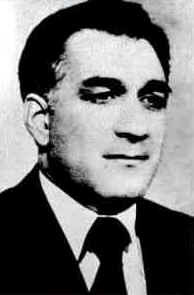
On this date in 1979, the 104-day term of Afghan president Hafizullah Amin met a violent end as a Soviet-engineered coup raised the curtain on a war destined to bring misery to both Cold War combatants.

The Soviet Union’s ongoing intervention in Afghan politics had through the 1970’s steadily mired it deeper into an unstable political situation.

Now, it was running out of patience with the country’s president, Hafizullah Amin.

He’d got the best of rival Nur Mohammad Taraki in a power struggle that September, but to the political chaos and the blossoming Islamic insurgency roiling his country, Amin added a level of brutality that was all his own, and a streak of diplomatic independence that was distinctly unwelcome in Moscow.

Amin was a Communist himself, and both he and the predecessor he’d murdered had wanted ever-increasing Soviet aid to keep the country stable.

But that proved to be a Faustian bargain.

Though Kabul radio would announce that Amin had been tried and summarily executed for “crimes against the state,” the short-lived dictator’s fate had been decided two weeks before when the Soviet Politburo passed a secret resolution for his ouster — having lost whatever confidence it had once held in him as a dependable satellite governor.

“The Soviet Union,” said the New York Times in a more innocent time,

has seemed deeply troubled by the inability of either the Taraki or Amin governments to put down the rebellions in Afghanistan, which have been largely tribal but also militantly anti-Communist.

Amin survived a KGB poisoning, so the Red Army dispensed with subtlety by raiding the palace, plucking their preferred satrap out of exile in eastern Europe to take Amin’s place.

It would not see the last of Afghanistan until 10 years, 15,000 Soviet dead, and hundreds of thousands of Afghan casualties later.


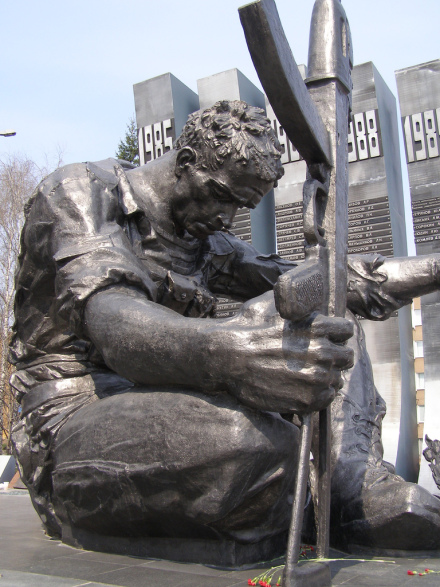
A memorial in Ekaterinburg, Russia, to the Soviet dead in the Afghan war. Image courtesy of beatdrifter (Andy Holmes).

On this day..

284: Aper, by Diocletian

On this date* in 284, one of Rome’s greatest emperors claimed the purple by summarily executing his rival before the approving army in Anatolia.

The Emperor Diocletian christened his reign with a bit of scaffold theatricality, but he might have been the real perp.

For half a century, the Roman Empire had waded through crisis. In its political manifestation, a parade of forgettable emperors had marched through the throne room, each to be assassinated, overthrown, or otherwise disposed of by some equally forgettable aspirant en route to a similarly unenviable end.

At length, out of this unpropitious bunch, rose one Diocles, a low-born Dalmatian of classical education whose martial gifts saw him rise through the legions. His opportunity came when the emperor Carus, barely a year on from succeeding his assassinated predecessor, died on campaign against Persia allegedly struck by lightning (quite possibly a euphemism for something more dagger-like), leaving his son Numerian in charge.

As the army meandered back to the friendly confines, Numerian secluded himself in his litter. And after a while, the litter started to stink.

Sometime on the journey, he’d been secretly killed — but by whom?

The principals this day are our leading suspects. (And it’s a little mystifying in either case just what was gained by leaving the body hidden so long.) We turn to Gibbon to narrate what must have been a riveting — not to mention definitive — proceeding adjudicating between them a few kilometers past Nicomedia (moder Izmit, Turkey) towards Chalcedon (now the Kadikoy district of Istanbul).

A general assembly of the army was appointed to be held at Chalcedon, whither Aper was transported in chains, as a prisoner and a criminal. A vacant tribunal was erected in the midst of the camp, and the generals and tribunes formed a great military council. They soon announced to the multitude that their choice had fallen on Diocletian, commander of the domestics or body-guards, as the person the most capable of revenging and succeeding their beloved emperor. The future fortunes of the candidate depended on the chance or conduct of the present hour. Conscious that the station which he had filled exposed him to some suspicions, Diocletian ascended the tribunal, and raising his eyes towards the Sun, made a solemn profession of his own innocence, in the presence of that all-seeing Deity. Then, assuming the tone of a sovereign and a judge, he commanded that Aper should be brought in chains to the foot of the tribunal. “This man,” said he, “is the murderer of Numerian;” and without giving him time to enter on a dangerous justification, drew his sword, and buried it in the breast of the unfortunate praefect.** A charge supported by such decisive proof was admitted without contradiction, and the legions, with repeated acclamations, acknowledged the justice and authority of the emperor Diocletian.

Though there isn’t any direct evidence of it, posterity is entitled to suspect on grounds of means, motive and opportunity, that the eventual beneficiary of Numerian’s demise — the emperor henceforth known as Diocletian — was its true author.

Whether obtained by fair means or foul, Diocletian put the laurels of state to good use, stabilizing government by introducing the “Tetrarchy” — the rule of the empire’s eastern and western halves by two emperors (“Augusti”) each aided by a “Caesar” who was also the heir apparent.

Diocletian’s two decades in power before his anomalous voluntary retirement constitute a watershed in the late history of Rome, and not only because the cycle of imperial assassinations and civil war took a welcome generation-long hiatus.

Although he’s also remembered for initiating the last major persecution of Christians, his administration set the stage for the rise of Constantine the Great, the Galilean’s first imperial champion. Constantine’s father was one of the original tetrarchs, the Caesar of the west.

And in the longer term, Diocletian’s division of the empire between east and west would sow the seed of the later separation of Byzantium and Rome, and the corresponding division in the Christian world. No surprise, then, that the first ruler profiled in Lars Brownworth’s 12 Byzantine Rulers podcast is this date’s executioner:

[audio:http://www.12byzantinerulers.com/audio/02-Diocletian.mp3]

More audiophilia about Diocletian and the tetrarchs in this lecture from Isabelle Pafford’s UC-Berkeley course on Roman history. (The first 6:45 or so consists of class business and carryover from previous lectures.)

[audio:http://webcast.berkeley.edu/media/s2008/hist106b/hist106b_20080425.mp3]

* As with much in the ancient world, sourcing is tenuous, and there is some scholarly debate over whether the events in this post should be ascribed to November 20, or to November 17, or to September 17, or to some other date. Since this blog, notwithstanding its title, embraces the occasional execution whose date is uncertain, I am prepared to wave aside textual uncertainty in the interest of a ripping good story.

** According to the Historia Augusta, Diocletian had a superstitious reason to carry out this bloodthirsty act personally.

This story my grandfather related to me, having heard it from Diocletian himself. “When Diocletian,” he said, “while still serving in a minor post, was stopping at a certain tavern in the land of the Tungri in Gaul, and was making up his daily reckoning with a woman, who was a Druidess, she said to him, ‘Diocletian, you are far too greedy and far too stingy,’ to which Diocletian replied, it is said, not in earnest, but only in jest, ‘I shall be generous enough when I become emperor.’ At this the Druidess said, so he related, ‘Do not jest, Diocletian, for you will become emperor when you have slain a Boar (Latin: Aper).’ ” … It is now well known and a common story that when he had killed Aper, the prefect of the guard, he declared, it is said, “At last I have killed my fated Boar.” My grandfather also used to say that Diocletian himself declared that he had no other reason for killing him with his own hand than to fulfill the Druidess’ prophecy and to ensure his own rule. For he would not have wished to become known for such cruelty, especially in the first few days of his power, if Fate had not impelled him to this brutal act of murder.

Part of the Themed Set: The “Ex” Stands For “Extrajudicial”.

On this day..

1928: Marshall Ratliff lynched for the Santa Claus Bank Robbery

On this date in 1928, the man whose disguise christened one of the most bizarre crimes in Texas’s colorful history was lynched behind a theater … producing “The Noose”.

The Santa Claus Bank Robbery was, in the words of one columnist present for the affair,

the most spectacular crime in the history of the Southwest … surpassing any in which Billy the Kid or the James boys had ever figured.

The story begins on December 23, 1927, in the town of Cisco, where a genial man dressed as Saint Nick strolled down the main drag dandling playful children en route to the First National Bank.

Santa — Marshall Ratliff — and three accomplices then conducted one of the most inept bank robberies in that craft’s ample stock of ineptitude.

A general gun battle erupted during the robbery, owing to the general citizenry being armed, and a standing reward available from the bank association for shooting a bank robber in the act. When the quartet finally fought their way to the getaway car — killing two cops in the process — they realized it was almost out of gas.

After a few days’ dodging a manhunt, everyone was rounded up, one of them in corpse form. Two of the surviving three drew death sentences, and Henry Helms sat in the Lonestar State’s electric chair on September 6, 1929.

But Kris Kringle — er, Ratliff — had his execution delayed by a sanity hearing that brought him back to Eastland County, where he feigned illness and killed a guard in an abortive escape attempt. The good folk decided they’d had about enough of due process.

Quoth a newspaper report of the day (reproduced in A.C. Greene’s book on the case):

All yesterday afternoon they gathered in little groups about the town and muttered about [the guard] Jones’ shooting which physicians said probably would prove fatal. Last night a crowd in front of the jail swelled to nearly a thousand at 8:30 o’clock.

At about 9 o’clock, some 200 men slipped into a side door of the jail and asked for the man. Jailer Gilborn refused to give him up. They overpowered Gilborn, took his keys and got Ratliff.

… He was dragged in the direction of the public square, but the crowd would not wait to go those few blocks.

At 200 yards from the jail a strong telephone cable was pointed out, a rope flung across it. A noose was put around Ratliff’s neck, a dozen men on the other end of the rope bent their weight, and Ratliff was jerked from the ground.

The rope broke. Messengers were sent for another, and again the mob set to its task. Then someone remembered that men about to die are usually given a chance to say a last word. For another moment he was lowered to the ground, but, displeased at his mumbling, the crowd yelled, “String him up!”

Part of the Themed Set: The “Ex” Stands For “Extrajudicial”.

On this day..