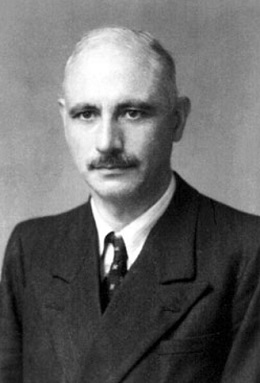
1914: Eugene Odent, the mayor of Senlis

On the second of September in 1914, the mayor of Senlis, France, was shot by the occupying Germans in the opening weeks of World War I.


Detail view (click for the full image) of a map of the British Expeditionary Force’s retreat in northern France during the first days of World War I.

The beautiful ancient town, where the Carolingian dynasty met its end (King Louis V was killed in a hunting accident there in 987, enabling Hugh Capet to take the throne), unhappily found right in the path of the German army smashing its way towards Paris as France and her allies gave way.

German troops reached Senlis by the first of September, and overwhelmed the city in a minor battle.

On guard from the experience of being picked off by franc-tireur snipers during the Franco-Prussian War many years before, the Germans entered this urban skirmish with far more concern for the safety of their troops than for that of noncombatants. A number of civilians were seized for use as human shields by the Germans as they moved through the streets, and some others reportedly executed summarily. Numerous buildings were torched.

In doing all this, the occupying army considered itself entitled not to suffer the resistance of its new (if ever so temporary) subjects — indeed it insisted upon the point with lead. On September 2, the German firing squads shot several French civilians accused of firing at German soldiers. The French Wikipedia page on the affair gives these names:

  • Romuald-Emile Aubert, 52
  • Jean-Stanislas Barber, 66
  • Cottereau Arthur-Lucien, 17
  • Pierre Dewert, 45
  • Mégret Gabriel, 52
  • Jean-Baptiste Pommier, 67
  • Rigault Arthur, 61
  • Louis Simon, 36

Hours later, the town’s mayor Eugène Odent heroically shared their fate. He had been accused by the Germans of orchestrating “terrorist” civilian resistance — shuttering buildings for the convenience of snipers, failing to demand orderly submission from his neighbors, and generally inconveniencing the new boss. (Most of Senlis’s 7,000 residents had fled town ahead of the approaching attack, presumably shuttering up in the process.)

The stunning German attack seemed on the brink of capturing Paris at this point, but just days later the disordered French “miraculously” — it’s literally known as the Miracle of the Marne — threw the invaders back at the Battle of the Marne.

This battle crushed Berlin’s dream of a knockout victory and allowed the combatants to settle in for four bloody years of miserable trench warfare. It also enabled the French to recapture Senlis, whose horrors — Eugene Odent and all — were collected for early entry into the war’s annals of barbaric-Hun propaganda.

On this day..

1944: Jacques Stosskopf

For most prisoners at the Netzweiler-Struthof concentration camp in Alsace, the fall of 1944 marked a time of disbursement to other detention sites — a clear sign that Allied forces were close at hand.

But both the disbursement order (in mid-September) and the Allied arrival at Struthof (in November) were just a little too late for Jacques Stosskopf, who was executed by the Nazis on Sept. 1 that year, even as the Germans were beginning preparations to disband the camp. How he was executed is unclear; stories from witnesses differ about whether prisoners at the camp were hanged, shot or gassed.

But it isn’t Stosskopf’s end that catches attention; rather, it is how he spent the war years, and his involvement, as a Frenchman, in the German U-boat war.

A native of Paris (born Nov. 27, 1898, in the City of Light), Stosskopf was of Alsatian heritage and spoke fluent German. He joined the French artillery in 1917 and received the French Croix de Guerre for his actions in World War I.

After the war, he entered the Ecole Polytechnique and earned a degree in marine engineering. As World War II approached, Stosskopf was appointed to lead the naval construction unit at Lorient, on the French coast. He eventually was promoted to the rank of Chief Engineer, 1st Class.

In June 1940, the German army took control of Lorient and began using the naval facility there to repair and resupply their U-boats. When they realized that the U-boats were vulnerable to attack by Allied air forces, the Germans set about fortifying the base as a refuge for their submarines.

Stosskopf worked with the Germans to design the new U-boat station, creating one of the most famous and impenetrable naval bases of the war: the double roof over the bunkers allowed them to withstand even a direct bomb hit, so even though the city of Lorient itself was almost 90% destroyed by Allied bomb raids, the bunkers continued to stand.

Between 1940 and 1944, the Germans built three such bunkers, capable of sheltering more than 25 submarines; from these fastnesses, German U-boats carried out relentless attacks against both military and civilian targets.

Because of his involvement with the naval station, Stosskopf was considered a collaborator by the local French citizenry. So when he disappeared in February 1944, they assumed that he had been promoted by his German compatriots and had been called to work in Germany.

In fact, all the while he was working on the U-boat port, Stosskopf had been collaborating not with the Germans but with the Alliance Reseau, a French resistance group headed by Marie-Madeleine Fourcade. Each week, he met with his resistance contact, providing information about boats going out to sea, the names of their captains, and the location of the missions. Because of these reports, many U-boats were intercepted at sea and their captains killed in Allied attacks.

In the end, Stosskopf was given up by a captured member of the Resistance, and he was caught up in the German Nacht und Nebel (Night and Fog) program. This roundup of suspected resistors of the Reich was undertaken by the Germans as a last-ditch attempt to regain some control over a war they could see slipping away; Nacht und Nebel abductees were spirited away at night and disappeared “into the fog” — never to be heard from again.

Stosskopf’s ultimate fate lay at Natzweiler-Struthof, a small concentration camp in the Vosges Mountains, in the Alsace region. Struthof, as it was called, was the only camp built on French territory, and it was the primary holding place for captured members of the French Resistance.

It was also the first camp liberated by the Allies (on Nov. 23, 1944), but by that time, most of the detainees had been evacuated. (For more detailed information on this camp and its prisoners, go to www.scrapbookpages.com/Natzweiler. Or, for a different perspective, read Night and Fog, by Arne Brun Lie, a prisoner’s account of life at Struthof, or the novel Necropolis, by Boris Pahor, a story based on his own experiences at the camp.)

At war’s end, the citizens of Lorient were amazed to learn the truth of Stosskopf’s activities, which were made public when he posthumously received the French Legion of Honour (1945). In 1946, the submarine base at Lorient was renamed in his honor. Today, visitors can tour the base at Lorient and see how it was operated.


Submarine Base Chief Engineer Stosskopf
Arrested and deported by the Gestapo Feb 21, 1944, for his activity in the resistance.
Disappeared.

To get a personal look at Jacques Stosskopf, read Jacques Camille Louis Stosskopf 1898-1944, a book of documents and testimony about his life compiled by his children, Francois Stosskopf and Elizabeth Meysembourg-Stosskopf.

On this day..

1824: Johann Christian Woyzeck, non compos mentis?

Johann Christian Woyzeck was publicly beheaded on this date in 1824 for fatally daggering his lover in a jealous wrath.

He was a rudderless orphan to whom the Napoleonic Wars gifted the stopgap profession of soldiering, but once the fighting stopped, Woyzeck wandered back to his native Leipzig and gave rein to his many vices.

Suicidal, drinking heavily, and unable to hold down steady work, Woyzeck frequently abused his special lady friend, the widow Johanna Christiane Woost. He would later say that he was often urged by voices in his mind to slay her — and on the night of June 21, 1821, after she canceled a rendezvous, he did so at last.

A pathetic exit from life turned out to be an entrance into judicial and literary history.

There was no question but that Woyzeck’s hand had taken Woost’s life, but proceedings against the killer dragged on for three years as courts vacillated on his mental competence. Woyzeck had been wildly depressed and owned to hallucinations and unbalanced moods that his contemporaries could readily recognize as falling near the pall of madness.

Nevertheless, Woyzeck had initially been slated for execution in November 1822 based on the evaluation of celebrated Leipzig physician Johann Christian August Clarus, but another doctor — academics will recognize the irksome intervention of reviewer no. 2 here — horned in with a missive questioning the conclusion.

That stay invited an 11th-hour stay and five more examinations worth of billable hours for Dr. Clarus, who studied up his man again and came to the same conclusion: that Woyzeck, though disturbed, was cogent enough to bear responsibility for his actions. It was in the end by this verdict that the executioner’s sword-arm swung.

The lost soul’s end on a Leipzig scaffold on this date would eventually inspire the writer Georg Buchner to pen the play Woyzeck. Though left unfinished when Buchner died young, the play has been frequently staged down to the present day, and even adapted for the silver screen by Werner Herzog:

On this day..

1811: Barbara Zdunk, the last witch (sort of)

Barbara Zdunk was executed on this date in 1811 in the Prussian city Rößel (today the Polish city Reszel).

Zdunk is the chronologically latest candidate for the elusive distinction of “the last witch execution in Europe”. Devastating fires that hit Reszel in 1806 and 1807 activated her neighbors’ suspicions of Zdunk witchery; however, enlightened Prussia had dispensed with its witch-burning laws long before the 19th century so Zdunk must have been formally prosecuted simply as an arsonist — whatever the superstitions animating that charge. The idea was that she caused the conflagration by torching the house of her faithless fiance.

Reszel Castle, the 14th century citadel whose dungeon entombed Ms. Zdunk for a couple of years prior to her execution, is today an atmospheric hotel, allegedly haunted by spirit of its famous former inhabitant.


Reszel Castle. (cc) image by Leszek Kozlowski.

On this day..

1849: Konrad Heilig and Gustav Tiedemann, Baden revolutionaries

Konrad Heilig and Gustav Tiedemann, two officers who joined the Baden Revolution(s) of 1848-1849, were shot on this date in 1849.

In southwest Germany’s edition of the revolutionary wave that swept Europe in 1848, Baden’s radical democrats attempted to topple the Grand Duchy of Baden in hopes of uniting with a (still aspirational) greater Germany.

Two separate risings were easily defeated in 1848.

Baden revolutionaries’ last gasp came in May-June 1849; its progress in detail is explored in a public domain volume, An Account of the Final Struggle, in Baden, for the Maintenance of Germany’s First National Representative Government.

Remnants of the left in Baden, exiles from the last go-rounds, and sympathetic soldiers who mutinied at the fortress of Karlsruhe and Ratstatt declared yet another abortive republic. Although the disturbance briefly forced Grand Duke Leopold to flee, other German states allied with Leopold’s exiled government to crush the rebellion. Revolutionary Baden had no chance in a test of arms against Prussia, which defeated the rebellion at Waghausel, then reduced the holdout fortress of Ratstatt. In all, 19 were shot there as rebels between August and October of 1849.

Rastatt saw the most blood flow in the execution of the law as enforced by the invaders. Here leader after leader was laid low, and his body thrown, without coffin or funeral service, into a big ditch prepared in the northern end of the cemetery. One day it was Major Konrad Heilig, the commander of the Rastatt artillery, who as a non-commissioned officer had been the pride of his men, as well as the tallest man in the army. He walked calmly to the place of execution smoking a cigar, and only when force was threatened allowed himself to be blindfolded …

Colonel Tiedemann … had been originally a lieutenant in the Baden army, [and] was the son of a well-known professor in the Heidelberg Uiversity, had gone to Greece and fought in the army of the country, and had a Greek wife and a young son in that far-away land …

In the year 1873, friends and companions-in-arms of the dead asked permission to erect a gravestone common to all those interred there; the Baden government offered no objection but Prussia stepped in with its veto, and the burial-place is still unmarked, although visited yearly by pilgrims from all parts of the world.

On this day..

1941: Ben Zion bar Shlomo Halberstam, the second Bobever Rebbe

(Thanks to Meaghan Good of the Charley Project for the guest post. -ed.)

On this date in 1941, less than two months after the Nazis invaded the Soviet Union, they executed the Hassidic Rabbi Ben Zion Halberstam along with his son, Rabbi Moshe Aaron, three of his sons-in-law, and a number of other Jews.

Born in Galicia in 1874, Ben Zion was the son of Grand Rabbi Shlomo Halberstam in the village of Bobov. After the father’s death in 1905, the Chassidim elected the son Grand Rabbi in his place.

During World War I, the Bobever Rebbe fled to Austria, but he returned to Poland once hostilities ceased and founded a highly regarded yeshiva. During the mid-thirties he lived in the town of Trzebinia in south central Poland, and developed a following of thousands of disciples.

He was a farsighted man and in 1938, when Germany expelled its Polish-Jewish minority, he wrote an open letter to the Jews of Poland explaining the terrible situation and asking them to help their displaced brethren. After the Nazis invaded Poland, Haberstam fled to Lvov,* which was under Soviet control and relatively safer. He hid there in a disciple’s house, and his followers tried and failed to get him papers to travel to the United States.

In June 1941, Nazi Germany invaded the Soviet Union. By June 30 they’d reached Lvov, and by July 25, Rabbi Halberstam and several other members of his family were placed under arrest and marched to the Gestapo prison.

As Yad Vashem records,

Rabbi Ben Zion [he was 67 years old by then] was weak, and could not keep up with the fast pace of the march. When he fell to the back of the column, the policemen whipped him and shouted at him to move faster. The march continued until the prisoners arrived at the Gestapo headquarters. Rabbi Ben Zion’s family tried everything to win their release, but after three days, he was executed at the Yanover forest together with his son, three sons-in-law and the other prisoners.

They were a mere 19 kilometers from the future site of Auschwitz.**

Although the Halberstam family suffered significant losses during the Holocaust, at least one of Ben Zion’s sons survived, and so their dynasty did not die out. There exists today a community of Bobover Hassidim in Borough Park, Brooklyn.


Rabbi Ben Zion Halberstam in the center, pictured during his time in Trzebinia. The bare-faced youth directly over the rabbi’s shoulder is Moshe Aaron Halberstam, the son who would eventually be shot at the rabbi’s side.

* Called Lviv in Ukrainian, Lvov in Russian, Lwow in Polish and Lemberg in German; the city is at the heart of Galicia, and has changed hands repeatedly between these countries. Right now it’s Lviv.

** Although the smaller Auschwitz I camp for political prisoners existed from 1940, Auschwitz II-Birkenau, the Reich’s metonymical extermination facility, was constructed towards the end of 1941.

On this day..

1908: Grete Beier, who wanted the fairy tale

Marie Margarethe (Grete) Beier, the daughter of the late Mayor of Brand-Erbisdorf, was beheaded on the fallbeil on this date in 1908 for murdering her fiance. While her crime was banal, the consequent spectacle lit up newswires all the globe ’round.


Despite the marquee half of this contradictory headline in the Adelaide, Australia Advertiser (Aug. 26, 1908), the execution occurred behind prison walls. About two hundred tickets were distributed to members of the public (all men), but thousands of applicants (which included many women) were denied them. These “ticket holders rushed in pell mell in their eagerness to get the best places. Men fell and fought wildly.”

Secretly carrying on with a lover named Johannes Merker, Beier (German Wikipedia link) was forced by her parents — a working-class couple made good — into pledging her troth to a respectable engineer named Heinrich Pressler.

With “the face of an angel and the heart of a fiend”* the charming Beier contrived a plan to truly have it all: on May 13, 1907, she visited her would-be husband and spiked his drink with potassium cyanide — then to be sure of her project, had him close his eyes and open his mouth on her flirty promise of a sweet surprise. Then she shoved his own revolver between his lips and fired, abandoning at the scene of her crime a forged will to her benefit, a forged suicide note lamenting a purported affair with a vengeful Italian woman, and forged love letters corroborating the latter, fictional, relationship.

She was some weeks on towards her way to getting away with it — the coroner did indeed take Herr Pressler for a suicide — before suspicions as to the dead man’s testament led police to set a watch on her and unravel the web. Grete Beier confessed, in an unsuccessful gambit to secure mercy.

She reportedly died bravely, albeit slightly appalled by the size of the audience that had been admitted to gawk at her disgraceful finale.


Detail view (click for the full image) of the courthouse yard at Freiburg being readied for Grete Beier’s beheading. Image via the invaluable Bois de Justice.

* Her feminine fiendishness was greatly exacerbated to contemporaries by stories that she had also aborted three bastard children.

On this day..

1787: Jacob “Hannikel” Reinhard

Robber Jakob Reinhard, better known as Hannikel, was hanged on this date in 1787 in Sulz am Neckar in Wurttemberg.

The captain of a brigand company stalking the Black Forest, Hannikel (English Wikipedia entry | German) kept one step ahead of pursuers for many years simply by exploiting the fragmented map of southern Germany: the next lord’s border was never more than a few strides away. Like his near-contemporary Schinderhannes, the bandit prince earned the affection due charismatic rogues for the usual reasons, viz., turning the wheel of fortune against the great and the good whom they made to stand and deliver.

Hannikel elevated his crew’s outlawry level from nuisance to anathema in 1786 by killing a guy in the course of a home invasion, which featured the less romantic part of the robber’s job: dripping burning resin on the lady of the house until she yielded up the concealed ducats. This incurred the wrath of the Duke of Wurttemberg, and the great bailiff (and early criminologist) Jacob Georg Schaeffer damned the borders and pursued the marauders all the way to Switzerland before he finally had them all rounded up.

Hannikel hanged along with three others of his gang; other members received lengthy prison sentences at hard labor.


1788 illustration of Hannikel imprisoned in the Schloss Sargans. Via this German-language summary (pdf) of Hannikel’s career.

On this day..

1941: Numberless Poles and Jews by Felix Landau’s Einsatzkommando

(Thanks to Meaghan Good of the Charley Project for the guest post. -ed.)

On this date in 1941, near the city of Lvov in eastern Poland (now called Lviv and part of Ukraine), an Einsatzgruppe—mobile Nazi killing squad—shot an unknown number of Poles and Jews. We know a little bit about what happened because of Felix Landau, a young SS Hauptscharführer of Austrian origin, who kept a diary of his experiences in the Einsatzkommando.

The diary has been translated and published in several anthologies; this version of it comes from “The Good Old Days”: The Holocaust as Seen by Its Perpetrators and Bystanders, edited by Ernst Klee, Willi Dressen and Volker Riess.

Landau was a Nazi of the Old Guard who’d been involved in National Socialist activities since the age of fifteen, served time in prison for his role in the assassination of Engelbert Dollfuss, and ultimately became a naturalized German citizen. He volunteered for the Einsatzkommando on June 30, 1941 — the same day the Wehrmacht arrived in Lvov — and went right to work.

It should be emphasized that Landau was not, by SS standards, a particularly vicious man. He rapidly became disillusioned with the kommando, writing that he preferred “good honest open combat.” In his first diary entry he referred to “scum” who “did not even draw the line at children” and also wrote, “I have little inclination to shoot defenseless people — even if they are only Jews.”

Yet shoot them he did, and he described it in his diary in a flat, matter-of-fact way.

Often he simply put down the dry numbers, as on July 22: “Twenty Jews were finished off.”

Other times, Landau recounted his gruesome work in chilling detail. And so it was on July 4, when over 300 people were killed. His entry describing that day is worth quoting at length:

One of the Poles tried to put up some resistance. He tried to snatch the carbine out of the hands of one of the men but did not succeed. A few seconds later there was a crack of gunfire and it was all over. A few minutes later after a short interrogation a second one was finished off. I was just taking over the watch when a Kommando reported that just a few streets away from us a guard from the Wehrmacht had been discovered shot dead.

One hour later, at 5 in the morning, a further thirty-two Poles, members of the intelligentsia and the Resistance, were shot about two hundred meters from our quarters after they had dug their own grave. One of them simply would not die. The first layer of sand had already been thrown on the first group when a hand emerged from out of the sand, waved and pointed to a place, presumably his heart. A couple more shots ran out, then someone shouted — in fact the Pole himself — “shoot faster” What is a human being? […]

The stench of corpses if all pervasive when you pass the burnt-out houses… During the afternoon some three hundred more Jews and Poles were finished off. In the evening we went into town for an hour. There we saw things that are almost impossible to describe… At a street corner we saw some Jews covered in sand from head to foot. We looked at one another. We were all thinking the same thing. These Jews must have crawled out of the grave where the executed are buried. We stopped a Jew who was unsteady on his feet. We were wrong. The Ukrainians had taken some Jews up to the former GPU citadel. These Jews had apparently helped the GPU persecute the Ukrainians and the Germans. They had rounded up 800 Jews there, who were supposed to be shot by us tomorrow. They had released them.

We continued along the road. There were hundreds of Jews walking along the street with blood pouring from their faces, holes in their heads, their hands broken and their eyes hanging out of their sockets. They were covered in blood. Some of them were carrying others who had collapsed. We went to the citadel; there we saw things that few people had ever seen. […] The Jews were pouring out of the entrance. There were rows of Jews lying one on top of the other like pigs whimpering horribly. We stopped and tried to see who was in charge of the Kommando. “Nobody.” Someone had let the Jews go. They were just being hit out of rage and hatred.

Nothing against that — only they should not let the Jews walk about in such a state.

Writing on July 6, Landau described himself as “psychologically shattered” — not due to what he had just seen and done, but because he was homesick and especially missed his girlfriend Trude. He complained of not being able to find stationery to compose a letter to her. (Landau was forever fretting when they weren’t able to write to each other, constantly worried she would leave him.)

He was, however, able to find “a lovely big traveling bag” for only 3.80 reichmarks.

Just another day on the job.

It is often said that the reason the Nazis stopped using the Einsatzgruppen to kill Jews and started using gas chambers was because it was more efficient: they could kill more people in less time using gas. This isn’t true. The Einsatzgruppen’s shooting at Babi Yar, for example, killed more than 33,000 people in two days. Gas chambers could not have done better than that.

In fact, the reason for the switch to the quieter, cleaner method of gassing had more to do with the effect the shootings were having on the Einsatzkommando men themselves. Men would rapidly develop what, in the modern parlance, would be called post-traumatic stress disorder; many were ruined for life. Given the conditions Landau described in his diary, it’s no wonder.

August Becker, a gas van inspector, later stated, “The men in charge of the Einsatzgruppen in the East were increasingly complaining that the firing squads could not cope with the psychological and moral stress of the mass shootings indefinitely. I know that a number of members of these squads were themselves committed to mental asylums and for this reason a new and better method of killing had to be found.”

The first gas vans wouldn’t be created until December 1941, however, and gas chambers came later still. In the meantime, the Einsatzgruppen traveled from town to town, massacring civilians everywhere they went.

As for Felix Landau: in late 1941 he moved in with Trude, and they married in 1943 after Landau divorced his first wife. He and Trude divorced in 1946, though, and that same year he was recognized and arrested for war crimes. Escaping from an American prison camp, he adopted an alias name and lived in plain sight as an interior decorator.

In 1959 he was arrested again and ultimately sentenced to life in prison for his role in the killings, but pardoned in 1973. Felix Landau died a free man in 1983, at the age of 73.

On this day..

1896: Chiefs Kahimemua and Nicodemus, Mbanderu rebels

Children, how should it be otherwise? They were ranchmen and proprietors, and we were there to make them landless workingmen; and they rose up in revolt. They acted in just the same way that North Germany did in 1813.

-Gustav Frenssen, Peter Moor’s journey to Southwest Africa; a narrative of the German campaign (review)

On or about this date in 1896, Herero chiefs Kahimemua Nguvauva and Nicodemus Kavikunua were executed by the Germans.

Germany was little more than a decade into its colonization of South-West Africa (present-day Namibia) when the events of this post took place, and the growing German presence was a growing thorn in the side of native chiefs.

Colonial administrator Theodor Leutwein had the delicate task of trying to negotiate a convenient-to-Germany colonial order among rivalrous tribes of Herero hersdmen … even as Germany’s expanding presence guaranteed their continually growing irritation.

Leutwein approached this Gordian knot in a manner convenient for a European functionary but less so for his unwilling subjects: he recognized the friendly leader Samuel Maharero as the “paramount” chief with whom he could arrange policy — a stature that rival Hereroland chiefs did not so readily admit. Maharero and Leutwein scratched one another’s backs: Maharero made treaties touching lands and people that were never truly in his jurisdiction, and superior German arms then cowed lesser chiefs into compliance with those treaties — and the attendant cattle confiscations, boundary adjustments, land clearances, and population expulsions, all of it tending to the steady increase of Maharero and his German backers.

Finally in 1896, chiefs Nicodemus and Kahimemua rose in revolt in the colony’s eastern reaches, a short-lived bush scrap known as the Ovambanderu Khauas-Khoi War.*

The Germans prevailed easily, forced the discontented chiefs’ surrender, and then eliminated them.

The two were tried and convicted by court-martial on June 11 and shot either that same day, or this, the next day.**

Maharero and the German colonists both profited by their relationship with each other, and eliminated some rivals in the process. But their marriage was only an expedient one.

Years later, as the German posture towards natives moved from rough colonial domination to outright genocide, Maharero himself would rebel, eventually having to flee to Botswana for his trouble. The sentiments he voiced at that time — sentiments that have helped land him an honored place in the national-resistance mythology of the post-colonial state Namibia — would have been awfully surprising to Nicodemus and Kahimemua, had they been around to hear him utter them.

All our obedience and patience with the Germans is of little avail, for each day they shoot someone dead for no reason at all. Hence I appeal to you, my Brother, not to hold aloof from the uprising, but to make your voice heard so that all Africa may take up arms against the Germans. Let us die fighting rather than die as a result of maltreatment, imprisonment or some
other form of calamity. (pdf source)

Both Kahimemua and his enemy Maharero share honorary space at Namibia’s “Heroes’ Acre” memorial to patriotic heroes.

* Refers to two different groups of peoples who participated in the rebellion: the (Ova)Mbanderu — whose zone one can see on this map of Namibia c. 1896: look for where the colony’s eastern border with British territory does a right-angle dogleg, then carry your eyes straight to the left along the 22nd parallel; and, some allied Khauas-Khoi.

** Sources I’ve found are cleanly split on which was the execution date. It is not clear to me that there exists any dispositive primary source.

On this day..