Today is International Students’ Day and a public holiday in the Czech Republic and in Slovakia thanks to the martyrdom of nine at the hands of the Nazi occupation forces this day in 1939.
The previous fall, Hitler had cowed the allied powers into ceding the mountainous Czechoslovakian Sudetenland to the Third Reich in order to avert war — leading to Neville Chamberlain‘s famously mistaken “peace in our time” speech.
In March 1939, Germany reneged its part of the bargain and gobbled up Bohemia and Moravia, essentially the modern Czech Republic.
That this would collapse Chamberlain’s vision of peace and set Europe’s powers on the road to war with Berlin was cold comfort to the occupied Czechs. They had their own problems.
On October 28, youth demonstrations in Prague against the occupation resulted in the shooting of Charles University medical student Jan Opletal
Two weeks later he succumbed to the injury, and his funeral turned into an anti-occupation riot forcibly quashed by German arms. According to the London Times account:
On November 17 at 3 a.m., the Gestapo entered all students’ colleges, men’s and women’s, without allowing them to dress, tied the students in groups of three, and dragged them away … Between 3 o’clock and 8 o’clock in the morning the Gestapo visited students’ homes and lodgings. Those opposing arrests and parents who withheld information were immediately shot at, and the wounded were refused attention. The Gestapo broke into high schools as well as into the university …
The prisoners were taken to the Ruzyn barracks and to the Sparta football stadium, where cold water was flung over them and were made to wait until the evening. Then, in the barrack yard, 124 students and teachers* were shot before their fellow-students, the first nine being presidents of students’ associations, including the brilliant young sociologist Dr. Matoushek [English Wikipedia entry | Czech], son of a former Minister of Commerce.
Universities in the cities were declared closed for three years; they would not in fact re-open until after the war.
The day, subsequently memorialized as den boje studentu za svobodu a demokracii (Day of the Students’ Fight for Freedom and Democracy), entered Czech history a second time a half-century later. A student protest at Opletal’s grave on this date in 1989 helped catalyze the Velvet Revolution that toppled Czechoslovakia’s Communist government.
* The larger figure was circulated in the days following by Czech sources. It is not clear to me whether that number proved unfounded, or whether subsequent memorials simply came to focus on the leading nine — whose executions are certain, and were even announced by German communique.
On this date in 1944, Hannah Szenes was shot by the Nazis in her native city of Budapest — a city she had left five years before, and to which she had returned as a British special operative.
But with the onset of war, she signed up with the British Special Operations Executive and was parachuted behind German lines in March 1944.
Her brief: to save both Jews and downed Allied pilots. It is often described as the only military expedition to relieve European Jewry during World War II.
Hannah was nabbed crossing into Hungary on a mission that her colleagues (rightly, it seems) deemed too perilous to attempt, and withstood months of torture without divulging her codes.
By the time she went in the dock for treason, Nazi control of Hungary was collapsing and judicial administration itself was breaking down to the timpani of falling shells. Her sentencing November 4 was postponed; on November 7, an officer peremptorily informed her that she had been condemned to death. It’s believed that she was actually never formally sentenced, merely mopped up ahead of the unstoppable Red Army, which on this very day first entered Budapest’s suburbs.
A writer as well as a fighter, Szenes’ poetry survived as her monument to life — like the present-day Israeli standard “Blessed is the Match”, also the title of the documentary excerpted above; and, her “Halikha LeKesariya” (“A Walk to Caesarea”), also known as “Eli, Eli” (“My God, My God”). Here it is sung by Regina Spektor.
These lines were reportedly her last-known verses from prison:
One – two – three … eight feet long
Two strides across, the rest is dark …
Life is a fleeting question mark
One – two – three … maybe another week.
Or the next month may still find me here,
But death, I feel is very near.
I could have been 23 next July
I gambled on what mattered most, the dice were cast. I lost.
On this date in 1730, Prussia’s greatest king watched his boyhood lover put to death at his father’s order.
Happy families are all alike; every unhappy family is unhappy in its own way. Most of those ways were explored at some point by a Hohenzollern.
The 18-year-old prince Frederick had a thoroughly frosty relationship with the old man. Surly Frederick William I — “the soldier king” — didn’t have much use for his sensitive, music-loving son. An “effeminate fool,” dad thought the boy, and did not scruple to beat him publicly as he forcibly molded the unwilling heir into a military man.
Now, blue bloods have often had rocky relationships with their sires, but running away is not the usual option for a prince of the realm.
But Frederick contrived to hit the bricks, and 26-year-old officer Hans Hermann von Katte had the bad luck to be his best friend (and presumed homosexual lover). When Frederick turned to him for help, they started plotting flight.
Both were apprehended and imprisoned, and Frederick was himself in some danger of being executed by command of his own father. Dad softened up enough to keep his son’s head attached to his shoulders.
Von Katte wasn’t so lucky: sentenced only to imprisonment, the verdict was upgraded by the vindictive monarch — and as part of Frederick William’s ongoing project to break his son, he made the kid watch his friend’s beheading from close enough proximity to beg (and receive) von Katte’s forgiveness.
Here’s a melodramatic interpretation from a short film called Der Tod des Hans Hermann von Katte:
Frederick spent the next decade under the father’s thumb, chafing but bending himself to the austere demands of Prussian statecraft.
Well did he absorb them, for upon succeeding in 1740, he far surpassed his father in the martial pursuits, and for the half-century span of his reign was Europe’s acknowledged battlefield master. Known to posterity as Frederich the Great — and more familiarly as der alte Fritz, “old Fritz” — his augmentation of the empire vaulted Prussia into Europe’s great powers club and set the stage for German unification.
Frederick scarcely ever spoke again of von Katte, but neither did he lose his native intelligence, and he kept up a long-running correspondence with Voltaire.
It gives an achingly tragic cast to the boy who suffered the horrible loss of his intimate this day — who dutifully delivered to his country genius as a commander and statesman, at the uncomplaining sacrifice of the life he yearned to lead.
UC-Berkeley professor Margaret Anderson’s wonderful “Rise and Fall of the Second Reich” course podcast situates Frederick in the arc of Prussia’s development out of the Middle Ages —
At 5 a.m. this date in 1917, Margaretha Geertruida Zelle — better known as Mata Hari — was awoken at Saint-Lazare Prison to news that it was her last day on earth.
She died in a muddy drill field outside Paris, facing a firing squad as she had lived: self-possessed, mysterious, her eyes (she refused a blindfold) open.
For the oldest profession, it may be there is nothing truly original, nothing new under the sun. But Mata Hari — thanks in no small part to her genuinely fatale end — redefined it for the dawning age of mass visual media and tapped the power of sexual allure for a commercial century.
She was already pushing 30 when she got into the exotic dance game, with a failed May-December marriage behind her from what a wag might call her first sexual bargain, to get out from under the thumb of her family and see the world. In Paris in the belle epoque, there were assuredly dancers younger, prettier. Margaretha, who here debuted the show name by which history would know here, surpassed them with showmanship.
She exploited her exotic olive-toned looks — there were rumors of Javanese or Jewish blood even in her childhood — and claimed to be an Indian princess; her talent for repackaging oriental exoticism with just the right amount of otherness combined with her willingness to push boundaries of eroticism made her an instant sensation. Naturally gregarious and unprudish, she segued into the courtesan biz on the side with dashing officers and wealthy industrialists.
Not bad for a thirty-something mother of two.
She comes at the start of our own era: sensual postcards and posed photos of Mata Hari were at once her pitch and her product; celluloid was just coming online, and 14 years after her death, she’d be portrayed by silver screen femme fatale Greta Garbo:
That’s her with the last object of her affections, a Russian aviator young enough to be her son, and a reminder that the birth of Greta Garbo’s era was also the death of Mata Hari’s own.
She was aging, for one thing. For another, of course, war shattered Europe. Famous, decadent, polyglot … those things that had been her passport suddenly became her liabilities. Globetrotting travel? Payoffs from a multinational cast of officers for her companionship?
There’s no take here on whether she was really, as convicted, a German spy of any variety at all — she seems to have been approached, to have tried her hand clumsily or to have been set up by either French or German intelligence, or simply to have behaved indiscreetly. Once she was caught up against events, her maneating reputation did her no favors.
Spying, she was terrible at. Commanding men’s attention? As a British correspondent reported, Margaretha Zelle owned her role to the very last.
The first intimation she received that her plea had been denied was when she was led at daybreak from her cell in the Saint-Lazare prison to a waiting automobile and then rushed to the barracks where the firing squad awaited her.
Never once had the iron will of the beautiful woman failed her. Father Arbaux, accompanied by two sisters of charity, Captain Bouchardon, and Maitre Clunet, her lawyer, entered her cell, where she was still sleeping – a calm, untroubled sleep, it was remarked by the turnkeys and trusties.
The sisters gently shook her. She arose and was told that her hour had come.
‘May I write two letters?’ was all she asked.
Consent was given immediately by Captain Bouchardon, and pen, ink, paper, and envelopes were given to her.
She seated herself at the edge of the bed and wrote the letters with feverish haste. She handed them over to the custody of her lawyer.
Then she drew on her stockings, black, silken, filmy things, grotesque in the circumstances. She placed her high-heeled slippers on her feet and tied the silken ribbons over her insteps.
She arose and took the long black velvet cloak, edged around the bottom with fur and with a huge square fur collar hanging down the back, from a hook over the head of her bed. She placed this cloak over the heavy silk kimono which she had been wearing over her nightdress.
Her wealth of black hair was still coiled about her head in braids. She put on a large, flapping black felt hat with a black silk ribbon and bow. Slowly and indifferently, it seemed, she pulled on a pair of black kid gloves. Then she said calmly:
‘I am ready.’
The party slowly filed out of her cell to the waiting automobile.
The car sped through the heart of the sleeping city. It was scarcely half-past five in the morning and the sun was not yet fully up.
Clear across Paris the car whirled to the Caserne de Vincennes, the barracks of the old fort which the Germans stormed in 1870.
The troops were already drawn up for the execution. The twelve Zouaves, forming the firing squad, stood in line, their rifles at ease. A subofficer stood behind them, sword drawn.
The automobile stopped, and the party descended, Mata Hari last. The party walked straight to the spot, where a little hummock of earth reared itself seven or eight feet high and afforded a background for such bullets as might miss the human target.
As Father Arbaux spoke with the condemned woman, a French officer approached, carrying a white cloth.
‘The blindfold,’ he whispered to the nuns who stood there and handed it to them.
‘Must I wear that?’ asked Mata Hari, turning to her lawyer, as her eyes glimpsed the blindfold.
Maitre Clunet turned interrogatively to the French officer.
‘If Madame prefers not, it makes no difference,’ replied the officer, hurriedly turning away. .
Mata Hari was not bound and she was not blindfolded. She stood gazing steadfastly at her executioners, when the priest, the nuns, and her lawyer stepped away from her.*
The officer in command of the firing squad, who had been watching his men like a hawk that none might examine his rifle and try to find out whether he was destined to fire the blank cartridge which was in the breech of one rifle, seemed relieved that the business would soon be over.
A sharp, crackling command and the file of twelve men assumed rigid positions at attention. Another command, and their rifles were at their shoulders; each man gazed down his barrel at the breast of the women which was the target.
She did not move a muscle.
The underofficer in charge had moved to a position where from the corners of their eyes they could see him. His sword was extended in the air.
It dropped. The sun – by this time up – flashed on the burnished blade as it described an arc in falling. Simultaneously the sound of the volley rang out. Flame and a tiny puff of greyish smoke issued from the muzzle of each rifle. Automatically the men dropped their arms.
At the report Mata Hari fell. She did not die as actors and moving picture stars would have us believe that people die when they are shot. She did not throw up her hands nor did she plunge straight forward or straight back.
Instead she seemed to collapse. Slowly, inertly, she settled to her knees, her head up always, and without the slightest change of expression on her face. For the fraction of a second it seemed she tottered there, on her knees, gazing directly at those who had taken her life. Then she fell backward, bending at the waist, with her legs doubled up beneath her. She lay prone, motionless, with her face turned towards the sky.
A non-commissioned officer, who accompanied a lieutenant, drew his revolver from the big, black holster strapped about his waist. Bending over, he placed the muzzle of the revolver almost – but not quite – against the left temple of the spy. He pulled the trigger, and the bullet tore into the brain of the woman.
Mata Hari was surely dead.
* Inevitably, a story got around that she’d opened her funereal coat to the firing squad, revealing no clothing beneath it.
Early this morning in 1915, the German military occupying Belgium shot aid worker Edith Cavell at Brussels for aiding the British war effort.
The matronly nurse had been condemned only the day before by a German military court for helping Allied soldiers escape from behind German lines — charges Cavell readily admitted. The British chaplain who attended her the night before her death reported her saying (not actually her last words, but recalled as her parting sentiment, as it were):
But this I would say, standing as I do in view of God and eternity, I realize that patriotism is not enough. I must have no hatred or bitterness toward any one.
So naturally, she immediately became the Entente’s bloody banner of the barbarous Hun, helping dramatically ramp up recruitment for the other team’s set of moral cretins.
The thing is, the Germans actually had a point. Cavell ran a nursing school in Brussels, and courageously stuck around when the Germans smashed through Belgium as World War I opened. She’s sometimes remembered as getting in hot water for treating the wounded regardless of nationality, but she did a lot more than that: she got involved with an underground railroad funneling Allied soldiers back to enemy countries.
It was one of those impossible trials of conscience that wartime brings: Cavell, whose hospital was subsumed by the Red Cross during the war, should technically have remained neutral; her actions did bring material aid to Germany’s foes.
However, Belgian, French and English troops caught behind lines by the Germans’ lightning advance were in danger themselves of summary execution, as were civilians who harbored them. Neutrally treating them and handing them over as POWs might have been tantamount to killing many of them, especially in the first few months of the war. Though Edith Cavell said that “I am happy to die for my country,” her actions look more humanitarian than nationalistic — the best choice to be made when no good ones are available. Patriotism of a higher order, if you like.
Probably Cavell’s was a case tailor-made for executive clemency, but Germany was keen to send one of those proverbial messages: civilians in occupied countries had best stay out of the war. Despite the frantic lobbying of England’s ambassadors (and, ominously for Germany, those of the United States), the sentence was carried out on both Cavell and a fellow-traveler in her network, Belgian Philippe Baucq.
Clumsy propagandists, the Kaiser’s boys badly misjudged the message so sent.
In the face of intense international outcry, Germany soon found itself defending its actions (.pdf), and then commuting the sentences (.pdf again) of Cavell’s other collaborators.
None of this abated Cavell’s stupendous propaganda value to Germany’s enemies. And — holy wow, the graying 49-year-old gets made over into quite the heartbreaker in most of these.
The nurse’s repute — and she was said to have struck a Joan of Arc-like chord in those parts — caused a renaissance for the name “Edith” among French and Belgian newborns, most notably singer Edith Piaf (born in December 1915). While Cavell’s sacrifice did nothing to stem her name’s declining Anglo (or at least American) popularity, there is a Mount Edith Cavell named for her in Canada, and a plethora of monuments and public spaces dedicated to her throughout the Allied powers’ lands. (Here are just a handful.) And she still packs enough symbolic punch for the current British Prime Minister Gordon Brown to deploy her in the propagandist’s subtler modern arts.
There’s plenty more about her online, but world headquarters (with information about the Cavell Festival) is edithcavell.org.uk. There’s also a stupendous collection of text and images (several already used in this post) at the sometimes slow-loading but endlessly fascinating site The Great War in a Different Light.
On October 4, 1621, the Duke of Württemberg declared Katharina Kepler free of a witchcraft charge for which she had barely avoided execution … with the help of her son, the astronomer Johannes Kepler.
The famous scientist was very well along his career, and his mother (German Wikipedia link) a too-old-for-this-crap 69, when authorities in her native town of Leonberg initiated proceedings in 1615.
It says here she was an eccentric, cantankerous old dame, just the sort liable to face a gossip campaign that would promote her into partnership with the Evil One. She was only one of a number of people targeted in the town’s witch-spasm, noticeably occurring as the Catholic-Protestant conflict was stoking that crucible of modernity, the Thirty Years’ War — a fine time and place for infernal superstition.
Several of the suspected were put to death.*
Kepler, whose heterodoxy and heliocentrism made him a touchy figure in a fraught time for scientists, might have done her no favors with his trippy Dream, whose overt musings on “daemons” and the like might have drawn suspicion onto the family. Johannes made six years of atonement struggling — ultimately successfully — to keep his mother alive and untortured.
The judicial college at the University of Tübingen — Kepler had matriculated there as a younger man — opened the door to Katharina’s release by declaring the evidence insufficient either way, and issuing a split-the-baby conviction directing that she be shown but not subjected to the instruments of torture.
On September 28, 1620, the Feast of St. Wenceslas, the executioner showed Katharina Kepler the instruments of torture, the pricking needles, the rack, the branding irons. Her son Johannes Kepler was nearby, fuming, praying for it to be over. He was forty-nine and, with Galileo Galilei, one of the greatest astronomers of the age — the emperor’s mathematician, the genius who had calculated the true orbits of the planets and revealed the laws of optics to the world. Dukes listened to him. Barons asked his advice. And yet when the town gossips of Leonberg set their will against him, determined to take the life of his mother on trumped-up charges of witchcraft, he could not stop them.
…
There were tidal forces at work in this little town. The events around the duchy of Württemberg would gather into themselves all the violent changes of the day, for by their conviction of Katharina, the consistory (the duke’s council), the magistrates, and the Lutheran church authorities had bundled together their fear of Copernicus and their anger against Johannes, a man they had already convicted of heresy. The Reformation, like an earthquake, had cracked Western Christianity, stable since the fifth century, into Catholics and Protestants, and the Protestants into Lutherans, Zwinglians, Calvinists, Anglicans, and Anabaptists, with the many camps drifting apart like tectonic plates. Even the heavens had begun changing, and Kepler had been a part of that change. … Fear ruled Europe — fear of difference, fear of change.
And there, in one corner of Swabia in southern Germany, the mother of a famous man, a mathematician and scientist, a respected, pious Lutheran, nearly paid with her life.
…
Early that morning, she was led to the torturer by Aulber, the bailiff of Güglingen, who was accompanied by a scribe for recording her confession, and three court representatives. The torturer, with the bailiff standing to one side, then shouted at her for a long time, commanding her to repent and tell the truth and threatening her if she didn’t. He showed her each instrument and described in detail all that it would do to her body — the prickers, the long needles for picking at the flesh; the hot irons for branding; the pincers for pulling and tearing at the body; the rack; the garrote; and the gallows for hanging, drawing, and quartering. He adjured her to repent, to confess her crimes, so that even if she would not survive in this world, she could at least go to God with a clear conscience.
Stubborn Katharina was having none of it.
Do with me what you want. Even if you were to pull one vein after another out of my body, I would have nothing to admit. (Source)
Having survived the “torture,” she was in the clear; at her son’s relentless insistence, the Duke ordered her released six days later.
* This German timeline of Leonberg says the witchsmeller got nine out of 10 targets. Other versions have slightly different head counts for the persecution; at any rate, Katharina wasn’t alone.
On this date in 1402, a Prussian commoner was put to death on the road between Falsterbo and Skanor in Sweden for masquerading as the long-dead King Olaf IV.
The real Oluf IV Haakonsson — or Olav, or Olaf — had inherited the crowns of Denmark and Norway and a claim to that of Sweden’s but died at the age of 17 in 1387. His mother, Margaret I (or Margrethe I), the real power behind the teenager, ruled outright upon her son’s death.
She proved an able hand and far-sighted ruler, cautiously welding Denmark, Sweden and Norway into the Kalmar Union that would hold until the 16th century. They called her “the Semiramis of the North,” centuries before Catherine the Great nicked the nickname.
But her son’s youthful demise had set persistent rumors abroad — that he was poisoned, for instance, and more to the point for our purposes, that he wasn’t dead at all.
So when his spitting image was recognized, and hailed as the prince of the realm … well, back in the day, equally audacious identity theft was attempted for much smaller stakes than a throne.
Anyway, “Olaf” got some robes befitting Olaf’s station and banged out some letters to Margaret demanding his kingdom back, and Margaret said, come on down.
That goes to show how far looks will take you in life.
Unfortunately for Olaf, his regal jawline wasn’t capable of enunciating Danish speech … so the jig was up as soon as he got to Margaret. One hopes he got a good ride out of his brief masquerade, because he was burned to ashes — possibly after being broken on the wheel — along with those presumptuous letters.
The traditional last day of the harvest season celebrated on September 29, Michaelmas was once a four-star holiday on the medieval calendar.
There’s a fair amount of commentary online saying that an “Old Michaelmas” used to be celebrated on October 10 or 11. But that looks to this writer like an interesting inversion stemming ultimately from the celebration’s fall into obscurity as the entity once known as Christendom has become more secular and less agrarian — although it’s admittedly nothing to do with the fate of False Olaf, or Semiramis for that matter.
In 1752, when England finally switched to the Gregorian Calendar, the switch took place in early September.*
For logistical pragmatism (the harvest wasn’t going to come in 11 days earlier just because the calendar changed), the then-imminent Michaelmas got pushed back 11 days to October 10. October 10 then became known as “Old Michaelmas,” no longer Michaelmas by the church calendar but the 365-day interval from when it used to be celebrated, and more importantly, the real end of the harvest season.**
In the next century, the difference between Julian and Gregorian calendars would have advanced to 12 days, placing Old Michaelmas on the 11th; by this present day, it’d be 13 days in principle, but the original meaning of the holiday and the host of cultural traditions associated with it have fallen away … so “Old Michaelmas” is a footnote still pinned to October 10th or 11th, and moderns rediscovering it suppose from the name that it’s the former date of the feast.
* People inclined to think of their death dates as foreordained in heaven’s celestial notebook protested the switch: “give us back our 11 days!” This reform, incidentally, also moved the official beginning of the New Year to January 1 from Michaelmas’ springtime “Quarter Day” counterpart, March 25; winter dates from years prior are often written with both years, e.g. 1738/9. “Old Lady Day“, April 6, is still the beginning of the fiscal year in England, and Thomas Hardy uses its traditional contractual character in Tess of the D’Urbervilles (Aside: Tess’s hanged real-life inspiration) when the title character takes a farm job running through that date:
Tess was so wrapt up in this fanciful dream that she seemed not to know how the season was advancing; that the days had lengthened, that Lady-Day was at hand, and would soon be followed by Old Lady-Day, the end of her term …
At length it was the eve of Old Lady-Day, and the agricultural world was in a fever of mobility such as only occurs at that particular date of the year. It is a day of fulfilment; agreements for outdoor service during the ensuing year, entered into at Candlemas, are to be now carried out. The labourers — or “work-folk”, as they used to call themselves immemorially till the other word was introduced from without — who wish to remain no longer in old places are removing to the new farms.
… With the younger families it was a pleasant excitement which might possibly be an advantage. The Egypt of one family was the Land of Promise to the family who saw it from a distance, till by residence there it became it turn their Egypt also; and so they changed and changed.
** Residents of the former Soviet Republics who switched to the Gregorian calendar in the 20th century still celebrate both the familiar January 1 New Year’s and “Old New Year’s” 13 days later, and the same trick with the (lesser, there) holiday of Christmas too … packing four party occasions into a three-week span.
The winds of the Reformation swirled mercilessly at that time, and Dietrich Flade sat on the bench charged with maintaining order in Trier. Flade held a Doctorate of Civil and of the Canon Law, and he was well-connected in the magisterial Germany of the day. He just happened to be alive at the wrong time. George Lincoln Burr provides an extensive account of Flade’s ill-fated time on the bench, including this foreboding look:
But the storm that was to rob him of fortune, fame, and life was already brewing all along the horizon. The witch-trials, which, during the earlier part of the century, had appeared only sporadically, were settling here and there into organized persecutions. In the neighboring Lorraine, the terrible Nicolas Remy was already exercising that judgeship, as the fruit of whose activity he could boast a decade later of the condemnation of nine hundred witches within fifteen years; and just across the nearer frontier of Luxemburg, now in Spanish hands, the fires were also blazing. Nay, the persection had already, in 1572, invaded the Electorate itself.
In six years, the diocese of Trier oversaw the execution of 368 witches, many of whom confessed only under torture. The anti-witchcraft campaign was so expansive that some towns were left with few if any women. The hysteria was widely reviled by the academics of the time, including both Flade and Cornelius Loos.
Loos was so disturbed by the events occurring around him that he wrote a book in objection; before it could gain distribution, however, Loos was arrested and jailed. It was four years before he was released, only after recanting his entire treatise and acknowledging the authority of the Pope.
As judge, he was too light with suspected witches and allowed many to go free or get off with light sentences. Worst of all, he let the unsettled Reformation continue without his intervention on behalf of the church. His “trial” was brutal*, with an extracted confession from five heinous torture sessions serving as evidence against him. As high-ranking as Flade was, though, he was executed rather mutedly in Treves.
Not without reason, Burr suspects the motive was entirely political on the part of Archbishop Johann von Schöneburg. Von Schöneburg immediately stepped up his campaign to ensure his dominion, moving to larger mass executions and damning the populace to a generation of loss — except the executioner, of course, who was paid handsomely for the deed.
The persecutions were spurred on by both similar events elsewhere in the world and the writings of those directly involved. France, and, of course, Spain both featured notable witchcraft courts. One bishop under Von Schoeneburg, Peter Binsfield, was tasked with scribing works to defend the practice, which he dutifully discharged in 1589 and 1591; these were followed shortly by Jesuit Peter Thyraeus** (1594) and the aforementioned Nicholas Remy (1595). By that time, however, the furor in Trier had, in more ways than one, burned itself out: by 1593, with too few people to tend the land and sustain the towns, the area around Trier had become an economic crater, and the persecutors put a reluctant end to the madness.
Badly damaged page from Flade’s original trial transcription, courtesy of the Cornell University Library’s Witchcraft Collection.
* One of the founders of Cornell University, A.D. White, joined forces with Burr to acquire the one known copy for that university’s library in 1883. Burr intended to transcribe the text but apparently never completed the job, instead delivering several talks and writing an tract on the subject that includes extensive footnotes.
** Thyraeus also wrote one of the age’s definitive considerations of lycanthropy, shapeshifting and werewolfism — another demonic manifestation simultaneously afoot in Germany.
A short-drop strangulation is not the way you’d want to go. It turns out, though, that Steven Spielberg (ever the sentimentalist) seriously tidied up the proceedings.
As you watch the video of the real Amon Goeth’s exit below — and it’s a snuff film, so proceed advisedly — consider the following:
Amon Goeth does bear a passing fair resemblance to Ralph Fiennes.
To judge by their getup — dig the masks! — the executioners might have been Batman and Robin.
To judge by the discharge of their duties, the executioners might have been Larry, Moe and Curly. Goeth survived two drops (notice the executioner on the right gesticulating in frustration as the second try fails) before they finally got it right:
As dark fell on the evening of September 7, 1943, a mass execution of 186 death row prisoners — including six with unresolved clemency appeals — began at Berlin’s bomb-damaged Plotzensee Prison, continuing by candlelight until the following morning.
An Allied air raid the night of September 3-4 had struck the facility, allowing four prisoners to escape and damaging the guillotine and execution shed where sentences were normally carried out. Coincidentally, that had come hours after Hitler had (as was his wont, in common with many a politician to the present day) castigated the judiciary for the dilatory rigmarole that allowed the condemned to delay their fate with legal appeals.
That is the last thing we need, that after the air raids a few hundred condemned to death would be let loose on the population in the Reich capital. -Goebbels
Protestant pastor Harold Poelchau described (pdf) what he witnessed.
As darkness fell on September 7 the mass murders began. The night was cold. Every now and then the darkness was lit up by exploding bombs. The beams of the searchlights danced across the sky. The men were assembled in several columns one behind the other. They stood there, at first uncertain about what was going to happen to them. Then they realized. Eight men at a time were called by name and led away. Those remaining hardly moved at all. Only an occasional whisper with my Catholic colleague and myself … Once the executioners interrupted their work because bombs thundered down nearby. The five rows of eight men already lined up had to be confined to their cells again for a while. Then the murdering continued. All these men were hanged. … The executions had to be carried out by candlelight because the electric light had failed. It was only in the early morning at about eight o’clock that the exhausted executioners paused in their work, only to continue with renewed strength in the evening.
And as Poelchau intimates, the fearful harvest of September 7-8 was not the end of the massacre. Dozens more followed over the ensuing days, for a total of more than 250 executions at Plotzensee September 7-12.
Notable among the victims was 27-year-old German-Dutch concert pianist Karlrobert Kreiten, memorialized at this German page. He’d been a little too loose with his distaste for Hitler and been arrested on the eve of a concert a few months before.

 In March 1939, Germany reneged its part of the bargain and gobbled up Bohemia and Moravia, essentially the modern Czech Republic.
 Happy families are all alike; every unhappy family is unhappy in its own way. Most of those ways were explored at some point by a Hohenzollern.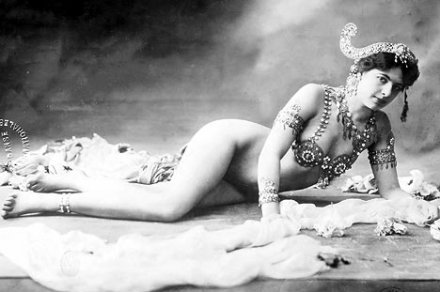

 The
The 


