Themed Set: Terrorism

Inhabiting though we do a world which promises an unending war on it, we have a devil of a time defining the word “terrorism”. Efforts merely to make a taxonomy out of the scores of interpretations scholars have given it resolve in the end to violence … violence by someone’s official enemies. One needs a number of caveats to rule in the good violence and rule out the bad since use of deadly force to cow people towards one’s political objectives is not so very distant from a definition of government itself — obviously including the hangmen that are this very site’s stock in trade.

In our custom execution playing cards, the Eights of all four countries’ suits are terrorists. (Pictured: Tsar Alexander II’s assassins)

Though deeds that meet the know-it-when-I-see-it standard of terrorism go back many centuries — remember, remember, the 5th of November? — the word terrorisme dates only to the French Revolution, when Jacobins self-described with it to position their implacability as a creditable necessity: Terror to the enemies of the Revolution, the armament of Virtue.

“Is force made only to protect crime?” Maximilien Robespierre demanded in his definitive vindication of Terror. “And is the thunderbolt not destined to strike the heads of the proud?”

Those guillotine years inaugurated a long revolutionary age, arguably still underway now, during which thunderbolts have smote many a head, proud and otherwise; in spite of that or perhaps because, terrorisme never caught on as a laudatory and soon fixed its place amid the peals of 19th century dynamite and infernal machines as mostly a term of abuse.

One may be assured that every reader will have many present-day examples of the phenomenon ready to mind, though it is not unlikely that one reader’s perfidious atrocity might be the next reader’s righteous resistance. Whatever its form — whatever its definition — and whatever the exertions of the flying death-droid program — terrorism by now seems destined like the poor to be with us always. But as the next few days’ posts illustrate, ours is not the only era to have believed that.

On this day..

1915: Basanta Kumar Biswas, bomber

Today is the centennial of Basanta Kumar Biswas‘s execution for the Delhi-Lahore conspiracy.

Said conspiracy was a project several years running by a circle of Bengalis and Punjabis to murder officials of the British occupation — “necessary,” as one of the accused explained at trial in 1914, “to awaken the masses, who are wrapped in sleep and under a foreign yoke.” (London Times, June 24, 1914)

Indeed, from a worse-is-better standpoint, the current Viceroy Lord Hardinge was a real pain since he had implemented reforms to make British authority a little more responsive to the subcontinent’s inhabiants.*

One of the conspirators’ signal blows was tossing a bomb into Hardinge’s elephant-mounted howdah.

This explosive lacerated Lord Hardinge with shrapnel, but it did not slay him — neither him, nor the Raj. (The poor elephant-driver was not so lucky.) But the authors of the deed remained obscure for many months despite the state’s intense investigation, and lucrative reward.

While the British hunted, the terrorists/freedom fighters authored a second bomb attack — one that would eventually form the basis of their prosecution. Biswas was tasked with assassinating another colonial official with another bomb, but finding that sentries prevented his approaching his target, he lodged the device on a carriageway, hoping it would detonate under the wheels of some passing viceregal envoy.

Instead, the roadside bomb was struck by a messenger on a bicycle — with lethal effect.

Three other men were condemned to death at the same trial: Amir Charid, Abadh Behari, and Balmokand. Biswas himself received only a prison sentence, but it was upgraded to hanging on appeal.

Several plaques in India — and one in Tokyo, placed by an expatriate — commemorate the young man as a national martyr.

* The measure of Hardinge’s success was London’s ability during World War I to deplo most of its occupation troops plus over a million Indian soldiers to other theaters without losing control of India — despite the best efforts of the Central Powers to foment a wartime mutiny on the subcontinent.

On this day..

1606: Henry Garnet, Gunpowder Plot confessor

On this date in 1606, the English Jesuit Henry Garnet was hanged, drawn and quartered in the churchyard of Old St. Paul’s Cathedral.
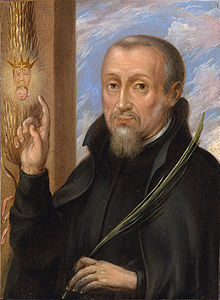
Garnet, “the prime scholar of Winchester College” as a gifted young student, left England to enter the Society of Jesus and study under Robert Bellarmine, a theologian so Catholic that he would later bring the hammer down on Galileo’s heliocentrism.

After eleven years in letters on the continent, the Society called Garnet to return to England in 1586 as the lead missionary to his native realm’s Catholic minority. It was a lonely burden for Garnet, especially after his opposite number Robert Southwell was arrested in 1592. (Southwell, too, went to the scaffold.) But Garnet carried it off as well as anyone. He remained free for nearly twenty years — creating an underground press and numerous illegal cells.

“Under his care the Jesuits in the English mission increased from one to forty, and that not a single letter of complaint, it is said, was sent to headquarters against him,” lauds the Catholic Encyclopedia.

Theologically, Garnet was noted for his defense of the doctrine of equivocation — that is (in the hostile reading of its Protestant interlocutors) of finding hair-splitting rationales for lying. It was an intellectual exercise of many centuries’ vintage, but for England’s beleaguered Catholics it was as urgent as life and death. Most specifically, this doctrine reckoned an oath insufficient to compel a truthful response to official inquiries as to the whereabouts and activities of fellow-Catholics who’d be liable with discovery to attain martyrdom. The liberal definition of “truth” to include an outright lie with a “secret meaning reserved in [one’s] mind” was obviously ripe for the scorn of persecutors for whom it was little but treason neatly clothed.

Knock, knock! Who’s there, in th’ other devil’s name?
Faith, here’s an equivocator that could swear in both
the scales against either scale, who committed
treason enough for God’s sake, yet could not
equivocate to heaven. O, come in, equivocator.

–Macbeth (c. 1606), Act 2, Scene 3

Much of Garnet’s last weeks in custody ahead of his execution were spent in harrowing the doctrine of equivocation; indeed, this is even the very last exchange he had with doctors of the English church sent to accompany him.

One of those standing near him then asked him, “Whether he still held the same opinion as he had formerly expressed about equivocation, and whether he thought it lawful to equivocate at the point of death?” He refused to give an opinion at that time; and the Dean of St. Paul’s sharply inveighing against equivocation, and saying that seditious doctrine of that kind was the parent of all such impious treasons and designs as those for which he suffered, Garnet said, “that how equivocation was lawful, and when, he had shewn his mind elsewhere, and that he should, at any rate, use no equivocation now.”

There were nevertheless equivocations that Garnet would never countenance. His A Treatise of Christian Renunciation, compiling quotes from Church fathers detailing the things a good Catholic must be prepared to renounce for his faith, excoriated those who attended Anglican chuches. Their pretense, he said, was nothing but their own comfort.

Certaine private persons, who have wholly addicted them selves to make them Gods either of their belly and ease, or of the wicked mammon, setting God behind all things which may delight them … refuse also to beleeve that the do amisse …

Judas with a kisse dost thou betray me? amongst hereticks dost thou professe me? no other place to professe chastity, but in the bedd of a harlott?

Harried as they were, England’s Catholics greeted with anticipation the 1603 accession of King James: raised Protestant, but the son of the Catholic Mary, Queen of Scots. Garnet shared Catholics’ hope that James would ease off harassment of the Old Faith; he even authorized the betrayal of fellow-Catholics’ regicidal Bye Plot as a show of loyalty and to pre-empt a possible backlash. “Quiete et pacifice,” he begged.

But toleration was still not quickly forthcoming, and soon Catholics had reverted to “a stage of desperation.” James was only in his thirties: would the trials be neverending?

Garnet continued endeavouring to keep Catholics calm and give the new sovereign the political space necessary to relax persecution. But many of his flock soon tired of quiete et pacifice.

In 1605, there would be another try — one that is still remember, remembered to this day.

Here Garnet again gets into hot water with theological doctrine. Garnet caught indirect wind of Guy Fawkes’ terrorist plot — but he heard it kind-of-sort-of under the seal of the confessional: another priest who himself had heard the design under confession told it to Garnet in a more ambiguous circumstance.

Garnet’s excuses here might strike the reader as far too fine; certainly that is how his prosecutors viewed it. The circumstances of the plot’s revelation certainly appeared to give the priest enough leave to find a way to reveal it, especially since he knew about it for many months before that almost-fateful Fifth of November. Garnet seems to have wanted the resolution — or loathed to plant another Judas-kiss. Maybe he thought his exhortations could stop it without anyone winding up drawn on a hurdle. Maybe, after 19 furtive years knowing every morning that his next sleep might be in a dungeon, his heart of hearts wanted to see it to go ahead.

When the attempt to explosively decapitate the English state was discovered Garnet was hunted to ground; his last days of “liberty” were spent stuffed in a coffin-sized priest hole at Hindlip Hall before the “customs of nature which must of necessity be done” finally forced him to out into the sight of his captors.

His fate looks like a foregone conclusion in retrospect, but Garnet did fight it — for two months before his condemnation, and five more weeks after from trial until his execution during which he maneuvered to exculpate himself. (See Investigating Gunpowder Treason for an exploration of this.) Since Reformation English law of course did not recognize the seal of the confessional, the most charitable reading of Garnet’s own admissions start at misprision of treason. It is but a single step from there to the scaffold if one supposes his long silence shrouded any sort of approval of or aid to the plotters.

Garnet received the mercy of being hanged to death before he was cut down for the public butchery part of his sentence.

On this day..

1545: Cornelis Appelman and Willem Zeylmaker, Batenburgers

On this date in 1545, the leaders of the violent Anabaptist Batenburgers were burned at the stake in Utrecht.

We know Anabaptists best as peaceniks, but the Batenburgers were the dead-end trail to a wholly different reputation. Named for a former Dutch mayor named Jan Van Batenburg, these Zwaardgeesten (“sword-minded”) Anabaptists answered the annihilation of their brethren’s Münster commune by doubling down on revolutionary struggle.

Batenburgers rejected the blandishments of David Joris to lay down the impolitic swords. Their numbers and their philosophies are hard to know with certainty owing to their secrecy, but they’re thought to have maintained the radical Munsterite teachings on polygamy and property.

Van Batenburg himself was caught and executed in 1538, and with that the Batenburgers — who had been living secretly in regular Catholic and Protestant communities — took to the wilderness under the leadership of a Leiden weaver named Cornelis Appelman. For the next ten years or so (even outlasting Appelman’s own death) this band of a couple of hundred desperate men made their way as marauders. We’d probably just call them terrorists today.

Appelman was even more extreme than his predecessor, verging right into crazy cult leader territory with his dystopian insistence on being called “The Judge” and readiness to mete out the severest penalties for any breach of obedience — to say nothing of the arsons, the church-sackings, and the summary executions dealt out to unbelievers. He was finally caught and put to death with his aide Willem Zeylmaker. Batenburger remnants, however, persisted for several more years with at least one splinter continuing until around 1580.

On this day..

2015: Sajida al-Rishawi and Ziyad Karboli, Jordan’s revenge on ISIS

This morning at Swaqa prison south of Amman, Jordan executed two operatives of al-Qaida in Iraq in retaliation against ISIS for the murder of a captured Jordanian pilot.

ISIS yesterday posted a video showing a caged and gasoline-drenched Lt. Muath al-Kaseasbeh shrieking as flames devour him. The slickly produced 22-minute piece with the stomach-turning climax can be found online here, but don’t say we didn’t warn you. It’s nightmarish.

The unfortunate pilot had been used as a prop in ISIS’s provocative hostage diplomacy along with the Japanese captive Kenji Goto, who were both offered in exchange for Sajida al-Rishawi, a terrorist already on Jordan’s death row Jordan’s death row who had been widely forgotten. Video of Goto’s beheading came out several days ago.

Jordan last week agreed to trade al-Rishawi, if ISIS could prove that al-Kaseasbeh was still alive. Jordanian television has reported that the almost jeering video reply was actually filmed on January 3, indicating that the “hostage” negotiations had been a sham all along. (And/or deflecting some of the public anger away from the government; initial reports today had some crowds chanting against Jordan’s King Abdullah, who hastened home from meetings in Washington, D.C. after news of Lt. al-Kaseasbeh’s fate surfaced.)

Al-Rishawi, an Iraqi woman condemned to death in 2005 for taking part in a suicide bombing,* was promptly hanged in revenge by an enraged Jordan. Her crime predated ISIS, of course, but here’s guessing it was a public relations maneuver for the Islamist quasi-state to involve the al-Rishawi gratuitously and invite Jordan to martyr a female prisoner who turned terrorist after she lost a husband and three brothers killed fighting American troops.


Sajida al-Rishawi

Jordan has vowed an “earth-shaking response” extending far beyond hanging al-Rishawi and Ziyad Karboli, another al-Qaida in Iraq prisoner who was also executed.

“While the military forces mourn the martyr, they emphasize his blood will not be shed in vain. Our punishment and revenge will be as huge as the loss of the Jordanians,” a spokesman said in a prepared statement today.

“My son’s blood is worth more than those two,” Lt. al-Kaseasbeh’s father agreed — adding that Jordan’s true revenge must be “to destroy this terrorist group.”

* Her explosive vest failed to detonate, but the attack killed 57. Despite the notoriety of the bombing, al-Rishawi was understood as a small-timer by Jordanians who widely favored setting her free if that could actually secure the release of the lieutenant.

On this day..

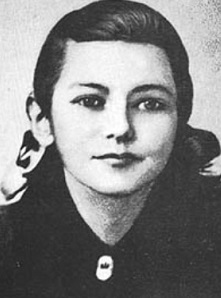
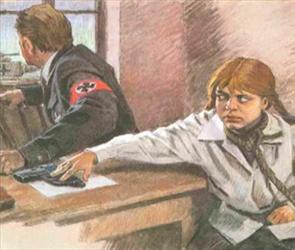
1944: Zinaida Portnova, Komsomol hero

On this date in 1944, Soviet partisan Zinaida Portnova was executed by the Germans occupying Belarus.

The youngest-ever female Hero of the Soviet Union (she was posthumously decorated in 1958), the Leningrad-born Portnova had a rude start in insurgency when the German blitz swept past her summer camp in Belarus and trapped her behind lines.

Said to have been radicalized when occupying soldiers struck her grandmother, the girl joined the youth arm of the local resistance, dubbed the “Young Avengers”.

From surveilling enemy troop deployments and assembling weapons caches, Zinaida Portnova graduated to sabotage and ambushes … and capture. Even then she pulled off an action hero escape by snatching a gun and shooting her way out of custody, only to be re-arrested shortly thereafter.

She was shot a month shy of her 18th birthday.

A large number of Pioneer youth groups were subsequently dedicated to Zinaida Portnova, as was a museum of the Komsomol underground and a public monument in Minsk. She remains to this day an honored martyr of the Great Patriotic War.

On this day..

2015: Ahmed Ali and Ghulam Shabbir, Pakistan terrorists

Pakistan this morning has hanged at the central jail of Multan two members of the long-banned Sipah-e-Sahaba Sunni militant party.

Pakistan has been on an execution bender in recent weeks, following the terrorist massacre of 140-plus people at a Peshawar school on December 16.

Directly following that attack, Pakistan lifted a running moratorium on executions and began finalizing death sentences against various people with years-old terrorism death sentences having no particular connection to Peshawar; it carried out four cathartic hangings on December 20.

Ahmed Ali and Ghulam Shabbir both had death sentences from years-old murders (1998 and 2000) that Pakistan characterized as “terrorist” killings.

There have been a total of nine hangings since the Peshawar massacre, and at least eight more people have had mercy pleas officially rejected by Pakistan President Mamnoon Hussain, and could be executed soon.

While this is a fine clip for three weeks’ work, it might just be the tip of the iceberg: Pakistan has threatened to execute up to 500 prisoners over the coming months.

On this day..

1964: Vuyisile Mini, Zinakile Mkaba and Wilson Khayingo

On this date in 1964, anti-apartheid fighters Vuyisile Mini, Zinakile Mkaba and Wilson Khayingo went to the gallows of Pretoria Central Prison — the first three members of the African National Congress’s military arm to be executed by apartheid South Africa.

In 1960, on the 21st of March — a date still kept as South Africa’s Human Rights Day, and worldwide as the International Day for the Elimination of Racial Discrimination — white police gunned down 69 black civilians protesting the color line.

After the Sharpeville Massacre the struggle over racial apartheid in South Africa escalated to a much more violent plane.

Confrontations throughout South Africa following Sharpeville led the white government to declare a state of emergency and begin rounding up thousands of regime opponents. Pretoria also immediately outlaws the leading black resistance organizations, the Pan Africanist Congress and the African National Congress.

Driven underground, both PAC and ANC spun off military wings in 1961 to meet force with force.

We have already visited the “Langa Six”, members of the PAC’s Poqo.

Shortly thereafter, on December 16, Umkhonto we Sizwe (“Spear of the Nation” in Zulu, but better known simply as “MK”) announced its advent with placards in city streets.

The time comes in the life of any people when there remain two choices: to submit or fight. That time has now come to South Africa. We will not submit but will fight back with all means at our disposal in defence of our rights, our people and our freedom.

MK conducted its first dynamite attacks that very evening in Port Elizabeth; over the ensuing 18 months, it carried out more than 200 bombings and other acts of sabotage against the facilities of the apartheid state: train tracks, power stations, telephone wires, offices.

A security crackdown naturally ensued.* By 1963, the white government had managed to expose and arrest three-quarters of MK’s regional Eastern Cape High Command. Vuyisile Mini, Wilson Khayingo, and Zinakile Mkaba were all swiftly condemned on multiple counts of sabotage plus one of murdering a police informant. International appeals for clemency fell on deaf ears; one fellow-traveler later remembered the men taking leave of their fellow-prisoners in a haunting song.**

“The last evening was devastatingly sad as the heroic occupants of the death cells communicated to the prison in gentle melancholy song that their end was near … It was late at night when the singing ceased, and the prison fell into uneasy silence. I was already awake when the singing began again in the early morning. Once again the excruciatingly beautiful music floated through the barred windows, echoing round the brick exercise yard, losing itself in the vast prison yards. And then, unexpectedly, the voice of Vuyisile Mini came roaring down the hushed passages. Evidently standing on a stool, with his face reaching up to a barred vent in his cell, his unmistakable bass voice was enunciating his final message in Xhosa to the world he was leaving. In a voice charged with emotion but stubbornly defiant he spoke of the struggle waged by the African National Congress and of his absolute conviction of the victory to come. And then it was Khayinga’s turn, followed by Mkaba, as they too defied all prison rules to shout out their valedictions. Soon after, I heard the door of their cell being opened. Murmuring voices reached my straining ears, and then the three martyrs broke into a final poignant melody which seemed to fill the whole prison with sound and then gradually faded away into the distant depths of the condemned section.

* It was during this crackdown that future president Nelson Mandela was rolled up. Mandela had helped to found MK.

** According to The Road to Democracy in South Africa, 1960-1970, the song was Mini’s own composition titled “Pasop — nants’in-dod’inyama, Verwoerd” (“Watch out, here is the African man, Verwoerd!”). If it is available online, I have not been able to find it.

On this day..

1932: Lee Bong-chang, would-be Hirohito assassin

On this date in 1932, Korean nationalist Lee Bong-chang was hanged at Ichigaya Prison for attempting to assassinate Japanese Emperor Hirohito.


The would-be assassin under arrest.

Remembered now as a patriotic hero, Lee on January 9, 1932 chucked a grenade at an imperial procession in Japan as it passed the imperial palace’s Sakuradamon Gate — the aptly-named Sakuradamon Incident. Korea at that point had been directly ruled by Japan since 1910.*

Lee’s hand grenade targeted the wrong carriage, and didn’t even kill the occupants of that conveyance — it just injured a guard. A second grenade failed to explode altogether.

Three months after Lee’s attempt, another Korean, Yoon Bong-gil, also tried to murder Hirohito with a bomb. Both men are interred with garlands at Seoul’s Hyochang Park. A statue of our man Lee, poised with a grenade in hand, stands in the park.

* Newspapers in China — also under Japanese occupation — expressed regret that Lee’s attempt had missed its mark; this impolite language helped to catalyze a Japanese show of force later that month known as the January 28 Incident or the Shanghai Incident.

On this day..

2006: Sheikh Zana, Erbil terrorist

On this date in 2006, the government of Kurdistan hanged eleven members of an alleged “terrorist cell” in its capital of Erbil.

Sheikh Z(h)ana Abdel Karim Barzinji and his gang “were involved in kidnapping and killing innocent people,” per media accounts, and security forces made sure to provide to television statements dubiously adulterated videotapes of confessions they had wrung from the group. The confessions copped to beheadings and bomb attacks, as well as to gay sex and child rape.

It was the first known judicial execution in Kurdistan since it attained functional autonomy in 1992 — but authorities still delayed it in deference to the moratorium on executions in Iraq immediately following the U.S. invasion. When Baghdad resumed executions in September 2006, Erbil went ahead and did so as well.

Victoria Fontan, a scholar of peace and conflict studies resident in Iraq, remembered her horror at watching with Kurdish friends the stagey confession broadcast in her Voices from Post-Saddam Iraq: Living with Terrorism, Insurgency, and New Forms of Tyranny. In particular, Fontan takes note of the incendiary gay-baiting used to demonize the accused, a shaming tactic she has noted in widespread use against insurgents on Iraqi television.

This was coming at a time when Erbil had just suffered an especially bloody suicide attack, and residents were demanding answers and more security. Because I had heard of similar homosexual accusations related to al-Qaeda before, my reaction was a mix of amusement and skepticism. A gay/pedophile/Islamist/terrorist network: how convenient to discredit any insurgent effort for years to come …

The entire city was waiting for the confessions, which finally came in the most sordid of manners, interrupted with footage of gay sex, executions, and much gore. The fact that the confessions were intermittent, cut off abruptly at times, that the images of gay sex supposed to have been filmed by Sheikh Zana and his group could have been filmed by anyone even after the culprits’ arrest — in the same way that some were filmed in Abu Ghraib — was not relevant at all to the viewers of this show. My friend Rowand and his family were mesmerized and disgusted. When I expressed my skepticism, they politely dismissed it. This footage appealed to the deepest of Iraqi collective fears, the fear of being exposed as a homosexual.

On this day..