1300: Gerard Segarelli, Apostolic Brethren founder

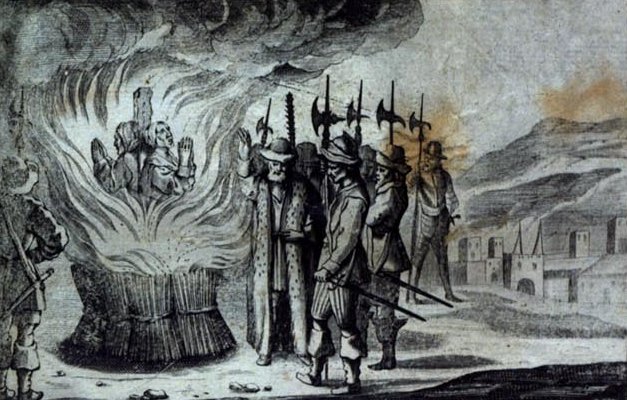
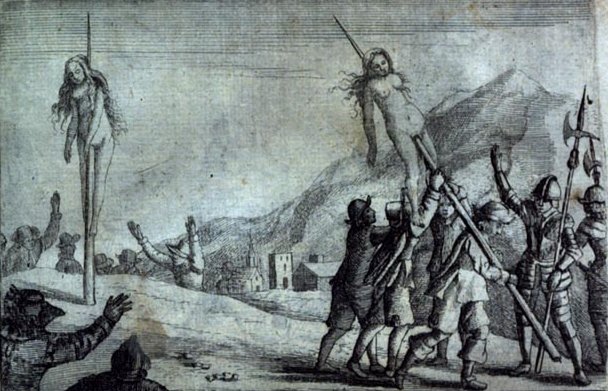
This date in 1300 saw the execution in Parma, Italy of Gerard Segarelli, the founder of the order of the Apostolic Brethren who are perhaps better known for Segarelli’s apocalyptic successor, Fra Dolcino.

Despite the tendency of his follower to eclipse his star, Segarelli was himself a formidable religious reformer in a time flowering with expressions of popular piety that regularly confounded the prelates.

Joined as Dolcino and Segarelli are in this fascinating period, Executed Today aptly welcomes back Dr. Jerry Pierce to talk Segarelli. He’s already shed some light on Dolcino in these pages.

Dr. Pierce is completing a forthcoming book on the Apostles.

You view Segarelli as a very different sort of character from Dolcino.

One of the big issues in studying Segarelli is that he’s always tied to Dolcino. I mean, Segarelli does die a heretic, but he’s always tied to the biggest heresy. He actually founds his order in 1260 and he’s not executed until 1300, so that’s 40 years.

Doctrinally, the reason Segarelli didn’t have any issues for so long is that as far as we can tell, he never had an anti-clerical agenda. Unlike Dolcino, he doesn’t go around calling the Church the “Whore of Babylon”.

Even at the end?

No. Basically, the reason he’s executed is that he refuses to renounce his movement, it’s not that he has any doctrinal errors or anything like that.

He’s basically like a Franciscan, just 50 years later. It’s this popular, penitential movement. They have tons of support throughout central Italy, support from the lay people who provide them with shelter and food. They’re basically doing the stuff that Francis and the early Franciscans did, wandering around exhibiting the ascetic lifestyle. And it’s okay for lay people to do this at this point. Everybody does this.

Why does everybody do this? This century has an explosion of penitential religious mass movements.

Personally, I think it has to do with economics — you have the growth of cities, growth of money economy. These are urban movements. Segarelli’s in Parma, the flagellants are in Parma and other cities.

It has to do with living in this world of growing wealth, growing towns, hearing this message of poverty preached from the pulpit and then they look around and say, “wait a minute.”

Different individuals come to this conclusion — Francis, Peter Waldo, Segarelli — I don’t think they had an idea about founding a movement. They were just trying to do something to preserve their souls.

And these other groups like the Franciscans also face an internal tension between the spirit of ascetic poverty and the institutional Church.

Even before Segarelli, the guy who’s the head of the Franciscans in one letter that he wrote said, “people wandering in Italy would rather run into robbers on the road than two begging Franciscans because at least they know the robbers’ intentions.”

A lot of authors say that Segarelli is an offshoot of the poor spiritual Franciscans. But he has no connection. He tried to join the Franciscan order, but the poor order founded by St. Francis says, “yeah, you don’t have the right pedigree to be a Franciscan,” which really goes to show how institutionalized and closed the Franciscans had already become.

Most of the stuff we have about Segarelli for his first 20 years or so is from a rival Franciscan named Salimbene who’s mad that he’s making such headway. He actually says that he can’t believe that his fellow citizens are giving more to Segarelli and his Apostles than they ever did to the Franciscans. And that colors how they talk about them: in his eyes, Segarelli is a rustic from the country.

Did Segarelli preach at all?

He goes around telling people to do penance, and the Franciscan chronicler makes fun of him because he doesn’t say the Latin version, he uses the vernacular: penitenziagite instead of the Latin penitentiam agite.

Most of it was by example. You don’t have access, really, to a Bible as a lay person; this was a way for people to sort of experience the religious life without becoming a nun or a monk.

So for these first decades of his career, if he’s attracting all this criticism, why is he still tolerated?

Because he’s not really a threat. It’s a good way to channel lay piety without it becoming a threat or anything.

Bear in mind, this is after the Waldensians, after the Crusade against the Albigensians — and both of those groups talked about poverty. This gives Church figures a pretty good idea that, hey, maybe we should be accepting of these movements.

The Bishop of Parma accepted Segarelli. There was apparently a group of Apostolic sisters who did the same thing, and the Bishop of Parma sort of wrote a document saying that you get a partial indulgence for giving to them.

Given this institutional semi-support, why wasn’t Segarelli’s movement also corrupted?

There are other leaders than Segarelli, and some do have this issue. One guy is the brother of the podesta of Bologna, a pretty wealthy dude. He takes over this movement and he’s basically using people’s donations to buy horses and ride around in nice clothes. There’s a huge civil war within the Apostles. At one point Segarelli himself gets kidnapped by rival members.

It’s not until the 1280s that they start really running into problems with respect to the Catholic hierarchy, and the problem is because of the general proliferation of the lay movements. Two different popes lay out guidelines saying unestablished religious orders need to join established orders or just disband. But then you see people in the Apostolic movement ignoring that, moving into actually preaching things, which is potentially heretical, and they start attacking the Franciscans, the Friars Minor, by referring to themselves as the Friars Minimi, “the least.” The Franciscans are pretty powerful and they start going against the Apostles.

But Segarelli himself stays clear of this?

Segarelli himself doesn’t really take a leadership role even though he’s the founder. He’s sort of hands-off.

You can argue that he has some issues because he won’t follow authority when they tell him to disband. But it was after the group had been around for so long, it’d be like telling the Franciscans 40 years on, “sorry.” Early in the movement, the Apostles had actually gone to different members of the hurch hierarhy asking for a rule under which they could operate. So they’re not trying to be insurrectionaries.

How does it all break down for the Apostles, then?

It’d be too easy to say that it’s just greedy Franciscans. I think the other part is you have people who are getting into the movement, people like Dolcino, who have other agenda. And the Church is worried that they’re unregulated and without control you get improper doctrine being preached.

When it comes to it, Segarelli just refuses to disband. The Apostles had really grown beyond his personal control anyway. But at one point he escapes from the bishop’s palace where he’s sort of under house arrest and resumes his preaching, and they’re like, “all right, enough.”

What do we know about Segarelli’s relationship with Dolcino?

We think that Dolcino may have joined the order around 1290, but it’s all hearsay. Dolcino talks some about Segarelli.

What’s Segarelli’s long-term legacy?

It’s not heresy to be associated with Segarelli after he’s executed. We have Inquisitional trial records for several years after Segarelli in places like Bologna and other areas. There’s even some evidence that there were followers in France and Germany.

As time goes on, there’s a lot of people in Italy itself like Dolcino who appropriate the movement, so you have modern writers who talk about Segarelli and Dolcino as proto-Communists, or Segarelli as the real Franciscans. Some of them have an axe to grind against the institutional Church.

On this day..

1415: Jan Hus, reformer of religion and language

On this date in 1415, Czech theologian Jan Hus was burned at the stake at Konstanz for heresy.

This statue of Jan Hus in Prague’s Old Town is a tourist magnet. image (cc) autumnal fire

Hus might be the most consequential pre-Lutheran Christian religious reformer, and the Hussite faith he founded still persists to this day.

In his own time, Hus expounded a reformist theology inspired by John Wycliffe, and putting Holy Writ into the vernacular was essential to his program. His religious movement found common cause with a Bohemian political interest in exploiting western Christendom’s clown carful of rival popes to stake out greater national independence.

He eventually met his martyrdom by agreeing to come to the Council of Konstanz (Constance) under a guarantee of safe conduct, where prelates were going to sort out their rival popes and do the periodic Church reform thing.

Instead, Hus was seized and imprisoned — you don’t have to keep promises to heretics, see; it’s all a part of this noble era’s expediently plastic sense of honor — and tried and condemned and implored to recant and finally burned alive.*

But the disobedient movements Hus had kindled in life were not so easily reduced to ash.

In the aftermath of the great ecclesiastic’s execution, a significant conflict erupted in Bohemia. For a generation or so of the Hussite Wars, the man’s followers repelled Catholic incursions before they too finally succumbed.

Even then, it wasn’t over (and still isn’t). Though it wasn’t all specifically about the guy named Jan Hus — these things never are — the Catholic powers that be were still fighting and propagandizing against Hus centuries later, into the Counter-Reformation.

Today, the statue of Jan Hus that everyone flocks to see in Prague’s Old Town Square is flanked by a Catholic church on one side … and a Catholic church that’s become a Hussite church on another.


Since all of the above and a great deal more about Hus and Hussites is readily available at the search engine of your choice, we thought — after the above introduction — to redirect our conversation to a dimension of Jan Hus less widely recognized: his foundational role in the development of the modern written Czech language, and especially its use of diacritics. Hus is generally credited as the creator of the haček or caron.

Thanks to friend of the blog Sonechka for helping ferret out this excerpt, from the chapter on Czech by Robert Auty in The Slavic Literary Languages: Formation and Development, ed. Alexander M. Schenker and Edward Stankiewicz, Yale: 1980.

The religious reform movement associated with the name of Jan Hus (1371-1415) had important consequences for the Czech literary language. Knowledge of the Bible was an important element in the reform program of Hus and his followers: the Bible was to be made available to the people in their own language and priests had to be able to expound it in a clear and straightforward manner … The establishment and continuous polishing and revision of the scriptural text played a great part in the development of the written Czech vernacular. Moreover the Czech translation profoundly influenced the earliest Polish versions of the Bible.

…

Hus’s own views on the language emerge not only from his practice but also from various theoretical utteranes on the subject. It has been shown that in morphology and vocabulary he tried to modernize the language in accordance with the development of natural speech. In phonology however he took up a more conservative position … Hus was also critical of another element of contemporary Prague speech, the proliferation of Germanisms in the vocabulary. In this he took up a position similar to that of many of his countrymen four or five centuries later and castigated those who said handtuch (Ger. Handtuch) for ubrusec ‘towel,’ šorc (Ger. Schurz) for zástěrka ‘apron,’ trepky (Ger. Treppen) for chódy ‘steps,’ knedlík (Ger. Knödel) for šiška ‘dumpling’ and the like. It is interesting to note that many of the Germanisms to which Hus objected have in fact disappeared from the language; yet others have resisted; knedlík, for example, has become fully domesticated.


A Czech knedlík by any other name would still taste as chutný. (cc) image from Michal Sänger.

It is in all probability to Hus that we must ascribe the establishment of the orthography of modern Czech, for this is essentially based on the diacritic system expounded in the treatise known as De orthographia bohemica. Written at the beginning of the fifteenth century, the tract, though it cannot with absolute certainty be ascribed to Hus, is nevertheless held by the great majority of scholars to be his work. …

The revolutionary innovation advocated in De orthographia bohemica was the introduction of the diacritic system, that is to say the extension of the repertory of graphemes by the user of superscript marks. For the consonants the principle adopted was to use the unmarked Latin letters for sounds which (in the contemporary pronunciation) were identical in Latin and Czech, but to indicate specifically Czech sounds by means of a superscript dot over the letter concerned. Thus … č, š, ž, ř … [which] indicated not palatal articulation but non-Latin-ness. …

It seems most probably that he was influenced by the Hebrew practice of indicating by a dot (dageš) variant phonetic realizations of the same grapheme. We know that Hus learned some Hebrew, and this would seem the most obvious source of this orthographic device. …

The diacritic orthography was not immediately accepted, despite the fact that a handful of early fifteenth-century manuscripts employed it. It gained ground in the later fifteenth and especially in the sixteenth century and became adopted as the standard. With the advent of printing in the late fifteenth century the Gothic (black-letter) form of the Latin alphabet was used for Czech books as it was for German. When the forms of the letters were standardized Hus’s lozenge-shaped dot was changed to the ‘hook’ (haček) which lives on as the reversed circumflex of the present-day Czech alphabet. The indication of vowel length, originally similar to a comma, was systematized as an acute accent (referred to in Czech as &#269árka) …

By the time the Hussite wars ended in the 1430’s the Czech language was in use in most spheres of national life. It was established as a medium of administrative and legal documents, and it was increasingly used for learned and technical writings … When we consider that the relative uniformity of the phonological and morphological structure of the language remained unimpaired, and that its orthography was in the process of consolidation, we can establish the mid-fifteenth century as the period of origin of the Czech literary language as a normalized, polyvalent, nationally recognized idiom.

Czechs and their normalized, polyvalent, nationally recognized idiom get a public holiday and all the hačeks they can drink in Jan Hus’s honor today.

* Just to make sure everyone got the point, this same council ordered the remains of the long-deceased Wycliffe exhumed and posthumously “executed”.

On this day..

1569: Three Huguenot Parisians

France during its intractable 16th century Wars of Religion was a scary place to be on the wrong team at the wrong time — nowhere more so than Catholic Paris, for its Protestant Huguenot minority. This, after all, is the city that Henri IV had to capture by conversion, with that quotable bow to temporal expediency, “Paris is worth a mass.”*

On this date in 1569, that settlement lay decades in the future … but looming around the corner was the era’s signature atrocity, the St. Bartholomew’s Day massacre.

But Paris was already on tenterhooks in the 1560s as an abortive peace gave way to another installment of armed conflict, the “third war”, and the city girded itself against Huguenots without and within.


The state of the discourse: Catholic anti-Huguenot propaganda (click for larger image) from 1562 shows the heretics mounting a Catholic priest on the cross and shooting him. (Hey, don’t say it could never happen)

The September, 1568 Edict of Saint-Maur deprived Protestants of religious freedom, and municipal regulations confined most Huguenots to their homes — one part religious discrimination, one part pre-emptive crowd control in a city liable to pop out an anti-Huguenot pogrom at any moment. That happened in January to our day’s victims, Philippe and Richard de Gastines (father and son, respectively) and their in-law Nicolas Croquet, when a crowd attacked their home on suspicion of celebrating a Protestant Last Supper.

the seizure of the Gastines, along with several of their relatives and neighbors, took place amid widespread public disturbances … “The Huguenots were so hated by the Parisian populace that, if the king and authorities had let them have their way, there would not have been one [Huguenot] in the whole city who was not attacked.” De Thou added that crowds of people followed after the magistrates of Parlement when they left the Palais de Justice and so threatened them that they eventually pronounced a death sentence against the Gastines for a crime that would ordinarily have warranted banishment or a mere fine.**

The crowd also destroyed the subversive house. Upon the site of the former residence, the Parisian parliament erected a pyramid surmounted by a crucifix — the “Croix de Gastines”. This popular monument of religious chauvinism was maintained against a royal demand to demolish it for two-plus years, until the Marshall of France finally did so by force.†

But the Gastines were remembered by the Huguenot party, too.

The Protestant French poet Agrippa d’Aubigne, who grew up during this delirious age, retrieved the story of their martyrdom — and the somewhat incidental fact that Richard de Gastines had also been (non-capitally) convicted for a minor incident of supposed heretical evangelizing while languishing in prison — and made Gastines the eloquent exponent of Protestant fidelity in d’Aubigne’s poetical magnum opus, Les Tragiques. The relevant bit, rousing other prisoners to embrace the torments of martyrdom, is available in French here. (There’s a bit more about d’Aubigne’s martyr-making in this book.)

* And also the city where a Catholic assassin murdered that monarch.

** Barbara Diefendorf, “Prologue to a Massacre: Popular Unrest in Paris, 1557-1572,” The American Historical Review, Dec., 1985

† The Marshal literally had to shed blood to repel the throng attempting to defend the Croix. Frustrated of its public monument, the mob proceeded to sack two neighboring homes believed occupied by Protestant fellow-travelers. Both those domiciles were again of mob violence during the St. Bartholomew’s Day Massacre. (Diefendorf)

On this day..

1535: Cardinal John Fisher

On this date in 1535, Catholic prelate John Fisher was beheaded on Tower Hill for refusing to endorse Henry VIII as the head of the Church of England.

The longtime Bishop of Rochester had only been elevated to the cardinalate weeks before by the new Pope Paul III, in the vain hope that the sublimity of the position would induce King Henry to ease the prelate’s imprisonment.

Henry eased it, all right. Permanently.*

Forbidding the official hat to be delivered to Albion, Henry declared he would dispatch its owner’s head to Rome instead.

A jury including the father of the usurping queen who had occasioned all this trouble — Anne Boleyn, of course, bound for the block herself in less than a year — condemned the aged ecclesiastic to death for treason.

He was hustled to the scaffold on this date to beat the June 24 feast day of his patron and namesake Saint John the Baptist, Christ‘s Biblical precursor who was … beheaded by a ruthless king whose marriage the Baptist had denounced. Struck a little too close to home, that.

Fisher’s friend and fellow-traveler both spiritual and temporal, Sir Thomas More, followed the cardinal’s footsteps to Calvary a fortnight later.

Both men are considered saints not only by Catholics (for obvious reasons) but also by Anglicans. June 22 is their feast day on the Catholic calendar of saints.

* It’s possible Henry had been out for Fisher’s blood for some time. As a foe of the king in his so-called Great Matter of many years’ standing, Fisher was the presumed target of a 1531 assassination-by-poison attempt that resulted in a horrific execution by boiling alive.

On this day..

1516 and 1530: Autos de fe in the Spanish Canary Islands

From The Inquisition in Spanish Dependencies, available free from Google books here:

That Columbus, on his first voyage, took his departure from Gomera indicates the importance assumed by the Canaries in the development of trade with the New World and this, conjoined with their productiveness, as they became settled and cultivated, rendered them a centre of commerce frequented by the ships of all maritime nations, as well as an object of buccaneering raids, in an age when trade and piracy were sometimes indistinguishable. Their proximity to Morocco and the Guinea coast moreover exposed them to attacks from the Moors and gave them an opportunity of accumulating Moorish and negro slaves, whom the piety of the age sought to convert to Christians by the water of baptism. In various ways, therefore, there came to be abundant material for inquisitorial activity, although the Judaizing New Christians, who furnished the Spanish tribunals with their principal business, appear to have been singularly few.

There was no haste in extending the Spanish Inquisition to the Canaries … It is not until the time of Diego de Muros [Spanish link], who was consecrated in 1496, that we have any evidence of such action … [and even then] every act, from the preliminary arrest to the final decision, was regulated from Seville …

Irregular and imperfect as may have been the organization of the tribunal, it yet managed to accomplish some convictions. In 1510 there was held an auto de fe in which there were three reconciliations for Judaism and one, of a Moorish slave, for reincidence in Mahometan error, while a fifth culprit was penanced for Judaism. Then in 1513 occurred the first relaxation, that of Alonso Fatima, a native Morisco, who had fled to Barbary. This was always deemed sufficient evidence of relapse to former errors, and he was duly burned in effigy. It was probably also to 1516* that may be attributed the first relaxation in person — that of Juan de Xeres of Seville, for Judaism. It shows that the tribunal was indifferently equipped that, when he was sentenced to torture, the physician whose presence was obligatory on such occasions, Doctor Juan Meneses de Gallegas, was required personally to administer it. It was exceedingly severe, extending to eleven jars of water; the accused was unable to endure it; he confessed his faith, was sentenced to relaxation as a relapsed and for fictitious confession, and was executed on Wednesday, June 4th. …

on June 4, 1530, another oblation was offered to God, in an auto celebrated with the same ostentation as the previous one [in 1526, with seven executions]. This time there were no relaxations in person, but there were six effigies burnt of as many Moorish slaves, who had escaped and were drowned in their infidelity while on their way to Africa and liberty. There were also the effigy and bones of Juan de Tarifa, the husband of the Ynes de Tarifa who had denounced herself in 1524; he was of Converso descent and had committed suicide in prison, which was equivalent to self-condemnation. There were three reconciliations, of which two were for Judaism and one for Islam and five penitents for minor offences.

This use of religious terror in service of slavery — the burning of those effigies who had been “drowned in their infidelity on their way to Africa and liberty” — was an overt policy of the tribunal.

Pious zeal for the salvation of these poor savages led to their baptism after capture; they could not be intelligent converts or throw off their native superstitions, and no one seemed able to realize the grim absurdity of adding the terrors of the Inquisition to the horrors of their enslaved existence. When a negro slave-girl was bemoaning her condition, she was kindly consoled with the assurance that baptism preserved her and her children from hell, to which she innocently replied that doing evil and not lack of baptism led to hell. This was heresy, for which she was duly prosecuted.

Under the inquisitorial code the attempt to escape from slavery thus was apostasy, punishable as such if unsuccessful, and expiated if successful by concremation in effigy. This is illustrated in an auto, held by Zayas and Funez, June 24, 1576, in which among sixteen effigies of absentees were those of eight slaves, seven negroes and one Moor. They had undergone baptism, had been bougt by Dona Catalina de la Cuevas and were worked on her sugar plantation. They seized a boat at Orotava and escaped to Morocco, for which they were duly prosecuted as apostates and their effigies were delivered to the flames — a ghastly mockery which does not seem to have produced the desired impression in preventing other misguided beings from flying from their salvation.

Related: Jews in the Canary Islands: Being a calendar of Jewish Cases extracted from the records of the Canariote inquisition in the collection of the Marquess of Bute.

* A footnote in the text of our source notes that “in the record concerning Juan de Xeres, the year is omitted, but as Wednesday fell on June 4 in 1511, 1516, 1533 and 1539, the probable date is 1516.”

On this day..

1572: Thomas Howard, Ridolfi plotter

On this date in 1572, the Duke of Norfolk lost his head for a conspiracy to overthrow Queen Elizabeth.

Thomas Howard was a born plotter. Literally.

The fourth Duke of Norfolk, he inherited the title from the third Duke of Norfolk — his eponymous grandfather, the scheming courtier who had maneuvered nieces Anne Boleyn and Catherine Howard into disastrous matrimony with Henry VIII.

Having run afoul of his ruthless sovereign, this elder Howard then had the distinction of dodging execution only because the king himself dropped dead the very day before Howard was to have been beheaded.

The Norfolk title, however, did skip a generation, because grandpa Howard’s son Henry Howard was not so lucky, and abdicated his birthright at the block.*

That left our day’s principal, a mere boy of 10 when his father got axed, as his lucky grandfather’s heir apparent — to carry on the Howard scheming against his second cousin, Anne Boleyn’s lucky daughter Queen Elizabeth.

And young Thomas Howard would prove to be a chop off the old block.

Howard’s sympathies for Catholicism and for swinging an ever-bigger dick led him into a machination to wed Elizabeth’s northern rival Mary, Queen of Scots.

Lucky to get off with just a slap on the codpiece, Howard went right back at it with an unabashed Spanish-supported conspiracy to depose Elizabeth, again in favor of Mary — the Ridolfi Plot.

This chicanery was sniffed out by Elizabeth’s pervasive spy network, and while Mary’s royal status enabled her to survive the revelation, Norfolk had already got down to his last chance.

The conflict between Elizabeth and Norfolk, heavily fictionalized and climaxing in the Ridolfi Plot, is essentially the plot of of the 1998 movie Elizabeth.

Having endured so much trouble from these nettlesome Howards, the crown left the Duke of Norfolk title vacant for nearly a century after this date’s beheading. It was finally restored to a mentally deficient Howard descendant with the post-Cromwell Stuart restoration.

* And that’s just on the dad’s side. His maternal grandfather and great-grandfather from the Stafford family also met their ends on the scaffold.

On this day..

1307: Fra Dolcino, Apostle

On this date in 1307, radical preacher Fra Dolcino was gruesomely put to death in a daylong public torture at the Piedmontese town of Vercelli.

Dolcino was the millenarian successor of Gerard Segarelli, whose itinerant commune of impoverished penitents — Apostles, they called themselves, to the chagrin of the Church hierarchy — had attracted followers for near half a century before the powers that be smashed it.

The shade of the burned firebrand (and the corporeality of his refugee onetime followers) haunt the murderous monastery of Umberto Eco’s The Name of the Rose. Here, the paternal Franciscan unraveling the novel’s mystery explains Fra Dolcino’s illicit movement to his naive protege.

We were talking about those excluded from the flock of sheep. For centuries, as pope and emperor tore each other apart in their quarrels over power, the excluded went on living on the fringe, like lepers … all of them were ready to hear, or to produce, every sermon that, harking back to the word of Christ, would condemn the behavior of the dogs and shepherds and would promise their punishment one day. The powerful always realized this. The recovery of the outcasts demanded reduction of the privileges of the powerful, so the excluded who became aware of their exclusion had to be branded as heretics, whatever their doctrine …

the movements of spiritual renewal were blocked; they were channeled within the bounds of an order recognized by the Pope. But what circulated underneath was not channeled. It flowed, on the one hand, into the movements of the flagellants, who endanger no one, or into the armed bands like Fra Dolcino’s …

From the cinematic adaptation of The Name of the Rose. The monk’s semi-coherent summons to “penitenziagite” is significant because it marks him as a former adherent of the penance-focused movement. An Italian metal band called Dolcinian had a song (and album) of that exact title.

But were they really an “armed band”?

Executed Today is pleased to mark this portentous anniversary in conversation with historian Dr. Jerry Pierce, currently working on a book about the outlaw movement.

ET: Who were the Dolcinians?

JP: A lot of people get kind of caught up in the Dolcino part. It’s not about him until the very end.

The group itself originated in 1260, and it lasted 40-some years before it ran into any trouble. Their whole goal when they start is essentially, live a life of poverty like the original Apostles. And apparently that’s a problem for people later.

That’s really all it was about. It’s communal living, it’s not owning things at all, including houses. By 1260, they were better Franciscans than the Franciscans were.

And the Franciscans had a big presence in the city of Parma, where this thing got started, so they were slightly peeved.

So it’s a challenge to the Franciscans?

It’s not trying to show up the Franciscans, but it becomes a challenge.

The “Apostles” wander around, they beg for their food, they tell people to do penance.

The early Franciscans started off the same way, all about poverty, but once they became established, the order became all about money.

And the Apostles are not the only ones mounting this challenge.

Right. Waldensians in France predate the Franciscans by about 30 years or so.* You just have a guy in France who’s a businessman who hears a reading of the gospel saying to give up your possessions and follow Christ. And that’s what he does. He even pays someone to translate the Bible into vernacular French, which is a big no-no.

His group and Segarelli’s group are not an issue as long as they don’t say anything about the doctrine. So long as they don’t say anything about the Trinity or the Eucharist, they’re just calling people to penance — they’re okay.

But the reason these groups come along is that in that period, around 1150 — Europe is experiencing a big economic change. The haves are on the side of the church. This is the core of all of them, and it’s the core of the Dolcino philosophy as well — the church is preaching poverty, but it’s living wealthy.

So they were doing something within the practice of the Church’s community for decades. How did they get so dangerously on the outs?

The bishop of Parma actually patronizes the Apostles and grants indulgences to people who give money to them. They’re not just some kooky group that’s out there even though the main writings about them are by their opponents.**

But what happens is they become really, really popular, and people start following them, and the Franciscans get the hierarchy involved.

There’s nothing doctrinal about them until Dolcino that becomes heresy.

And what specifically is that?

You take Segarelli’s stuff about poverty and radical egalitarianism, and you have Dolcino either witness or know about the execution of Segarelli, and that sort of crystallizes for him that members of the Church are forces of evil.

Basically, Dolcino says that if they would kill this guy for preaching nothing other than poverty, which is their own message, then there’s something wrong.

Because of the persecution — Segarelli’s execution, the Inquisition moving in and questioning people — that kind of pressure is what spurs Dolcino to take off to the northern mountains. That’s sort of the catalyst for him to become apocalyptic.

But even suppressing that takes the Church years.

The chronology is muddy because we only have about three sources, but we think he joined the order before Segarelli was executed. And between 1300 and 1302 or 1303, he’s off in the northeast of Italy near Trento.

He’s from Valsesia, a river valley in the Piedmont, and he eventually returns with a bunch of followers across the mountains — between Novara and Vercelli. It’s an important area because the bishops of the two cities have been fighting each other for access to the valleys, and fighting the local feudal lords, the Biandrate.

This family that’s been controlling the region, they’ve been extending their influence far up the river valley and the farther you go up the valley, the more independent the people are up there; they hate people who encroach on their autonomy and they’ve recently rebelled and kicked them out.

Essentially, Dolcino enters this sovereign territory, and he’s saying to the inhabitants, the wealthy church and the people who live down on the plain are wicked and they’re going to assault you, and sure enough …

And that’s the rebellion that takes place, it’s these farmers and families who live up there against the Crusader army.

A Crusade?

The Pope† allowed a papal indulgence for people going on Crusade up there. They essentially recruit a mercenary army.

The irony of it is that the things that Dolcino and his followers are accused of is raiding people’s houses and stealing all their stuff, and raiding churches and stealing all the gold. Well, guess who actually did that? And all the mercenaries needed to say when they plundered was, “uh, yeah, Dolcino did that.”

You have these non-Valsesian Crusaders and mercenaries who sort of move into these territories and basically get beat by the locals several times.

We know there was this final pitched battle. The Dolcinians flee to a mountaintop awaiting the End Times. Essentially what the Crusader army did was they starved them into submission, basically just blockaded the whole area, and then overran a bunch of starving women and children.

“On that day more than a thousand of the heretics perished in the flames, or in the river, or by the sword, in the cruellest of deaths. Thus they who made sport of God the Eternal Father and of the Catholic faith came, on the day of the Last Supper, through hunger, steel, fire, pestilence, and all wretchedness, to shame and disgraceful death, as they deserved.” (Source)

Dolcino also had a female opposite number, and the sect preached egalitarianism. Did they have an egalitarian gender politics as well?

The woman, Margaret or Margherita, it’s hard to tell exactly who she is — there’s all this embellishment. She’s sometimes called the “wife” of Dolcino, or sources call her the “mistress”, which makes it sound seedier. But we don’t actually know if they were involved or not involved. She was a former nun, and we know a little bit about her family, but there’s just not much about her.†

As to gender generally, the sources will say, these Apostles believed that nobody should own any property so they shared all their things and even their women.

So you’re meant to think that they just pass them around, but that wasn’t the case at all; there weren’t orgies and such. In this case, they did stress radical egalitarianism.

This is actually the ideology of the Christians in the first century: they also say, the world we live in is wrong, and it’s about to end — one of the things about the world they live in is, it’s patriarchal, and they come up with radical egalitarianism because there’s not supposed to be any distinctions in heaven and they’re looking forward to that.

We don’t exactly know if, in the end, it was the Dolcinians themselves fighting or the inhabitants of the area who protected them. But whoever it was, the [anti-Dolcino] sources on the battles also say, basically, “oh my God, the women are wearing pants and fighting next to the men.”

What’s the legacy of this whole movement?

In its own time, there were remnants of the Order of the Apostles still in Parma and the area for the next 20 or 30 years. It’s not heresy to be part of the group per se. There are references to sort of straggler parts of the group in France, in Spain, for the next 100 to 200 years, but it’s really hard to tell.

We do know they spread out pretty far. At one point under Segarelli they sent people to Jerusalem.

The people who live in Valsesia still today totally revere Dolcino. You can go on Dolcino hiking tours!

And there’s been this long history of appropriating his meaning.

“Thou, who perchance
Shalt shortly view the sun, this warning thou
Bear to Dolcino: bid him, if he wish not
Here soon to follow me, that with good store
Of food he arm him, lest impris’ning snows
Yield him a victim to Novara’s power,
No easy conquest else.”

-Mohammed, in Dante’s Inferno (He sounds prophetic, but Dante wrote after Dolcino’s death, with the action set while the heresiarch was still alive.)

In 1407, members of the Church went out and built a church consecrated to the fight aganist the heretics near the site where the Dolcinians were wiped out, and the local populace was outraged.

In 1907, Dolcino was appropriated by the Italian socialists. There was a workers’ group that planted a big red flag, and then they built a monument to him, with a plaque on it with the lines from Dante‘s Inferno.

There’s pictures of this monument, with tons of people up on the mountainside and they’re all dressed in their best.

And the monument lasted until the mid-1920s when the fascists blew it up with pro-fascist clerics. It was rebuilt in 1974, and you can see the old Catholic church from it — two opposing claims on Fra Dolcino.

Obviously you’re pretty sympathetic to this movement. What do you think we ought to make of them?

I think for me the key to understanding the whole order is not just to say, “well, everyone understands it wrong.” There’s a sort of willful wrongness to it, that whenever you put apocalypticism in it, it immediately puts people in the crazy category.

But in this period, when people talked about the end of the world, it didn’t necessarily mean they were nuts.

And then the other thing is, they’re not as violent and threatening as they appear on first read. I’m not even sure that they ever lifted a finger against the Crusaders, they may have just fled. Which in a sense means that they hold true to their values to the end.

More reading: A Historical Memoir of Fra Dolcino and His Times -ed.

* The Waldensians hung around into the Protestant Reformation, and still exist today.

** e.g., about Segarelli, by a Franciscan — who calls them something that translates loosely to “ribald bumpkins”.

† Pope Clement V: he would prove more effective crushing the Templars.

‡ Margaret was also executed — allegedly turning down several smitten suitors’ offers to marry her if she would abjure. (Margaret was rich.) Although she’s most picturesquely shown burnt to death in front of Fra Dolcino during or before the latter’s torture, the sources seem to be unreliable as to whether she was in fact also executed on June 1, or on some other date.

On this day..

1655: Massacre of Waldensians

On this date in 1655, Catholic forces under the Duke of Savoy carried out a notorious massacre of Waldensians* in the Piedmont.

This interesting, excommunicate sect had persisted for centuries in those hard-to-reach places in Alpine foothills, intermittently ignored and hunted. After Martin Luther, many Protestants inclined to see them as a proto-Reformation movement, or even a counter-papal apostolic succession reaching back to ancient Christianity.

At any rate, they sure weren’t Catholic.

And our friend the Duke decided — perhaps piqued by the murder of a missionary Catholic priest, or for whatever other reason — to mount one of those heresy-extirpating sorties and make them Catholic in 1655.

On April 17, the Marquis of Pianezza appeared with an overwhelming force of mixed Piedmontese, French, and Irish** troops. They conducted a few skirmishes, then made nice with the Waldensian civic leaders and induced them to quartering their troops temporarily further to some expedient pretext.

Alas! alas! these poor people were undone. They had received under their roof the executioners of themselves and their families. The first two days, the 22d and 23d of April, passed in peace, the soldiers sitting at the same table, sleeping under the same roof, and conversing freely with their destined victims …

At last the blow fell like a thunderbolt. At four of the clock on the morning of the 24th April the signal was given from the Castle of La Torre. But who shall describe the scenes that followed? On the instant a thousand assassins began the work of death …

Little children were torn from the arms of their mothers, and dashed against the rocks; or, more horrible still, they were held betwixt two soldiers, who, unmoved by their piteous cries and the sight of their quivering limbs, tore them up into two halves. Their bodies were then thrown on the highways and the fields. Sick persons and old people, men and women, were burned alive in their own houses; some were hacked in pieces; some were bound up in the form of a ball, and precipitated over the rocks or rolled down the mountains … Some were slowly dismembered, and fire applied to the wounds to staunch the bleeding and prolong their sufferings; some were flayed alive; some roasted alive; others were disembowelled; some were horribly and shamefully mutilated, and of others the flesh and brains were boiled and actually eaten by these cannibals.

–Source, whose atrocity accounts channel those in this French tome

Without doubting the capacity of man’s inhumanity to man, the cannibalism charge reminds that we’re dealing with propaganda alongside historiography. And what great propaganda — like, babies-torn-from-incubators great.

Thumbnails (click for a larger, disturbing view) of selected images of this date’s atrocities from Samuel Morland’s The History of the Evangelical Churches of the Valleys of Piedmont

And there’s little doubt as to the overall savagery of the affair, which could well have become the opening salvo in a full-scale sectarian cleansing campaign. (A later addendum to Foxe’s Book of Martyrs narrates the ensuing Piedmontese armed struggle, petering out before any definitive resolution in the field.)

Outrage at this hecatomb spread in Protestant Europe — which would also refer to the day’s doings as the “Bloody Easter,” since it corresponded with the eve of that celebration as reckoned by the Julian Calendar (source).

It was felt especially in Protectorate England, which intervened diplomatically.

A “day of solemn fasting and humiliation” was promulgated in Albion, along with collections for the relief of the survivors. Oliver Cromwell personally put £2,000 into the kitty.

More importantly, he dispatched diplomat Samuel Morland† to force the House of Savoy to lay off the persecution; in fact, he threatened to disrupt high statecraft between England and France unless the French twisted arms on behalf of the Waldensians.

Written correspondence for Morland’s diplomatic tour addressed to Louis XIV of France and various other continental potentates, as well as a fiery bit of oratory that Morland delivered to Savoy, all seem to have originated from the pen of Republican scribbler John Milton — the future author of Paradise Lost.‡

Milton, for whom the whole thing was more than just a day job, was further moved to put his umbrage at the slaughter into sonnet form:

Avenge O Lord thy slaughter’d Saints, whose bones
Lie scatter’d on the Alpine mountains cold,
Ev’n them who kept thy truth so pure of old
When all our Fathers worship’t Stocks and Stones,

Forget not: in thy book record their groanes
Who were thy Sheep and in their antient Fold
Slayn by the bloody Piemontese that roll’d
Mother with Infant down the Rocks. Their moans

The Vales redoubl’d to the Hills, and they
To Heav’n. Their martyr’d blood and ashes sow
O’re all th’ Italian fields where still doth sway

The triple Tyrant: that from these may grow
A hunder’d-fold, who having learnt thy way
Early may fly the Babylonian wo.

* The Waldensians in question here are interchangeably known as the Vaudois for their geographic region, actually above the Piedmont and abutting the Swiss region also known as Vaud. (These pages have visited the latter.)

** Fresh from being on the receiving end of another infamous massacre.

† Morland is more regarded for his post-Restoration labors as an inventor; he created an early calculator and internal combustion engine.

‡ The speech in particular is not definitively attributed; see Robert Fallon, “Milton in Government: Denmark and Savoy,” Milton Quarterly, May 1989.

On this day..

Feast Day of St. George

This is the feast date, and the traditionally-ascribed execution date in 303, of St. George — legendary dragon-slayer and patron saint of half the world and darn near everything that the original apostles didn’t nail down.

Saint George is supposed to have been a well-favored officer in Diocletian‘s army who suicidally announced his Christian faith during the latter’s persecutions, and refused every sop and entreaty to renounce it. He was martyred at Nicomedia.

Pretty standard persecution fare — and there’s next to nothing that can be reliably verified about his life — but George did well by his future cult to get into the martyr’s game right before Christianity’s official triumph. Still, at the end of the day, it’s one of those unaccountable accidents of history that this particular fellow ended up as perhaps Christendom’s most widely venerated champion.

He’s most immediately recognizable for the story of having slain a dragon, a plain metaphor for paganism (and usable metaphor for anything and everything else) that’s been depicted in all its scaly corporeality by innumerable artists.

England has liked him jolly well ever since his suitability to the chivalric ethos positioned him to supplant Edmund the Martyr as that realm’s patron saint during the Middle Ages. The red cross on the English flag is a St. George’s cross.

And so there he is, too, in one of Shakespeare’s most rousing patriotic monologues:

I see you stand like greyhounds in the slips,
Straining upon the start. The game’s afoot:
Follow your spirit, and upon this charge
Cry ‘God for Harry, England, and Saint George!’

But George gets around, and England has to share him.

That St. George’s Cross also adorns the flag of Georgia (the country, that is: it’s so hard core that it’s named for the guy), and he’s claimed as a sponsor throughout Orthodox Christendom: Serbia (which celebrates a major holiday when April 23 hits on the Julian calendar); Bulgaria; Greece; Ethiopia; the city of Constantinople and its heir, the city of Moscow, and Russia generally. There were two George’s [Yuri’s] Days on Old Russia’s calendar, and the autumn one was marked as the one time in the year that serfs were permitted to change their landlords, at least until Boris Godunov canceled the privilege and left Russian with the idiom “so much for Yuri’s day!” to mark an expectation disappointed.

George is big in Spain, and even bigger in Portugal; through its Portuguese heritage, he’s also venerated in Brazil, where he’s the patron saint of the Corinthians football club. He’s the sponsor (via that dragon connection) of the snaky Hungarian military order that gave Vlad the Impaler the immortal sobriquet of Dracula.

There are other countries and any number of cities who also trust the dragon-slayer’s patronage; George accepts the further devotions of saddle-makers, lepers, animal husbandmen, shepherds, Crusader knights, butchers, the Maltese, gypsies, farmers, archers, syphilis-sufferers, cavalrymen and therefore also armored tankmen, Palestinian Christians, and the Boy Scouts of America. He’s generally got a stupendous worldwide collection of churches, art, legends, and devotional rites dedicated to his name.

On this day..

1534: Elizabeth Barton, the Holy Maid of Kent

On this date in 1534, Elizabeth Barton was hanged at Tyburn with her “conspirators” for having prophesied the death of Henry VIII and (in the words of the parliamentary attainder against them) “traterously attempted many notable actes intendyng therbye the disturbaunce of the pease and tranquyllytie of this Realm.”

A country servant-girl, this Elizabeth Barton had begun having divine visions around Easter 1525, and developed a popular following for her gift of prophecy, generally delivered during spooky (perhaps epileptic) fits and trances.

This was all just fine with everyone, since King Henry was still a good Catholic at the time; Barton took orders in the St. Sepulchre Nunnery and continued her career in the seer business.

Elizabeth Barton wasn’t going to leave her place in Henrician England … but to paraphrase Ronald Reagan, Henrician England was about to leave her.

And like so many entries that age has given this site, it all went back to Henry’s leaving his first queen, Catherine of Aragon.

If one likes to see in the prophetic tradition a refracted expression of popular sentiment, speaking a religious rather than a political language, Elizabeth Barton’s divine gift set her up to be the mystical exponent of the English populace’s visceral reaction against Henry’s ascending paramour, Anne Boleyn.

Rather rashly, Barton began publicly warning her sovereign against his bedchamber gambit, threatening that if the proposed Boleyn union should come to pass, he “should no longer be King of this realm…and should die a villain’s death.”

That would be compassing the death of the king — which is treason.

Barton articulated a fear of Henry’s policies which was shared by many of his subjects. The anticipated breach with Rome made the citizens of England insecure about the future stability of the realm, and prognostications concerning the state of the country abounded. Barton was not alone in foretelling that wars and plagues would soon rack the country; or in prophesying that the King would be overthrown, that his death was imminent, that he would die as a villain. Many people were discussing such prophecies, by means of which they could “objectify their fears and hopes” in an age of change and disruption.

-Diane Watt, “Reconstructing the Word: the Political Prophecies of Elizabeth Barton (1506-1534)”, Renaissance Quarterly, Spring 1997

So it’s probably only fitting that this creature of her times would be devoured by the Tudor state which made its Reformation from the top.

Devoured, not only bodily.

As the Tudor king breaks with Rome, Barton becomes almost totally obscure to us, the real person who dared to stand openly against her king subsumed entirely by the edifice of state propaganda. As Watt observes, “as a result of her fate … almost all the first-hand evidence concerning Barton’s life and revelations has been destroyed” and “the surviving image of her has therefore been shaped by those who suppressed her visions and prophecies.”

We have her mystical utterances mostly indirectly, through the interlocutors charged with refuting her, and we have the expedient charges against her of fraud, contumacy, and (of course) sexual indiscretion leveled by her foes.


“The Imposture of the Holy Maid of Kent”

Arrested with a circle of supporters, Barton was forced into a public recantation in November 1533 by her persecutors. One supposes such a recantation was in any event obtained under some duress; undoubtedly it was, as the disgusted Spanish ambassador recorded, staged “to blot out from people’s minds the impression they have that the Nun is a saint and a prophet.” (Cited by Watt)

If said duress included an easing of the charges against herself or her associates, Barton was to be disappointed.

She was attainted for treason* in January (the evidence against her being insufficient for a judicial verdict of treason); the bill of attainder also required the public to hand over any writings about her alleged prophecies or revelations, like the popular pamphlets that had circulated with official approval in the 1520’s: there would be nothing to nurture a people’s cult for this exponent of resistance. Over the decades to come, the early writings sympathetic (and proximate) to Barton would be almost completely annihilated, supplanted by Protestant works that rendered Barton a trickster, a puppet, a sham — magnified her retraction into the definitive statement. It was a propaganda victory almost as chilling as Barton’s corporeal fate: even her potentially sympathetic Catholic audiences can latterly make no reliable judgment about her.

And so Barton moulders.

In April 1534, the usurping consort once more apparently pregnant with Henry’s long-sought heir, the once-popular, now-deflated prophetess of the old queen and the old faith was emblematically put to death with her former adherents on a most significant day in the city of London.

[T]his day the Nun of Kent, with two Friars Observant, two monks and one secular priest, were drawn from the Tower to Tyburn, and there hanged and headed. God, if it be his pleasure, have mercy on their souls. Also this day the most part of this City are sworn to the king and his legitimate issue by the Queen’s Grace now had and hereafter to come, and so shall all the realm over be sworn in like manner.

-Letter from John Husee to Lord Lisle, April 20, 1534 (Source)

We trust everybody got the message.

But in case anyone missed the point, there would be plentiful reminders still to come.

* Chancellor Thomas More had some traffic with Barton — very cautious, as befits a skeptical elite’s approach to a loose cannon commoner — and was briefly in some danger of being named in the indictment against her. When his loyal daughter Meg joyously reported to him that he’d been cleared, he’s supposed to have replied, “In faith, Meg, ‘quod differtur non aufertur’, what is put off is not put away.” But it probably didn’t require heavenly foresight for More to perceive the wheel of fortune about to turn on him, too. By the time of Barton’s actual execution, More had already been clapped in the Tower himself.

On this day..