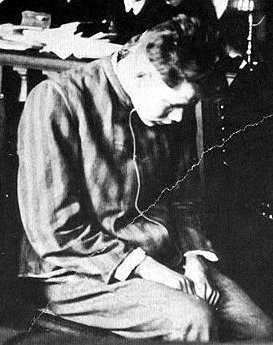
1932: Paul Gorguloff, who assassinated the French President

On this date in 1932, deranged Russian emigre Paul Gorguloff was guillotined for murdering President Paul Doumer four months before.
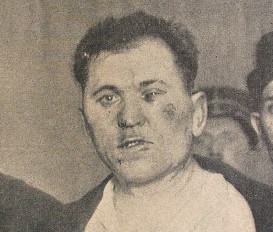

The forgettable Paul Doumer — distinguished for reasons quite beyond his control as the penultimate President of the Third Republic — was a week short of his one-year anniversary in office when the nutbar gunned him down at a Parisian book fair.

Disturbed 37-year-old Gorguloff had some impenetrably incoherent justification for the murder having to do with some “Idea” formed in a trance-like state.

From the moment of my arrival in Paris, and even in the train, I had a sort of hypnotic obsession that I must kill the President. I went and prayed in Notre Dame; then I drank heavily, and gradually decided to kill myself, the idea almost supplanting that of assassination. After drinking I conceived the idea of getting arrested to prevent me from committing the crime, so I asked a policeman on the Boulevard Saint-Michel a lot of stupid questions, hoping that he would ask for my papers and, finding them not to be in order, arrest me. All the time the Devil was saying: “Kill yourself, if you like, but only after you have killed the President.” Until 2 o’clock in the afternoon on the day of the crime I drank in a bar, emptying a bottle of cognac in the hope that I would get too drunk to do anything. Nevertheless I finally went to the book exhibition in the Rue Berryer, where the President was expected. After I had spoken with M. Farrere [he was later shot in the arm by Gorguloff] and looked at a few books, the President arrived. I was in a kind of hypnotic sleep, and fired without really knowing what I was doing. (The Times of London, May 18, 1932)

Whatever this daemon may have amounted to in Gorguloff’s mind, he cherished it; the brief trial was punctuated by repeated invocation of the never-explicated “Idea”:

France, listen to me! I am the apostle of my Idea. My crime was a great protest in the name of the miserable ones who wait ‘over there’ [in Russia] … My Idea is more precious than my life. Take my life, but save my Idea. (The Times of London, July 26, 1932)

The “idea” may have been fame. Gorguloff’s defense counsel — understandably pinning its hopes on an insanity defense (French link) — entered into the record a request the assassin had forwarded Czech authorities to be launched in a rocket to the moon; a correspondent for Le Matin discovered that the killer had nursed similarly half-baked plots to do in Hindenburg, Lenin, and Czech President Thomas Masaryk instead/as well.

Gorguloff was beheaded just before 6 a.m. outside La Sante Prison in Paris.

On this day..

1939: Howard Long, New Hampshire’s most recent hanging

As of today, it’s been 70 years since the U.S. state of New Hampshire carried out an execution, despite maintaining a death penalty statute almost continuously since.

“Craving for boys,” Long was condemned for molesting and beating to death a 10-year-old in 1937, evidently his second molestation/murder: in the first, he reportedly drove around for 10 hours with his prisoner before plucking up the heart to do the thing, the sort of mental picture to cast a child murder victim of a wannabe-serial killer in the unexpected aspect of boredom.

Long’s execution in the bicentennial of New Hampshire’s first legal hangings was itself the first in 21 years in the Granite State. Although a handful of cases since have potentially fit the steadily narrowing set of death penalty circumstances, none has actually come so far as the gallows (or, today, theoretically, lethal injection) before taking one of the many possible exits — plea bargain, sentence reduction, premature death — from the capital punishment system.

New Hampshire’s present-day death row consists of only one person, and earlier this year its legislature actually voted to abolish the death penalty, a measure spearheaded by State Rep. Renny Cushing, who is the son of a murder victim.* The measure was vetoed by Gov. John Lynch.

* Full disclosure: also a personal friend. Cushing founded Murder Victims Families for Human Rights (MVFHR).

On this day..

1931: Ernesto Opisso

On this date in 1931, a carpenter became the first Gibraltar native hanged by the British on that strategic peninsula.

Ernesto Opisso was convicted, in his second trial (the first jury hung), of murdering Marie Bassano, the true crime sensation of the day. Strangely, the elderly woman had been killed in her apartment but neither robbed nor sexually assaulted; Opisso was placed in the vicinity by a witness despite his denials, and a “maybe they got into a fight” theory sufficed to outfit him for the halter.

(Courtroom color: Opisso’s lawyer, evidently something of a functional alcoholic, got around a no-drinking-in-court rule by dipping bread in liquor. “Not drinking, m’Lord,” he replied when the judge’s suspicions were aroused. “Eating.”)

Popular dissatisfaction with the questionable verdict against a local was widespread; because nobody on Gibraltar itself would carry out the execution, a hangman had to be imported from Britain.

The London Times reported of the scene on the eve of the hanging, once all prospect of reprieve had been refused,

Scenes of wild disorder were witnessed to-night when crowds surged through the streets demonstrating against the execution fixed for to-morrow morning of a carpenter, Ernesto Opisso, who has been sentenced to be hanged for the murder of an elderly woman. It will be the first execution in Gibraltar since 1896. A reprieve was refused by the Governor in Council. The crowds thronged the streets demanding a reprieve and forced cafes and places of amusement to close. No taxis were to be had, as the drivers are on strike.

So ugly was the situation that troops turned out and are patrolling the streets armed with hockey sticks.

It was Gibraltar’s first execution of any kind since 1896 — and remains to date its last peacetime execution. (Two Spanish citizens were hanged for wartime offenses in 1944.)

On this day..

1935: Pat Griffin and Elmer Brewer

On this date in 1935, the first double hanging* in the state of Iowa took place at Fort Madison.

Waterloo, Iowa, police heading out to query Elmer Brewer “in connection with alleged misconduct of Brewer with juvenile girls” alarmed Brewer and his friend Patrick Griffin, who assumed they were coming to arrest them for a robbery.
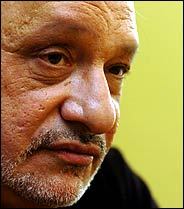
The two killed Deputy Sheriff William Fay Dilworth in a shootout.

Long forgotten, Griffin’s rodeo avocation, his friendship with the classmate who was to be his Catholic confessor, his offer to give all his earnings to the victim’s family were his sentence commuted to hard labor.

Just a lost file from the police blotter, moldering in a musty corner of a local archives. Although the glacial progress of the legal proceedings will look more familiar to modern eyes.

Thus closes a case which has been more or less in the courts since December 16, 1932. Attorney James Fay of Emmetsburg and Attorney John McCartney of Waterloo made valiant efforts to save the lives of the two men, but to no avail. Following their conviction of the murder in the district court in Waterloo on January 5, 1933, they were sentenced to be hanged on January 26, 1934. In May, 1933, an appeal was filed with the state supreme court, thus automatically staying the execution. The supreme court denied the appeal. On June 24, 1934, Attorneys Fay and McCartney petitioned the supreme court for a rehearing. This was denied January 10, 1935. A plea for commutation of the sentences to life imprisonment was denied by Governor Clyde Herring on February 1 and the chief executive set April 5, 1935, as the execution date. Continuing farther with their efforts the attorneys sought a writ of habeas corpus from District Judge John Craig of Fort Madison, but their request was denied. The refusal opened another loophole for the attorneys to ask a review of Judge Craig’s action. Again refused, the lawyers announced that they would go to the United States supreme court where they would ask the court for a writ of habeas corpus. In order to allow time for this step Governor Herring granted the convicted slayers a 60-day stay of execution but at the same time he announced that it was the last reprieve that could be expected from him. Illness of defense attorneys, it was said, prevented them from prosecuting their appeal to the supreme court. Monday Mr. Fay appealed to Federal District Court Judge Charles A. Dewey for a stay order and a writ of habeas corpus, but Judge Dewey refused to interfere. In Des Moines Tuesday a last minute effort to save the men was made in an appeal to Governor Herring, but the appeal for a commutation of sentence was denied.

A family member has compiled old clippings about this case — from which, both the excerpt above and the illustration — here.

* According to Iowans Against the Death Penalty. There had been a previous double execution when Iowa was a territory, and a triple execution in 1918.

On this day..

1938: A pig, experimentally

EXECUTION TEST MADE WITH PIG

San Quentin’s Lethal Chamber Tried Out

SAN QUENTIN, March 19 [1938]. (AP) A runt pig* died today in a slow-motion test of San Quentin’s lethal gas chamber.

The test required thirty-five minutes before the pig was formally pronounced dead, but prison officials said “nowhere near that time” would be necessary for execution of a condemned convict in the gas chamber.

The trial execution was conducted in slow motion to enable prison officials and guards to learn details of the operation. The test was conducted by representatives of the manufacturers of the chamber.

* According to the Los Angeles Times (whose March 24, 1938 edition captions a photograph of Warden Court Smith peering inquisitively through the gas chamber’s window), it was “a little thirty-pound brown pig.” According to the backgrounder in When You Read This, They Will Have Killed Me — which concerns an altogether more famous gas chamber subject — the swine was “a 155-pound pig named Oscar, raised on the prison farm.”

On this day..

1937: Alexander Yulevich Tivel

On this date in 1937 — probably — one of the numberless obscurities consumed by Stalin’s purges was convicted and presumably shot for “preparing to commit a terrorist act against [NKVD head] Yezhov.”

Alexander Yulevich Tivel, a Jewish bureaucrat who had the misfortune to have been in a party organ too close to Zinoviev, was disappeared by the NKVD one day in 1936.

His fate forms the opening hook for J. Arch Getty’s The Road to Terror: Stalin and the Self-Destruction of the Bolsheviks, 1932-1939 — “the story of the Stalinist terror writ small.” (Here’s a review)

We do not know whether he was physically tortured by his interrogators, but there is ample evidence that countless others were. Even high-ranking officials under arrest were beaten or, as Molotov would put it, “worked over.” Ten years later, a high-ranking police official described interrogation procedures in a letter to Stalin. First, prisoners were offered better conditions — better food, mail, and so on — in return for a confession. If that failed, appeals to the prisoner’s conscience and concern for his family followed. The next step was a solitary-confinement cell without exercise, a bed, tobacco, or sleep for up to twenty days … Finally, the use of “physical pressure” was authorized …

Tivel was probably executed on the same day [of his conviction]. Unlike many others who were badgered and tortured by the NKVD, he had not confessed.

His wife and mother-in-law to internal exile. His son would suffer the stigma of being the child of an executed traitor.

The widow Eva Tivel, reports Getty, grappled for years with the unresponsive bureaucracy until she finally cleared Sasha Tivel’s name.

On 23 May 1957, twenty years after Tivel’s execution and after Eva’s many letters and appeals, Tivel’s sentence and party expulsion were overturned … [as] “based on contradictory and dubious materials.”

On this day..

1939: Three Men For Murder, But Not Isidore Zimmerman

On this date in 1937, Isidore “Beansy” Zimmerman spent the day preparing for death in New York’s electric chair … but was spared by an 11th-hour clemency from New York Governor Herbert Lehman.

Here’s the scene, as laid in the anti-death penalty tome of wrongful convictions In Spite of Innocence:

As dawn broke over Sing Sing Prison, Beansy Zimmerman had every reason to think it would be his last day.

Zimmerman numbly went through the pre-execution rituals. The last meal (choose whatever you want), and music (you get to choose that, too) played on the wind-up phonograph. The barber shaves your scalp so the electrodes can fit snugly against your bare skin. The tailor slits one of your trouser legs for another electrode. Officials treat you with unaccustomed politeness. A final family visit — how do you say good-bye when you know it is forever? What should your last words be? Beansy’s mother stayed away, unable to face such finality.

Two hours before execution, Gov. Lehman commuted his sentence.

In this blog, we lay aside each story day by day, but for those affected, it’s rarely so easy — which is why the mothers of the five men condemned today put in their personal clemency appeals to the governor.
For Zimmerman and a fellow “accomplice” named Philip Chaleff whose respective roles in a robbery/murder were doubted, it had the desired effect. (Dominick Guariglia, Arthur Friedman and Joseph O’Loughlin weren’t so lucky.)

Chaleff, a diabetic being kept alive just for execution, soon succumbed. For Zimmerman, the execution that did not happen was to define the rest of his 66 years. He was alive, but to what end?

“I wasn’t dead, no,” he remembered. “But every day from now on they’d bury me a little more.”

Zimmerman fought, by becoming a skilled jailhouse lawyer and in 1962 finally winning exoneration from the New York Supreme Court, which held that the testimony against him had been perjured with the connivance of the prosecutor.

He’d spent nearly a quarter-century in prison. Now, he was just another ex-con scrabbling after dead-end employment.

For years thereafter, Zimmerman fought for a special bill that would allow him to sue the Empire State for wrongful imprisonment, finally winning approval in 1981.

His suit asked for $10 million. The judge reckoned Zimmerman’s time and trouble were worth a tenth of that.

Expenses deducted, Zimmerman walked away with $660,000 — that, and sweet vindication.

Fourteen weeks later, he dropped dead of a heart attack.

On this day..

1934: Marinus van der Lubbe, for the Reichstag fire

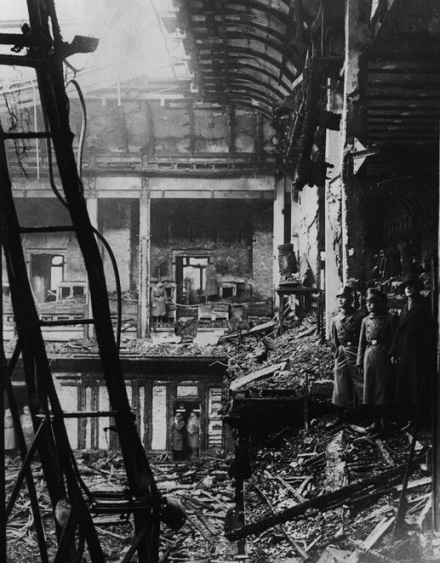
On this date in 1934, Dutch bricklayer Marinus van der Lubbe was beheaded by guillotine in Leipzig for setting the Reichstag Fire.

A watershed event* in the formation of the Nazi dictatorship, the Reichstag fire days before a parliamentary election enabled Hitler to stampede voters, suspend civil liberties, suppress left-wing parties on grounds of a suspected Communist plot, and seize “emergency” powers he would never relinquish.

Heil Hitler.

This clip from an American miniseries on Hitler with the characters chattering in unaccented English portrays the fascists’ opportunistic use of the attack on a national symbol … something not exactly unknown to later generations.

Van der Lubbe, who was arrested on the scene, suffered the predictable fate. Four other Communists charged as accomplices were acquitted, in a trial with the gratifying spectacle of Hermann Goering personally testifying, and being undressed on cross-examination by one of the reds. One is reminded here that Hitler did not yet have everything in the state apparatus at his beck and call … although he did have a great deal already, inasmuch as the arson law under which van der Lubbe died was passed after the Reichstag fire and made retroactive.

If the big-picture outcome of the Reichstag fire is pretty clear-cut, its real origin and the corresponding rightness of the judicial verdicts have remained murky ever since. The fact that the scene of the crime became Nazi ground zero for the next decade sort of obscures the evidence.

Van der Lubbe confessed, so his participation is generally taken as a given.

Whether he was really able to start the blaze acting alone, as he insisted, and the Nazis “only” exploited this fortuitous calamity; whether he was part of a larger leftist plot, as his prosecutors claimed; or whether, as Shirer and many others since have viewed him, he was a patsy in a false flag operation set up by the Nazis with an eye towards creating a politically advantageous national emergency — these possibilities remain very much up for debate.

For what it’s worth, postwar West German courts reversed and un-reversed the sentence before officially rehabilitating van der Lubbe last year on the non-specifically indisputable grounds that the legal machinery brought to bear on the Reichstag fire “enabled breaches of basic conceptions of justice.”

* From Defying Hitler: A Memoir by a writer who would soon emigrate:

I do not see that one can blame the majority of Germans who, in 1933, believed that the Reichstag fire was the work of the Communists. What one can blame them for, and what shows their terrible collective weakness of character … is that this settled the matter. With sheepish submissiveness, the German people accepted that, as a result of the fire, each one of them lost what little personal freedom and dignity was guaranteed by the constitution, as though it followed as a necessary consequence. If the Communists had burned down the Reichstag, it was perfectly in order that the government took “decisive measures”!

Next morning I discussed these matters with a few other Referendars. All of them were very interested in the question of who had committed the crime, and more than one of them hinted that they had doubts about the official version; but none of them saw anything out of the ordinary in the fact that, from now on, one’s telephone would be tapped, one’s letters opened, and one’s desk might be broken into. “I consider it a personal insult,” I said, “that I should be prevented from reading whichever newspaper I wish, because allegedly a Communist set light to the Reichstag. Don’t you?” One of them cheerfully and harmlessly said, “No. Why should I? Did you read Forwards and The Red Flag up to now?”

On this day..

1939: The 18 corpses of the rebellion

On this date in 1939, 18 junior officers of the Thai military were shot in Bangkok.

Ostensibly condemned for being part of a coup plot to depose the adolescent King Ananda Mahidol in favor of his abdicated predecessor Prajadhipok, they were in reality the casualties of a purge by the Field Marshal-turned-Prime Minister Phibun Songkhram.

It’s alternatively transliterated “Phibun Songkhram” or “Pibunsonggram”, and familiarly abbreviated to “Por”, but by any name he dominated Thai politics for a generation.

One of the military leaders of the bloodless 1932 Siamese Revolution that made the country a constitutional rather than an absolute monarchy, Phibun had in 1938 muscled his way to the Prime Ministership.

Beset by assassination attempts linked to royal revanchists to whose purposes the young turk’s programme was deeply inimical, Phibun determined to break the back of monarchism en route to a modernized, militaristic nationalism (pdf) that would be right at home in the imminent world war.*

As 1939 opens, we join the narrative of Paul Handley’s The King Never Smiles:

Phibun swept the capital and arrested 50 royals, nobles, and soldiers in the clique of his People’s Party rival Colonel Song Suradej for plotting his overthrow …

Whatever the truth behind the cabal, its quashing came to represent the final victory of the 1932 revolutionists and the constitutionalists over the monarchists. To mark it, Phibun commissioned a huge monument to the constitution, later called Democracy Monument, in the middle of the city’s main thoroughfare, Rajadamnoen (“royal progress”) Avenue.


The Democracy Monument in Bangkok.

The eighteen officers who took it in the shorts on this date were not joined by condemned VIPs like royal blood Prince Rangsit, who copped a commutation. It’s widely thought now that the “Songsuradet Rebellion” — or aptly-named “Rebellion of 18 Corpses” — was trumped-up, if not an phantasm altogether.

The Democracy Monument was not the only bulwark of Thai nationalism thrown up by Phibun in the year between the “conspirators'” January arrest and their deaths this day.**

He dropped the old absolutist name “Siam” in favor of the more nationalistic “Thailand” in June of that year; made the date of the 1932 revolution a national holiday; stripped the language of class-distinctive structures; and pressed irredentist claims against neighboring French colonies.

And if the royal house was efficiently marginalized by Phibun, it would yet develop in the latter part of the century into one of the region’s weightiest political entities† … intertwined with the Thai military Phibun helped hoist to pride of place, a formula that has left coups and unstable governments a presistent feature of the political landscape down to the present day.

* And subsequently, too. Despite aligning with the Axis powers during World War II, Phibun was a feted anti-Communist dictator as Washington started counting dominoes in Southeast Asia in the 1950’s.

** The Wikipedia page for the rebellion claims that the executions were carried out in batches of four per day. A New York Times report of December 6, 1939 said that all 18 had been executed the previous day.

† The current King Bhumibol Adulyadej, who coincidentally turns 81 today, is the world’s longest-reigning monarch as of this writing … with no shortage of concern about the conflict his passing may unstop.

On this day..

1937: Masao Sudo, since rehabilitated

On this date in 1937, Japanese emigre Masao Sudo was shot in Moscow as a spy.

The executed man’s son, Dr. Mikhail Masaovich Sudo.

A true-red Communist who had fled increasingly right-wing Japan in the 1920’s and become a labor organizer in the far east, Sudo shared the tragic fate of the Japanese community in Stalin’s USSR, decimated by denunciations of one another.

Sudo was the father of Russian geologist Mikhail Masaovich Sudo, author of several abstruse texts (and also, it would appear, Japanese language primers for Russian speakers) — and under whom, apparently, you can take classes at the International Independent University of Environmental and Political Sciences.

Masao Sudo was rehabilitated in 1956.

On this day..