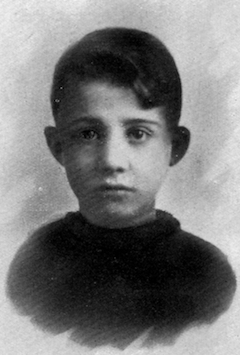
1666: James Blackwood and John M’Coul, two Covenanter martyrs

From The Homes, Haunts, and Battlefields of the Covenanters. The martyrs in question, who were among many of that profession in these years, were executed by a condemned fellow-Covenanter who days before in Ayr had miserably consented to turn hangman in order to save his own life. We’ve previously covered that tragedy in these pages.

STOP PASSENGER
THOU TREADEST NEAR TWO MARTYRS
JAMES BLACKWOOD & JOHN M’COUL

who suffered at IRVINE
on the 31st of December 1666
REV xii. 11th

These honest Country-men whose Bones here lie
A Victim fell to Prelates Cruelty;
Condemn’d by bloody and unrighteous Laws
They died Martyrs for the good old cause
Which Balaams wicked Race in vain assail
For no Inchantments ‘gainst Israel prevail
Life and this evil World they did contemn
And dy’d for Christ who died first for them
‘They lived unknown
Till Persecution dragged them into fame
And chas’d them up to Heaven’ [Cowper lines -ed.]

Erected by Friends to Religious Liberty -31st Dec. 1823.

On this day..

A Day in the Death Penalty Around the Martyrology

We’ve paid tribute before to Christian martyrologies’ adroit remembrances of the dead. December 30 furnishes a crowded example from the Roman Breviary, found here:

Upon the 30th day of December were born into the better life —

At Spoleto, under the Emperor Maximian, the holy martyrs Sabinus, bishop of that see; the deacons Exuperantius and Marcellus, and the President Venustian along with his wife and children. Marcellus and Exuperantius were first racked then heavily cudgelled, then mangled with hooks, and their sides were afterwards burnt until they died. Venustian and his wife and children were shortly afterward put to the sword; holy Sabinus had his hands cut off, and was long imprisoned, and at length lashed to death. These did not all suffer at the same time, but they are all commemorated upon the same day.

At Alexandria, the holy martyrs Mansuetus, Severus, Appian, Donatus, Honorius and their companions.

At Thessalonica, the holy martyr Anysia [about the year 303]. There likewise holy Anysius, bishop of that city. [He succeeded S. Ascole, and died about the year 404.]

On this day..

1572: Johann Sylvan, Antitrinitarian

On this date in 1572, Antitrinitarian Calvinist Johann Sylvan lost his head in a Heidelberg market.

Sylvan — or Johannes Slyvanus — was a pastor and theologian in the service of Calvinist Elector Frederick III.

Frederick’s own Calvinist scruples were theoretically anathema in a Holy Roman Empire whose writ of tolerance did not extend past Lutheranism.

But Sylvan gravitated towards a circle of reformers whose concept of the divine left orthodox Calvinism far behind — “a group of ministers within the Palatine church, who were not only prepared to deny the eternal divinity of Christ, but secretly aspired to promote a further reformation of received doctrine with a view to restoring the pristine monotheism of the faith,” according to this pdf volume, The Heidelberg Antitrinitarians.

This rejection of the long-canonical Christian mystery of threefold godhead formed a recurring subtheme of Europe’s Reformations, its exponents — like Michael Servetus — forever prone to martyrdoms administered by any respectable sect.

This proved to be the case for Sylvan as well; given his dubious theological position within the empire, Elector Frederick might have felt it politically necessary to come down hard on these radicals.

Still, while Sylvan was made the example, others in his Antitrinitarian circle lived to expound their heresies in other lands. Matthias Vehe fled to Transylvania — where a Unitarian Church was founded in 1568, protected by a sympathetic prince — and then to other fellow-travelers in Poland. Adam Neuser also escaped, later converting to Islam and defecting to Ottoman Istanbul, an event that did a lot of lifting for anti-Anti-trinitarian propagandists.

On this day..

1799: Nicola Fiorentino, Jacobin man

On this date in 1799, Neapolitan Republican Nicola Fiorentino went to the gallows.

A precocious and multitalented scholar, Fiorentino (Italian Wikipedia link; almost everything to his name on the Internet is in Italian) was all of 19 years old when he obtained the professorship of mathematics at the royal school of Bari in 1774 although this honor was a bit delayed since he’d won a competition for a similar chair in Aquila when he had not yet attained the minimum age of 15.

Health problems would bring the Renaissance man back to his native Naples in 1780s, where he distinguished himself in law, commerce, and increasingly in politics: his various texts in politics and economics trending ever more reformist through the years, until he went full Jacobin when Naples got her own short-lived republic in early 1799. Fiorentino’s “Hymn to San Gennaro for the Preservation of Liberty” (image) from that heady moment appeals to the patron saint of Naples to inspire “ardor for Equality and Freedom” so that in their new-made country would prevail “not privilege and flattery, but merit and virtue.”

Instead, a speedy Bourbon reconquest clinched the other thing.

Having held no office in the Republic he was ridiculously condemned for nothing but his prominence and the credibility his adherence lent to the republic.

Fiorentino has the consolation of a present-day Neapolitan street named in his honor.

On this day..

304: Saint Eulalia

December 10 is the aptly wintry feast date of Saint Eulalia of Merida, a virginal girl of age 12 to 14 who was martyred for the Christian faith under Diocletian‘s western empire wingman Maximian.

With the headstrong zeal of youth, Eulalia escaped from a pastoral refuge arranged by her mum and belligerently presented herself to the pagan authorities, daring them to martyr her. The pagans were game.

Because God abhors immodesty, He sent a timely snowfall to protect the martyr’s nudity from the prurient gaze of her killers, making Eulalia the informal patron saint of snow. (More officially, she’s a patron of runaways, as well as of Merida, Spain, where she died, and Oviedo, Spain, where her remains are enshrined in the cathedral.)

A hymn to St. Eulalia by the ancient poet Prudentius which greatly multiplied her fame in Christendom salutes her for “[making] her executioners tremble by her courage, suffering as though it were sweet to suffer.”

[She] stood before the tribunal, amidst the ensigns of the empire, the fearless Virgin.

“What madness is this,” she cried,

which makes you lose your unthinking souls? Wasting away your love in adoring these chiselled lumps of stone, whilst you deny God the Father of all? O wretched men! You are in search of the Christians: lo! I am one; I hate your worship of devils: I trample on your idols; and with heart and mouth I acknowledge but one God.

Isis, Apollo, Venus, all are nothing; Maximian, too, is nothing; they, because they are idols; he, because he worships idols; both are vain, both are nothing.

Maximian calls himself lord, and yet he makes himself a slave of stones, ready to give his very head to such gods. And why does he persecute them that have nobler hearts?

This good Emperor, this most upright Judge, feeds on the blood of the innocent. He gluts himself on the bodies of the saints, embowelling those temples of purity, and cruelly insulting their holy faith.

Do thy worst, thou cruel butcher; burn, cut, tear asunder these clay-made bodies. It is no hard thing to break a fragile vase like this. But all thy tortures cannot reach the soul.

At these words the Praetor, maddening with rage, cried out:

Away, Lictor, with this senseless prattler, and punish her in every way thou canst. Teach her that our country’s gods are gods, and that our sovereign’s words are not to be slighted.

Yet stay, rash girl! Would I could persuade thee to recall thy impious words before it is too late! Think on all the joys thou thus wilt obtain; think on that noble marriage which we will procure thee.

Thy family is in search of thee, and thy noble house weeps and grieves after thee, their tender floweret so near its prime, yet so resolved to wither.

What! are nuptials like these I offer not enough to move thee? Wilt thou send the grey hairs of thy parents into the tomb by thy rash disobedience? Tremble at least at all these fearful instruments of torture and death.

There is a sword which will sever thy head; there are wild beasts to tear thee to pieces; there are fires on which to burn thee, leaving to thy family but thy ashes to weep over.

And what do we ask of thee in order that thou mayest escape these tortures? Do, I beseech thee, Eulalia, touch but with the tip of thy finger these grains of salt and incense, and not a hair of thy head shall be hurt.

The Martyr answered him not: but full of indignation, spat in the tyrant’s face; then, with her foot, upsets idols, cakes, and incense.

Scarce had she done it, two executioners seize her: they tear her youthful breast, and, one on each side, cut off her innocent flesh even to the very ribs. Eulalia counts each gash, and says:

See, dear Jesus, they write thee on my flesh! Beautiful letters, that tell of thy victory! O, how I love to reac them! So, this red stream of my blood speaks thy holy name!

Saint Eulalia by John William Waterhouse (1885) is one of the most unique and outstanding exemplars of the Pre-Raphaelite style.

Thus sang the joyous and intrepid virgin; not a tear, not a moan. The sharp tortures reach not her soul. Her body is all stained with the fresh blood, and the warm stream trickles down the snow-white skin.

But this was not the end. It was not enough to plough and harrow up her flesh: it was time to burn: torches, then, are applied to her sides and breast.

Her beauteous locks dishevelled fell veiling her from worse than all their butchery, the stare of these wretches.

The crackling flame mounts to her face, and, running through her hair, surrounds and blazes over her head. The virgin, thirsting for death, opens her mouth and drinks it in.

Suddenly is seen a snow-white dove coming from the martyr’s mouth, and flying up to heaven. It was Eulalia’s spirit, spotless, eager, innocent.

Her soul is fled: her head droops, the fire dies out: her lifeless body sleeps in peace, while her glad spirit keeps feast in its ethereal home, and this sweet dove rests in the house of her most High God.

The executioners, too, see the dove issuing from the martyr’s mouth: astonished and trembling they flee from the spot. The lictor, too, is seized with fear and takes to flight.

‘Tis winter, and the snow in thick flakes falls on the forum, covering the tender corpse of Eulalia, which lay stiffening in the cold, with its fair pall of crystal.

Ye men that mourn at funerals, weeping and sobbing out your love for the dead, ye are not needed here: give place. God bids his elements, O Eulalia, do the honours of thy exequies.

On this day..

1859: Yoshida Shoin, samurai sage

The name at the head of this page is probably unknown to the English reader, and yet I think it should become a household word like that of Garibaldi or John Brown. Some day soon, we may expect to hear more fully the details of Yoshida’s history, and the degree of his influence in the transformation of Japan …

Robert Louis Stevenson

On this date in 1859,* Japan’s fading Tokugawa Shogunate beheaded samurai sage Yoshida Shoin as an enemy of the state.

Inheriting leadership of an unprosperous samurai house by the untimely death of his adoptive father, Yoshida (English Wikipedia entry | the much more detailed Japanese) studied war and philosophy from the age of five but understood right away that the classics he knew backward and forward were no match for the American gunships that steamed into Edo Bay in 1853.

Keen to learn the barbarian’s secrets, Yoshida and a friend named Sakuma Shozan* surreptitiously presented the American flotilla with an illicit request to come aboard. The American Commodore Perry never knew their identities, but he remembered the two “men of some position and rank, as each wore the two swords characteristic of distinction, and were dressed in the wide but short trowsers of rich silk brocade. Their manner showed the usual courtly refinement of the better classes, but they exhibited the embarrassment of men who evidently were not perfectly at their ease, and were about doing something of dubious propriety. They cast their eyes stealthily about as if to assure themselves that none of their countrymen were at hand to observe their proceedings, and then approaching one of the officers and pretending to admire his watch-chain, slipped within the breast of his coat a folded paper.” That paper, in courtly Mandarin, implored the visitor that the authors

have been for many years desirous of going over the ‘five great continents,’ but the laws of our country in all maritime points are very strict; for foreigners to come into the country, and for natives to go abroad, are both immutably forbidden … we now secretly send you this private request, that you will take us on board your ships as they go out to sea.

Instead, the shogunate clapped them in cages.

Would that iron bars could contain the shock Commodore Perry’s ships had given to Japan. Those islands had long closed themselves against the West save for narrow apertures on Dutch Learning. The evident superiority of American arms and the consequent necessity of accepting unequal treaties proved a fatal blow to the shogunate. Anger at the shogun manifested in a movement to restore the rights of the emperor — a position that the shogunate had centuries before reduced to a mere figurehead.

Our man Yoshida Shoin emerged from prison as a teacher whose loyalty hewed to the emperor. In vain did the shogunate attempt to purge such characters, for their cause far outstripped this or that man. Several of Yoshida’s students would be important players in the coming Meiji Restoration that did indeed reanimate the imperial office and topple the shogunate by the late 1860s.

By that time, Yoshida was rated a martyr and spiritual forerunner, for the dying shogunate had indeed seen fit to destroy him: “the old story of a power upon its last legs,” as Stevenson’s biography figures it: “learning to the bastille, and courage to the block … He failed in each particular enterprise that he attempted; and yet we have only to look at his country to see how complete has been his general success.”

* The Gregorian date. By the Japanese calendar it occurred in the tenth month, and some sites erroneously place it in October for that reason.

** Shozan was destined to be assassinated in 1864 by Kawakami Gensai.

On this day..

1936: The Seven Martyrs of Madrid

On this date in 1936, the Seven Martyrs of Madrid became martyrs.*

These sisters of Catholicism’s Visitandine or Visitation Order were the last remaining to watch over their convent, which had been mostly evacuated for fear of anti-clerical violence in the unfolding Spanish Civil War.

Indeed, even these seven felt it wiser to stay in a nearby apartment where they secreted the convent’s treasures and kept their holy orders as quiet as possible.

Their precautions were justified — but insufficient. On the night of November 17, weeks after the Spanish capital was besieged by the Francoists an anarchist militia tossed the place, interrogated them, and then returned the next day to have them summarily executed on the outskirts of town.

“I beg God that the marvelous example of these women who shed their blood for Christ, pardoning from their hearts their executioners,” Pope John Paul II said when beatifying these sisters in 1998, “may succeed in softening the hearts of those who today use terror and violence to impose their will upon others.”

* Technically, only Sisters Gabriela de Hinojosa, Teresa Cavestany, Josefa Barrera, Ines Zudaire, Engracia Lecuona, and Angela Olaizola were shot on the 18th. Sister Cecilia Cendoya escaped her captors but later turned herself in and obtained the crown of martyrdom a few days afterwards.

On this day..

1541: Claude Le Painctre, giving himself willingly to be burned

A French evangelical named Claude Le Painctre — on mission evangelizing back in his dangerous homeland after previously escaping to exile in Geneva — was burned at the stake in Paris on this date in 1541, after having his tongue torn out.

A Prussian-born student resident in Paris in those years, named Eustache Knobelsdorf, witnessed this execution and recorded the event in his memoir.

His striking impression of a joyous martyrdom captures not only the agonies of a 16th century heretic’s execution, but the ecstasies by which those same heretics turned the whole spectacle to evangelizing effect.

This translation of Knobelsdorf comes via
Bruce Gordon’s 2009 biography Calvin

I saw two burnt there. Their death inspired in me differing sentiments. If you had been there, you would have hoped for a less severe punishment for these poor unfortunates … The first [Claude Le Painctre] was a very young man, not yet with a beard … he was the son of a cobbler. He was brought in front of the judges and condemned to have his tongue cut out and burned straight afterward. Without changing the expression of his face, the young man presented his tongue to the executioner’s knife, sticking it out as far as he could. The executioner pulled it out even further with pincers, cut it off, and hit the sufferer several times on the tongue and threw it in the young man’s face. Then he was put into a tipcart, which was driven to the place of execution, but, to see him, one would think that he was going to a feast … When the chain had been placed around his body, I could not describe to you with what equanimity of soul and with what expression in his features he endured the cries of elation and the insults of the crowd that were directed towards him. He did not make a sound, but from time to time he spat out the blood that was filling his mouth, and he lifted his eyes to heaven, as if he was waiting for some miraculous rescue. When his head was covered in sulphur, the executioner showed him the fire with a menacing air; but the young man, without being scared, let it be known, by a movement of his body, that he was giving himself willingly to be burned.

Such spectacles had palpable effect for snowballing the evangelical project. Another onlooker in the crowd was a 21-year-old just out of university named Jean Crespin … present with some “several who had a stirring sense of truth.” We can’t draw anything so dramatic as a direct causal line to Claude Le Painctre, but sometime during Crespin’s stay in Paris in the early 1540s he converted to the reformed faith — and in this guise he would in time become a notable Protestant publisher. (Of interest to these grim annals, he Le Livre des Martyrs.)

On this day..

1926: Anteo Zamboni, Mussolini near-assassin, lynched

Halloween of 1926 was a festival of triumph for the Italian fascists … and they crowned it in a festival of blood.

The occasion marked (not exactly to the day) the fourth anniversary of Benito Mussolini‘s bloodless coup via the October 1922 March on Rome. And as a gift for himself and his populace, Benito Mussolini on that date inaugurated Bologna’s Stadio Littoriale by riding a charger into the arena and delivering a harangue.


Fascist-built and still in service, it’s now known as the Stadio Renato Dall’Ara and it’s home to Bologna F.C. 1909. (cc) image by Udb.

After another address to a medical conference later that afternoon, Mussolini was motorcading down via Rizzoli in an Alfa Romeo when a gunshot whizzed through his collar.*

It had been fired by a 15-year-old anarchist named Anteo Zamboni, vainly and sacrificially hoping to turn history’s tide with a well-placed bullet.

Instead, his act would offer Il Duce a Reichstag Fire-like pretext — there was always bound to be one, sooner or later — for a raft of repressive legislation including the creation of a nasty secret police, the dissolution of political opposition, and (of interest to this here site) reintroduction of the death penalty.**

But Anteo Zamboni would see his penalty delivered summarily after the crowd seized him.†

Zamboni was done to death with blows and blades by Mussolini’s fascist admirers right on the spot. In a turn of heart, Bologna — by tradition a leftist stronghold — now has a street named for the young would-be assassin. (Here is the source for the ghastly Mature Content images below of Zamboni’s brutalized corpse.)

The incident is the subject of the 1978 film Gli Ultimi Tre Giorni.

* Zamboni’s was only one of three assassination attempts on Mussolini in 1926 alone.

** Just days afterwards during the post-Zamboni repressive pall, the great Marxist intellectual Antonio Gramsci was tossed into prison, never to emerge. Gramsci’s Prison Notebooks issued out of his dungeon, before his health succumbed in 1937 to the intentional neglect of his captors.

† It’s reportedly cavalry officer Carlo Alberto Pasolini who first detained the youth: the father of postwar film director Pier Paolo Pasolini.

On this day..

1949: Nicolae Dabija, anti-communist partisan

On this date in 1949, the Romanian anti-communist partisan Nicolae Dabija (English Wikipedia entry | Romanian) was shot at Sibiu, along with six other members* of that resistance.

Although cousin to Romania’s pre-Ceausescu Communist ruler Gheorghe Gheorghiu-Dej, Dabija — not to be confused with the 19th century general of that name nor with the latter-day Moldova M.P. of the same name — charted a distinctly separate ideological course.

He was decorated for his service on the Axis’s Eastern Front during World War II, but this same credential got him expelled from the army in the postwar Red takeover.

Nothing daunted, Dabija and some like-minded comrades** formed an armed anti-communist militia a few dozen strong in Transylvania’s Apuseni Mountains named the National Defense Front, Haiducian Corps — a nod to the Balkans’ historical outlaws/rebels. The Securitate reduced them over the course of 1948-1949 months, culminating in a March 3-4, 1949 forest battle that brought Dabija et al into custody.

* Ioan Scridon, Traian Mihaltan, Titus Onea, Augustin Ratiu, Gheorghe Oprita, Silvestru Bolfea. (Source)

** Brothers with the apt surname Macavei.

On this day..