1792: Jacob Johan Anckarström, assassin of Gustav III

On this date in 1792, Jacob Johan Anckarström lost his right hand and his center head for murdering Gustav III.

Like some other nobles, this officer considered the “theater king” and enlightened despot Gustav III a, well, despot.

Times being what they were, regicide was in order, to usher in an age of constitutional liberalism.

A conspiracy of Swedish nobles surrounded the royal victim at a masquerade ball on March 16, 1792, and shot him in the back. Alas for them, the scene was immediately sealed and the attendees unmasked before the gang could get away.

Although in the confusion nobody knew whodunit among those disguised revelers, it was only a matter of time before the discarded murder weapon was identified as Anckarström’s.

(Actually, it was a much longer matter of time before it became a “murder” weapon. The king only succumbed to the infection 13 days later.)

Five were condemned to death, but the four who hadn’t pulled the trigger were commuted to exile instead. Exile for regicide? Maybe that’s making you wonder why they all thought it was such an oppressive regime they all lived under.

Jacob Johan Anckarström could give them the answer. He was said to have met his beheading joyfully, which would only be natural after he’d been flogged in chains in three different parts of the city over the preceding three days.*

For readers of Swedish (or exploiters of online translation), there’s much more about Jacob and his dastardly plot here and here.

Appropriately, given the murder’s stagey venue, the Anckarstrom assassination was great performance art material in the 19th century. Verdi based Un Ballo in Maschera on it, although he’s given the principals a generic love-triangle relationship — and because of mid-19th century censorship, the iteration of it below is set in colonial Boston with “Anckarstrom” sporting the very New England name “Rennato”.

Although this particular plot didn’t achieve the revolutionary thing its authors intended, it didn’t have the opposite effect either. The king’s teenage son Gustav IV Adolf succeeded the throne, with an unsurprising hatred of Jacobinism. But in the tumult of the Napoleonic Wars (that also cost Sweden its dominion over Finland), Gustav IV was deposed and a liberal constitution adopted.

* He wasn’t handled with kid gloves in prison, either, but you can take in the scene over the libation of your choice at the present-day cafe that occupies Anckarstrom’s onetime dungeon. The joint is named for another Swedish political martyr, Sten Sture.

On this day..

1597: Severyn Nalyvaiko

On this date in 1597, Cossack Severyn Nalyvaiko was publicly quartered in Warsaw.

Nalyvaiko organized “unregistered” Cossacks in Poland’s eastern realms, modern-day Belarus and Ukraine, into what became a significant rebellion. (Poland’s efforts to “register” and thereby control Cossacks would continue to cause tension in the years ahead.)

The Poles outmuscled him, and here he is.

However, because longer-term historical trends were not so favorable to the Polish-Lithuanian Commonwealth, Nalyvaiko rates a place as an early independence martyr for (east) Slavic resistance to Warsaw’s Polish imperialism.

Not only does he get a spot on present-day Ukrainian coinage (as pictured); 19th century Russian poet Kondraty Ryleyev, who would himself be executed for his part in the Decembrist plot, lyricized Nalyvaiko’s death as heroic national sacrifice … and simultaneously elevated the poet’s own prophesied fate for himself.

“In Ryleyev’s poetry, fate — romantic fate — is not simply personal and individual,” writes Lauren Leighton. “The fate of his heroes, and so his own fate, is raised to the level of national-historical tragedy. By welcoming his fate and dying for his land, Nalivayko ennobles his people.”


“Nalyvaiko”

Say not, thou holy man, again
That this is sin, thy words are vain,
Be it a fearful mortal sin
Worse than all crimes that e’er have been,
I care not — for could I but see
My native land at liberty,
Could I but see my race restored
To freedom from the foreign horde,
All sins would I upon me take
Without one sigh for Russia’s sake. —
The crimes of all the Tartar race,
The apostates Uniates‘ treason base,
The sins of every Jew and Pole —
All would I take upon my soul.
Try not with threats my mind to shake,
Persuasive words no change can make,
For hell to me is to have viewed
My loved Ukraine in servitude;
To see my fatherland set free,
This, this alone, is heaven for me!

E’en from the cradle was my breast
With love of liberty possessed;
My mother sang me glorious lays
Of those long-past historic days,
Whose memory yet lives ‘mongst men,
For no fear seized on Russians then,
None cringed before the haughty Pole;
The iron of a foreign yoke
Weighed upon no free Russian’s soul,
None cowered beneath a stranger’s stroke;
Cossacks were then the Pole’s allies,
Bound each to each in equal ties,
Such as free men would well beseem —
Now all is vanished like a dream.
Cossacks long since had learned to know
How into tyrants friends may grow;
The Lithuanian, and the Jew,
The Pole, and all the Uniate crew,
Like ravening crows around their prey
Seize us, and tear our limbs away.
The voice of law no more is heard
In Warsaw’s city, none are stirred
At hearing all a nation’s wail,
Our mourning voices nought avail,
And now within me burns a flame
Of hatred for the Polish name —
A fierce hot flame of raging fire —
My look is wild with passion dire
And frenzied wrath; the soul in me
Sickens for love of liberty.
One thought have I by night and day,
Which like a shadow haunts my way,
E’en where the steppes lie silent, bare,
Unresting it pursues me there;
E’en in the soldier’s camp, and when
The battle’s whirl, and tramp of men,
Around me roar with maddening rush,
I hear it still, and in the hush
Of the still church’s vaulted gloom,
Sound in my ears the words of doom
“‘Tis time,” the holy accents say,
“‘Tis time to sweep the foes away,
“O’er the Ukraine who bear their sway.”
I know full well the direful fate
Which must upon the patriot wait
Who first dare rise against the foe
And at the tyrant aim the blow.
This is my destined fate — but say
When, when has freedom won her way
Without the blood of martyrs shed,
When none for liberty have bled?
My coming doom I feel and know
And bless the stroke which lays me low
And, father, now with joy I meet
My death, to me such end is sweet.

On this day..

1314: Tour de Nesle Affair adulterers

Think you want to fall in love with a princess?

On this date in 1314, the French crown dissuaded the fantasy by butchering two Norman knights who had sheathed their swords where they oughtn’t.

In the Tour de Nesle affair (English Wikipedia page | French), French princess Isabella — then Queen of England, where she is known as Isabella of France or any number of less-flattering sobriquets — noticed that some purses she had once given her brothers’ wives as gifts were being sported by a couple of (evidently metrosexual) dudes in the court.

Let their fate be a warning against regifting.

In short order, the purse-toting knights Philippe and Gauthier d’Aunay or d’Aulnay (both links are in French) were arrested for tapping, respectively: Margaret of Burgundy (the wife of the king’s eldest son, Louis, soon to become Louis X); and, Blanche of Burgundy (the wife of the king’s third son, Charles, the future king Charles IV).*

“The pious confidence of the middle age, which did not mistrust the immuring of a great lady along with her knights in the precincts of a castle, of a narrow tower — the vassalage which imposed on young men as a feudal duty the sweetest cares, was a dangerous trial for human nature, when the ties of religion were weakened.”

–Jules Michelet

Under torture, the knights copped to the cuckoldry, supposed to have been conducted in the Tour de Nesle, a since-destroyed guard tower on the Seine.**


Detail view (click to see larger image) of the dilapidated Tour de Nesle, as sketched in the 17th century by Jacques Callot. The tower was destroyed in 1665.

The knights suffered horrific deaths:

“deux jeunes et biaux chevaliers furents roués vifs, écorchés vifs , émasculés, épendus de plomb soufré en ébullition, puis décapités, traînés à travers rues, et pendus au gibet y pourrissant durant des semaines. Leurs sexes, instruments du crime, sont jetés aux chiens. Jamais corps n’auront autant souffert.”

In fine: flayed, broken on the wheel, burned with hot lead and sulfur, genitals thrown to the dogs, and then decapitated for ignominious gibbeting on Montfaucon.

The women fared only a little better. Neither faced execution, and in fact both would technically become Queens of France. But they “reigned” as such from prison.

Margaret of Burgundy was clapped in a tower in a room exposed to the elements while her estranged husband became king. She succumbed (or possibly was murdered outright to clear the way for a new wife) in 1315.

Blanche of Burgundy was still in wedlock and still locked up in Chateau-Gaillard when her husband ascended the throne early in 1322; the marriage was annulled a few months later, and Blanche lived out her last few years at a nunnery.

Isabella’s role in all of this as the goody-two-shoes informer upon the adulterers looks particularly ironic with benefit of hindsight. In another 12 years’ time, this Queen of England and an adulterous lover combined to overthrow the King of England.

But maybe not so ironic after all, if one takes her for a power-thirsty “she-wolf”.

This Tour de Nesle scandal also happened to cast doubt on the paternity of Margaret’s only daughter Joan, which mitigated against Joan (and potentially in favor of Isabella’s new son, Edward) for eventual claim to the throne of France. Since this potential succession was not evidently imminent, and Isabella had three brothers in the prime of life, this seems a farfetched motivation for tattling. But one is drawn to the question of inheritance since happenstance soon put the royal succession into dispute — a misfortune that helped lead to the Hundred Years’ War when that son, grown up to be Edward III of England, did indeed press his French claims at swordpoint.

(The Tour de Nesle scandal is generally thought now to have been legitimate, on the grounds that the ruling family would not have inflicted such an injury to its own legitimacy without very good cause. However, according to Alison Weir, at least one chronicle blamed the affair on a frame-up by hated royal advisor — and eventual Executed Today client — Enguerrand de Marigny.)

Neither Isabella nor Joan ever ruled France. Joan, however, was an ancestor of Henri IV.

* The wife of the middle son, Philip, was also accused of knowing about the affairs, but her strong defense and her husband’s backing got her off.

** Spectacular embroideries enhanced the legend in later generations, into tales of a royal succubus making her rendezvous in the tower by night, then having her lovers hurled off it at dawn. Alexandre Dumas spun a melodrama from this material, though Frederic Gaillardet accused him of plagiarism. (Dumas gives his side of the story at excrutiating length in his memoirs.) La Tour de Nesle was later made into a movie.

On this day..

1925: Fritz Haarmann, Hanover vampire

On this date in 1925, German serial killer Fritz Haarmann dropped his head in a basket in Hanover.

One of the most iconic and most terrifying among Weimar Germany’s ample crop of mass murderers, Haarmann is thought to have slain dozens of boys and young men from 1918 to 1924. (He was charged with 27 murders and convicted in 24 of them; Haarmann himself suggested the true number might be north of 50.)

Such gaudy statistics require teamwork.

This predatory pedophile partnered with one Hans Grans, a younger lover-slash-confederate; together they would lure fresh “game” (Haarmann’s word) for a meal and more.

Everyone dined well — Haarmann especially. Notorious as one of the most prolific “vampire” killers (the press also favored him with this moniker its its search for some epithet equal to the offenses; “werewolf” and “butcher” were also current), Haarmann liked to gnaw through his victims’ throats.

A chilling ditty paid tribute to the unsubstantiated rumor that Haarmann would even butcher the human flesh and sell it as “pork” on the black market. (He was known to trade in black-market meat.)

Just you wait ’til it’s your time,
Haarmann will come after you,
With his chopper, oh so fine,
He’ll make mincemeat out of you.

In the 1931 Fritz Lang classic M, for which Haarmann is one of several influences on the fictional serial killer at the center of the action, this rhyme appears with the name “Haarmann” replaced by “black man”.

Much deeper delves into the mind of this particular madman are to be had here, here and here.

And here:

That accomplice of his, Hans Grans, drew a death sentence too, but Haarmann somehow exculpated him successfully. Not only did Grans get out of prison, the once-notorious homosexual killer lived out the Nazi regime in Hanover un-tortured.

On this day..

1965: Perry Smith and Dick Hickock, In Cold Blood subjects

This date in 1965 saw the end of the road (and the end of the rope) for Dick Hickock and Perry Smith, the drifters who slaughtered the Clutter family in Holcomb, Kansas, and inspired Truman Capote’s magnum opus In Cold Blood.


Hickock (left) and Smith.

These ex-cons — Smith, the smart Korean War veteran; Hickock, the fallen high school jock turned small-time hood — got a tip from a fellow jailbird that Herbert Clutter’s farm had a well-stocked safe.

On November 15, 1959, they raided the farm, tied up and shotgunned the family of four, and made off with … 40 bucks. Alas: no safe.

The horrific, out-of-nowhere brutality of the crime — “apparently the work of a psychopathic killer” — made national headlines and drew Manhattanite Truman Capote out to small town Kansas (along with novelist Harper Lee, whom Capote used to gain the confidence of locals).

The killers were caught on the lam in Nevada, and as the case unfolded,* Capote’s sympathy for Smith unlocked a spellbinding book that put this day’s murderers in the literary canon.

I really admired Mr. Clutter, right up until the moment I slit his throat.”

– Perry Smith

(Perry Smith was first protrayed on celluloid by actor Robert Blake, who would one day stand trial himself for arranging the 2001 murder of his wife. Blake was acquitted.)

In Cold Blood has drawn criticism from the outset: for its accuracy, or for its problematic relationship between author and subject, or for its pride of place in the true crime genre. (Or the “nonfiction novel” genre Capote claimed it created.)

But as literary milestone, its place is secure.

In Cold Blood, in multiple media

* More detail about Smith and Hickock and Capote and the Clutters in this trutv article.

On this day..

1554: Thomas Wyatt the Younger, with the Queen’s life in his hands

On this date in 1554, rebel leader Thomas Wyatt the Younger tied on his own blindfold and laid his head on the block, having declared that not “any other now in your durance [i.e., the Tower] was privy to my rising”.

That remark exculpated the Princess Elizabeth, who just days before had been ominously rowed to the Tower on suspicion of having known of or involved herself in Wyatt‘s abortive revolt.

And Wyatt had had to do more than talk the talk to keep the future Queen Elizabeth I out of the executioner’s way.

Sore afraid that Wyatt’s rebellion had been engineered with the connivance of her Protestant half-sister, the Catholic Queen Mary Tudor had had Wyatt tortured to implicate her.

Wyatt held firm to Elizabeth’s innocence.

Had he not, the princess might have followed her mother to the scaffold, instead of becoming one of the realm’s most illustrious monarchs* — a fraught situation aptly portrayed at the outset of the 1998 Cate Blanchett flick Elizabeth.

It wasn’t only religion that made the political situation in 1550s England so perilous.

Mary Tudor’s marriage to Philip of Spain had roused fears of Spanish political domination. This, much more than theology, triggered the plot that took Thomas Wyatt’s head off his shoulders.

Against this specter of Iberian influence, Wyatt and some fellow-nobles attempted to raise coordinated insurrections in early 1554. Most fizzled or were busted by authorities before they could get going. Wyatt’s alone, in quarrelsome Kent, ignited: he marched 4,000 men on the city of London and for a moment seemed to have a real prospect of capturing it before the crown rallied the city.

A paroxysm of vengeful executions in February 1554 claimed nearly 100 participants in the rebellion, their mutilated bodies demonstratively hung up around town. (It also claimed Lady Jane Grey, the lately defeated rival contender for Mary’s throne, whom the latter now realized was too dangerous to be left alive.)

It could have been uglier, though.

Despite her “Bloody Mary” reputation, the Queen went fairly easy on this dangerous challenge to her authority, making some high-profile examples but paroling most of the rank-and-file traitors in a hearts-and-minds clemency campaign.

The namesake rebel, however, was never going to be in that bunch. He was kept on a bit in the Tower while Mary’s goons “laboured to make Sir Thomas Wyatt confess concerning the Lady Elizabeth … but unsuccessfully, though torture had been applied.”

“Much suspected by me, nothing proved can be, Quoth Elizabeth prisoner”

Having kept his head under torture, Wyatt lost it on this date — and readied Elizabeth’s to wear the crown.


If you find the Elizabethan age worth celebrating, spare an extra thought this date for Thomas Wyatt the Younger’s eponymous old man.**

This Henrician poet is supposed to have been Anne Boleyn‘s last lover before Henry VIII.

In Henry’s snakepit, youthful frolics could come back to bite you; Wyatt the elder was actually imprisoned for adultery with the queen, only ducking the fatal charge thanks to some pull with Thomas Cromwell.

Wyatt pere wrote a melancholy poem about this depressing turn of his fortunes, but considering his times, you’d have to say he was born under a good sign.

A few years later, he was again on the hook for treason, and (Cromwell having been beheaded in the interim) saved by the fortuitous influence of Queen Catherine Howard, who was herself not long before a fall and a chop. (After that, Lady Wyatt, famous for her gallantries, was supposed to be in the running to become King Henry’s sixth wife even though she was still married to Thomas.)

The elder Wyatt managed to die naturally before trying his luck with a third treason charge.

* Many a slip ‘twixt a cup and a lip, but that turn of ill fate for Elizabeth could have set Mary, Queen of Scots on her way to becoming one of England’s most illustrious monarchs, instead of going to the scaffold.

** The illustrious family ties go the other direction, too. Thomas Wyatt the Younger was the grandfather of Francis Wyatt, the first English royal governor of the New World territory named for Queen Elizabeth: Virginia.

On this day..

2007: Ajmal Naqshbandi, Fixer

On this date in 2007, the Taliban beheaded hostage Ajmal Naqshbandi, an Afghan “fixer” who arranged local contacts for foreign journalists.

Naqshbandi had been pinched on March 6 with La Repubblica writer Daniele Mastrogiacomo while both were out on a story together, even though Naqshbandi himself had set up Taliban interviews before.*


Quiet negotiations over several weeks produced a swap that would free the scribes, but a last-minute breach by the authorities — who decided not to return one of the agreed-upon prisoners — caused the Taliban to hang onto the Fixer. (Mastrogiacomo was set free. The man who was driving these two had been beheaded at the outset to prove the captors meant business.)

The story wasn’t quiet any longer, and as it mushroomed into a worldwide cause celebre with a scramble to save Ajmal, the Taliban evidently perceived a political advantage in butchering its hostage.

Success! Afghan President Hamid Karzai looked like a total stooge, willing to ransom a foreigner but not an Afghan.

So, for that matter, did the Italian government, which got it from both sides for being abject enough to deal with terrorists in the first place, and then ignoble enough once it did so to bail out its own national while letting his local partner die.

Naqshbandi is the subject of the (aptly titled) documentary Fixer: The Taking of Ajmal Naqshbandi (review).

Fellow-hostage Daniele Mastrogiacomo wrote this book about the ordeal.

The film follows Ajmal’s work with journalist Christian Parenti.

Doug Henwood of Left Business Observer interviewed Christian Parenti in the second half of this August 2009 episode from his (highly recommended, though rarely death penalty-related) WBAI radio program/podcast Behind the News, with intriguing coverage of the political context and the role of Pakistani intelligence:

[audio:http://shout.lbo-talk.org/lbo/RadioArchive/2009/09_08_15.mp3]

(Another leftist outlet, Democracy Now!, interviewed Parenti here.)

Pretty brutal.

But then, war is hell for journalists.

* “This work is very dangerous,” Naqshbandi said a few months before his death. “I bring one enemy to meet another.”

On this day..

1984: Elmo Patrick Sonnier, Dead Man Walking

On this date in 1984, Elmo Patrick Sonnier was electrocuted in Louisiana’s Angola Prison for abducting and murdering two teens in St. Martin Parish.*

Elmo and his brother Eddie posed as police officers and handcuffed two high schoolers parked at a local makeout point. Then they raped the girl, and shot both of them dead.

Both were given death sentences for the crime.

Eddie managed, as he said, to “give it back” on the grounds that Patrick was the one who did the shooting.

Once Eddie was clear of the death penalty, he tried to cop to the shooting after all, in order to save his little brother.

The appellate life of this case involved unedifying revisions of the “who shot whom” story. Ultimately, Eddie’s later claim to have been the triggerman, though quite possibly true, is not likely to win very much sympathy for his brother. It didn’t help him in the courts, either.

Just the 17th person executed since reinstatement of the death penalty, Sonnier learned that his longshot bid for clemency had been denied straight from the man who denied it — colorful, corrupt Louisiana Gov. Edwin Edwards, who personally phoned Sonnier to give him the bad news.

Little did Sonnier know that he had equally famous company meeting him in his cell.

Sonnier was the first condemned inmate to receive the spiritual ministration of Sister Helen Prejean.

The then-obscure Louisiana nun would later write the bestseller Dead Man Walking about her experiences with Sonnier and a second death row prisoner, Robert Lee Willie. Prejean remains among the most well-known death penalty opponents in the world today.

While the book Dead Man Walking treats Sonnier and Willie in a nonfiction vein, the film adaptation (review) amalgamated those people into a single character, the fictional “Matthew Poncelet”. It’s apparent from the flashbacks in Dead Man Walking‘s execution scene, however, that Sonnier is the predominant influence on “Poncelet”.

Dead Man Walking is an interesting movie. Though its principals were all vocal death penalty opponents, the film itself is much better art than propaganda. Arguably, the doomed criminal attains a sort of personal redemption — finally admitting responsibility for a crime he had denied for much of the film; seeking the forgiveness of his victims’ surviving family — only because the death penalty awaits him.

The real-life Sister Helen. Her most recent book is The Death of Innocents:An Eyewitness Account of Wrongful Executions.

Susan Sarandon won an Oscar for Best Actress for her turn as Sister Helen. Note that while Sonnier was in fact put to death in the electric chair (as was Robert Lee Willie), director Tim Robbins opted to portray a lethal injection because, as Helen Prejean herself put it,

we don’t want to give people the moral out whereby people could say ‘oh well, we used to do electrocution but that’s too barbaric so now we are humane and inject them’

* The murder that led to this date’s execution took place in the same area where Willie Francis survived a trip to the electric chair: the very chair that killed Patrick Sonnier.

On this day..

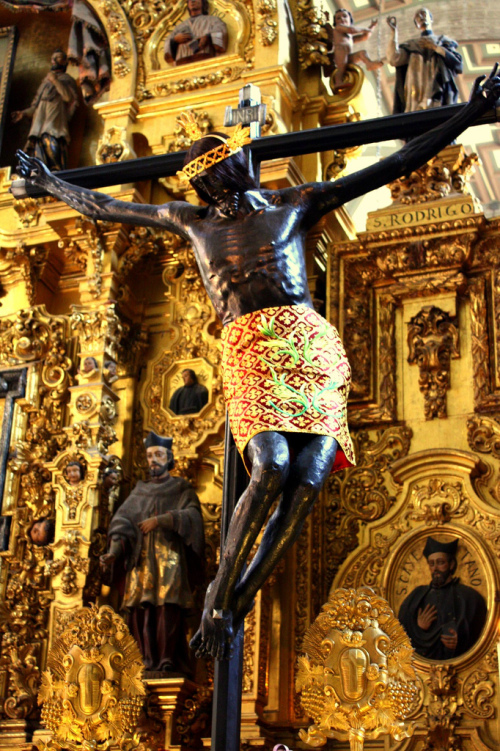
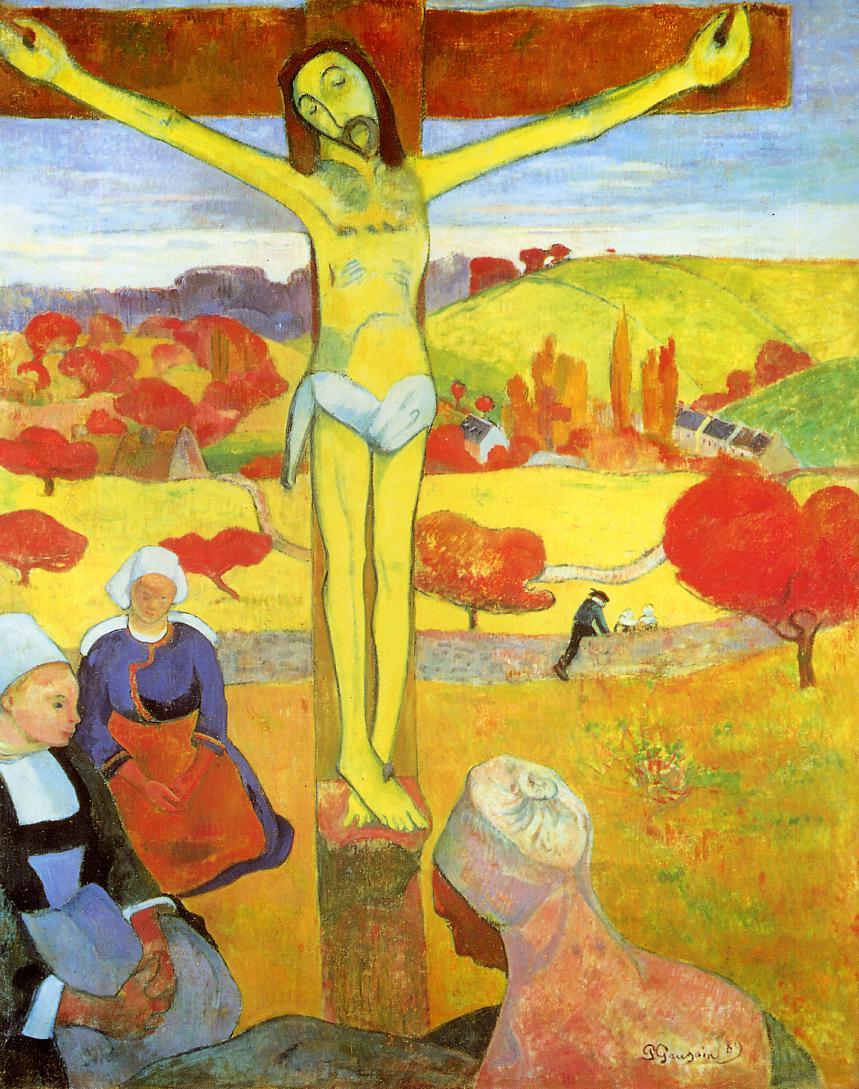
Jesus of Nazareth, King of the Jews

Images of the Crucifixion


(Thanks to Jeffrey Fisher [jeffreyfisher at me.com] for the guest post.)

On Good Friday every year,* Christians around the world commemorate the death by crucifixion of Jesus of Nazareth, rabbi, prophet, Son of God, Son of Man, messiah, and all-around trouble-maker.

The truth is that very little is known of Jesus’ life and teachings from verifiable accounts, but this has not stopped generation after generation of Christians from telling his story, beginning with Jesus’ semi-official biographers, the evangelists of the New Testament. Almost everything we know about the life and teachings of the physical human being Jesus are in those writings, which do not portray him always in compatible ways, and which are almost entirely unconfirmed by any external source. The Roman historian Tacitus mentions (with disdain if not disgust) Jesus’ cult following, as does the Jewish historian and philosopher Josephus, but neither gives us anything to work with as historians (or, for that matter, as theologians). For the record, Suetonius and Pliny also talk about Christians, but these piecemeal sources tell us much more about Roman perceptions of Christians than about Christ and his teachings, or even necessarily Christian beliefs and practices.

What, then, can we reasonably say about Jesus?

It is almost impossible to find universal agreement around anything more than a few basics, including most importantly Jesus’ crucifixion. The Gospels narrate it; Paul the Apostle (who never met Jesus in the flesh, as it were) hangs his theology on it, together with the equally important resurrection; and no contemporary sources (Christian or otherwise) dispute it.

But it’s when we ask why Jesus was crucified that things start to get interesting.

What did he do? The two men he is traditionally said to have been crucified with are commonly understood to be “robbers,” but that they were common criminals is highly unlikely. Crucifixion is a horrible death designed to make a very public statement about the crucified, the sort of thing you use on gladiator-slave rebels like Spartacus, not on pickpockets and roustabouts. The Greek term used for these two men (lestai) is consistent with the description of the released Barabbas as one who had participated in rebellious activities, whose “criminality” was related to his revolutionary business. Moreover, the name “Barabbas” means literally “son of the father,” a purely symbolic and surely entirely fictional name, and that the people choose to have him released indicates their affinity for him as a thorn in the side of the Romans. He is thus contrasted with Jesus, the other son of the father, the peaceful (apocalyptic) revolutionary.

So Jesus would have been crucified as a political criminal, a rebel. This would make sense of accounts of his having been identified by the Romans as “Iesus Nazarenus Rex Iudaeorum”: “Jesus of Nazareth, King of the Jews.” Anyone claiming to be king (and “son of God” was a Jewish way of talking about the king of Israel recorded clearly in Psalm 2), would, if taken seriously, be understood as challenging Roman authority.

Insofar as Jesus seems to have been deliberately poking the Romans’ local running dogs, the Sadducees and the Temple priests, his seizure and termination were surely inevitable. If his teaching is as opposed to violence and unconcerned with “politics” as it seems to have been, it’s hard to believe the Romans would have noticed him without some prodding, this coming not from the “crowd,” but from the leadership (who in Mark and Matthew incite the crowd). Indeed, the priests and scribes look for ways to arrest him when the crowds are not around, because they fear a riot.

If we take the Gospel of Mark at all seriously, Jesus was preaching a new kingdom of God, an apocalyptic redemption of the people of the earth by God’s direct intervention (and with Jesus as the sacrificial pesach lamb). If we take the Gospel of Luke seriously, Jesus spoke in a classic prophetic mode, calling people — Jew and Gentile both — to care for the oppressed of the earth, the poor and the hungry and the helpless. Both Jesuses called for people to be better to each other, to love each other, and indeed to love each other when love was, according to common sense, the foolish thing.

Why would this get you executed?

Well, in itself, it wouldn’t. But the Gospel of Mark tells us of Jesus speaking with a man who realizes that all the animal sacrifices in the world don’t amount to a hill of beans (in that crazy world). When love counts more than sacrifice, we are undermining the Temple. When we go into the Temple, start knocking things over, and say it’s become about robbing the poor and not about loving God and one’s neighbor, we are undermining the Temple. And to undermine the Temple’s authority is also to undermine Rome’s authority, and Rome’s cash flow.

Jesus, like the Essenes he may or may not have associated with, was a purist.

The Temple was full of collaborators and exploiters, the kind seen before in the history of Israel (and berated by prophets like Isaiah and Amos), the kind hated also by the Dead Sea community of apocalyptic purists awaiting a final showdown between God and evil (i.e., the Roman Empire and their local potentates, the Temple authorities).

Jesus, like other Jewish prophets before him, thought that Judaism was about something. That it was somehow about justice and not just about following rules or waiting around for things to get better: that it was about our making the world a better place, and not just making our own lives better.

Start talking that way and get people on your side, and you’re fairly likely to get killed, even twenty centuries later.

* Though the actual date (even the year) of the execution marked by the movable feast of Good Friday is fundamentally unknowable, there are some present-day astronomer types who’d like to sell you April 3, 33 A.D.

On this day..

1910: Ahn Jung-geun, Korean nationalist

A century go today, Korean independence martyr Ahn Jung-geun (or An Jung-geun) hanged at Port Arthur for assassinating Japanese statesman Ito Hirobumi.

Ahn Jung-geun, who was also a skilled calligrapher (his epigram, “Unless reading everyday, thorns grow in the mouth” is well-known in Korea), actually had a more visionary pan-Asianist agenda than his nationalist byline might initially suggest.

But he militantly opposed Japan’s annexation of the peninsula, and won his hero stature for gunning down Ito in Manchuria.

Ito, for his part, is a national hero in Japan for establishing that country’s parliamentary government and serving as its first Prime Minister.

So, yeah. Still a spot of tension over this incident.

Because the Japanese worried that “if Ahn Jung-geun’s body is handed over to the surviving family or impudent Koreans … it will not be good in the future,” its ultimate deposition has become an enduring historical mystery, with China the current likely suspect. Koreans’ intensified hunt for records pointing to Ahn’s grave has been much in the news during the centennial run-up.

Wherever his bones rest, the Korean patriot (as the saying has it) lives on. He’s even been posthumously promoted by the South Korean army to the rank of “General”.

The recent Korean film 2009 Lost Memories is premised on an radically different alternate timeline starting when Ahn is prevented from killing Ito. Here’s its aesthetically appealing climax, when history is righted.

Scrabbel put the Ahn Jung-geun story to music.

On this day..