On this date in 1942, Jose Abad Santos was shot by the Japanese forces occupying the Philippines.
Brother of a famous socialist agitator who fought the Japanese from the bush, Jose Santos had an impeccably mainline elite career: university degrees in America, corporate lawyering gigs, followed by a stint in the Ministry of Justice and elevation to the high court.
In December 1941, Santos administered the oath of office to re-elected president Manuel Quezon even as the archipelago was being invaded by the Japanese. Quezon would evacuate, forming a government-in-exile.
Santos preferred to stay, and would spend his last remaining weeks as the Philippines’ Acting President.
“It is an honor to die for one’s country,” he would say to his son, after their capture. (The son survived.) “Not everybody has that chance.”
On this date in 1510, the new king Henry VIII had his dad’s most hated tax collectors beheaded on Tower Hill.
Better days: Empson (on the left) and Dudley (on the right) pal around with Henry VII.
When Henry Tudor conquered Bosworth Field to emerge from the War of the Roses as King Henry VII, he brought the baggage of being the son of some Welsh squire.
His shaky legitimacy exposed the newborn Tudor dynasty to existential threats from every quarter; even putative allies proved liable to turn against him.
Henry consequently looked for every opportunity to centralize power away from institutions that could check or threaten him and into his own hands — nowhere more notoriously so than in the realm of taxation.* Aggressive tax collection would not only regenerate the crown’s blasted treasury; it would widen his own scope of action.
Whether Henry’s historical repute for cupidity is well-deserved is a topic beyond the scope of this site, but the fact that he does have such a reputation can be attributed in no small degree to this date’s featured players.
These two persons, being lawyers in science, and privy councillors in authority, as the corruption of the best things is the worst, turned law and justice into wormwood and rapine. … Neither did they, toward the end, observe so much as the half-face of justice, in proceeding by indictment; but sent forth their precepts to attach men and convent them before themselves, and some others, at their private houses, in a court of commission; and there used to shuffle up a summary proceeding by examination, without trial of jury; assuming to themselves there to deal both in pleas of the crown and in controversies civil. Then did they also use to inthral and charge the subjects’ lands with tenure in capite, by finding false offices, and thereby to work upon them for wardships, liveries, premier seisin, and alienations … When men were outlawed in personal actions, they would not permit them to purchase their charters of pardon, except they paid great and intolerable sums; standing upon the strict point of law, which upon outlawries giveth forfeiture of goods; nay, contrary to all law and colour, they maintained the king ought to have the half of men’s lands and rents, during the space of full two years, for a pain in case of outlawry. They would also raffle with jurors, and enforce them to find as they would direct, and if they did not, convent [summon] them, imprison them, and fine them. These and many other courses, fitter to be buried than repeated, they had of preyig upon the people; both like tame hawks for their master, and like wild hawks for themselves; insomuch as they grew to great riches and substance.
–Francis Bacon‘s History of the Reign of King Henry the Seventh
Richard Empson and Edmund Dudley were two powerful parliamentarians of less than lordly stature who had been elevated to this bad-cop role for their loyalty and aptitude. There, they became lightning rods for public resentment. It’s a path that had once taken a French counterpart from the common stock to the robes of state to (once his patron monarch died) the scaffold. Empson and Dudley trod it exactly.
Even in Henry’s lifetime, his newly intrusive taxes risked fearful public reaction.
The pretender Perkin Warbeck knocked Henry for the “robberies, extortions, the daily pilling of the people by dismes [tithes], taskes [contributions], tallages [tolls], benevolences, and other unlawful impositions and grievous exactions” he imposed, “agreeable to the meanness of his birth.” Tax backlash helped generate at least some of Warbeck’s popular support.
By the twilight of Henry’s rule in the first decade of the 1500’s, he had mastered these threats and could take advantage of political tranquility to really focus on his accounting. And he’d figured out that by ratcheting up enforcement of already-existing levies, he could avoid the dangerous confrontations that might result from summoning Parliament to ask it for money. It’s from this period most of all that he gets his historical Ebenezer Scrooge image, and the tool he employed for it, the Council Learned in the Law, got its extreme unpopularity.
Henry died in April of 1509 at the age of 52, leaving his son Henry VIII an overflowing treasury and countless grievances against the tax collectors who made it happen.
As the Council Learned’s leading lights, Empson and Dudley — “the king’s long arms with which … he took what was his” — immediately became targets once their royal protector was in the ground. They were hailed before the greenhorn king and the Privy Council to justify themselves within days of Henry VII’s death.
Interestingly, because a royal pardon amnestied all crimes except “felony, murder, and treason,” the malfeasance of these two councilors — whose real offense was unimpeachable loyalty to the last sovereign — had to be exaggerated into rather fantastical charges of treason in order to satisfy petitioners against them while avoiding undue embarrassment for the late king or the other aides who had served him.
In the year or so he lay in the dungeon awaiting his fate, “a pson most ignorant, and being in wordlie vexacon and trowble, also wth the sorrowfull and bitter remembrance of death,” Edmund Dudley wrote a treatise on the right arrangement of a society dedicated to the young new master who held Dudley’s life in his hands. The Tree of Commonwealth can be read here.
Yale professor Keith Wrightson introduces an interesting lecture — “Early Modern England: Politics, Religion, and Society under the Tudors and Stuarts” — with Dudley’s Tree of Commonwealth social schema.
Remember both, since now each thrive,
on perquisite ill gotten,
Empson & Dudleys case survives,
when they’re hang’d, dead, & rotten;
-From an 18th century colonial Virginia ballad titled “Remonstrance”, comparing this date’s centuries-old executed to a contemporary politician (Richard Beale Davis, “The Colonial Virginia Satirist: Mid-Eighteenth-Century Commentaries on Politics, Religion, and Society,” Transactions of the American Philosophical Society, Vol. 57, No. 1 (1967))
Update: The History of England podcast covers these two blokes here.
* The phrase “Morton’s fork” comes from Henry’s extractive machinations. Named for his Lord Chancellor John Morton, the original dilemma was a “fork” the crown used to stick taxpayers: those living high on the hog were made to pay up, since they obviously had enough to spare … and those living modestly were also made to pay, since they perforce must have saved enough to spare.
The outcome in the kangaroo court for anyone involved in the previous year’s near-miss bomb attack on Hitler was foreordained. Just the day before, the movement’s ineffectual but conscientious political statesman Carl Goerdeler had hanged for it.
But a funny thing happened to the lawyer and reserve officer Schlabrendorff on the way to the gallows.
As he awaited this date his tongue-lashing and inevitable condemnation at the hands of the vituperative Nazi judge Roland Freisler, a bombing raid led by Jewish future Nuremberg prosecutor Robert Rosenthal struck the People’s Court — killing not the prisoner, but the judge, who was reportedly found still clutching his prey’s file.
“It is God’s verdict” was the succinct epitaph issued by a worker at the hospital where they raced his body, and nobody cared to dispute the subversive remark.
Hysterically badgering defenseless prisoners in farcical show trials, ostentatiously obeisant to the Reich, and personally responsible for thousands of executions, Freisler was a hard guy to admire. His role model for courtroom demeanor was supposed to be the ruthless purge trials of the Soviets.*
(Freisler also attended the Wannsee Conference, where Reinhard Heydrich organized the Final Solution. What a guy.)
In the confusion of the bomb blast, Schlabrendorff was hustled off to detention un-sentenced, and spent the last months of the war being shifted from one concentration camp to the next. The Third Reich — and admittedly, it had a few other things on its mind in those days — neglected to kill him, trial or no.
Schlabrendorff went on to become a West German constitutional court judge, though in this career he could hardly be as memorable as his onetime persecutor.
That Schlabrendorff miraculously escaped the war with his life thanks to a timely explosion was a particular irony: Hitler had once unwittingly been preserved from a Schlabrendorff assassination attempt by a bomb that failed to detonate.
In a March 1943 attempt on Hitler’s life, Schlabrendorff himself had passed one of Hitler’s entourage a package supposedly containing two bottles of cognac for delivery to another officer. In fact, the package was meant to blow up Hitler’s plane.
When [Hitler] was boarding the plane I started the mechanism of the delayed-action bomb … timed to explode within half an hour. At a sign from Tresckow, I handed the parcel to Colonel Brandt,** the member of Hitler’s escort who had promised to take it. It was a great nervous strain to remain quiet at this juncture.
…
After more than two hours of waiting, we got the shattering news that Hitler had landed safely …
We were stunned and could not imagine the cause of the failure … even worse would be the discovery of the bomb, which would unfailingly lead to our detection and the death of a wide circle of close collaborators.
After considerable reflection Tresckow resolved to ring up Colonel Brandt at Hitler’s headquarters and ask whether the parcel for General Stieff had already been delivered. Brandt replied that it was still in his keeping. This gave us hope that the bomb had not been discovered. Its delivery had to be prevented by all means. So Tresckow asked him to keep the parcel. He added there had been some mistake. I would call on him the following day to exchange the parcel, as I had anyway to go on official business to headquarters in East Prussia.
On some military pretext, I flew to Headquarters with the regualr messenger plane. I called on Colonel Brandt and exchanged a parcel containing two bottles of brandy for the one containing the bomb.
I can still recall my horror when the man, unaware of what he held, smilingly handed me the bomb and gave it a jerk that made me fear a belated explosion. Feigning a composure I did not feel, I took the bomb, immediately got into a car, and drove to the neighboring railway junction of Korschen. From there a sleeper train left for Berlin in the evening.
At Korschen, I got into a reserved compartment, locked the door, and … dismantled the bomb … The mechanism had worked; the small bottle had broken; the corrosive fluid had consumed the wire; the striker had hit forward; but — the detonator had not fired.
* Not the only ostpolitik admiration the Nazis showed for their battlefield foes’ ruthlessness; Hitler, similarly, applauded (sometimes envied) Stalin’s 1930s purge of the officer corps.
** This Heinz Brandt, too, has another unwitting part left to play in the story of the German resistance: it was he who, on July 20, 1944, moved Col. Stauffenberg’s deadly parcel behind an oaken table support, preserving Hitler from the bomb’s worst effects. Brandt died in that explosion.
Tiptoft’s calling card says he’s one of England’s first Renaissance men — literally so, because after cutting his teeth at Oxford, he spent several years in Padua, Ferrara, Rome and Florence, brushing up on Latin and law.
Besides culture and erudition, Tiptoft is supposed to have picked up from his Italianate exposure a taste for that fragmented peninsula’s barbarous political jockeying.*
Back in Britain from the start of the 1460s, Worcester aligned with the Yorkists during the War of the Roses, and made liberal use in both England and Ireland of his continental savvy in matters of torture, earning that unflattering sobriquet Butcher.
Tiptoft gave them the material, exercising,” in his constabulary post, “more extreme crueltie (as the fame wet) then princely pity.” For instance, when putting down one revolt,
the Kynge Edwarde came to Southamptone, and commawndede the Erle of Worcetere to sitt and juge suche menne as were taken … and so xx. persones of gentylmen and yomenne were hangede, drawne, and quartered, and hedede; and after that thei hanged uppe by the leggys, and a stake made scharpe at bothe endes, whereof one ende was putt in att bottokys, and the other ende ther heddes were putt uppe one; for whiche the peple of the londe were gretely displesyd; and evere afterwarde the Erle of Worcestre was gretely behatede emonge the peple, for ther dysordinate dethe that he used, contrarye to the lawe of the londe.
Too bad for the gretely behatede Erle of Worcestre that this was an era when anyone‘s uppance could be coming at any time.
This last, well, butchery was effected against supporters of the Earl of Warwick, the “kingmaker” whose fluid alliances shaped the royal jostle in the mid-15th century.
And the trouble for Tiptoft was that Warwick’s 1470 revolt against Tiptoft’s ally and kin Edward IV … worked. Okay, only temporarily, but it was long enough to do in John Tiptoft.
For a brief moment, the Yorkist cause waned and the Lancastrian waxed; during the brief moment, the Butcher of England was haled before the Lancastrian Earl of Oxford, a man who occupied that office because Tiptoft had executed his father and elder brother.
The wheel of fortune had turned. A massive, jeering crowd turned out to see Tiptoft de-topfed. He asked the executioner to do it in three strokes rather than one, in honor of the Trinity.
Prayerful: John Tiptoft’s tomb at Ely Cathedral. (He’s flanked by two of his three wives, one of whom is in the foreground.) Image used with permission.
Tiptoft [wrote Henry Pancoast] was the most learned man among the English nobility of his time … [he] reflects his age at its best and worst. He was set at a confluence of evil influences, when civil strife following the Hundred years War [sic] had debauched the English nobility. Abroad he came close to that Italy which Machiavelli called “the corrupter of the world.” Yet a new intellectual life was growing, and Tiptoft’s career alternates between scholarship and political intrigues. He shows us how early the new spirit was astir in England, and how it was retarded; is is the “butcher” and “the first fruits of the Italian Renaissance.”
You can explore a bit more about John Tiptoft in the first third of this BBC radio 4 program, with author Alison Weir. (Her Tudor books burn up the bestseller lists, but she’s also written about the War of the Roses.) Or, look up the Household of Worcester, a medieval re-enactment society that takes name and inspiration from our day’s butchered butcher.
* This supposed southern influence on our friend the Earl might well be true, but it also strikes this author as an answer in search of a question. It’s hardly necessary to posit foreign influence to explain brutality in 15th century England, nor to explain educated men with a taste for cruelty.
But Tiptoft’s “wanton ferocity,” says Pancoast, “brings to mind the Italian proverb, quoted by Ascham in proof of the brutalizing effect of Italy upon the English nature: Inglese Itilianato e un diabolo incarnato.”
Since oiled stakes up buttocks were no more characteristic of Italian jurisprudence than English, the obvious place one might inquire for an outside influence would be that better-known diabolo incarnato, Vlad the Impaler: stories of Vlad Dracula’s then-contemporary skewerings were even then circulating and magnifying in the 15th century’s fresh new media channel, the printing press.
On this date in 1388, England’s former Chief Justice was executed for his executive-friendly jurisprudence.
For some reason, this illustration of Tresilian’s execution from Froissart‘s chronicles shows him receiving a dignified beheading, rather than a nude hanging.
The ambitious Robert Tresilian (or Tresillian) had shimmied his way up the 14th century legal ranks for his dutiful service to the monarch, including presiding over a “bloody assize” after Wat Tyler’s revolt.
Despite stringing up 500 rebels, Tresilian couldn’t have been too upset about the disturbance: it also killed off the sitting Chief Justice and opened the seat for a man of Tresilian’s talents and loyalty.
A few years later, Richard would require of this position a legal opinion vindicating his personal authority as against the council his rivals had foisted upon him. Tresilian duly produced a writ affirming the unitary executive authority.
The upshot of this opinion was to put that council at risk of life and limb. It turned out to be more dangerous to its author.
The lords thereupon announced that in matters of such high concern the rules of civil law oculd not be observed; the parliament was itself the supreme judge; it was not to be bound by the forms which guided inferior courts, that were merely the executors of the ancient laws and customs of the realm, and of the ordinances and establishments of parliament.
In a characteristically judge-like juxtaposition of wit, naivete and arrogance, Tresilian was somehow smart enough to go into hiding but dumb enough to hide by disguising himself and hanging around the parliament where his associate, London Mayor Nicholas Brembre, was putting on a theatrically futile defense. Since Tresilian had absconded, he was already judged guilty in absentia and liable to suffer execution immediately upon capture.
This date in 1388, that’s exactly what happened: capture, and summary hanging.
Before they had argued to the finish the end of the trial against Nicholas Brembre, the hapless Tresilian occupied their attention. He had been located above the gutter of a certain house annexed to the wall of the palace, hiding among the roofs the sake of watching the lords coming and going from parliament. However, when resolute soldiers had entered that house and looking around found no one, a certain knight with intent expression strode to the father of the house and pulled his head up by the hair, drawing his dagger, saying, “Show us where Tresilian is or your days are numbered.” Immediately, the terrified father of the household said, “Behold the place where that man is positioned at this moment,” and under a certain round table which was covered for deception with a tablecloth, the unfortunate Tresilian, disguised as usual, was miraculously discovered. His tunic was made out of old russet, extending down to mid-shin, as if he were an old man, and he had a wiry and thick beard, and wore red boots with the soles of Joseph, looking more like a pilgrim or beggar than a king’s justice. This event was immediately made clear to the lords’ ears, and when, quicker than a word, the aforesaid five appellants under a hasty pretext left the parliament without explaining the reason for their departure, all who remain in parliament were stunned, and many others followed them with passionate zeal. And when at the palace gate they had seized Tresilian, leading him toward the parliament, they proclaimed in a universal voice, “We havet hym! We havet hym!” Meanwhile, interrogated in the parliament how he would excuse himself concerning the false treachery of this kind and other things done by him, he remained nonetheless stock-still and mute, his heart hardened even in the face of death, and he would not confess to the things committed. Immediately parliament was broken for the sake of this matter, and on the grounds of dealing with Tresilian they sent away for the day Brembre, who had remained present. And at once Tresilian was led to the Tower of London so that execution of his sentence might be carried out on his person. His wife and daughters, moaning and imploring weepingly, were present at hand there in that place, and with voiceless requests, kissing him first from one side then the other, they forgave him for one or another of the crimes he had committed. But she, overwhelmed with sorrow in her heart, fell to the ground as if dead. At length Tresilian was bound hand and foot to a hurdle, and along with a vast multitude of lords and commoners, horsemen and pedestrians, he was dragged from the back of horses through the city squares, resting at intervals of about the length of a furlong out of considerations of charity, to see if he wanted to repent anything. But alas, he did not publicly confess, and indeed it is not known what he would say to his friar confessor, nor has it been ours to discover: the friars well treated Tresilian, preserving him from his transgression. And when he had come to the place of Calvary that he might be made defunct, he did not want to climb the stairs but goaded by sticks and whips that he might ascend, he said, “While I carry a certain something around me, I am not able to die.” Immediately they stripped him and found particular instructions with particular signs depicted in them, in the manner of astronomical characters; and one depicted a demon’s head, many others were inscribed with demons’ names. With these taken away, he was hanged nude, and for greater certainty of his death his throat was cut.
“His fate,” wrote Baron John Campbell, “seems to have excited little compassion, for he had shown himself ready to mete out like injustice to others, and he had extra-judicially pronounced opinions which, if acted upon, would have been for ever fatal to public liberty.”
Something of a career troublemaker, Murillo had had a few scrapes with the crown’s agents over his patriotic aspirations for the territory the Spanish called Upper Peru.
Unfortunately for the self-proclaimed Junta Tuitiva, neither masses nor elites really rallied to their side, and the Spanish swiftly crushed the uprising.
July 16, the date these dreamers declared independence, is still celebrated in La Paz.
And why not? Though militarily overwhelmed, this quixotic enterprise turned out to be one of the opening acts in a (largely successful) generation-long struggle for independence throughout the Spanish possessions in the New World.
This date’s observance marks the systematic execution by (West) Pakistani forces of the intellectual class of East Pakistan at the end of the civil war which would detach the east as the independent nation Bangladesh — an unavenged war crime as cynical as it was brutal.
Executed intellectuals in the Dhaka Rayerbazar, 1971.
This was not a single discrete massacre, but a continuing policy during the March-December 1971 war. December 14, just two days before the Pakistani army surrendered, was the peak date of a dreadful endgame paroxysm that saw hundreds of scholars, teachers, lawyers, doctors, artists, writers, engineers, and the like rounded up and summarily executed in a bid to decapitate the new Bengali state’s intelligentsia.
Though the martyrs were subsequently venerated in Bangladesh, the higher-stakes regional geopolitics have always made effective redress a nonstarter.
This was the date in 1982 of the “December murders” (“Decembermoorden”), when 15 opponents of Suriname’s military dictatorship were shot at Fort Zeelandia.
Though the killings weren’t secret at the time, their circumstances have always been murky, beyond the plain fact of being murders of political dissidents — “counterrevolutionaries,” in the parlance of the “Socialist Republic”.
President Desi Bouterse had seized power in a coup in early 1980, and some of the casualties this day might have been suspected of plotting to pull the same trick on him: at least, several were made to read statements to that effect. Others were regime opponents of a less existential menace: dissident university professors; critical journalists; a prominent former footballer. (When in Paramaribo, take in a match at Andre Kamperveen Stadion, which is named for him.)
Bouterse took political responsibility for the slaughter while claiming not to have ordered it. But it’s long been said that Bouterse was actually present for the shootings, personally interviewing/interrogating/”judging” the prisoners. (That’s what the massacre’s lone survivor, the since-deceased Fred Derby, said. (Dutch link))
Decades later, Bouterse — now an ex-dictator — is finally facing trial for the December murders, including fresh evidence of his involvement in the day’s notorious affair.
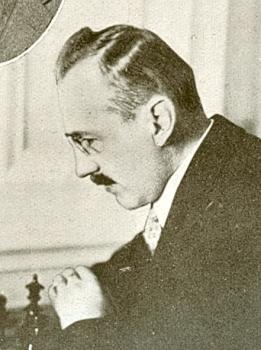
On this date in 1941, chess grand master Karel Treybal was shot in occupied Czechoslovakia as a suspected subversive for illegally stockpiling weapons.
The Bohemia-born Treybal was one of the great Czech players from the turn of the century.
Competing as an amateur — his day job was as a barrister — his attacking play made him one of the world’s best for most of his adult life. (Chess aficionados can browse his big matches here and here, or take in some Treybal chess puzzles. It says here that Treybal once played countryman Franz Kafka.)
Like everyone else standing between the great imperial powers come wartime, grand masters were just so many pawns.
The particulars of Treybal’s death seem murky: whether or not he received a nominal Nazi trial before his execution; whether there was anything to the weapons charges against him. Word, nonetheless, got right around.
According to a UP report datelined this very day that ran in the New York Times on Oct. 3,
German occupation forces have executed nearly 1,000 persons in Europe, in some cases shooting them by the carloads, in reprisal for a mounting tide of violence in the occupied countries, a compilation showed tonight.
German dispatches said eighteen persons were executed in Bohemia-Moravia today [Thursday, Oct. 2 -ed.], and thirty-nine yesterday. Six were executed Sunday, twenty Monday and fifty-eight Tuesday, according to earlier German announcements, making the total so far this week 141.
Those executed today were said to include Josef Benes, manager of the Farmers’ Association at Raudnitz; Anton Kvarda, manager of the trades school at Rakonitz; Karel Treybal, salesman; Josef Smrkovsky, business man, and Manzel Svoboda, former Czech Army lieutenant.
From Norway to Greece the executions have been Germany’s answer to all forms of opposition — sabotage, espionage, armed resistance, murder, treason, arson, aiding the enemy, listening to the foreign radio, operating illegal markets, dynamiting and the ill-inclusive “Communist” activity.
A postwar tournament was played in tribute of Treybal and the great Czech women’s champion Vera Menchik.
“Who cannot be sorrowful and amazed that he should be a traitor against your majesty? He that was so advanced by your majesty, he whose surety was only by your majesty, he who loved your majesty, as I ever thought, no less than God; he who studied always to set forward whatsoever was your majesty’s will and pleasure; he that cared for no man’s displeasure to serve your majesty; he that was such a servant, in my judgment, in wisdom, diligence, faithfulness, and experience, as no prince in this realm ever had …
If he be a Traitor, I am sorry that ever I loved him, or trusted him, and I am very glad that his treason is discovered in time; but yet again I am very sorrowful; for who shall your grace trust hereafter, if you might not trust him? Alas!”
It was on this date in 1540 that the Machiavellian minister of Henry VIII fell by the instrument he had wielded so ably against so many others.
While Henry strove to get his end away, Thomas Cromwell made the Reformation, setting his energetic hand to the needfully violent reordering of England.
In almost a decade as the king’s chief minister, he had dissolved so many monasteries, annulled so many noble prerogatives, backstabbed so many courtiers, and sent so many of every class to the scaffold that most at court had some reason to hate him. (Cranmer was the only one to (cautiously) object to his old partner’s arrest.)
Hilary Mantel’s acclaimed Man-Booker Prize-winning 2009 novel Wolf Hall humanizes Cromwell’s side of his clash with Thomas More. (Review)
Though it may be, as Edward Hall recorded, that “many lamented but more rejoiced” at Cromwell’s fall from the very height of his power — “and specially such as either had been religious men, or favoured religious persons; for they banqueted and triumphed together that night [of his execution], many wishing that that day had been seven year before” — the reasons for it are murky enough to invite recourse to the royal person’s irrationality.
The bedroom politics get all the press: Cromwell’s bit of marital statecraft arranging Henry’s marriage to Anne of Cleves was a famous dud, but negotiations to end it were well on their way by the time of Cromwell’s arrest.
Why, too, should the minister have been ennobled Duke of Essex in April 1540, months after the disastrous union? That Cromwell, whose own security rested upon the stability of the realm, was a radical Protestant promulgating inflammatory religious ideas — and he was condemned for both treason and heresy, incidentally giving the king wide latitude for just how painfully to kill his former servant — seems to beggar belief.
Once fallen, Cromwell was kept alive long enough to add testimony to the Cleves divorce; that much is clear. But then why keep him alive still three weeks more?
In the end, maybe it was inevitable that one in his position, at his time and place, had to follow to the scaffold the many he had sent thither, just the Tudor version of that familiar “bad advisors” trope: it were not treason to murmur against the aide whose ill counsel did wrong by His Majesty, and so Cromwell stood to accumulate the share of hostility that properly belonged to his sovereign. As an expert practitioner of the game of power politics, Thomas Cromwell could hardly be in a position to complain.
Oh, and by the by: with the German princess on the outs, the king’s wandering eye had fallen upon a niece of Cromwell’s enemy. On the day that Cromwell lost his head, Henry married Catherine Howard. No matter your brilliance, in Henrican England you only had to lose at court politics once, even if the king would be lamenting this injudicious trade within months.
Henry gave his loyal servant the easiest death, beheading on Tower Hill (although it turned out to be a botched job) — alongside a distinctly undercard attraction, Walter Hungerford, the first person executed under the Buggery Act.
Hall records Cromwell playing ball with a fine entry in the scaffold-speech genre that kept his son in the peerage.
I am come hether to dye, and not to purge my self, as maie happen, some thynke that I will, for if I should do so, I wer a very wretche and miser: I am by the Lawe comdempned to die, and thanke my lorde God that hath appoynted me this deathe, for myne offence: For sithence the tyme that I have had yeres of discrecion, I have lived a synner, and offended my Lorde God, for the whiche I aske hym hartely forgevenes. And it is not unknowne to many of you, that I have been a great traveler in this worlde, and beyng but of a base degree, was called to high estate, and sithes the tyme I came thereunto, I have offended my prince, for the whiche I aske hym hartely forgevenes, and beseche you all to praie to God with me, that he will forgeve me. O father forgeve me. O sonne forgeve me, O holy Ghost forgeve me: O thre persons in one God forgeve me. And now I praie you that be here, to beare me record, I die in the Catholicke faithe, not doubtyng in any article of my faith, no nor doubtyng in any Sacrament of the Churche.* Many hath sclaundered me, and reported that I have been a bearer, of suche as hath mainteigned evill opinions, whiche is untrue, but I confesse that like as God by his holy spirite, doth instruct us in the truthe, so the devill is redy to seduce us, and I have been seduced: but beare me witnes that I dye in the Catholicke faithe of the holy Churche. And I hartely desire you to praie for the Kynges grace, that he maie long live with you, maie long reigne over you. And once again I desire you to pray for me, that so long as life remaigneth in this fleshe, I waver nothyng in my faithe.
And then made he his praier, whiche was long, but not so long, as bothe Godly and learned, and after committed his soule, into the handes of God, and so paciently suffered the stroke of the axe, by a ragged and Boocherly miser, whiche very ungoodly perfourmed the Office.
If Cromwell’s dying sentiment concealed any lasting bitterness for the crown, maybe his spirit would take some satisfaction a century later when another of his name and family rose high enough to behead a king.
* Cromwell’s bit about the “Catholic faith” in his dying confession is to be carefully handled; it’s sometimes rendered “the traditional faith,” and occasionally treated by later Protestant polemicists as a phony addition made by Roman apologists. It’s not, appearances aside, walking back the Reformation; according to Charles Carlton’s “Thomas Cromwell: A Study in Interrogation” (Albion: A Quarterly Journal Concerned with British Studies, Vol. 5, No. 2 (Summer, 1973)) our day’s victim “did not see himself as a Catholic separate from the Church, but as a Christian, who, with his King, had escaped the Pope’s usurped authority.” Cromwell is also explicit in this passage about rejecting sacramentarianism, which was part of the heresy accusation against him.

 Brother of a famous socialist agitator who fought the Japanese from the bush, Jose Santos had an impeccably mainline elite career: university degrees in America, corporate lawyering gigs, followed by a stint in the Ministry of Justice and elevation to the high court.


 Tiptoft’s calling card says he’s one of England’s


 The Bohemia-born

