Our Theo was a 23-year-old university student in Amsterdam pulled into anti-Nazi resistance by the imposition of a hated loyalty oath on university personnel and was arrested several times, repeatedly tolling his father for bribes to extract him.
The arrest he couldn’t buy his way out of was a home raid on March 1, 1945 — the very last weeks of the war, while these Germans were in the process of being stranded in the Low Countries. Evidently the collapse of the Reich didn’t dampen their enthusiasm for the cause, because on March 8 the Germans imposed a collective punishment of 100+ executions in revenge for the Dutch resistance’s attempt to assassinate a prominent SS officer.* Theo van Gogh was one of them.
Besides his name-brand ancestry, Theo the World War II resistance figure is also the uncle (quite posthumously — this man wasn’t born until 1957) of film director Theo van Gogh, who’s a far-right martyr in his own right thanks to the vociferous anti-Islamic work that resulted in his 2004 assassination.
Prisoners’ Round (after Gustave Doré) (1890), by Vincent van Gogh.
* That officer, Hanns Albin Rauter, was executed for war crimes in 1949.
This Tyrant at his first entrance here acted and commanded prodigious Slaughters to be perpetrated: Notwithstanding which, the Chief Lord in his Chair or Sedan attended by many Nobles of the City of Ultlatana, the Emporium of the whole Kingdom, together with Trumpets, Drums and great Exultation, went out to meet him, and brought with them all sorts of Food in great abundance, with such things as he stood in most need of. That Night the Spaniards spent without the City, for they did not judge themselves secure in such a well-fortified place. The next day he commanded the said Lord with many of his Peers to come before him, from whom they imperiously challenged a certain quantity of Gold; to whom the Indians return’d this modest Answer, that they could not satisfie his Demands, and indeed this Region yielded no Golden Mines; but they all, by his command, without any other Crime laid to their Charge, or any Legal Form of Proceeding were burnt alive. The rest of the Nobles belonging to other Provinces, when they found their Chief Lords, who had the Supreme Power were expos’d to the Merciless Element of Fire kindled by a more merciless Enemy; for this Reason only, because they bestow’d not what they could not upon them, viz. Gold, they fled to the Mountains, (their usual Refuge) for shelter, commanding their Subjects to obey the Spaniards, as Lords …
In the first weeks of 1524, Alvarado pressed across the Samala River into the K’iche’ kingdom to devastating effect. “The Spaniards, O wonderful! went to the Towns and Villages, and destroy’d with their Lances these poor Men, their Wives and Children, intent upon their Labour, and as they thought themselves, secure and free from danger. Another large Village they made desolate in the space of two hours, sparing neither Age, nor Sex, putting all to the Sword, without Mercy,” de las Casas laments.
In a decisive February 20 battle, Alvarado’s forces felled the half-legendary native hero Tecun Uman — a mortal blow to the empire in the memory of the Annals of the Cakchiquels, a document from later in the 16th century, which bluntly records that “the Quiches were destroyed by the Spaniards … all the Quiches who had gone out to meet the Spaniards were exterminated.”
Indians now fleeing before him, the conquistador marched onward towards the capital city of Q’umarkaj (various other transliterations are available, such as Gumarkaaj and Cumarcaaj; it’s also known from Nahuatl as Utatlan, giving us de las Casas’s reference at the head of this post). To assist blunt force, he had recourse to strategem — as Alvarado himself recorded in his account of Guatemala. Declining an invitation of hospitality from the authorities there for fear of being trapped in a hostile city, he instead convinced those guys to pay him a diplomatic visit to his camp outside the city … then seized them as hostages, who were executed speedily when their capture did not quell all resistance.
by the cunning with which I approached them, and through presents which I gave them, the better to carry out my plan, I took them captive and held them prisoners in my camp. But, nevertheless, their people did not cease fighting against me in the neighborhood and killed and wounded many Indians who had gone out to gather grass. And one Spaniard who was gathering grass, a gunshot from camp, was slain by a stone rolled down the hill …
And seeing that by fire and sword I might bring these people to the service of His Majesty, I determined to burn the chiefs who, at the time that I wanted to burn them, told me, as it will appear in their confessions, that they were the ones who had ordered the war against me … And as I knew them to have such a bad disposition towards the service of His Majesty, and to insure the good and peace of this land, I burnt them, and sent to burn the town and to destroy it, for it is a very strong and dangerous place.
Then [the Spaniards] went forth to the city of Gumarcaah, where they were received by the kings, the Ahpop and the Ahpop Qamahay,** and the Quiches paid them tribute. Soon the kings were tortured by Tunatiuh [Alvarado].
On the day 4 Qat [March 7, 1524] the kings Ahpop and Ahpop Qamahay were burned by Tunatiuh. The heart of Tunatiuh was without compassion for the people during the war.
As Alvarado pledged to make it, this former empire’s former capital is today an utter ruin.
The Baile de la Conquista commemorates the Spanish conquest, personified in Alvarado’s confrontation with Tecun Uman.
Ahpop is the Maya word which has passed without variation to the languages of the interior of Guatemala; its literal meaning is “the mat.” The mat, pop, was the symbol of royalty, and the chief or lord is represented as seated upon it on the most ancient monuments of the Maya Old Empire which had its origin in the Peten, Guatemala. The Ahpop was the Quiche king and chief of the House of Cavec; the Ahpop Camha, also of the House of Cavec, was the second reigning prince; the Ahau Galel was the chief or king of the House of Nihaib, and the Ahtzic Vinac Ahau the chief of the House of Ahau Quiche
Nathaniel Woods was controversially executed by lethal injection at William C. Holman Correctional Facility in Atmore, Alabama, tonight at 9:01 p.m. U.S. Central Time.
Woods and Kerry Spencer — a co-defendant who is awaits execution for the same affair — were in a Birmingham trap house when officers Charles Bennett, Harley Chisholm III, Carlos Owen and Michael Collins arrived to serve a warrant. Of the four, only Collins would outlive the deadliest day in Birmingham police history.
While the facts of the case are contested, one that is universally agreed is that Kerry Spencer, not Nathaniel Woods, killed all three officers. Woods met them but as the police were in the process of taking him into custody, Spencer — just waking up from the commotion, he claimed — burst onto the scene firing an SKS.
“When I looked to the side, there was two police officers trying to train their guns on me so I opened fire with the fucking rifle. I wasn’t trying to get shot, period. I got a rifle in my hand. They’re going to shoot me,” Spencer told CNN. “You point a gun at me, bitch, I’m fixing to shoot.”
Woods said he simply fled from an unexpected crossfire, and Spencer agrees. “Nate is absolutely innocent,” he said. “That man didn’t know I was going to shoot anybody just like I didn’t know I was going to shoot anybody that day, period.” Alabama prosecutors characterized Woods as conspiring with Spencer to lure the cops into an ambush.
Woods and Spencer not only deny this, but developed an explosive appellate argument — never probed by any court — that the slain policemen were hassling the place as part of a routine police shakedown racket, to which the apartment’s owner had fallen behind on payments, and intimidated that owner out of providing exculpatory evidence.
But at a minimum, Woods’s execution presented the disturbing spectacle of a non-triggerman being punished for actions to which he might have been little other than a bystander. The #SaveNate campaign garnered a wide and fruitless call for clemency compassing civil rights leaders …
Governor Ivey cannot allow the execution of Nate Woods. Please call 334-242-7100 and ask to grant him a reprieve, and tag @GovernorKayIvey. We must stop this injustice before it is too late. Please Retweet. #SaveNatehttps://t.co/pyCTYyhEhr
— Martin Luther King III (@OfficialMLK3) March 3, 2020
… celebrities …
#NathanielWoods is scheduled to be executed in Alabama TONIGHT for murders he did NOT commit. Join the broad coalition- including members of the jury and relatives of the victims – in urging @GovernorKayIvey and @AGSteveMarshall to stay Nate’s execution.
— Kim Kardashian West (@KimKardashian) March 5, 2020
… and at least one relative of a victim.
Just got off phone with Kimberly Chisholm Simmons, sister of Harley Chisholm III, one of 3 Birmingham police officers killed in 2004. She does not support the execution of #NateWoods. "He did not kill my brother. This is so unjust. I don't understand," she told me in tears. 1/5 pic.twitter.com/bwt7jKRLPp
(Thanks to Charles George Herbermann for the guest post. Herbermann emigrated from Prussia to the United States in childhood and became a prominent scholar of Catholicism at the institution now known as New York University. Herbermann was the chief editor of the gigantic originally published in a volume of Catholic Encyclopedia in the early 20th century, where this text originally appeared; many other contributors were involved, and it’s impossible to tell . -ed.)
Christopher Bales. Priest and martyr, b. at Coniscliffe near Darlington, County Durham, England, about 1564; executed 4 March, 1590. He entered the English College at Rome, 1 October, 1583, but owing to ill-health was sent to the College at Reims, where he was ordained 28 March, 1587. Sent to England 2 November, 1588, he was soon arrested, racked, and tortured by Topcliffe, and hung up by the hands for twenty-four hours at a time; he bore all most patiently. At length he was tried and condemned for high treason, on the charge of having been ordained beyond seas and coming to England to exercise his office. He asked Judge Anderson whether St. Augustine, Apostle of the English, was also a traitor. The judge said no, but that the act had since been made treason by law. He suffered 4 March, 1590, “about Easter”, in Fleet Street opposite Fetter Lane. On the gibbet was set a placard: “For treason and favouring foreign invasion”. He spoke to the people from the ladder, showing them that his only “treason” was his priesthood. On the same day Venerable Nicholas Horner suffered in Smithfield for having made Bales a jerkin, and Venerable Alexander Blake in Gray’s Inn Lane for lodging him in his house.
Osmund Brønnum — boxer, Communist, and anti-Nazi Resistance martyr — was executed in Quisling Norway on this date in 1944.
Brønnum (English Wikipedia entry | Norwegian) practice the sweet science for still-extant Oslo club Vika IF and later progressed into a municipal sports administrator.
A committed Popular Front advocate who had also studied in Moscow, Brønnum greeted the German occupation of his native soil with a turn to printing underground propaganda for the Norwegian Resistance — until, sensing danger, he attempted to escape to Sweden only to be arrested at the border.
He was shot with six other men (notably ichthyologist Iacob Dybwad Sømme) at the Trandumskogen forest execution site (and, a natural enough double role, mass grave). A granite marker unveiled there in 1954 pays tribute to “173 Norwegians, 15 Soviet subjects, and 6 Britons” executed in the forest over the course of the war.
The milkman was grooming a young woman named Lillian Marks as a potential mistress which all came horribly to public light when Marks reported to police Bailey’s attempt to rape her. The ensuing investigation revealed that the creeper had gone so far as to poison to death his 22-year-old wife to disencumber himself in anticipation of trading up to his prospective paramour. When arrested at a train station he had more doses of prussic acid as well as a suicide letter/confession.
This open-and-shut homicide tried at Aylesbury in January 1921 was distinguished as the first capital trial with women in the jury pool. Maud Stevenson, Annie White and Matilda Tack were the subject of intense — often cringe — attention by Fleet Street for their novelty: only on July 28, 1920 did the UK swear in its first female juror. In Bailey’s case, there was at least one instance of a barrister attempting to bowdlerize some sordid detail on account of the tender sentiments of the lady-jurors, only to be reprimanded by the judge. When free to speak after the case, the women made a point of insisting that nothing about the ordeal of the jurybox taxed the capacities of women, even in a death case.
Other advances in the courtroom would follow, albeit glacially. According to friend of the site (and guest blogger) Robert Walsh,
Not until 1950 did a woman appear as lead counsel. That was Rose Heilbron whose client George Kelly was executed in 1950 only to be exonerated decades later. It wasn’t until 1962 that the first female judge appeared, Elizabeth Lane joining the County Court. It took until 1972 for a female judge to preside at the Old Bailey in London, Rose Heilbron again blazing the trail. Bailey and his case are scarcely remembered today, but are legal landmarks nonetheless.
Every revolution has its opportunists and this cavalryman swerved wildly between the infighting factions — deserting the general and president overthrown by the revolution, Porfirio Diaz, in favor of Francisco Madero (president from 1911 to 1913), then switching to rebel Pascual Orozco, and then to El UsurpadorVictoriano Huerta (president from 1913 to 1914 via a coup), and last a swing to the left-wing revolutionary Emiliano Zapata.
This man waged a running guerrilla battle against the government until his own death in 1919 … by which time Argumedo was long done for, having been run to ground by Constitutionalist general Francisco Murguia. (Murguia extended him the courtesy of a drumhead tribunal the day before execution.)
Argumedo was reportedly refused a plea to be shot in the public plaza for maximum spectacle, and died with a wish upon his lips that posterity forego noxious flourishes of rank because “we are all equal material for the grave.” (Executed Today endorses this sentiment.)
The corrido “Las Mananitas de Benjamin Argumedo” — “So much fighting and fighting, / so much fighting and fighting, / with my Mauser in my hands. I came to be shot, / I came to be shot / in the cemetery of Durango.” (Full lyrics and even sheet music to be found in Hispano Folk Music of the Rio Grande Del Norte.
On Leap Day in 2016, the bodyguard-turned-assassin of Punjab governor Salman Taseer was hanged for murder.
A longtime activist of the center-left Pakistan Peoples Party, Taseer was a prominent public figure for thirty-plus years and wrote a biography of hanged PPP Prime Minister Zulfikar Ali Bhutto in 1980.
A millionaire through financial services businesses and a minister in the federal government from 2007, Taseer became governor of the Punjab region in 2010. But as a secular- and liberal-minded elite, he was already becoming an artifact from a different Pakistan, and indeed his party was routed at the 2013 election.
The specific grievance nursed by our date’s principal Mumtaz Qadri, a former police commando recruited in 2010 to the personal security detail of the businessman/politician, was Taseer’s support for reversing the high-profile death sentence for blasphemy against a Pakistani Christian woman.* On January 4, 2011, Qadri opened up on his protective charge in an Islamabad marketplace, shooting him 28 times.
As a legal matter, this was all open and shut — but Qadri’s strike on behalf of Islamic militancy earned him wide admiration that reminded some observers of the Raj-era Punjabi assassin Ilm Deen. Hundreds of lawyers clamored to represent him pro bono while “cheering supporters clapped Qadri as he was bundled into court. ‘Death is acceptable for Muhammad’s slave,’ they chanted.” (Guardian)
Death is what he got, of course, although thousands subsequently marched in mourning and staged a parliament sit-in to demand sharia law. On the same day as that march, a suicide bomber attacked a Christian Easter gathering in a Lahore public park, killing 75 or more.
* After a yearslong legal odyssey, Asia Bibi’s conviction was vacated by the Pakistani Supreme Court only in 2018. She was allowed to emigrate to Canada in 2019. (Here’s a short interview with her Incidentally, a second politician, Federal Minister for Minorities Affairs Shahbaz Bhatti, was also assassinated in 2011 for advocating her position.
Ohio State University professor Dr. James Howard Snook was electrocuted on this date in 1930.
The eggheaded veterinary lecturer, Snook was an Olympic gold medalist in pistol shooting.* On a site like Executed Today one would presume that sidearms appear with a Chekhovian purpose, but it will transpire that different instruments cause his downfall.
Beginning, as so often occurs, with the instrument the good Lord gave him, which in 1926 was diverted from his wife in favor of comely undergraduate Theora Hix.
Dr. Snook soon installed his paramour in an apartment from which they carried on a torrid three-year love affair whilst Hix progressed to medical school. “We didn’t love each other,” Snook testified. “We satisfied each other’s needs.”
Hix’s needs, by Snook’s interested account, grew shockingly ravenous: she used cocaine, liked to hit and threaten him, and took on other lovers — including another university professor, agronomist Marion T. Meyers. The doctor’s explication of their relationship scandalized the university and the nation for the sordid particulars of their stormy affair. “Almost every letter trailed off into obsceneities [sic],” notes one report (Louisville Courier-Journal, Aug. 9, 1929.) “For the most part their content is unpublishable.” His own counsel was seen to chortle as some were read out to a stunned court, before rising in a vain attempt to claim they proved his client’s insanity.
Fort Lauderdale (Fla.) Daily News, July 1, 1929.
According to Snook’s testimony, matters fell apart on a motor outing on June 13, 1929, when he attempted to decline a weekend’s canoodle citing his domestic obligations: “She replied, ‘Damn Mrs. Snook. I am going to kill her and get her out of the way.'” And as Hix began raining blows on Dr. Snook, he grabbed a ball-peen hammer from the car toolkit and struck her … and then kept striking.
“I was sure she was going to shoot me,” Snook said through tears, claiming that he feared she carried a weapon in her purse. “My only thought was to stop her. I sprang after her and struck her again.” (Quotes per the Pittsburgh Post-Gaztte, Aug. 9, 1929.)
After bashing her about four times, she was a crumpled but still-breathing heap outside his vehicle. According to a confession that Snook attempted to repudiate, he then clinically finished her off with a pocket knife to her jugular, as a mercy.
* In the 30-meter team military pistol and 50-meter team military pistol competitions at the 1920 Antwerp games. This also happened to be the last year these disciplines were contested at the Olympics.

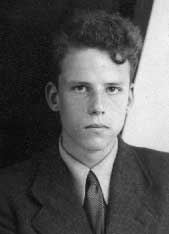 This man was the grandson of the famous Theo van Gogh, art dealer and brother to troubled, brilliant painter Vincent van Gogh.
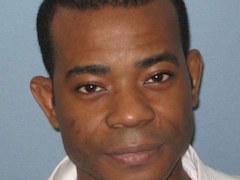 Woods and Kerry Spencer — a co-defendant who is awaits execution for the same affair — were in a Birmingham trap house when officers Charles Bennett, Harley Chisholm III, Carlos Owen and Michael Collins arrived to serve a warrant. Of the four, only Collins would outlive the
  Brønnum (
 Every revolution has its opportunists and this cavalryman swerved wildly between the infighting factions — deserting the general and president overthrown by the revolution,
