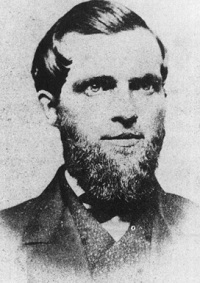
1783: Diego Cristobal Tupac Amaru, rebel heir

On this date in 1783, Diego Cristobal Tupac Amaru — cousin and successor to the famed indigenous rebel Tupac Amaru II — was tortured to death in Cusco.

After Tupac Amaru’s execution in May 1781, the rebellion he had kindled fell south to present-day Bolivia and fought on furiously. Diego Cristobal succeeded his kinsman in authority, and with the (unrelated, but allied) Tupac Katari could briefly command vast territories that demanded bloody Spanish reconquest over hostile terrain. “Twenty years after these events,” one 19th century chronicle reports, “This writer saw the plains of Sicasica and Calamaca, for an extent of fourteen leagues, covered with heaps of unburied human human bones, lying in the places where the wretched Indians fell, to bleach in the tropical sun.”

By early 1782, Tupac Katari had followed Tupac Amaru to the Spanish scaffold and the indigenous resistance they had led was broken into so many bleaching bones. Diego Cristobal Tupac Amaru availed himself of an amnesty promised by Viceroy Agustin de Jauregui to bring the rebellion to a formal close. Diego Cristobal even lived for some months thereafter in peace.

But if Spain’s viceregal authorities ever had the least intent of keeping that guarantee long term, they were set straight by the mother country once the treaty was circulated back home: “no faith is due to pledges made to traitors,” the crown directed. Surely in this perfidy there is also the implied regard of fear; had Cusco fallen to Tupac Amaru’s siege in 1781, the whole history of the New World could have changed. To leave unmolested the royal family of this martyred champion would have courted more danger than an empire ought.

So in March 1783, a Spanish sweep arrested not only Diego Cristobal Tupac Amaru but around 100 other members of his family and their households, pre-emptively on allegations of a fresh conspiracy. Though it was left to Diego to suffer the most extreme bodily fate, extirpation of his line was the intent, and other Tupac Amaru kin were dispossessed of property, deported, and forbidden the use of their costumes and titles as their subjects — Spain’s subjects — were forbidden their arms.

A ghastly account of Diego Cristobal’s sentence and execution is available in Spanish here: “to be dragged through the streets to the place of execution and there his flesh torn with hot pincers and then hanged by the neck until dead; afterwards to be dismembered and his head carried to Tungasuca, his arms to Lauramarca and Carabaya, his legs to Paucartambo and Calca, and the rest of his corpse set up in a pillory on the Caja del Agua, forfeiting all his property to the confiscation of His Majesty.”

On this day..

1726: Joseph Quasson

Hanged on this date in 1726, Joseph Quasson enjoys a minor distinction in the annals of the gallows press: according to friend of the blog Anthony Vaver, Samuel Moody’s account of Quasson’s long* jailhouse sojourn was the first published in the colonies as a standalone conversion narrative, without cover of an attached ministerial sermon.

And here it is:

* Quasson fatally shot a fellow enlistee serving during Father Rale’s War. There was no question about his guilt, but when the murder took place the next sitting of the court was nine months away so the man just got to cool his heels.

On this day..

1557: Galvarino, Mapuche warrior

On this date in 1557, the handless Mapuche cacique Galvarino was executed by the Spanish during the Arauco War.

The Mapuche people, still extant today, inhabited present-day Chile and Argentina; Spanish explorers pushing south from the wreck of the Inca Empire encountered them, and naturally antagonized them.

Rebellion broke out among the Mapuche in 1553, led by Caupolican and his able commander Lautaro; they won some signal victories but the conflict was never decisively finished by either side. The Arauco War — encompassing many distinct rebellions and campaigns punctuated by relative calm — ran until the early 19th century.

Our fellow Galvarino was elevated to folk hero status by the Spanish in the very first period of rebellion when he was captured in battle at Lagunillas. Instead of cutting off his head, the Europeans chopped off his hands — then sent him (with a number of like mutilated prisoners) back to his people. The intent was to make a terrifying example, but Galvarino made the example his own: brandishing the bloodied stumps and oratorical fury to match, he incited his comrades to further resistance.

At the Battle of Millarapue on this date in 1557, hours before his execution, the Spanish beheld him urging on the Mapuche:

My Brothers, why have you stopped attacking these Christians, seeing the manifest damage that from the day which they entered our kingdom until today they have done and are doing? And they still will do to you what you see that they have done and they are doing? And still they will do to you what you see that they have done to me, cut your hands off, if you are not diligent in making the most of wreaking destruction on these so injurious people for us and or or our children and women!

But by evening, the Spanish carried the day — and once again had Galvarino in their custody.

“The poet Ercilla, impressed by the Indian’s valor, made every effort to keep him from being executed, arguing that he had seen Galvarino changing sides and joining the Spanish troops,” writes Guillermo I. Castillo-Feliu in Culture and Customs of Chile. “Galvarino, displaying his mutilated arms, until then covered by a shawl, refused Ercilla’s offer to commute his death sentence and said that he only wished that he could tear his enemies apart with his teeth.”

They put him to death straightaway. Accounts of the execution method range from hanging to impalement to being thrown to dogs.

On this day..

1836: Six Creek rebels, amid removal

We ask you how the Muscogee Nation came by this country? You came from the west and took the country from another people who were in possession. After living here a great many years, the people from over the big waters came in large vessels and took some of the country from you and set up their own government, and made laws, & made you obey them …

you must be sensible that it will be impossible for you to remain, for any length of time, in your present situation, as a distinct society or nation, within the limits of Georgia, or any other State. Such a community is incompatible with our system, and must yield to it. This truth is too striking and obvious not to be seen by all of you, surrounded as you are by the people of the several States. You must either cease to be a distinct community, and become, at no distant period, a part of the State within whose limits you are, or remove beyond the limits of any State …

Brothers, we now tell you, what we, in the name of your Father the President, want you to do. We want the country you now occupy. It is within the limits of Georgia and Alabama. These States insist upon having their lines cleared. The President will do this by giving you a better country, and will aid you in removing; protect you where you may go, against whites and all others, and give you a solemn guaranty in the title and occupancy of the new country which you may select … By deciding for yourselves, it may prevent others from deciding for you.

-U.S. federal communication to the Muscogee Creek chiefs, Dec. 9, 1824


Brothers, you have been deceived. A snake has been coiled in the shade, and you are running into his mouth … drunk with the fire of the pale-face. Brothers, the hunting grounds of our fathers have been stolen by our chief and sold to the pale-face, whose gold is in his pouch. Brothers, our grounds are gone, and the plow of the pale-face will soon upturn the bones of our fathers. Brothers, are you tame? Will you submit?

Opothle Yoholo

On this date in 1836, six Muscogee Creek rebels were hanged in Alabama as murderers.

This age of the bellicose Andrew Jackson comprised the peak years of America’s Indian Removal — a frightful term denoting the forcible expulsion of indigenous nations from America’s east to her frontier wastelands. This was the fate ordained for the Creek people of Alabama, just as it was with their “civilized tribes” brethren, the Choctaw of Mississippi and the Cherokee of Georgia and the Carolinas.

Jackson himself had tangled with the Creek during his career-making appearance as America’s up-and-coming caudillo in the War of 1812: the eponymous Fort Jackson in Alabama was the base from which the Tennessee militia captain had defeated rebellious natives in the 1813-1814 Creek War and forced upon them the Treaty of Fort Jackson.* “Numberless aggressions,” read that document, “had been committed [by the Creeks] against the peace, the property, and the lives of citizens of the United States.”

So small wonder that as President, Old Hickory — for whom Indian Removal was a signature policy — had no time for Creek appeals to Washington to uphold their treaty rights in Alabama and Georgia. Their defeat in 1814 had left the Creek polity a powerless dependency, whose rights and even survival extended precisely so far as the American government wished. With the shrunken remnant** of their ancestral lands increasingly sought by white settlers, all the pressure within Anglo America ran towards the ethnic cleansing option.

“Voluntary” emigration under steady white pressure gnawed away at Creek numbers in the Southeast for a decade or more preceding the events of this post, but there was always going to be a militant slice of the population for whom no inducement short of violence would suffice. In 1836, land incursions finally triggered a Creek revolt, and became the Second Creek War — Jackson’s justification at last for completing the long-sought elimination of the Creek in the East.†

“The Creek Indians, below the Federal Road, are all in arms and killing every white person they have fallen in with,” ran the May 12, 1836 Macon Messenger. Everything was in “confusion and disarray” — the fleeting advantage of initiative while Anglos mustered an overwhelming response.

Attacks on stagecoaches this same month “created a greater sensation throughout the country than any previous act of Indian hostility,” per this public domain history of Columbus, Ga. (The town abuts the Alabama border.)

Two stages carrying the United States mail, going from Columbus to Tuskegee, Ala., were attacked about eighteen miles from Columbus. The Indians killed Mr. Green, one of the drivers, and two horses, and robbed the mail. The next day a party of fifteen men started to come through to Columbus with two stages. Some of these men were passengers and others volunteers who accompanied the stages to assist in their protection.

It was for this raid that claimed Green’s life that Tuscoona Fixico and four others — never named in any source I have been able to find — were condemned to hang on Nov. 25, alongside a man named Chilancha for the unrelated killing of a man named Fannin during the uprising.

The Second Creek War went much the same way as the first, and proved those American diplomats prescient as to the inevitability of the conquered peoples’ fate. Today, the Poarch Creek — numbering barely 2,000 — are the only remaining band of Muscogee Creek in Alabama.

* It was from this engagement that Jackson proceeded to the famous Battle of New Orleans.

** In one vain bid to stanch the loss of Creek territory, the tribe — incensed by the Treaty of Indian Springs — had in 1821 enacted capital punishment for anyone who sold land to whites. It was on the strength of this statute that Creek assassins murdered/executed the collaborationist chief William McIntosh in 1825.

On this day..

1834: James Graves, Trail of Tears precursor

On this date in 1834, the Cherokee James Graves was hanged in Spring Place, Georgia, for murder. He’s the only person ever executed in Georgia’s Murray County.

But he was also a sad waymarker on the way to a much larger tragedy.

It happened that in 1834 the state of Georgia’s long-simmering conflict with the indigenous Cherokee nation was coming to a nasty head. In the infancy of the American Republic, it had made a pact placing the Cherokee under the protection of the United States.

By the 1820s, however, Cherokee land had been nibbled away and the white citizens of Georgia started clamoring for a proper ethnic cleansing: forcibly expelling the Cherokee to the western frontier.

The immediate territorial conflict became joined to a conflict over federal jurisdiction, because the Cherokee had their treaty with the United States (not with Georgia) and its terms were supposed to be guaranteed by Washington (not Milledgeville). As the Georgia legislature enacted laws stripping the Cherokee of land and self-rule, the Cherokee appealed in federal courts.

The Cherokee notched a major win in the 1832 Worcester v. Georgia, when the U.S. Supreme Court held that Indian affairs were the domain of the federal government and individual states had nothing to say in the matter.

But to give a sense of where the wind was blowing, this is the very decision about which U.S. President (and notorious Indian-killer) Andrew Jackson is supposed to have remarked, “John Marshall has made his decision; now let him enforce it.” The quote itself is probably apocryphal but the atmosphere of lawless confrontation was very real indeed.

James Graves was convicted by a Georgia jury in September 1834 of murdering a white man several years prior on Indian land … or rather, on what Georgia said was now no longer Indian land.

The Supreme Court directed Georgia to stay the hanging and appear at a January 1835 hearing.

Governor William Lumpkin* would have none of it. Grandstanding in a communique to an all but universally supportive legislature, he vowed to ignore the court’s order.

Any attempt to infringe the evident rights of the State, to govern its entire population, of whatever complexion, and punish all offences committed against its laws within those limits … I consider a direct usurpation of power. … Such attempts demand the determined resistance of the States … I shall wholly disregard all such unconstitutional requisitions, of whatever character or origin, and, to the utmost of my power, protect and defend the rights of the State, and use the means afforded me to maintain the laws and Constitution of the same. (Nov. 7, 1834)

Two weeks later, Georgia hung James Graves, stay or no stay. There would be no hearing in Washington that January.

“What is to be done with Georgia?” lamented the Nantucket Inquirer (Dec. 13, 1834). “Will another presidential proclamation, full of big words and bombastic threats, be issued against her, for having nullified the U.S. claim of sovereignty over the Indians, and for having hanged the copper-skinned citizen Graves, in defiance of the interdict of one of Gen. Jackson’s judges?”

They already knew the answer: “O, no! — Why? Van Buren counts upon the vote of Georgia at the next presidential election!” (Van Buren did not in fact carry Georgia.)

In 1835, the U.S. foisted a dubious new treaty on the Cherokee by getting a minority faction to sign off on Indian removal, and shortly thereafter forced the Cherokee west on the Trail of Tears.

* Lumpkin County, Georgia is named for him. That’s not too shabby, but he almost hit big-time when the city of Terminus proposed to rename itself Lumpkin. Lumpkin declined and the city is today known as Atlanta.

** Georgia conducted another execution, that of George Tassels, under similarly contested circumstances a few years before Graves.

On this day..

1879: Pocket, on the Hallettsville hanging tree

On this date in 1879, a half-blooded Native American named Pocket died in Hallettsville on an oak tree.

The son of a French Canadian father and a Blackfoot Sioux mother, Pocket had been befriended by a cattleman named Lou Allen. They met by chance in the early 1870s; Pocket was a half-caste child, maybe not even into adolescence, with broken English, doing odd jobs to scrape by.

Of Pocket we have only glimpses of the moments where he comes into the view of white men. His rancher-friend took him until “becoming tired of civilized life, and pining for the freedom of his native wilds,” Pocket vanished on a horse that Mr. Allen willingly gave him. (The quote comes from the Galveston Weekly News of September 18, 1879; it’s also the source for the other quotes in this post.)

That was in 1874. For the next several years Pocket’s activities are mostly unknown, save for the few times he popped back into Mr. Allen’s life — once to bum a suit of clothes; another time when they met by accident in Wichita, Pocket destitute after gambling everything away; and finally when Pocket reappeared in Lavaca County only to be refused aid by his benefactor in a possible gesture of tough love. Pocket found work on a nearby farm instead.

On Valentine’s Day 1878, Pocket was seen in the county seat of Hallettsville getting roaring drunk on whiskey. He left town for the countryside carrying another bottle and proceeded to stop at several farms to accost their residents.

At the Smith house, he barged in, stole a pistol, and forced his way into the family dinner. He stumbled into the home of a former slave named Frank Edwards, ripped up bed clothes, and started swinging an axe around until Edwards punched out the unwanted visitor.

Fuming, Pocket proceeded to yet another farm, the Petersons, where he contrived to get the family hunting rifle by representing the presence of a drove of turkeys nearby. A young Brit named Leonard Hyde worked for the Petersons, and he went along with Pocket “to see the fun.” As ominously as this reads, Hyde had no reason to suspect trouble; the Galveston Weekly News would note that Hyde and Pocket “were both under twenty-one years of age, friendly with one another up to the last moment, and both strangers in the land which has given to each of them a grave.” Two kids out on a turkey-shooting lark.

Hyde trotted along on foot after Pockett, and soon another of Hyde’s friends joined the supposed hunting foray. Suddenly, their intoxicated leader stopped and cursed Hyde for following him — then shot him dead through the forehead with his pistol. The killer’s mind was obviously disordered and impulsive, but it’s possible that Hyde died in place of Frank Edwards, or if not Edwards then whomever Pocket might have crossed paths with next that night.

Now with blood on his hands, Pocket did not pause to revenge any other slights but galloped off into the wilderness. He was eventually captured in Bosque County.


(Source, which also preserves a sad letter from Hyde’s father written in March 1878 upon learning of his son’s murder.)

Perhaps three thousand souls turned out to see a repentant Pocket die in Hallettsville on September 12, 1879 — “every road entering this town became alive with people of all ages, sexes and colors, without regard to previous condition, coming to witness the first legal execution in this county.” Pocket had spent his last weeks in religious devotion and struck those who saw him as a profoundly changed man.

The great hanging-tree can still be seen today, shading a picnic-table in City Park, next to the Hallettsville Golf Association clubhouse.

On this day..

1676: Matoonas, a Nipmuc shot on Boston Common

On this date in 1676, an indigenous Nipmuc named Matoonas was marched into Boston, condemned by a summary judicial proceeding, and immediately shot on Boston Common.

Though he was a so-called “Jesus Indian” — a converted Christian — Matoonas had become a principal adversary of the European colonists once long-building tensions exploded into King Philip’s War.

To the communal grievances that made up this war, Matoonas brought a very personal injury: back in 1671, his son Nehemiah had been accused by English colonists of murder and executed on that basis. And not just executed, but his rotting head set up on a pike at the gallows, to really rub it in.

Matoonas bided his time, but when the opportunity to fight back arrived he joined King Philip (Metacomet) with gusto. On July 14, 1675, Nipmuc warriors under his command raided the town of Mendon, Massachusetts, leaving five dead — the very first Anglo casualties of the war.

“A dark cloud of anxiety and fear now settled down upon the place,” a bicentennial a Rev. Carlton Staples recalled in a bicentennial address on Mendon’s history 1867. “With tears and lamentations they tenderly gathered the bodies of the slain and laid them away in some pleasant spot, we know not where. The houses and farms remote from this central point were abandoned, and the people fled to other places, or gathered here to save their flocks and growing crops. All sense of security was gone. They only dared to go abroad in companies. While some worked in the fields and gardens, others watched for the lurking foe.” A few months later, the settlers had to abandon Mendon altogether, and the Nipmuc burned the ghost town to the ground.

But the tide of the war soon turned against the natives, and Matoonas would find that he had his own lurking foe.

Sagamore John comes in, brings Mattoonus and his sonne prisoner. Mattoonus shot to death the same day by John’s men.

diary of Samuel Sewall

A mysterious Nipmuc leader known as Sagamore John (“Sagamore” designates a sachem or chief) betrayed Matoonas in exchange for a pardon from the Massachusetts colony, marching Matoonas and his son right into Boston on the 27th of July.

After an improvised tribunal set down the inevitable punishment, Matoonas was lashed to a tree on Boston Common. Sagamore John performed the execution himself — although whether he volunteered or “volunteered” is not quite clear. The late Nipmuc raider’s head, too, was set on a pole — just opposite Nehemiah’s.


Memorial to Sagamore John in Medford, Mass. (cc) image from David Bruce.

On this day..

1936: Earl Gardner

(Thanks to Meaghan Good of the Charley Project for the guest post. -ed.)

On this date in 1936, Earl Gardner, a “pint-sized” Apache Indian from the San Carlos Reservation in Arizona, hanged for the murders of his wife, Nancy, and baby son, Edward. Gardner had, for no apparent reason, axed them both to death the previous December.

This wasn’t his first time, either; in the 1920s he’d served seven years in prison for stabbing another man to death.

He tried to plead guilty to Nancy and Edward’s murders, but the judge refused to let him in spite of Gardner’s preference that the government should “take a good rope and get it over with.” Better to “die like an Apache” than die a little every day in prison, he said. With his heart never in his own defense, it’s no surprise he was convicted; appeals filed by his attorney proceeded against Gardner’s wishes, and without success.

R. Michael Wilson records in Legal Executions After Statehood in Arizona, Colorado, Nevada and Utah: A Comprehensive Registry:

Finding a gallows was difficult as the state of Arizona was using the gas chamber exclusively for executions, so U.S. Marshal Ben J. McKinney improvised a gallows using an old rock crusher from the Coolidge Dam project. The crusher had been abandoned within a deep gorge on the Indian reservation. A rope was strung from a crossbeam and a hole cut in the floor for the trapdoor. After there were rumors of an Indian uprising McKinney deputized a force of men and armed them to prevent any interference, and they guarded the gallows for days before the execution date.

As he stood on the contraption’s trapdoor before forty-two witnesses, Gardner was asked if he had anything to say. “Well, I’ll be glad to get it over with,” was all he could come up with. It took longer to get it over with than anyone could have anticipated. A witness recalled:

Earl went to the gallows without apparent concern and died a ghastly death. I was crouched in a corner of the crusher on a pile of gravel and damn near went through the trap after him. Earl’s shoulder struck the side of the trap and broke his fall. He hung at the end of the rope gasping … until Maricopa County Sheriff Lon Jordan, a giant of a man, stepped down through the trap and put his weight on Earl’s shoulder to tighten the noose and shut off his breathing.

When the trap sprung at 5:06 a.m., the noose slipped around to the front of Gardner’s throat, causing him to fall off-center and hit the side of the opening. His head snapped backwards but his neck didn’t break and he thrashed around for over half an hour. It wasn’t until 5:39 that his heart ceased to beat.

Earl Gardner’s death was the last legal hanging in Arizona.

On this day..

1715: Thomas Nairne, Charles Town Indian agent

The generations-long conquest of indigenous peoples in North America might look from posterity like a historical ienvitability, but the 1715-1718 Yamasee War was perhaps “as close to wiping out the European colonists as ever [they] came during the colonial period.” (Gary Nash, quoted by William Ramsey in “‘Something Cloudy in Their Looks’: The Origins of the Yamasee War Reconsidered”, Journal of American History, June 2003. This post draws heavily from Ramsey’s article, which is the source of any quote not otherwise attributed.) In it, not only the Yamasee but a vast coalition of peoples throughout what is today the United States Southeast nearly swept the British out of South Carolina.

And it started three hundred years ago today with some executions.

British South Carolina had extensive trading contacts with the native peoples in their environs — acquiring deerskins and Indian slaves for the plantation colony — and said trading had too often been a flashpoint between alien cultures. South Carolina’s annals record a number of instances of natives crudely abused by Anglo merchants, including women whose bodies were next to sacrosanct for the matrilineal Yamasee, and traders aggressively taking slaves even from friendly tribes. Many years later a Lower Creek man would recall that “we lived as brothers for some time till the traders began to use us very ill and wanted to enslave us which occasioned a war.”

It has never been entirely clear just why and how such individual abuses, even as a pattern, triggered in 1715 something as drastic as military action; our source William Ramsey suspects that they only hint at much wider-ranging economic pressures of the Atlantic economy, which entangled native peoples in debt and warped traditional lifeways towards producing ever more deerskins for export, obtained at ever poorer prices from ever more belligerent merchants.

Just as trade relations were at their most antagonistic, the colonial capital Charles Town fell down on the diplomatic side of the job. (This is, again, per Ramsey.)

The colony had created in 1707 an office of Indian Agent.

Intended to manage the complications of its sometimes-delicate cross-cultural trade and police the traders, the post instead became a locus of bitter competition between two men: Thomas Nairne and John Wright. (There’s a 1710 account of South Carolina in Nairne’s hand available here.) These two men, South Carolina’s most expert Indian diplomats and the only two men ever to hold the Indian agent office, had by the 1713-1715 period become consumed with their internal rivalry. Wright, a trader who thought Nairne too accommodating of the natives generally and unduly meddlesome with Wright’s own commerce specifically, bombarded the latter with lawsuits; Nairne eventually had to stay in Charles Town almost permanently to protect his own affairs. The colony’s diplomatic voice fell silent — which meant that rapacious traders squeezing mounting debts on their spring rounds in 1715 were that voice.

In annoyance, one tribe returned an ultimatum to Charles Town: “upon the first Afront from any of the Traders they would down with them and soe goe on with itt.” (See The Southern Frontier, 1670-1732)

That warning got the colony’s attention.

The Indian Agent rivals Wright and Nairne were dispatched together to meet with the Yamasees at Pocotaligo and smooth things over. But just as these men stood at loggerheads professionally, they were noted for quite distinct policies towards the Indians: Nairne was the friendly hand, the man who sympathized with natives. Wright was the asshole. If their joint presence was intended to be a good cop-bad cop act, they carried it off as clumsily as their mutual antipathy might suggest.

In a famous meeting on the night of April 14, Nairne, Wright, and a number of traders seemingly reassured the Yamasees over a feast that their grievances would be redressed, and went to sleep satisfied that matters were well in hand.

It was not so for the Yamasees, who held council that night after the Europeans were tucked away. An unknown Indian leader who signed himself “the Huspaw King” would later dictate a letter to a hostage charging that at the April 14 meeting

Mr. Wright said that the white men would come and fetch [illegible] the Yamasees in one night and that they would hang four of the head men and take all the rest of them for slaves, and that he would send them all off the country, for he said that the men of the Yamasees were like women, and shew’d his hands one to the other, and what he said vex’d the great warrier’s, and this made them begin the war.

We don’t know if this was on-message for the delegation — a glimpse of the iron fist that Nairne’s politesse was to glove — or delivered privately in Wright’s going campaign to undermine his opposite number. What we do know is that the Yamasees had seen both these men in authority over colonial-Indian trade over the past several years: on the night of April 14-15, they had to decide between mixed messages. Could they count on Nairne’s reassurances of comity? Or should they believe, as Wright intimated, the increasingly obnoxious inroads of traders presaged the outright destruction of their people?

April 15th was Good Friday. And the Europeans awoke to their Calvary.

The Yamasees’ decision about the intentions of their European counterparts was far from internally unanimous — but it was instantly effected.

“The next morning at dawn their terrible war-whoop was heard and a great multitude was seen whose faces and several other parts of their bodies were painted with red and black streaks, resembling devils come out of Hell,” a plantation owner later wrote to London. Most of the Europeans were killed on the spot, Wright apparently among them. A couple of them escaped.

And for Thomas Nairne, a stake in the center of the little village awaited, with an agonizing torture-execution said to have required three days before Nairne mercifully expired on April 17th.

The red indicates War, and the black represents the death without mercy which their enemies must expect.

They threw themselves first upon the Agents and on Mr. Wright, seized their houses and effects, fired on everybody without distinction, and put to death, with torture, in the most cruel manner in the world, those who escaped the fire of their weapons. Amongst those who were there, Captain Burage (who is now in this town, and from whom I derive what I have just said) escaped by swimming across a river; but he was wounded at the same time by two bullets, one of which pierced his neck and came out of his mouth, and the other pierced his back and is lodged in his chest, without touching a vital spot. …

Another Indian Trader (the only one who escaped out of a large number) saved his life by crawling into a marsh, where he kept himself hid near the town. He heard, during the whole day, an almost continual fire, and cries and grievous groans. He often raised his head in his hiding-place, and heard and saw unheard-of things done; for the Indians burned the men, and made them die in torture. They treated the women in the most shameful manner in the world. And when these poor wretches cried O Lord! O my God! they danced and repeated the same words mocking them. Modesty forbids me to tell you in what manner they treated the women: modesty demands that I should draw a veil over this subject.

This man who had witnessed so many cruelties, stripped himself naked so as completely to resemble the Indians; and in this state, made his escape by night, crossing the town without being perceived, he heard many people talking there, and saw several candles in each house; and having avoided the sentries, God granted that he should arrive here safe and sound.

Mr. Jean Wright, with whom I had struck up a close friendship, and Mr. Nairne have been overwhelmed in this disaster. I do not know if Mr. Wright was burnt piece-meal, or not: but it is said that the criminals loaded Mr. Nairne with a great number of pieces of wood, to which they set fire, and burnt him in this manner so that he suffered horrible torture, during several days, before he was allowed to die.

On this day..

1861: The Bascom Affair hangings, Apache War triggers

The retaliatory executions a U.S. Army lieutenant carried out on this date in 1861 helped set in motion a decade-long war with the Apaches.

Three years out of West Point and brand new to Arizona’s Fort Buchanan, George Bascom in retrospect was probably not the ideal ambassador to send out with orders to retrieve a young half-Apache boy kidnapped from a ranch by an Indian raid. (Along with all the cattle.)

Since nobody was present at the time, the identity of the raiders just wasn’t known — but someone’s suspicions affixed on the wily and dangerous* Chiricahua warrior Cochise. The Chiriachuas were just one group among the Apache peoples; they ranged from Mexico to southeastern New Mexico and southwestern Arizona, and were divided into many small local groups each with their own leader — like Cochise.

Lt. Bascom would be killed in a Civil War engagement a year after the events in this post without leaving posterity his memoirs, so his understanding of Apache society can only be guessed at. But his on-the-make bullheadedness is universal to every time and place where young men can be found. “Bascom was a fine-looking fellow, a Kentuckian, a West Pointer, and of course a gentleman,” Arizona frontiersman Charles Poston later remembered. “But he was unfortunately a fool.”


Lt. Bascom and Cochise.

The greenhorn lieutenant rode out with 54 cavalrymen to Apache Pass and lured Cochise to a confabulation. Cochise showed up with his brother, wife, and children — clearly expecting some sort of social call.

Cochise was entirely unaware of the kidnapping, and unaware that Bascom considered him the kidnapper. He offered to find out about it and retrieve the boy from whomever had him.

Bascom, whose troops had surrounded the tent during the parley, accused Cochise of lying to him. Cochise had twice the impertinent lieutnant’s years and at least that multiple of Bascom’s sense, and must have been affronted by his opposite number’s behavior — but when Bascom announced that he would be taking Cochise and his companions as prisoners pending the return of the raiders’ spoils, the Apache commander whipped a knife out of its sheath and instantly slashed his escape route through the wall of the tent. Bursting past the shocked troops (they were as inexperienced as their officer), Cochise escaped into the twilight. This “Bascom Affair” (to Anglos) is remembered more evocatively by Apaches as “Cut Through The Tent”.

But the tent-knifing was only the start of it.

Cochise’s party did not manage to follow his escape, so Bascom now held Cochise’s brother, wife, son, and two other warriors. The Apache tried to put himself in a negotiating position by seizing hostages of his own — first a Butterfield stagecoach stationmaster named Wallace, and later three white men seized from a passing wagon train.

Nor were the hostages’ the only lives at stake. Cochise’s band, including the soon-to-be-legendary Geronimo, had assembled and their campfires burned menacingly in the hills around the little stage station where Bascom’s force fortified themselves. Bascom could have defused it all with a hostage swap, but the kid had his orders and stubbornly refused to make the trade unless it included the one hostage Cochise didn’t have: that little boy from the ranch.

At length, reinforcements for the beleaguered cavalry began arriving, one such party bringing three other Apaches captured en route and entirely unrelated to Cochise. “Troops were sent out to search for us,” a much older Geronimo recalled in his memoirs. “But as we had disbanded, it was, of course, impossible for them to locate any hostile camp … while they searched we watched them from our hiding places and laughed at their failures.”

Despairing now of seeing his family again, Cochise had his hostages killed and dispersed, leaving the mutilated remains to be discovered by his antagonists with the help of circling buzzards. When they did so, they retaliated in fury — releasing only Cochise’s wife and child, but hanging the six other hostages, including Cochise’s brother. In the narration of Sgt. Daniel Robinson,

After witnessing the fiendish acts committed by the Apaches, the minds of our officers and men were filled with horror, and in retaliation, it was decided in Council, that the captive Indians should die. On the 19th we broke camp to return to our respective posts leaving a Sergeant and eight men to take charge of the station until relieved. We halted about half a mile from the station where there was a little grove of Cedar trees. The Indians were brought to the front with their hands tied behind their backs, and led up to the trees. Noosed picket ropes were placed around their necks, the ends thrown over the limbs of the trees and manned by an equal number of willing hands. A signal was given and away flew the spirits of the unfortunate Indians — not to the happy hunting grounds of Indian tradition. According to their ideas or belief in a hereafter, those who die by hanging can never reach that region of bliss. I was in an ambulance with the other Sergeant, and must confess it was a sad spectacle to look upon. An illustration of the Indians sense of Justice: “That the innocent must suffer for the guilty.” And the white man’s notion — “That the only good Indians are dead ones.” Whatever it may be, I do not think it was much worse than the present policy of penning them up on Reservations and starving them to death. (See Cochise: Firsthand Accounts of the Chiricahua Apache Chief.)

A devastating decade-long war against Cochise and his equally able father-in-law Mangas Coloradas ensued, and right when the army most needed its military resources for the Civil War. The conflict claimed hundreds or thousands of lives, crippled mining and ranching, and depopulated fearful white settlements around Apache country in favor of “gravestones … by the road-side like sentinels, bearing the invariable description ‘Killed by the Apaches'”.

A fort near the Texas border was later named for Bascom. The kidnapped boy was never recovered and grew up in a different Apache tribe.

The events of, and following, the Bascom Affair were depicted on the silver screen in the 1950 Jimmy Stewart western Broken Arrow and its 1952 prequel Battle at Apache Pass — among many other cinematic adaptations.


Tom Jeffords (Jimmy Stewart): “Cochise didn’t start this war! A snooty little lieutenant fresh out of the east started it. He flew a flag of truce which Cochise honored, and then he hanged Cochise’s brother and five others under the flag.”

* Cochise was officially at peace with the Americans at this point and hostile to Mexicans. In “Cochise: Apache War Leader, 1858-1861,” in the Journal of Arizona History (Spring 1965), Barbara Ann Tyler argues that the reality of the situation was that his warband flexibly shifted between temporary peace and opportunistic small raids, moving north and south of the Mexican border as convenient.

On this day..