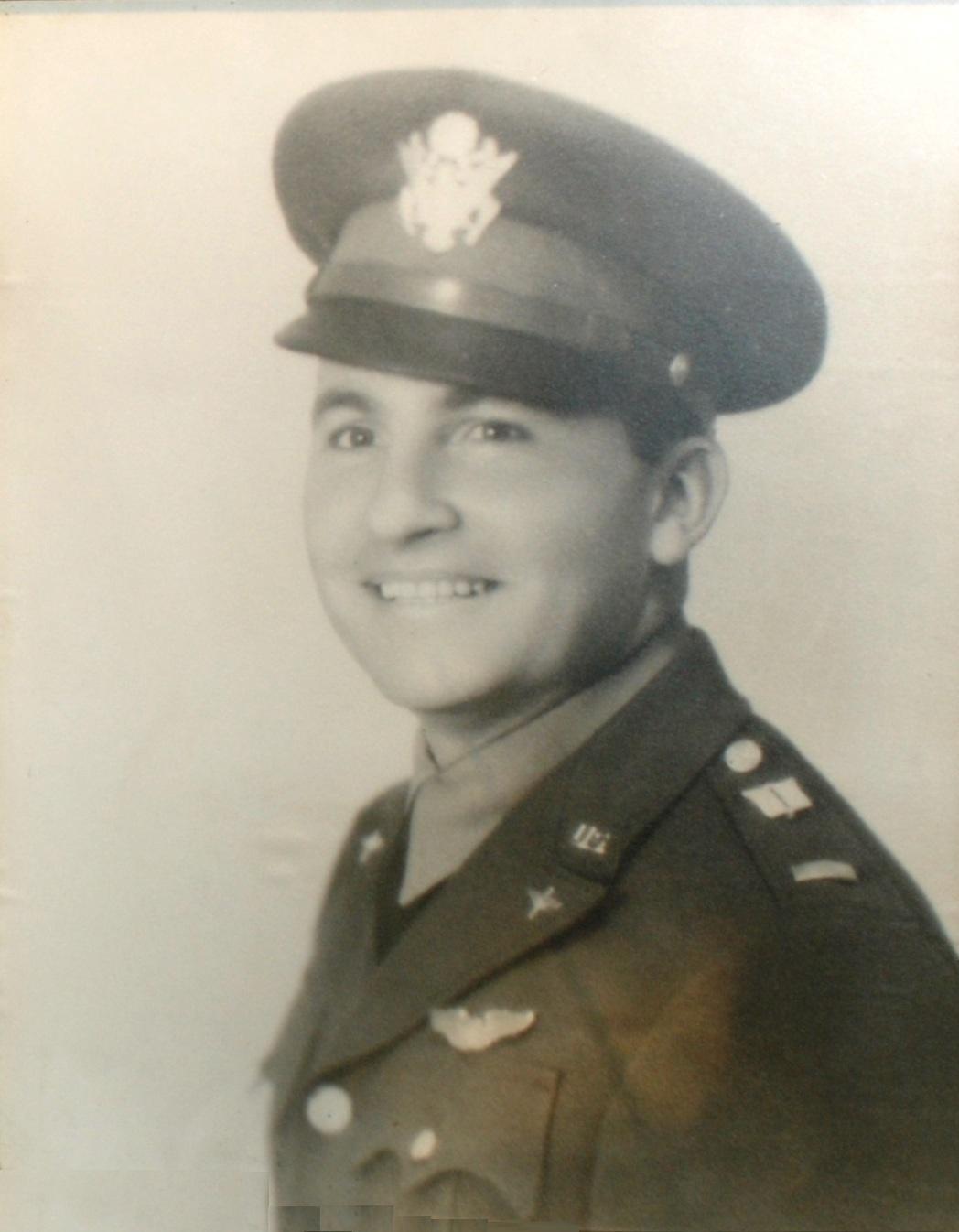
1940: Jilava Massacre

On the night of November 26-27, 1940, the Romanian Iron Guard massacred sixty-plus political prisoners of the pre-fascist regime at Jilava — the Jilava Massacre.

This incident marked the interregnum of the National Legionary State, and the friction between the fascist Legionaries under Horia Sima and Prime Minister Ion Antonescu.

An authoritarian right-wing dictatorship by any standard, but like any polity it had its own internal conflicts. Of moment for this date: the detention of people whom the Legions considered implicated in the execution of fascist martyr Corneliu Zelea Codreanu two years before, as well as miscellaneous other undesirables who had prospered under the abdicated King Carol II.

Antonescu, who had a thing about rectitude, proposed to ornament these men’s inevitable deaths with the formalities of investigation and trial. Long story short, Sima and the Legionaries didn’t trust Antonescu; when Antonescu ordered some of the prisoners transfered to a different prison, the Guard refused — and when replacement jailers were consequently slated for the Guard, the Guard took matters into its own hands by slaughtering its charges this night.

Antonescu was furious.

the handful of reprobates who have committed this crime will be punished in an exemplary manner. I will not allow that the country and the future of the nation be compromised by the action of a band of terrorists … I was reserving the punishment of those held at Jilava for the justice system of the country. But the street decreed otherwise, proceeding to implement justice itself

By the following January, the conflict between the National Legionary State factions came to a head. With the support of the Third Reich, Antonescu mastered the Iron Guard, took control of the state, and sent Sima into exile.

And he did indeed punish — up to and including execution — several of the Guard members involved in this date’s massacre.

On the other hand, as a prize for serving as wartime Prime Minister of an Axis-aligned state, Antonescu himself was shot for war crimes not far from Jilava Prison in 1946. Sima, on the other hand, had a few in absentia death sentences, but checked out comfortably in Madrid at the age of 85.

On this day..

1945: Three German war criminals

On this date in 1945, three Germans were hanged by the American army at Landsberg for killing downed U.S. pilots during the late war.

Also available here.

Ernst Waldmann, a former Wehrmacht Unteroffizer, was one of the three; he shot an American pilot at Haimbuch in December 1944.

The other two were policemen Wilhelm Haffner and Albert Bury, who killed a downed pilot at Langen Sel Bold that same month — under, they protested, the coercion of the SS.

As the New York Times report noted, they died “within sight” of the cell in that same prison where Adolf Hitler (serving easy time for the Beer Hall Putsch) wrote Mein Kampf.


This was, coincidentally, also the same date that American president Harry S Truman first transmitted to Congress a national health insurance proposal. The doctors’ lobby howled it down as rank Bolshevism … leading to the bizarre ascendancy of the Rube Goldberg-esque employer-based insurance system that had sprouted during World War II as a consequence of wartime wage controls limiting employers’ ability to bid for workers’ service.

On this day..

1943: Six POWs, inscribed on a ouija board

Here lie the remains of 3529270 Pte T Jackson Manch Reg. CQMS C Anderson FMSVF, A S H Justice USS Houston. 33271– Pte Mar- … here the letters had been eaten away. At the bottom of the board there were several more words which it was not possible to decipher but still discernible were the words

Executed 1/11/43

The WW2 People’s War is an online archive of wartime memories contributed by members of the public and gathered by the BBC. The archive can be found at bbc.co.uk/ww2peopleswar.

This date’s execution — contributed to WW2 People’s War by Chris Comer of Stockport Libraries on behalf of Arthur Lane — concerns six Commonwealth POWs who were shot for attempting to escape at Thambazayat, a prison camp in Burma.

They’re remembered by a fellow-prisoner from their time at the Thailand prison camp Chungkai, where the prisoners pulled off a memorable caper with a ouija board and some of their guards.


Chungkai War Cemetery, on the site of camp’s POW burials. (From Australian War Memorial)

These executions did not reshape history. But this story of a few men under the shadow of a senseless death has the spark of humanity that animates these pages. Read it in its entirety here: part 1 | part 2.

On this day..

1941: Twenty Red Army officers


Top to bottom: Proskurov, Rychagov, Shtern, and Smushkevich.

“Quantity has a quality all its own.”

-Stalin

The aphoristic Uncle Joe doomed Soviet officers in both quantity and quality on this date in 1941, shooting 20 Soviet officers at the very moment when Mother Russia could have used them most.

This wouldn’t seem like the ideal time for a purge, but old habits are hard to break.

As the Wehrmacht closed in on Moscow, these prisoners had been evacuated to the Volga city of Kuybyshev (today, Samara). In this, they were already treated more courteously than some.

But any semblance of consideration for these fallen brass — to say nothing of bourgeois indulgences like due process — went out the window when an order arrived from Lavrenty Beria:

“Investigation to be stopped, all to be executed by firing squad without delay.”

They were.

Those “all” included:

Many of this day’s victims were rehabilitated after Stalin fell.

Cold comfort, perhaps, but for their survivors there was bloodier satisfaction: the personal order Beria gave to execute them was in turn used against Beria when he was purged.

It’s a bit tangential, but here‘s an interesting interview with one of their contemporaries in Soviet combat aviation, who managed to survive those terrible years (despite being “taken out to be shot on three occasions” while a POW in Spain). There are some pictures of the planes these men would have used in this thread of a Spanish-language military forum.

On this day..

1943: Leonard Siffleet, beach beheading

On this date in 1943, Australian World War II commando Leonard Siffleet was beheaded on Aitape Beach in Papua New Guinea, along with two Ambonese, H. Pattiwal and M. Reharing

A photograph of the Japanese soldier Yasuno Chikao an instant before he strikes off Siffleet’s head was taken from the body of a Japanese casualty later in the war. Published in Life magazine, it became one of the war’s most iconic photos.

On this day..

1942: Three Doolittle raiders

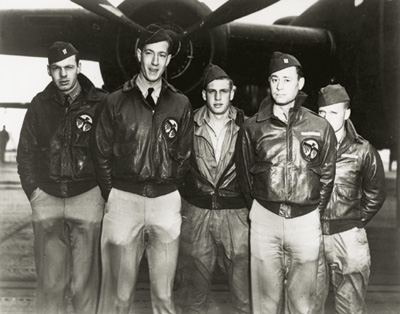
On this date in 1942, three captured American airmen who had bombed Japan in the Doolittle Raid were shot in Tokyo.

The Doolittle Raid — named for its commander, Jimmy Doolittle — was America’s April 1942 retaliation for the Japanese attack on Pearl Harbor a few months before.

The mission: bomb the Japanese homeland.

Later in the war, American advances in the Pacific would enable the Yankee to do this regularly. In 1942, it was all but a suicide mission.

The plan involved launching 16 B-25s from an aircraft carrier — an unprecedented feat in itself — to fly light with arms and heavy with fuel to just make it 400 miles to Honshu, and with any luck on to China before the tanks ran dry.

Considering that the bombers had to launch in a panic when the carrier group was spotted a couple hundred miles too early, the raid’s success was downright miraculous: all 16 bombers made it on to (or near enough) the mainland without being shot down, where the crews bailed out and, for the most part, escaped to allied forces. Jimmy Doolittle would title his autobiography I Could Never Be So Lucky Again.

But not all were quite as lucky as Lt. Col. (later, General) Doolittle.

Farrow (left) and Hallmark. Spatz was a member of Farrow’s crew, and is pictured center in that plane’s crew shot here.

Two (out of eighty) drowned when their ride was ditched in the drink. Eight others were captured by the Japanese.

Four of those eight captives would survive the war to tell the tale. A fifth died in captivity. And the other three — pilots William Farrow and Dean Edward Hallmark, and (for somewhat unclear reasons) gunner Harold Spatz — were shot this day in a Shanghai cemetery following a sketchy military trial which condemned them for hitting civilian targets.

Designed largely for its psychological effect, the morale-boosting Doolittle raid has attracted interest from countless other sources who treat it in greater depth. DoolittleRaid.com and DoolittleRaider.com both provide detailed online information about the raid.

For more traditional media, one could do worse than bomber pilot Ted Lawson’s book, and its subsequent propaganda film adaptation, Thirty Seconds Over Tokyo.

On this day..

1950: The Leningrad Affair “culprits”

Fifty-nine minutes after midnight on this date in 1950, five Soviet cadres were condemned to death in a secret trial on trumped-up charges of treason in one of Stalin’s party purges. An hour later, they were shot.

The “Leningrad Affair” saw Uncle Joe — with the urging of other henchmen jockeying for the imminent post-Stalin succession — liquidate the excessively independent leaders of Russia’s other capital.

During the late World War, the “hero city” Leningrad withstood a withering 28-month Nazi siege stretching from the very first weeks of war into 1944.

In those days there was something in a man’s face which told you that he would die within the next twenty-four hours …

I shall always remember how I’d walk every day from my house near the Tauris Garden to my work in the centre of the city, a matter of two or three kilometres. I’d walk for a-while, and then sit down for a rest. Many a time I saw a man suddenly collapse on the snow. There was nothing I could do. One just walked on. And, on the way back, I would see a vague human form covered with snow on the spot where, in the morning, I had seen a man fall down.

One didn’t worry; what was the good? People didn’t wash for weeks; there were no bath houses and no fuel. But at least people were urged to shave. And during that winter I don’t think I ever saw a person smile. It was frightful. And yet there was a kind of inner discipline that made people carry on.

-A survivor of the siege

This horror cost the lives of a million Leningraders, and tour guides will be sure to point out the physical scars still to be seen.

But the city never fell, and its resistance wrote one of the 20th century’s awe-inspiring monuments to human perseverance. Dmitri Shostakovich, caught in the city himself, composed one of the Great Patriotic War’s most famous musical anthems, defiantly performed by the Leningrad symphony itself during the actual siege, and broadcast on Soviet radio and around the world.

One result of a city’s being carved away from its country — and of consequence to this date’s victims — was that it put Leningrad on increasingly autonomous footing.

Voznesensky, who literally wrote the (incautiously heterodox) book on The Economy of the USSR during World War II

And as the war receded, the men who administered Leningrad were left with an unusual scope of action … bolstered by their recent reputation for anti-fascist heroism. The so-called “Leningraders” had become an embryonic rival power center.

The Leningrad Affair corrected that unwelcome-to-Stalin development with a wholesale purge. While the Soviet judiciary harvested the most illustrious heads on this date — economist Nikolai Voznesensky, Party bigwig Aleksei Kuznetsov — Michael Parrish observes in The lesser terror: Soviet state security, 1939-1953 that

[t]he executions of October 1, 1950, were only the tip of the iceberg … The Leningrad Affair probably claimed more than 1,300 victims, including over 100 who were shot, nearly 2,000 people who were dismissed, and many arrseted.

This day’s victims (though not all those persecuted) were officially rehabilitated during the Khrushchev era; responsibility for the Leningrad Affair even served to condemn one of its authors, NKVD torturer Viktor Abakumov, to death in the 1950s.

But compared to the corpse motel of 1930s USSR, this purge was distinctly small potatoes. One of its survivors — a man who could easily have been condemned on the same evidence that doomed the likes of Kuznetsov — was politician Alexei Kosygin, later to emerge as one of the USSR’s leading liberalizers in the 1960s and (in the words of Canadian Prime Minister Pierre Trudeau) “the forerunner of Mikhail Gorbachev.”

On this day..

1941: Babi Yar massacre begins

(Thanks to Meaghan Good of the Charley Project for the guest post. -ed.)

Between September 29 and September 30 in 1941, the Nazis, specifically Einsatzgruppe C, shot some 34,000 Jewish people at Babi Yar, a ravine outside of the Ukrainian city of Kiev.

The United States Holocaust Memorial Museum gives a suspiciously specific death count of 33,771. This is considered the single largest mass murder of World War II, and for Kiev it was just the beginning.

In the days prior to the massacre the Nazis put up posters around the city reading:

Kikes of the city of Kiev and vicinity! On Monday, September 29, you are to appear by 08:00 a.m. with your possessions, money, documents, valuables, and warm clothing at Dorogozhitskaya Street, next to the Jewish cemetery. Failure to appear is punishable by death.

The Jews believed they were being resettled. They had no knowledge of Nazi atrocities, as the Soviet press had supressed such accounts. By the thousands they arrived at the cemetery with their belongings, expecting to be loaded onto trains.

Instead they were forced to strip naked and leave their clothes, shoes and possessions at designated places, all while being beaten by the Nazis and their Ukrainian accomplices.

A Ukrainian truck driver and innocent bystander described the scene:

The naked Jews were led into a ravine which measured approximately 150 m long, 30 m wide and 15 m deep. Two or three narrow entrances led to the ravine, through which the Jews were driven. When they arrived at the edge of the ravine they were taken by Schupo officers, and laid down on top of Jews who had already been shot. All this happened very quickly. The corpses were neatly stacked. As soon as a Jew lay there, a Schupo marksman came with an mp and shot him in the neck. The arriving Jews were so shocked when they saw this horrible scene that they were absolutely submissive. It even happened that some lay themselves down and awaited the shot.

There were only two marksmen who carried out the shootings. One marksman was at one end of the ravine, the second one at the other end. I saw the marksmen standing on the already piled-up corpses while shooting one person after another. As soon as a Jew was killed by a shot, the marksman climbed over the corpses of the killed to the next supine Jew, and shot them. This went on again and again, without any distinction being made between men, women, and children. The children were led to the ravine with their mothers, and killed with them.

Babi Yar survivor Dina Pronicheva

Much of what is known about the massacre comes from Dina Pronicheva, a survivor who later testified at the war crimes trials in 1946 and whose story is told in the most graphic terms in Anatoly Kuznetzov‘s memoir/documentary history Babi Yar: a Document in the Form of a Novel.

Contrary to popular belief, Pronicheva was not the only survivor — there were at least three or four others — but she is the most famous one and the only one to testify at the war crimes trials.

Pronicheva, an actress at the Kiev Puppet Theater, tore up her identity card when she realized what was happening. Her last name and her appearance were not typically Jewish, and she told one of the Nazis that she was a Ukrainian who had been seeing someone off and gotten caught up in the crowd.

She was told to stand aside with a group of other people in the same situation. The Nazis decided to shoot them anyway, however, as they could not allow witnesses to come back to the city and tell what they knew.

When it was her turn, Pronicheva jumped into the ravine without waiting to be shot, and played dead among the mass of bodies. As Kuznetzov put it:

It seemed to her she fell for ages — it probably was a very deep drop. When she struck the bottom she felt neither the blow nor any pain, but she was immediately spattered with warm blood, and blood was streaming down her face, just as if she had fallen into a bath of blood. She lay still, her arms stretched out, her eyes closed.

All around and beneath her she could hear strange submerged sounds, groaning, choking and sobbing: many of the people were not dead yet. The whole mass of bodies kept moving slightly as they settled down and were pressed tighter by the movements of the living.

The Germans went around the ravine firing their revolvers into anyone who appeared to be still alive. One SS man got suspicious of Pronicheva’s appearance. He kicked her hard in the chest and then stomped on her hand until the bones cracked, but she managed to remain limp and silent and he went away without shooting her. Eventually she was able to crawl out of the ravine and make good her escape.

Babi Yar continued to absorb bodies throughout the Nazi occupation of Kiev: Jews, Gypsies, Ukrainians, political activists and basically anyone who pissed the Nazis off. The total number of victims will never be known because before they were driven from the area by the Russians, the Nazis dug up the ravine and burned the corpses.


Mass execution of Soviet civilians at Babi Yar. (Source)

A guesstimate would be between 70,000 and 120,000, but some accounts run as high as 300,000. Some traces were left, as Kuznetzov remembers:

The river bed was of good, coarse sand, but now for some reason or other the sand was mixed with little white stones. I bent down and picked one of them up to look at it more closely. It was a small piece of bone … in one place we saw that the sand had turned to gray. Suddenly we realized we were walking on human ashes …

Nearby there had been a fall of sand, following the rains, which had exposed an angular projection of granite and a seam of coal about a foot thick. There were goats grazing on the hillside with three little boys, each about eight years old, looking after them. They were hacking away diligently at the coal with little picks and breaking it up on a granite block.

The coal was brown and crumbly, as though it was a mixture of ashes from a railway engine and carpenter’s glue.

“What are you doing?” I asked.

“See here!” And one of them pulled from his pocket a handful of something that glittered where it was not covered in dirt, and spread it out in his hand.

It was a collection of half-melted gold rings, earrings and teeth. They were digging for gold.

Babi Yar was filled in after the war and the site is now part of a residential neighborhood in Kiev. There were many international protests in 2009 after the city’s mayor announced plans for a hotel on the site, but he changed his mind.

On this day..

1947: Nikola Petkov, “a dog’s death”

At midnight as the calendar turned over to this date in 1947, anti-communist Bulgarian politician Nikola Petkov was hanged in Sofia’s central prison.

Petkov was a principal in a still-extant peasant party that briefly held state power in Bulgaria in the early 1920s.

His anti-fascist activities did him no favors as Bulgaria’s aligned with the Axis, and he spent the war touring his country’s internment camps.

The anti-fascist Fatherland Front that Petkov co-founded — allying with the Communist party in what would prove to be a Faustian bargain — had become the government by the end of the war, with Petkov in a ministerial role.

Unfortunately for Petkov, greater ministers of greater states were even then carving up spheres of influence in the postwar world. In the process, the Bulgarian statesman would get carved right out.

Here’s the blog of this critically acclaimed novel’s author.

With Bulgaria slated for the Soviet bloc and all its scary political purges, the Fatherland Front was soon controlled by the Communists. Petkov mounted brave but futile opposition as a Member of Parliament — until he was arrested in the parliament building itself, an apt image for Bulgaria’s entrance onto the Cold War chessboard as a red pawn.

The show trial and resultant death sentence “for having tried to overthrow the legal authority and restore Fascism in the country by conspiring with military organisations” briefly exercised western diplomats filing appeals and high-minded talk about justice during the summer of 1947.

Which stuff earned the derision of Bulgarian Premier Georgi Dimitrov, so Soviet-aligned that he was a Soviet citizen.

In this menacing speech to the Social Democrats the next January, his Don’t-Mess-With-TexasBulgaria umbrage at outside actors for having the temerity to object stands in ironic contrast to Dimitrov’s own history as a prewar international cause celebreback when he was unjustly accused in Nazi Germany for the Reichstag Fire.

So sauce for the goose-stepper is sauce for the dialectical materialist?

Negatory.

As you remember from this rostrum I many times warned your political allies from Nikola Petkov’s group. They did not listen to me. They took no notice of all my warnings. They broke their heads, and their leader is now under the ground. You should now think it over, lest you share their fate … When the trial against Nikola Petkov began you said “The court will not dare to sentence him to death. It would be too horrible. Both Washington and London will rise against it in order to stop it.” I said then: “Nobody can stop it. Those who may try to intervene from abroad will only worsen the position of the accused and his friends.’ What happened? What I said would happen. The court fulfilled its role, fulfilled the will of the people and sentenced the traitor to death.

Then you said: “If they execute the death sentence, the glass of patience will overflow. The whole world will rise against it, and all its wrath will fall on the back of the Bulgarian people.”

Of course, if there had been no interference from abroad, if they had not tried to dictate to the sovereign court, the head of Petkov could have been saved Yes, it could have been saved. His death sentence could have been commuted to another sentence. But when they tried to blackmail the Bulgarian people and question the authority of a sovereign court, it became necessary for the death sentence to be executed. And it was executed.

What happened then? Who rose against it in the country? Where were the demonstrations, the mutinies with which we were threatened? Nothing like that happened.

And what happened abroad? Not even decent diplomatic notes were delivered, which could have been expected. No one raised a hand in defense of Petkov. Some people in the West shouted for a while, but soon quietened (sic) down … The whole incident was soon forgotten.

The Balkans In Our Time

Hard to say Dimitrov was wrong about that: just one week after Petkov’s execution, the United States officially recognized a Bulgarian state dedicated (so the U.S. State Department had only just declared) “to remov[ing] all save a purely nominal opposition and to consolidat[ing], despite its professions to the contrary, a totalitarian form of government.”

“To a dog, a dog’s death,” sneered the official trade union council about Petkov — a taunt liberally repeated by Radio Sofia.

The “dog” was posthumously rehabilitated in 1990, and now has the requisite post-Soviet public monuments.

On this day..

1944: Six Jesuits in Palau

On this date in 1944, six Spanish Jesuit missionaries were executed in Palau by the island’s increasingly desperate Japanese defenders.

Fr. Elias Fernandez Gonzalez, Fr. Marino de la Hoz, and Br. Emilio del Villar were on hand to spread Catholicism in the island, which fell into Japan’s lap at the end of World War I and was therefore incorporated into the Asian hegemon’s economic plans.
Taking no chances with these foreign proselytizers, Japan had them confined when the Pacific War broke out in 1941.

By 1944, with the writing clearly visible on the wall, they were joined by three other Jesuits captured from nearby Yap, now a part of the Federated States of Micronesia, Fr. Luis Blanco Suarez, Fr. Bernardo de Espriella, and Br. Francisco Hernandez.

After a few months’ confinement, all six were summarily executed. Their remains have never been recovered; they were allegedly exhumed and burned shortly before Allied occupation, a bit of evidence-destruction similar to Wake Island.

There was a Japanese officer arrested for these executions and other war crimes, but he committed suicide before he could face judgment.

On this day..