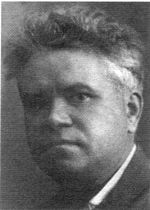
1949: Traycho Kostov, Bulgarian purgee

On this date in 1949, leading Bulgarian communist Traycho (Traitcho, Traicho) Kostov was hanged in Sofia.

A journalist and agitator from way back, Kostov was a casualty of the postwar political chasm between east and west.

He’d been the number three man in Bulgaria’s communist hierarchy at the time of his fall in January of 1949, but had also been considered close to Yugoslavia’s independent socialist leader Josip Broz Tito. Like Tito, Kostov was a little too into his own country’s national economic sovereignty as against the purported greater good of a Soviet-dominated eastern bloc.

Stalin had overtly split with Tito in 1948. Over the next few years, Soviet satellites in eastern Europe would systematically eliminate perceived Titoist elements — and submit to economic integration on Moscow’s terms.

So a propagandist could write, comparing Kostov to the Hungarian minister who had swung for Titoism just weeks before, that

[i]f Laszlo Rajk could be regarded as the right arm of Tito’s plans for Eastern Europe, Traicho Kostov, member of the Bulgarian Politburo and Deputy Premier, was certainly his left arm. I sat in a crowded court in Sofia in December, 1949, heard and watched Traicho Kostov and ten other accused and dozens of witnesses testify to a Yugoslav plan for Bulgaria every whit as diabolical and bloodthirsty as that for Hungary. In reality there was only one overall strategic plan with “Operation Rajk” and “Operation Kostov” as tactical moves.

Specifically, “Operation Kostov” entailed spying for western (plus Yugoslavian) powers and plotting to overthrow the People’s Republic.

Although his enemies had browbeaten Kostov into political self-denunciation at party summits, the man stoutly repudiated guilt at trial — which was not necessarily the norm in the show trial genre.

Kostov’s ten fellow defendants received prison terms rather than the rope, and some of them were alive to enjoy the official rehabilitation that followed Stalin’s death.

On this day..

1937: Eero Haapalainen, former Finnish Red Guard commander

On this date in 1937, Finnish communist Eero Haapalainen was shot in Moscow.

Haapalainen (English Wikipedia entry | Finnish) was a prominent socialist, trade unionist, and journalist when World War I tipped Finland into civil war.

Despite a lack of military experience, Haapalainen had momentary command of the Red Guards in that brief but bloody struggle. The Reds lost, necessitating Haapalainen’s escape by motorboat to St. Petersburg in May 1918.

There he settled in for a couple of decades’ middle-management service to the revolution: writing, teaching, paper-pushing.

The almost inevitable end came with stunning speed in the autumn of 1937. Arrested exactly one month before his execution, Haapalainen denied the charges of counterrevolutionary activity under NKVD torture.

Denial, confession … it all amounted to the same thing. Eleven other Finns (Finnish link) got it with Haapalainen at the very same time: Saimi Virtanen, Väinö Turunen, Urho Pitkälahti, Armas Raasu, Anselm Mäkelin, Mikko Lehmus, Toivo Rantanen, Aino Forsten, Väinö Savander, Rauno Koivistoinen, Eskil Kyllänen, Anton Uotinen.

The next year, Eero Haapalainen’s son Toivo, an engineer, was also purged. Father and son were both rehabilitated in the Krushchev era.

Part of the Daily Double: Stalinism East and West.

On this day..

1937: Peljidiin Genden, former Mongolia Prime Minister

On earth there are two great geniuses – Buddha and Lenin.

-Peljidiin Genden

On this date in 1937, purged former Mongolia Prime Minister Peljidiin Genden was shot in Moscow.

Genden was in the thick of communist authority in Mongolia, including a forced collectivization that provoked resistance sufficient for Moscow to demand the Mongolians lay off the “leftist deviation.” Eyeballing a likely future conflict with Japan, Russia wanted Mongolia as a buffer zone and couldn’t afford gratuitously upsetting the apple cart.

Genden, himself a former leftist deviant, managed an adroit volte-face and got himself named Prime Minister in 1932.

Stalin’s minions would closely meddle in the business of the Mongolian People’s Republic over the 1930s as it rolled out its own eastern policy. Despite the Comintern’s recent turn towards ideological moderation in those precincts, it soon became concerned that Genden was lax in going after the Buddhist element; in fact, he’d openly declared religious toleration in 1932. But this particular enemy Russia could not abide. “The lama regime,” Stalin tut-tutted, “is stronger than the people’s regime.”

Genden had the ill-chosen moxie to push back against Stalin. On one state visit to Moscow, he got liquored up and bellowed,

“You bloody Georgian, you have become a virtual Russian Czar!”

Other plans for Mongolian leadership were soon put in place, the way cleared via the expedient of framing Genden as the mastermind of a fanciful pro-Japanese plot.

This [Genden] “case” led to the deaths of 639 falsely accused people, including 63 percent of the members of the [Mongolian People’s Revolutionary Party] Central Committee and 80 percent of its presidium members … There is evidence that the arrest of many Mongolian leaders on false charges and their “rendition” to the USSR for execution was organized from Moscow by NKVD chief Nikolai Yezhov.

It was estimated that, from 1934 to 1939, about 171 Mongols were arrested in Mongolia but tried and sentenced in Russia. The charges were usually “counterrevolution” or “espionage for Japan.” It is known that 33 were shot near Moscow, 108 received long terms of imprisonment, 13 were released, and four died “under investigation.”

And that’s just on the political side. With Genden out of the way, anti-Buddhist purges really took off in the late 1930s, to the tune of 18,000 lamas killed.

Part of the Daily Double: Stalinism East and West.

On this day..

1936: Grigory Zinoviev and Lev Kamenev, Old Bolsheviks

During the purges of the 1930s, Josef Stalin showed a particular relish for eliminating the Old Bolsheviks whose red credentials predated the revolution. (And potentially, outshone his own.)

Zinoviev

On this date in 1936, one of the oldest of them, Grigory Zinoviev, was shot with his longtime ally Lev Kamenev.

These guys had been major movers and shakers among the early Bolsheviki, adherents of Lenin during the first decade of the century when the aspiration for a Communist Russia seemed hopelessly far-fetched. Zinoviev rode with Lenin from Switzerland to Petrograd in the famous sealed train after the February Revolution toppled the tsar. (Not so Kamenev: he was serving time in Siberia, but was freed by the revolution.)

In the years that followed, both played leading roles in the Soviet government despite their impolitic opposition to the Bolshevik coup in October.

Kamenev was briefly head of state in 1917, and he married Leon Trotsky’s sister. Zinoviev was the longtime head of the Communist International, in which capacity he showed Moscow’s public face for communist movements in other countries. Bela Kun was another ally of Zinoviev’s.)

In this capacity, he’s known in British history for the “Zinoviev letter”, a purported summons to Anglo agitation that was actually a dirty trick dropped before an election to help the Tories sweep to power.*

Those were the good old days — when Lenin was fading away and Zinoviev, Kamenev, and Stalin were the “troika” running things. They should have checked with the Romans how triumvirates work out.

Because of their alliance, Zinoviev and Kamenev provided the decisive support that enabled Stalin to remain General Secretary of the party after the public airing of Lenin’s Testament warning against him. Without Zinoviev and Kamenev at this crucial moment, Stalin probably could not have survived politically; the name Koba might have gone into history books as little more than a terror to the paperwork of some forgotten bureau. (And the pre-revolutionary Caucasus!)

Talk about hoisted by your own petard.

Having been helpfully maintained in his position against Lenin’s dying wish, Stalin soon marginalized these formerly useful creatures. Their last decade was doomed to a spiral of failing power struggles, sinking rank, furtive dissension, and craven submission to party discipline.

Stalin at length destroyed them at the first great Moscow show trial, the Trial of the Sixteen — which hyped a “Trotskyite-Zinovievite” plot in a nicely Orwellian twist. (Despite Kamenev’s marital connection, Trotsky was actually a political rival.) The charge sheet must have reminded the defendants on every one of their dwindling days of the alliance with Trotsky they could have made back when they mattered.

The Trial of the 16 defendants would help to write the script for succeeding acts of this awful theater: after fighting the allegations, Zinoviev and Kamenev agreed to plead guilty on private assurances that their lives would be spared.

But once he had their “admissions” on the record, Stalin altered the deal.

Not only Zinoviev and Kamenev, but all 16 from the trial of the 16 were shot shortly after midnight this date.

From exile, their “conspirator” Trotsky called it the “end of an epoch”.

His obituary for Zinoviev and Kamenev minces no words about the men’s personal shortcomings (“they lacked sufficient character”), but still achieves a certain elegaic sympathy for these former fellow-travelers and their shared movement, now swallowed by Stalinism.

I have had the occasion to hear tranquil petty bourgeois tell me in the days between the beginnings of the trial and my internment: “It’s impossible to understand Zinoviev … He is so lacking in character!” And I would reply: “Have you yourselves experienced the full weight of the pressure to which he has been subjected for a number of years?” Unintelligent in the extreme are the comparisons, so widespread in intellectual circles, of the conduct in court of Danton, Robespierre and others. These were the instances of revolutionary tribunes who found the knife of justice suspended over them, directly in the midst of the arena of struggle; at a time when they were in the full flower of their strength, with their nervous system almost untouched and, at the same time, when they despaired of all hope of salvation.

[By contrast] For ten years they [Zinoviev and Kamenev] had been enveloped by clouds of slander paid for in heavy gold. For ten years they had swayed between life and death, first in a political sense, then in a moral sense, and lastly in a physical sense. Can one find in all past history examples of such systematic, refined and fiendish destruction of spines, nerves and all the fibers of the soul? Zinoviev or Kamenev would have had more than ample character for a tranquil period. But the epoch of grandiose social and political convulsions demanded an extraordinary firmness of these men, whose abilities secured them a leading place in the revolution. The disproportion between their abilities and their wills led to tragic results.

* There are numerous theories of the Zinoviev Letter’s origin; one has it that spy Sidney Reilly had a hand in it.

On this day..

1937: Jan Sten, Stalin’s tutor

Anyone who has ever had an unedifying experience of pedagogy ought to be able to sympathize with Jan Sten, the Marxist philosopher once hired to tune up Joseph Stalin’s intellectual credentials and who on this date in 1937 was purged by his former pupil.

This account of Sten’s unfortunate (though hardly atypical) fate comes from the archive of Sten’s personal friend, one Yevgeny Frolov and is printed in Let History Judge: The Origins and Consequences of Stalinism.

Hardly anyone knew Stalin better than Sten. Stalin, as we know, received no systematic education. Without success Stalin struggled to understand philosophical questions. And then, in 1925, he called in Jan Sten, one of the leading Marxist philosophers of that time, to direct his study of Hegelian dialectics. Sten drew up a program of study for Stalin and conscientiously, twice a week, dinned Hegelian wisdom into his illustrious pupil. (In those years dialectics was studied by a system that Pokrovsky had worked out at the Institute of Red Professors, a parallel study of Marx’s Capital and Hegel’s Phenomenology of Mind.) Often Sten told me in confidence about these lessons, about the difficulties he as the teacher, was having because of his student’s inability to master Hegelian dialectics. Jan often dropped in to see me after a lesson with Stalin, in a depressed and gloomy state, and despite his naturally cheerful disposition, he found it difficult to regain his equilibrium. Sten was not only a leading philosopher but also a political activist, an outstanding member of the Leninist cohort of old Bolsheviks. The meetings with Stalin, the conversations with him on philosophical matters, during which Jan would always bring up contemporary political problems, opened his eyes more and more to Stalin’s true nature, his striving for one-man rule, his craft schemes and methods for putting them into effect … As early as 1928, in a small circle of his personal friends, Sten said: “Koba will do things that will put the trials of Dreyfus and of Beilis in the shade.”This was his answer to his comrades’ request for a prognosis of Stalin’s leadership over ten years’ time. Thus, Sten was not wrong either in his characterization of Stalin’s rule or in the time schedule for the realization of his bloody schemes.


Komar and Melamid‘s ironic 1981-1982 Stalin and the Muses travesties sycophantic Socialist Realism exaltations of Uncle Joe, like these. (More by K&M)

Sten’s lessons with Stalin ended in 1928. Several years later he was expelled from the party for a year and exiled to Akmolinsk. In 1937 he was seized on the direct order of Stalin, who declared him one of the chiefs of the Menshevizing idealists.* At the time the printer had just finished a volume of the Great Soviet Encyclopedia that contained a major article by Sten, “Dialectical Materialism.” The ordinary solution — and such problems were ordinary in those years — was to destroy the entire printing. But in this case the editors of the encyclopedia found a cheaper solution. Only one page of the whole printing was changed, the one with the signature of Jan Sten. “Dialectical Materialism” appeared over the name of M.B. Mitin, the future academician and editor in chief of Problems of Philosophy, thus adding to his list the one publication that is really interesting. On June 19, 1937, Sten was put to death in Lefortovo prison.

Seen in that light, a hostile review on RateMyProfessors.com doesn’t sound so bad at all.

* Menshevizing idealism — here’s an official Soviet definition from the 1970’s — was among Stalin-era “polemical by-words for philosophical heresy.” (Robert Tucker, “The Rise of Stalin’s Personality Cult,” The American Historical Review, Apr. 1979)

On this day..

1949: Koci Xoxe, Titoist

On this date in 1949, Albania’s former defense minister was purged.

One of the first purge victims in the Soviet satellites — though scarcely the last — Xoxe was induced to admit having labored “against the Party and the people.”

The ethnic Macedonian’s real offense had been a pro-Yugoslav orientation.

That put Xoxe on the wrong side of the emerging rift in the Communist bloc, between Soviet dictator Joseph Stalin and independent-minded Yugoslav strongman Josip Tito.

After Tito broke with Stalin in 1948, Moscow froze the naughty Yugoslavs out of the international communist club and began suppressing “Titoist” elements whose national political or economic orientation augured potential annoyance for Soviet supremacy.

Albanian chief Enver Hoxha in later years would become somewhat notorious as the last unabashed Stalinist leader in Europe. (Hoxha took an “anti-revisionist” stance on Khrushchev’s later denunciation of Stalin.) So you can see the bind Koci Xoxe was about to be in.

Hoxha’s own pro-Soviet orientation was akin in its way to Tito’s anti-Soviet orientation: for Tito, Moscow meant domination, but for Hoxha, Yugoslavia was the resented aspiring regional hegemon. Albanian economic ministers complained that trade links disproportionately benefited Belgrade, and Yugoslavia once high-handedly marched troops into Albania to contain a conflict in neighboring Greece.

At any rate, Hoxha went energetically along with Uncle Joe on the Tito question … whose answer, on this date, was a bullet for Hoxha’s former Defense Minister.

On this day..

1938: Yakov Peters, Siege of Sidney Street survivor

On this date in 1938, a Soviet purge claimed (among others*) Yakov (Jacob) Peters, former Cheka executioner and once the subject of a headline-grabbing trial in England.

Peters was a trusted (and ruthless) operator in the Soviet internal police from the start of the Revolution: he helped interrogate Lenin‘s would-be assassin Fanya Kaplan in 1918.

And he was the guy Trotsky had on speed-dial when Cheka founder Felix Dzerzhinsky was arrested by the Left SRs during their abortive 1918 uprising against their erstwhile revolutionary allies, the Bolsheviks.**

Dzerzhinsky was disarmed and locked in a room. his assistant, M.I. Latsis, was captured in the Cheka Lubianka headquarters. “No point in taking him anywhere, put this scum against the wall!” shouted a sailor, but one of the leaders, Alexandrovich, intervened, saying, “There is no need to kill, comrades; arrest him, but do not kill.” Dzerzhinsky’s assistant Yakov Peters was urgently summoned by Trotsky, who ordered him to crush the uprising by attacking the Left Eser headquarters. Alexandrovich was caught at a railway station, and Latsis, whom he had saved from execution, personally shot him. Mass executions in Cheka prisons followed. (Source)

Like a lot of old Bolsheviks, Peters’s early service to the cause didn’t age too well. He ran afoul of some bureaucratic intrigue or point of party discipline or other and caught a bullet in 1938. (Khrushchev rehabilitated him.)

For anyone in England watching the fate of this distant apparatchik, the proximity to bloodbaths would have had a familiar hue.

Peters was one of a gang of Latvian revolutionaries who came to cinematic public attention in London when, in the course of being rounded up for a December 1910 murder, they engaged the police in a stupendous East End firefight on January 2, 1911 — the Siege of Sidney Street. (It’s also known as the Battle of Stepney.)

Armed like soldiery, the Latvians easily outgunned the bobbies who had them hemmed into a cul-de-sac, and they fired on John Law with ruthless effect. This necessitated a call to the Scots Guard — whose deployment was okayed by Home Secretary Winston Churchill, the latter captured on film that day awkwardly milling about the scene of the urban combat.


(Translated directly to the city’s cinemas as soon as that same evening, Churchill’s image came in for public catcalls owing to his support for a relatively open immigration policy for eastern Europeans.)

This incident was a landmark in crime, policing, media — recognizably modern in its trappings of nefarious immigrant terrorists, politicized state funerals for policemen, and of course, the live-on-the-scenes camera work.

Since Britain was a ready hand with the noose at this time, one might think an execution would have been just the denouement.

However, responsibility for the policememen slain in the affray had been officially assigned to a different gang member, George Gardstein — who was killed when the besieged house burned down — and there was little usable evidence against those who were finally put on trial for the gang’s various crimes. Most of the witnesses were dead, fled, or completely unreliable, so the surviving Latvians all walked.

(Since the identity of one of the first guys to start shooting when the police rang always remained murky, there are some theories — such as in this out-of-print book — that Peters himself had been one of the gunmen on-site, and/or that he could be identified with the absconded and never-captured gang leader “Peter the Painter”.)

Whatever the exact measure of blood on Yakov Peters’s hands from Sidney Street, there would be a lot more where it came from.

While Peters went off to his different fate in revolutionary Russia, the dramatic scene he left behind has naturally attracted continuing retrospective attention in England. The testimony of witnesses, who also recollect the shootout’s anti-immigrant fallout, is preserved in this BBC Witness radio program:

[audio:http://downloads.bbc.co.uk/podcasts/worldservice/witness/witness_20110127-0950a.mp3]

And, on this BBC Four television special:

* e.g., Russian Civil War officer Nikolay Gikalo and Romanian Jewish revolutionary Leon Lichtblau.

** And in favor of resuming Russia’s ruinous involvement in World War I!

On this day..

1940: Robert Indrikovich Eikhe, “believing in the truth of Party policy as I have believed in it during my whole life”

On this date in 1940, the former Soviet People’s Commissar for Agriculture was shot for treason.

The 1930’s were a scary time in the USSR, but the agricultural posts — forced collectivizations, production quotas, and screw-ups that starved thousands — were particularly fraught.

R.I. Eikhe inherited the job from a fellow purged in the trial of the 21. And, unsurprisingly, he went the same way.

It was another former agricultural commissar (of Ukraine), Nikita Khrushchev, who managed to succeed Stalin.

When, in 1956, Khrushchev made his “secret speech” denouncing the savagery of his predecessor, the fate of his old comrade Eikhe was lamented in detail.

Excerpted below is the relevant portion of Khrushchev’s report, as cited here.


The great modesty of the genius of the revolution, Vladimir Ilyich Lenin, is known. Lenin had always stressed the role of the people as the creator of history, the directing and organizational role of the party as a living and creative organism, and also the role of the central committee.

Lenin never imposed by force his views upon his coworkers. He tried to convince; he patiently explained his opinions to others. Lenin always diligently observed that the norms of party life were realized, that the party statute was enforced, that the party congresses and the plenary sessions of the central committee took place at the proper intervals.

In addition to the great accomplishments of V. I. Lenin for the victory of the working class and of the working peasants, for the victory of our party and for the application of the ideas of scientific communism to life, his acute mind expressed itself also in this that lie detected in Stalin in time those negative characteristics which resulted later in grave consequences. Fearing the future fate of the party and of the Soviet nation, V.I. Lenin made a completely correct characterization of Stalin, pointing out that it was necessary to consider the question of transferring Stalin from the position of Secretary General because of the fact that Stalin is excessively rude, that he does not have a proper attitude toward his comrades, that lie is capricious, and abuses his power. . . .

Vladimir Ilyich said:

“Stalin is excessively rude, and this defect, which can be freely tolerated in our midst and in contacts among us Communists, becomes a defect which cannot be tolerated in one holding the position of the Secretary General. Because of this, I propose that the comrades consider the method by which Stalin would be removed from this position and by which another man would be selected for it, a man, who above all , would differ from Stalin in only one quality, namely, greater tolerance, greater loyalty, greater kindness, and more considerate attitude toward the comrades, a less capricious temper, etc.”

As later events have proven, Lenin’s anxiety was justified …

Stalin originated the concept enemy of the people. This term automatically rendered it unnecessary that the ideological errors of a man or men engaged in a controversy be proven; this term made possible the usage of the most cruel repression, violating all norms of revolutionary legality, against anyone who in any way disagreed with Stalin, against those who were only suspected of hostile intent, against those who had bad reputations. This concept, enemy of the people, actually eliminated the possibility of any kind of ideological fight or the making of one’s views known on this or that issue, even those of a practical character. In the main, and in actuality, the only proof of guilt used, against all norms of current legal science, was the confession of the accused himself, and, as subsequent probing proved, confessions were acquired through physical pressures against the accused. . . .

Lenin used severe methods only in the most necessary cases, when the exploiting classes were still in existence and were vigorously opposing the revolution, when the struggle for survival was decidedly assuming the sharpest forms, even including a civil war.

Stalin, on the other hand, used extreme methods and mass repressions at a time when the revolution was already victorious, when the Soviet state was strengthened, when the exploiting classes were already liquidated, and Socialist relations were rooted solidly in all phases of national economy, when our party was politically consolidated and had strengthened itself both numerically and ideologically. It is clear that here Stalin showed in a whole series of cases his intolerance, his brutality, and his abuse of power.

Stalin’s willfulness vis-a-vis the party and its central committee became fully evident after the 17th party congress, which took place in 1934. . . .

It was determined that of the 139 members and candidates of the party’s Central Committee who were elected at the 17th congress, 98 persons, that is, 70 percent, were arrested and shot (mostly in 1937-38). [Indignation in the hall.] . . .

The majority of the Central Committee members and candidates elected at the 17th congress and arrested in 1937-38 were expelled from the party illegally through the brutal abuse of the party statute, because the question of their expulsion was never studied at the Central Committee plenum.

Now when the cases of some of these so-called spies and saboteurs were examined it was found that all their cases were fabricated. Confessions of guilt of many- arrested and charged with enemy activity were gained with the help of cruel and inhuman tortures. . . .

An example of vile provocation of odious falsification and of criminal violation of revolutionary legality is the case of the former candidate for the central committee political bureau, one of the most eminent workers of the party and of the Soviet Government, Comrade Eikhe, who was a party member since 1905. [Commotion in the hall.]

Comrade Eikhe was arrested on April 29, 1938, on the basis of slanderous materials, without the sanction of the prosecutor of the USSR, which was finally received 15 months after the arrest.

Investigation of Eikhe’s case was made in a manner which most brutally violated Soviet legality and was accompanied by willfulness and falsification.

Eikhe was forced under torture to sign ahead of time a protocol of his confession prepared by the investigative judges, in which he and several other eminent party workers were accused of anti-Soviet activity.

On October 1, 1939, Eikhe sent his declaration to Stalin in which be categorically denied his guilt and asked for an examination of his case. In the declaration he wrote:

“There is no more bitter misery than to sit In the jail of a government for which I have always fought.”

On February 2, 1940, Eikhe was brought before the court. Here he did not confess any guilt and said as follows:

“In all the so-called confessions of mine there is not one letter written by me with the exception of my signatures under the protocols which were forced from me. I have made my confession under pressure from the investigative judge who from the time of my arrest tormented me. After that I began to write all this nonsense. The most important thing for me is to tell the court, the party and Stalin that I am not guilty. I have never been guilty of any conspiracy. I will die believing in the truth of party policy as I have believed in it during my whole life.”

On February 4 Eikhe was shot. [Indignation in the hall.] It has been definitely established now that Eikhe’s case was fabricated; he has been posthumously rehabilitated.

On this day..

1977: Atnafu Abate, Mengistu’s last rival

On this date in 1977,* Ethiopian dictator Mengistu Haile Mariam eliminated one of his last political rivals with the execution of Atnafu Abate.

The men’s relationship had long been complex and unclear; Abate backed the Derg’s “Black Saturday” mass executions in 1974, and sometimes lined up as Mengistu’s ally over the succeeding years as part of the Derg military junta.

At the same time, there were rumors that things between Mengistu and Atnafu were so tense that they pulled guns at meetings.

Atnafu’s absence (by accident or design) during an early 1977 purge within the Derg left the conservative and Orthodox Atnafu officially second-in-command, and unofficially the last real or potential rival to Mengistu.

His elimination was widely expected, though exactly why it went down, when it went down has never been transparent. Mengistu’s grip on the country was already secure enough to have launched the Red Terror.

The New York Times‘ Nov. 15 report of this development captures a bit of the Alice-in-Wonderland political logic evidently at work.

The Ethiopian press agency, which made the announcement, also released what amounted to a six-page indictment listing “twelve specific antirevolutionary crimes,” and “five specific arch-reactionary stands” attributed to Colonel Atnafu, who had served as vice chairman of the provisional military administrative council.

The statement charged Colonel Atnafu with opposing “proclamations intensifying the revolution,” manifesting “a feudal arrogance while on visits to various provinces,” and consorting after working hours with what the statement called riff-raff of the aristocracy and military bourgeois, as well as “extremely dangerous imperialist agents — especially CIA agents.”

The statement also charged that “he had repeatedly confessed at meetings that he did not believe in the ideology of the working class.”

But perhaps the section of the statement that most accurately reflects the bewildering tone of political rhetoric and chaos in Addis Ababa, was one that charged that the proof of Colonel Atnafu’s “reactionary stands” was his placing of Ethiopian national interests before ideological considerations.

“At this time,” said the document, “when workers, farmers, the men in uniform and all the toiling masses are intensifying the revolutionary struggle guided by the principles of Marxism-Leninism, Lieut. Col. Atnafu has been antagonistic to the idea and has instead by way of dilatory tactic, argued that the interest of Ethiopia should be put before ideology.”

* As reported by the London Times gloss (articles Nov. 14 and Nov. 15) of a state radio report given in Ethiopia on Nov. 13. “A revolutionary measure” was the official euphemism for the action taken against Atnafu Abate.

On this day..

1941: Twenty Red Army officers


Top to bottom: Proskurov, Rychagov, Shtern, and Smushkevich.

“Quantity has a quality all its own.”

-Stalin

The aphoristic Uncle Joe doomed Soviet officers in both quantity and quality on this date in 1941, shooting 20 Soviet officers at the very moment when Mother Russia could have used them most.

This wouldn’t seem like the ideal time for a purge, but old habits are hard to break.

As the Wehrmacht closed in on Moscow, these prisoners had been evacuated to the Volga city of Kuybyshev (today, Samara). In this, they were already treated more courteously than some.

But any semblance of consideration for these fallen brass — to say nothing of bourgeois indulgences like due process — went out the window when an order arrived from Lavrenty Beria:

“Investigation to be stopped, all to be executed by firing squad without delay.”

They were.

Those “all” included:

Many of this day’s victims were rehabilitated after Stalin fell.

Cold comfort, perhaps, but for their survivors there was bloodier satisfaction: the personal order Beria gave to execute them was in turn used against Beria when he was purged.

It’s a bit tangential, but here‘s an interesting interview with one of their contemporaries in Soviet combat aviation, who managed to survive those terrible years (despite being “taken out to be shot on three occasions” while a POW in Spain). There are some pictures of the planes these men would have used in this thread of a Spanish-language military forum.

On this day..