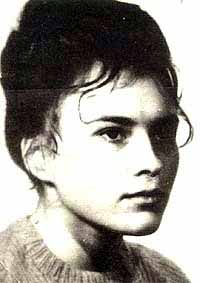
1875: Tiburcio Vasquez, California bandido

A spirit of hatred and revenge took possession of me. I had numerous fights in defense of what I believed to be my rights and those of my countrymen. I believed we were unjustly deprived of the social rights that belonged to us.

Tiburcio Vasquez

On this date in 1879, legendary Californio outlaw Tiburcio Vasquez was hanged in San Jose.

Born to a respectable family (his grandfather was the first mayor of San Jose) when the land was under Mexican control, Vasquez was among the many chagrined to find themselves demoted to second-class citizenry by the norteamericano conquest of the Mexican-American War.

That occurred when Vasquez was in his early teens, and soon thereafter the young man was plying California’s ill-policed byways with the whole litany of depredations characteristic of the frontier outlaw: livestock rustling, highway robbing, shopkeep stickups.*

One of the latter furnished the proximate cause of his death and probably the most infamous single incident among his exploits: an armed robbery in Tres Pinos** that resulted in three shooting deaths and a serious manhunt.

For Vasquez, the end of the rope (last word: “Pronto”) was just the last act of a legendary career, of poetry and horsemanship and countless enchanted inamoratas. He was renowned in his own time, and has graduated since into a mythical, and potently symbolic, figure of the other peoples of the Golden West.

For this anniversary of Tiburcio Vasquez’s execution, we’re pleased to welcome John Boessenecker, author of the recent biography Bandido: The Life and Times of Tiburcio Vasquez . (Find another topical interview with this same author here.)

Book CoverHow did you separate fact from folklore researching this outlaw? How much do we really know about him?

Generally speaking the whole genre of outlaws and lawmen is sort of known for bad research and myths and crazy stories. It tends to attract — here I’m denigrating myself– people who are a little off. Like myself. The movie buffs tend to get reality mixed up with what they’ve seen in the movies.

The whole genre has attracted poor research and sensational writers since the days of the dime novels. Though there are real historical groups: the Wild West History Association is probably the best example — True West magazine and Wild West magazine do a god job of publishing authentic history.

With Vasquez in particular, he became a folk hero in his own lifetime to disadvantaged Hispanics.

He was personally very well-liked; as a general rule, he didn’t rob Hispanics (although he did from time to time); he paid for safe harbor and food; he was a terrific dancer; he wrote poetry to is female admirers. He was a bigger-than-life personality, sort of the life of the party.

Among the larger Hispanic community as he became more notorious in the 1870s, he became a folk hero in his own lifetime. A lot of the myths are exaggerations of things he really did.

When the colonized cannot earn a living within the system, or when they are degraded, they strike out. The most physical way is to rebel. This can be done in an organized way, as was done by Juan Cortina in Texas, or it can express itself in bandit activity. An analysis of the life of Tiburcio Vasquez clearly demonstrates that, while in the strict sense of the word he was a criminal, at the same time his underlying motivation was self-defense. Some Anglo-American folklorists have attempted to portray Tiburcio Vasquez as a comical and oversexed Mexican bandit … dismiss[ing] the legitimate grievance of Chicanos during the nineteenth century. While it is true that Tiburcio Vasquez was an outlaw, many Mexicans still consider him a hero.

Rodolfo Acuña, Occupied America: A History of Chicanos

His outlaw career seems like it’s bound up in this Anglo-Hispanic cultural collision. To what extent does that influence how he’s “read” by others?

His life is sort of a microcosm of what was going on. The first portion of my book deals with the rise and fall of the native settlers of California.

With the loss of California in the Mexican-American War and then the discovery of gold, they became second-class citizens in their own land. So Vasquez becomes a folk hero — he robbed stagecoaches, thumbed his nose at the sheriff, and got away.

But he was also a bandit.

In the 1960s, the so-called Chicano historians (pdf) latched on to Vasquez, and they actually believed he was a Robin Hood figure or a “social bandit”. This is a total crock.

You find these same outlaw myths in all cultures. Vasquez is no different, though he’s better documented than most. People would sing corridos about him.

There were some quotes by him that says that he was driven to it, the Anglos drove me to it — but that’s no different from Jesse James or Billy the Kid saying they were driven to it, even if it’s true. Most of these guys I’m talking about are or were history professors; they should have known better.

What led you to this story?

When I was a kid in the early 60s I watched all the westerns. Clint Eastwood and Steve McQueen were my favorite. But then I wanted to know, was there a Wild West here in California? So when I got into high school I went and read everything I could get my hands on about early California history.

Vasquez and Black Bart were pretty much the most famous early California outlaws. So I started researching Vasquez in high school, and collected information for about 40 years, but it took me another four years to write it.

There’s never been a biography about Vasquez. There were three paperback books published about him, one after he was captured and two right after he was hanged — they’re not dime novels, but they’re sort of semi-fictional. There have been many magazines, many book chapters since, but everything published about him has just been a rehash of those three books. (n.b. — here’s a pdf of one of those original 1870s books -ed.)

It must have been a compelling story for you to stick with it for 40 years.

It’s just sort of a great story from early California. Vasquez was very colorful.

He fell under the influence of a guy named Anastacio Garcia when he was about 16 years old, and his parents seem to have separated. He had a large family; all of them were extremely honest. One of his brothers was a very prominent rancher; another brother served a term as a justice of the peace in Los Angeles County.

Vasquez, possibly because his father wasn’t around, fell under the influence of Garcia and got involved in the Roach-Belcher feud. Garcia was a hired gun, and the two of them were involved in a brawl in a Fandango house in 1854 and one of them killed a local constable. Tiburcio Vasquez fled Monterrey and never appeared openly after that.

But he basically did not change.

He was engaged to Garcia’s sister when he was 17 and she apparently broke it off. That seemed to have embittered him because he never had another serious relationship again with another woman. He was a real rounder, he got shot over women, took off with the wives of other gang members.

That was very foolish — that’s what got him the noose, when a cuckolded gang member testified against him at trial. He never made any effort to change; he was what you call a career criminal.

He was a very cultured person, and even if you compare him to more modern-day criminals like Clyde Barrow or Pretty Boy Floyd or John Dillinger, none of them had that kind of culture. He really was sort of the prototype of that sort of charismatic bandit who at the same time is both charming and deadly.

Probably the thing to me that was the most fascinating was the information I dug up about his family: his parents, his sisters who were very loyal to him; his brothers who all tried to get him to go straight. I was very pleased to meet the descendants of some of his brothers, so it was fascinating to reconstruct his family life to try to explain his personality.

So what was the nature of that bandit career?

Well, he wasn’t a remorseless killer, though he was involved in nine murders — he always said it was someone else.

The one that he was hanged for, his gang killed three people in a robbery. He claimed someone else pulled the trigger. Some witnesses said it was Vasquez himself, but under the law then and now, if you band together to commit a felony and someone dies, everyone involved is culpable for murder.

He’d been doing a lot of robberies before then, but he’d do them in remote areas. He tried not to kill anyone; he’d tie people up — but he was also involved in a lot of gunfights. Basically he’d shoot to escape. In doing the research I found that he had fired into a brothel in Santa Cruz and wounded three people; another time he fired into a stagecoach station.

One of the great Vasquez stories is, he gets out of San Quentin and he goes to San Juan Bautista which is one of the most picturesque villages in California then and now — it was one of his favorite hangouts. One of his gang members, Salazar, had tried to go straight. Vasquez shows up at San Juan and finds out that Salazar has married this gorgeous 15-year-old named “Pepita” and he and another gang member lust after her and get her to run off with the gang. So Salazar comes gunning for him; they have a gunfight right there in front of the mission, and Salazar shoots Vasquez through the chest and damn near kills him. His gang gets him out of it … the girl gets pregnant, evidently with Tiburcio’s child and she dies of a botched abortion. It’s sort of the Vasquez story in a microcosm, it looks pretty romantic on the surface and you look a little deeper and it becomes pretty grisly.

He gave a lot of interviews after he was captured and they give color to the story. There’s the natural human inclination to paint yourself in the best light.

None of which helped him avoid execution.

His hanging was actually the most publicized hanging in the history of the Pacific coast; newspapers came from Canada, New York all over the country to witness the hanging.

He was hanged in front of a big crowd, a thousand people or more present. People climbed trees and telegraph poles became the jailhouse was packed. The sheriff had 300 or 400 invitations issued and then many many more were clustered around.


Executed Today would be remiss not to add that our day’s gallows-bird was the namesake of the Vasquez Rocks, a small Natural Area Park north of Los Angeles where the outlaw used to hide out.


The Vasquez Rocks. (cc) image from KateMonkey.

This striking triangular rock formation, thrust out of the earth by tectonic action, has been used extensively in film productions of every genre since at least the 1930s, including with almost compulsive frequency in the Star Trek franchise — e.g., Captain Kirk fighting the Gorn:

* There’s a good deal of material about Tiburcio’s career linked here.

** The Tres Pinos robbed by Vasquez’s gang is now known as Paicines; it would lose its original name to the distinct settlement that grew up around the Tres Pinos train station 4.7 miles away.

On this day..

2010: Paul Warner Powell, jurisprudentially confused

On this date in 2010, Paul Warner Powell was electrocuted in Virginia — the last human being, as of this writing, to be put to death by that method, although he is not likely to retain that distinction long-term.

However many might be yet to ride the lightning, it is doubtful that any will usurp this virulent racist’s place on dumbest-criminals lists.

Powell confronted a 16-year-old acquaintance about her relationship with an African-American, and in the altercation that followed our man stabbed Stacie Reed in the heart.

Then the charmer laid in wait in the house for the return of Stacie’s 14-year-old sister, whom he raped and left (so he thought) stabbed to death in the basement. Kristie Reed survived an abdomen wound and a slashed throat.

So far, just a regular malevolent criminal.

But his fate turned on a small legal technicality followed by a monumentally foolish blunder.

Initially death-sentenced for the murder (of Stacie) aggravated by the rape (of Kristie), that sentence was vacated by the Commonwealth’s high court on the grounds that rape could only aggravate the murder into a capital crime if it was the murder victim (Stacie) who was raped. Prosecutors had not shown that.

Erroneously believing this decision to have freed him from any risk of execution thanks to double jeopardy, Powell then proceeded to scribble a lengthy jeering diatribe to his prosecutor “to show you how stupid all of y’all mother fuckers are.”

The entire very profane letter is here. Apart from its intrinsically monstrous narrative, it made this very unwise admission about how things went with the murder victim Stacie:

I told her that all I wanted to do was fuck her and then I would leave and that we could do it the easy way or the hard way.

… she got up and started fighting with me and clawed me face. We wrestled around a little and then I slammed her to the floor. When she hit the floor I sat on top of her and pinned her hands down again. She said she would fuck me and I told her that if she tried fighting with me again, I would kill her.

This freely-confessed attempted rape (it was not consummated — hence the state’s previous inability to charge it) qualified as the exact aggravating factor whose want had just enabled Powell to escape death row. And in fact, prosecutors were able to use it to try Powell for his life once again. This time, they got him — and it stuck.*

Better to remain silent and be thought a fool, than to open your mouth and remove all doubt.

Powell, it turned out, was an energetic correspondent.

Apart from the aforementioned lethal missive, he posted other bigoted mash notes to his prosecutor “Fat Ebert”; he sent menacing taunts to the victims’ mother Lorraine Whoberry; and he even began swapping racy billets-doux with the married forewoman of his first jury who, guilt-stricken at having sent a man to his death, started writing the murderer and wound up falling for him and testifying on his behalf at his second sentencing.

Just a bizarre case all around.

Whoberry, the mother of Stacie and Kristie and the woman whom Powell had crudely harassed by mail from prison, founded the STACIE Foundation to teach compassion for violent crime victims. Whoberry even had some compassion of her own for Powell, eventually forgiving him; the two spoke amicably by phone on the night before Powell’s execution.**

* This raises our periodic reminder to anyone who should come to be of interest in a legal investigation not to talk to the police, period.

However, it is our firm conviction that Executed Today attracts a caliber of reader who intuit the inadvisability of confessing one’s capital crimes in florid written detail.

** Forgiveness or no, Whoberry did continue to support Powell’s execution.

On this day..

1995: Flor Contemplacion, OFW

On this date in 1995, Filipina maid Flor Contemplacion was hanged for murder in Singapore.

Contemplacion had, four years before, strangled a fellow-maid and drowned that maid’s four-year-old charge.

That’s what she confessed to, at least. Even though Contemplacion’s camp would eventually argue that the confession had been coerced, or that she’d been possessed by a strange epileptic, Contemplacion herself never really walked back that admission.

Still, Flor Contemplacion the cause celebre and Flor Contemplacion the cultural phenomenon was never only about the woman’s innocence, even if many do still believe she was framed.

By whatever happenstance of timing and circumstance, widespread publicity of her case in the Philippines during the months leading up to her hanging tapped a national discontent among her countrymen and -women about “OFWs” — overseas Filipino workers.

This economic sector — exported labor — had been intentionally nurtured (pdf) by Manila beginning with a 1974 labor code, and over the ensuing generation ballooned twentyfold into a positively enormous phenomenon.* By the time Flor Contemplacion hanged, everybody in the Philippines knew people who had worked overseas, and whose wage remittances were indispensable (pdf) for supporting their families in the Philippines. (And increasingly, the entire national economy.)


Boom of the overseas Filipino workers sector, 1975 – 2000 (1975 = 1). Source of figures; there are more official OFW stats here.

Ascendance of the OFW industry brought with it the discontents attendant with scattering wholesale quantities of the populace to unfamiliar corners of the globe, many of them to confront the timeless varieties of workplace abuse from positions of special vulnerability: “The dark reality,” one organization says this year, of “low wages, horrid working conditions, little protection for human rights, exploitation, harassment, threats, illegal arrests, imprisonment, criminalization, and deportation.”

To say nothing of the political discontents raised by such a discomfiting abdication of autarky, and the “domestic anxieties” (pdf) of developing “the embarrassing reputation that we are a country of DHs [domestic helpers], entertainers, and even prostitutes.” This is, truly, a rich and complex tapestry.

Flor Contemplacion is practically the patron saint of the indicted Filipino/a abroad, and her fruitless clemency appeal the political breakout of OFWs and their allies as a constituency to reckon with.

The effect was immediate. Contemplacion hadn’t had any great level of consular support early in her criminal process — the time when it might have made the most difference. (The Philippines embassy in Singapore later took considerable heat for this fact.)

But as the story made headlines and some sketchy witnesses accused the victim’s widower husband of being the real perpetrator, the case became a national sensation. Recently-elected president Fidel Ramos, who campaigned on restoring the previously-abolished death penalty in the Philippines, not only had to put on the full-court press for this condemned woman but incongruously declared her a “national hero”; his wife personally received Contemplacion’s remains at the airport. Leaders and ordinary people from Catholics to Communists rallied (sometimes rioted) in anger.

(Singapore was just at this time establishing its own reputation as the place that never gives diplomatically expedient clemencies. Never.)

Whatever the domestic controversies, the labor-export business has only continued to grow in the generation since Contemplacion’s hanging. To this day, the Filipino public has shown great sympathy with OFWs entangled in alien criminal justice systems, and demanded diplomatic support — regardless of particular individuals’ putative guilt.

Regrettably, it is often called to do so: from Saudi Arabia to China, the plight of Filipinos executed abroad remains a recurrent and emotionally charged theme in the country.

Flor Contemplacion’s name, well-known still anywhere in the archipelago, was back in the news last year … when her three sons all drew lifetime prison sentences for drug-smuggling.

On this day..

1677: Thomas Sadler and William Johnson, mace thieves

On this date in 1677, Thomas Sadler and William Johnson were hanged at Tyburn for one of the most impudent burglaries in English history.

Thomas Sadler alias Clarke, William Johnson alias Trueman and Thomas Reneger … broke burglariously into the dwelling house of Heneage Lord Finch the Lord Chancellor of the said Lord the King and then and there stole and carried off a silver mace gilt gold worth one hundred pounds and two velvet purses imbroydered with gold and and silver and sett with pearles, worth forty pounds, of the goods and chattels of the said Lord the King.”

That’s right. They robbed the Lord Chancellor of his ceremonial mace while he slept, and a couple of embroidered ceremonial purses. (Representative pictures here.) The only reason they didn’t make off with the Great Seal of the Realm too was that the Chancellor had it under his pillow while he slept, for safekeeping. That’s some security.

The robbers, to their misfortune, were little better conscious of this crucial precaution.

They paraded through the darkened streets with mace poised on shoulder, a glorious revelry of knaves celebrating what they surely anticipated was the signal achievement of their lives — and the knell of their deaths.

Upon return to their lodging-house, and having no particular place to stash this hottest of loot, they just stuck it in a cabinet. There, the landlady ran across it while cleaning, and raised the alarum.

So Sadler and Johnson died for the astounding crime — Reneger, who didn’t, hadn’t been involved in a previous robbery that Sadler and Johnson committed, which might have helped mitigate his guilt — along with three distinctly undercard common criminals whom even the Newgate Ordinary scarcely noticed.

Johnson left a mournful little self-eulogy, many centuries since lost but preserved for us in that Ordinary’s evocative text.

Before his Tryal, having an excellent fancie, and a hand no less happy at Limning, he had drawn most lively on the wall of his Chamber in Newgate, a pair of Scales, and in one balance the Mace, and in the other Tyburn; the last much over weighing the first: But since his Condemnation, he drew in one Scale the Gallows, in the other a Crucifix; the first mounted up by the greater weight of the last, and these lines under-written, as I have been informed.

My Precious Lord, from all Transgressions free, Was pleas’d, in tender pity unto me, To undergo the Ignominious Tree.

I Suffer justly; but his Sacrifice, I trust, shall make my groveling Spirit rise, And from the Gibbet mount the glorious Skies.

On this day..

1719: Mary Hamilton, lady in waiting

On this date in 1719, Mary (Marie) Hamilton, lady-in-waiting upon the tsaritsa Catherine I, was beheaded in St. Petersburg for infanticide.

A frightened Mary Hamilton contemplates her imminent execution in this 1904 painting by Pavel Svedomsky.

Lady Hamilton — her Scottish family had emigrated generations earlier — did not like to wait on her libido.

She could tell you if Peter the Great deserved his nickname, and dish on any number of other courtiers, nobles, and hangers-on.

This pleasing sport, of course, assumes with it the risks imposed by an equally impatient biology. Hamilton’s gallantries two or three times quickened her womb.

Her decision to dispose of these unwanted descendants in the expedient way — once by abortion, and again by infanticide — was done on the sly (voluminous court gowns helped) but surely also with no expectation of such a severe sanction in the unlikely event of detection.

But according to Eve Levin,* Russia’s longtime slap-on-the-wrist policy for infanticide was changing, and beginning “to distinguish between a woman who killed her child to hide illicit sexual conduct, and a woman who killed her child because she was too poor to care for it. In the first instance, the killing of the child reflected selfish behavior and was considered to be murder.”

Mary Hamilton was obviously not too poor to raise children.

In 1717, an unrelated investigation of another of Hamilton’s lovers led him to accuse the libertine lady-in-waiting of practicing post-natal birth control, which Mary admitted to,** certainly expecting her mistress the queen and her paramour the king to look forward, not back.

Peter, the towering and intense “learned druzhina” with his eye fixed on the West and a modernity that Russia lagged behind, was a liberal man in many respects. But he remained eminently capable of ruthlessness in service of an idea. This affair played out, after all, in his brand-new capital St. Petersburg, built on the bones of thousands peasants who threw up the city over swampland at Peter’s command. In 1718, he’d had his own son knouted to death.

Apparently infanticide was one of those ideas.

After all, executing women for infanticide was happening where the Hamiltons had come from. And it would still be good enough for late 18th century Enlightenment philosophers.

On the day of the execution, the prisoner appeared on the scaffold in a white silk gown trimmed with black ribbons. Peter climbed the structure to stand beside her and spoke quietly into her ear. The condemned woman and most of the spectators assumed that this would be her last-minute reprieve. Instead, the Tsar gave her a kiss and said sadly, “I cannot violate the laws to save your life. Support your punishment with courage, and, in the hope that God may forgive you your sins, address your prayers to him with a heart full of faith and contrition.” Miss Hamilton knelt and prayed, the Tsar turned away and the headsman struck.

Then, the bystanding tsar picked up the severed head that had once shared his pillow and discoursed to the multitude on its anatomical features — another idea imported from the West. That strange tsar afterward had the disembodied dome preserved in a jar until Catherine the Great ran across it and (after remarking that the woman’s youthful beauty had been preserved this half-century) had it decently buried.

Something else of Mary Hamilton outlasted her pickled cranium, however.

In one of those unaccountable twists of history, Hamilton maybe became conflated with the “four Marys”, Ladies-in-Waiting of Mary, Queen of Scots — and the story seemingly became translated backwards into this altogether different time and place. This is a much-disputed hypothesis† but for purposes of a blog post is well worth the noticing, while resigning to wiser heads the literary forensics at stake.

There was no “Mary Hamilton” among the Queen of Scots’s attendants, but in at least some of the many different versions of this ballad that survive, a person of this name is held to have become the lover of the king (“the highest Stuart,” in this case) and been put to death for killing her illegitimate child.‡ It is, at the very least, rather difficult to miss the parallel.

O little did my mother ken,
The day she cradled me,
The lands I was to travel in,
Or the dog’s death I wad d’ee!

Variants of this ballad remain popular to this day.

* “Infanticide in Pre-Petrine Russia,” Jahrbücher für Geschichte Osteuropas, Neue Folge, Bd. 34, H. 2 (1986).

** She had also pilfered some effects from the Queen.

† Dissenting opinions on identifying the “Mary Hamilton” of the ballad with our Mary Hamilton can be read here and here.

Presumed basis for the conflation: an actual 1563 infanticide scandal featuring the illicit offspring of Mary’s apothecary and “a Frenchwoman that served in the Queen’s bedchamber.”

On this day..

1975: Olga Hepnarova, tram spotter

On this date in 1975, 23-year-old Olga Hepnarova was hanged at Prague’s Pankrac Prison.

On July 19, 1973, a splenetic Hepnarova had lived out the road rager’s fantasy by barreling her three-ton Praga RN lorry into a tram stop* — killing eight elderly commuters.

Caught on the scene where her Truck of Death came to rest, Hepnarova’s authorship was not in question — only her culpability.

Three days after the bloodbath, she was telling police about her hatred of and alienation from her “brutal” fellow-beings, of beatings from her father and every form of humiliation and disrespect among her peers. This had been a lifelong theme with Hepnarova; the wounds of the world pierced her deeply, and she had spent time in a psychiatric institution after a teenage suicide attempt. In her short working life, she’d been unable to hold down any job for long. Truck-driving, tragically, was only her latest (and last) gig.

About the same time the tormented Hepnarova was owning her actions to the authorities, editors at two newspapers received nearly-identical letters she had posted before she made herself famous, touching much the same themes.

I am a loner. A destroyed person. A person destroyed by people… I therefore have a choice – to kill myself or to kill others. I choose – TO AVENGE MY PERSECUTORS. It would be too easy to leave this world as an unknown suicide. Society is too indifferent, rightly so. My verdict is: I, Olga Hepnarová, the victim of your bestiality, sentence you to the death penalty.

Doctors who examined her did not find her sufficiently off her rocker to have not known what she was doing, and the remorseless Hepnarova accepted the court’s verdict and sentence with equanimity. There are reports, however, that by the last day her placidity had crumbled and that she fought the execution team and had to be dragged, swooning, to the noose.

For this documentary, have your Czech handy. (And the same — or the online translator of your choice — for this Czech website about Olga Hepnarova’s life and legal case.)

Hepnarova was the last woman ever hanged in Czechoslovakia. (Or either of its death penalty-less successor states, if you want to count it that way.)

* The street where this shocking scene was enacted is today named for Milada Horakova, who preceded Hepnarova on Pankrac’s gallows.

On this day..

1997: The last execution in Ukraine

The last execution in Ukraine apparently took place on this date in 1997 — and bizarrely, nobody even seems sure of exactly who enjoyed this unwelcome distinction.

This was post-Soviet Ukraine under Leonid Kuchma, a man in no way renowned for his excessive regard for human dignity.

But Kuchma was keen on integrating with Europe, and that meant appeasing western Europe’s human rights sensibilities.

Ukraine joined the Council of Europe in 1995, a move that required it to abolish the death penalty. But executions — by means of the old Soviet method, a single gunshot to the back of the head — were ragingly popular during a decade of economic collapse and spiraling crime.

According to When the State No Longer Kills, which has an entire chapter devoted to the Ukrainian abolition experience, Ukraine’s annual count of reported murders shot up from 2,016 in 1988 to 4,896 by 1996, with 4,000-plus per annum every year from 1993 on.

“The country’s crime rate does not allow for cancelling the death penalty,” Ukraine’s Parliamentary chair told COE observers in November 1996.

He was in for a surprise.

To Europe’s chagrin, some 167 people were indeed put to death in 1996 alone. The Council Of Europe pointedly threatened sanctions against the Ukrainian delegation in January 1997 … and Kiev chickened out.

Its last executions were thirteen conducted in the first 70 days of 1997 — executions which were not announced publicly beforehand or even afterwards, and only wrung as admissions out of the government months afterward when the prisoners’ respective contacts realized they hadn’t heard from them in a suspiciously long period of time. Between this up-front secrecy and Ukraine’s practice of dumping its executed bodies in unmarked graves, nobody ever seems to have been able to document who exactly died when, and who really was last. (We assume the incriminating paper does exist somewhere in the bowels of the bureaucracy.)

By the same token, there was no public indication when the sun came up on March 12 that anything had changed. Ukraine kept information about its death row prisoners close to the vest; the Council of Europe continued to press it for a moratorium until very late in 1997, when Kiev announced that it had in fact been observing a de facto moratorium since March 11. I guess we have no choice but to take their word for it.

Just like that, this impossible dream had been accomplished.

Two years later, the country’s high court barred the death penalty, followed quickly by parliamentary action to remove it from the statutes full stop.

The nameless dead man or woman of this date is actually not only the last executed in Ukraine, but the last in the entire 47 countries of the Council of Europe — a zone that still excludes Ukraine’s neighbor Belarus, which as of writing is the last redoubt of capital punishment in Europe.

On this day..

1862: Martin Dumollard, l’assassin des bonnes

It’s the sesquicentennial of France’s beheading of Martin Dumollard, one of the earliest — some even venture the earliest — serial killers in the modern record.

From Madame Tussaud’s Chamber of Horrors, this is no mere death mask — but the actual skin of the killer. More pictures here, including Dumollard’s creepy house.

This dull peasant spent at least the latter half of the 1850s (and maybe the first half, too) visiting Lyon where he would lure impecunious girls with the promise of good wages in a domestic position.

We know very well that there was no job awaiting these young women, but the twist is that Dumollard wasn’t a sex-killer, either — he just wanted to throttle his marks, drink their blood, and steal their poor clothes and meager possessions to re-sell them.

So, a strange, scary man: here’s his French Wikipedia page; most of the resources about him are in French, but this little biography should suffice to orient the Anglophone.

And in Second Empire France, with its haunting specters of Communism and nationalism, the migration of country bumpkins like Dumollard into urban areas, and the existential threat posed the entire polity by the rise of neighboring Prussia … in that France, Dumollard’s shocking spree really agitated the id of the respectable French bourgeoisie.

Relentless and grim — Dumollard had actually seen his own father put to death when the family fled as refugees to Italy during his boyhood — the illiterate, middle-aged murderer as presented to the public heedlessly stuffed his face with food while maintaining a near-total disinterest in the criminal case that would claim his head. He’d also shown no interest in subterfuge, leading the courts to castigate police for not detecting him years earlier even though several girls had escaped from him. His wife abetted the whole thing, dutifully washing out the victims’ stained clothes before market days. (She got a sentence of hard labor.)

Dumollard must have looked to his betters like some vengeful golem arisen from the soil, a homicidal automaton not even impelled by any recognizable human avidity, and a frightening warning of what might befall them.

According to Albert Borowitz, the unveiling a few months later of Jean-Francois Millet’s unnerving painting The Man with the Hoe raised hackles in France (and it did raise hackles) partly because of the farmer’s perceived resemblance to Martin Dumollard.


L’homme à la houe (The Man with the Hoe), by Jean-Francois Millet. “A monster without brow, dim-eyed and with an idiotic rictus, planted in the middle of a field like a scarecrow,” wrote Paul de Saint-Victor of this painting. “No trace of intelligence humanizes this brute at rest. Has he just been working, or murdering? Does he dig the land or hollow out the grave?

“The public voice has found his name: it is Dumollard, gravedigger of the good.”

On this day..

1905: Two murderers beheaded in French Indochina

On this date in 1905, this happened in French Indochina:

“Annamites” — a term that will not get you a warm welcome in Southeast Asia today — were residents of the French protectorate of Annam. It, along with Tonkin to its north and Cochinchina to its south, comprise present-day Vietnam: “Annamite” was also sometimes generalized as a colonialist synonym for all Vietnamese. (Here’s a 1947 Life magazine article by William Bullitt that does just that in its warning about the burgeoning war wherein “Annamites — half starved and weakened by malaria, gentle by nature but courageous” had started “kill[ing] every Frenchman they can.”)

Postcard pictures on this post via BeheadedArt.com, which delivers what it promises. (Clicker beware.)

On this day..

1945: Lena Baker

What I done, I did in self-defense, or I would have been killed myself. Where I was I could not overcome it.

-Lena Baker’s final statement

The state of Georgia has only ever electrocuted a single woman: African-American maid Lena Baker, put to death on this date in 1945 for murdering her abusive employer.

Baker was a sharecropper and a former sex worker hired to care for white mill owner Ernest Knight as he recuperated from a broken leg. This, as Baker’s biographer Lela Bond Phillips puts it, “developed into a sexual relationship.”

A twisted, sometimes-violent relationship.

Both Knight and Baker were alcoholics, and the Knight liked to keep his domestic in the gristmill for days on end.*

As an interracial liason, it was also entirely taboo; Knight’s son tried everything to separate his dad from this scandalous arrangement, including moving the family and beating up Baker.

Knight pere was even more committed to keeping her.

On the night of April 29-30, 1944, the elder Knight locked Baker up in the mill, after she’d attempted to flee him. Baker testified that after Knight got back from church — it was Sunday, after all — Baker tried to leave over Knight’s threats. The two fought over Knight’s pistol, and the fight ended when the pistol discharged through Knight’s head. As to how it went off or who pulled the trigger, Baker said she didn’t know.

Although the irascible, hard-drinking Knight wouldn’t have won any popularity contests among his white neighbors, this breach of the color line was prosecuted both vigorously and speedily: a one-day trial that August (the all-white, all-male jury goes without saying, right?) sufficed to send the maid to her death.**

She’s (obviously) the subject of the 2008 film Hope & Redemption: The Lena Baker Story.

* Virtual imprisonment of domestic labor: not a thing of the past.

** In 2005, the Georgia Board of Pardons and Paroles — which turned down Baker’s clemency application in early 1945 — issued a posthumous pardon suggesting that a non-death penalty manslaughter charge would have been the more appropriate conviction. Baker’s family and defenders read that as vindication; there’s a detailed NPR story about it here.

On this day..