1857: Gaspard Matraccia, parrot-lover

From the London Times, March 26, 1857.

AN EXECUTION AT MARSEILLES. — Matraccia, the Italian who, as reported in the Messenger, was some short time back condemned to death by the Court of Assizes of Aix for a series of extraordinary murders at Marseilles, was executed in the latter city on Saturday morning.

At 4 o’clock he was awakened by the chaplain and director of the prison, and told that the petition for a commutation of punishment which he had sent to the Emperor was rejected, and that he was about to be executed. He received the announcement with the greatest calmness, and getting up, seated himself on the side of the bed, and took some coffee and smoked several cigars.

At 6 o’clock he attended mass, and during the service he appeared very devout. The mass was followed by a sermon, which seemed to make a great impression on him. The service was attended by all the prisoners.

When it was concluded, Matraccia was taken back to his cell, and supplied with breakfast. Shortly before 7 o’clock the clerk of the Court of Assizes read to him the text of his condemnation, the chaplain translating it into Italian. He listened to the reading and translation with great resignation, and when they were concluded embraced the clerk and all the persons present, most of whom were so affected that they shed tears.

Shortly after the executioners of Aix and Nismes, accompanied by an assistant, arrived, and proceeded to pinion the condemned. He was then freed from the irons on his legs and he asked if he could not be allowed to walk to the scaffold, but was told that he must be conveyed in a cellular van.

He then begged, as a special favour, that he might be accompanied by one of his friends, a countryman, who had been with him all the morning, and that his parrot, which was in a cage in his cell, might be taken with him to the scaffold. Both these requests were granted, and he was placed in a van, the chaplain being in attendance on him.

Arrived at the scaffold, which was erected in the Place St. Michel, and which was surrounded by an immense crowd, consisting of at least 30,000 persons, the vehicle stopped, and the cage containing the parrot was, to the surprise of the spectators, first placed on the scaffold; the criminal, his friend, and the chaplain then alighted from the van, Matraccia cast a glance at the guillotine, and embraced several persons who were present.

Then, supported by his friend and the chaplain, he ascended the steps of the scaffold, and in doing so it was observed that he slightly trembled.

When he reached the platform he kissed with great fervour the crucifix which the chaplain presented; then he embraced the chaplain and his friend, and then, turning to the parrot, he said in Italian, “Your master is about to die, and he embraces you for the last time.”

Afterwards he advanced towards the front of the scaffold, and cried to the people, “I demand pardon of the inhabitants of Marseilles for the scandal I have occasioned. Pray for me, for in a few minutes I shall pray for you.”

He was then seized by the executioners, and in a few seconds all was over.

On this day..

1909: Remy Danvers

On this date in 1909, French double-murderer Remy Danvers was guillotined in Carpentras.


From Le Matin, January 27, 1909.

Danvers, already a career criminal, signed on as a farmhand at age 22 in 1907 — a period when capital punishment in France was in abeyance owing to the presidency of a death penalty opponent who systematically blocked executions.

On February 1, 1908, he shot that farmer dead to steal some money he learned was available in the house … and for good measure shot his wife too, as she begged him on her knees for her life. He got caught trying to dump the burlap-sacked corpses in the Rhone. (Here’s a French-language summary, from the original Le Figaro report.)

Because of the de facto death penalty moratorium, Danvers didn’t sweat his death sentence too much. However, the outrages of the Pollet gang finally restored the guillotine to the French criminal justice scene earlier in January of 1909. Danvers turned out to be the very next victim in its path.

Shortly before the sentence was carried out, the public prosecutor appeared in Danvers’ cell to advise the doomed man of his appeal’s rejection, and the consequent imminent removal of his head. Fortified by rum, a visibly upset Danvers managed to get through it, but execution-starved French folk crowded a scene that authorities attempted to restrict. Someone snapped this photo:

The unruly public, the New York Times opined, “undoubtedly will hasten Parliamentary action toward making future executions private.”

That date was still some years away, but a France increasingly discomfited by its history of public executions did institute laws forbidding attendees from filming or photographing executions. (Those laws didn’t work, but there they were just the same.)

There’s more about Remy Danvers in this guillotine.cultureforum.net thread (French).

On this day..

1868: Giuseppe Monti and Gaetano Tognetti, by the Papal guillotine

On this date in 1868, Italian revolutionaries Giuseppe Monti and Gaetano Tognetti were guillotined in Rome.

Theirs was a passion of the Risorgimento, the 19th century drive to unify as a single nation the peninsula’s quiltwork of minor kingdoms, duchies, and city-states.

Following the Third Italian War of Independence, this had largely been accomplished … with the notable exception of the Papal States surrounding Rome. You can hardly have Italy without the Eternal City.

So national liberator Giuseppe Garibaldi gathered a force under the slogan Roma o morte and prepared to march … while Pope Pius IX began receiving reinforcements from the sympathetic French emperor Napoleon III.

Inside Rome, Monti and Tognetti prepared a little morte of their own. Intending to mount a fifth-column uprising to coincide with the arrival of Garibaldi’s army, the two detonated a couple barrels of gunpowder under the Serristori barracks, killing 23 French zouaves and four Roman civilians. (All links in this paragraph are Italian.)

Unfortunately for the bombers, no general rising ensued, and the Papal and French armies subsequently repulsed Garibaldi at the Battle of Mentana on Nov. 3, 1867 — extending the papal enclave’s lease on life only slightly, but just enough to deal with Monti and Tognetti.

Their fate at the hands of the civil and religious authorities (one and the same, at this time), is dramatized in the 1977 Italian film In Nome Del Pap Re. (This Google books freebie purports to relate their final days.)

The triumph, such as it was, was short-lived for the Papal States: these were the very last executions by guillotine in Rome; the Papal States polity as a whole had time for only two more executions in its history before the Italian nationalist army completed the risorgimento by capturing Rome in 1870.

The two are memorialized in a celebratory ode by Giosue Carducci.

PER GIUSEPPE MONTI E GAETANO TOGNETTI
MARTIRI DEL DIRITTO ITALIANO

I
Torpido fra la nebbia ed increscioso
Esce su Roma il giorno:
Fiochi i suon de la vita, un pauroso
Silenzio è d’ogn’intorno.

Novembre sta del Vatican su gli orti
Come di piombo un velo:
Senza canti gli augei da’ tronchi morti
Fuggon pe ‘l morto cielo.

Fioccano d’un cader lento le fronde
Gialle, cineree, bianche;
E sotto il fioccar tristo che le asconde
Paion di vita stanche

Fin quelle, che d’etadi e genti sparte
Mirar tanta ruina
In calma gioventù, forme de l’arte
Argolica e latina.

Il gran prete quel dì svegliossi allegro,
Guardò pe’ vaticani
Vetri dorati il cielo umido e negro,
E si fregò le mani.

Natura par che di deforme orrore
Tremi innanzi a la morte:
Ei sente de le piume anco il tepore
E dice – Ecco, io son forte.

Antecessor mio santo, anni parecchi
Corser da la tua gesta:
A te, Piero, bastarono gli orecchi;
Io taglierò la testa.

A questa volta son con noi le squadre,
Né Gesù ci scompiglia:
Egli è in collegio al Sacro Cuore, e il padre
Curci lo tiene in briglia.

Un forte vecchio io son; l’ardor de i belli
Anni in cuor mi ritrovo:
La scure che aprì ‘l cielo al Locatelli
Arrotatela a novo.

Sottil, lucida, acuta, in alto splenda
Ella come un’idea:
Bello il patibol sia: l’oro si spenda
Che mandò Il Menabrea.

I francesi, posato il Maometto
Del Voltèr da l’un canto,
Diano una man, per compiere il gibetto,
Al tribunal mio santo.

Si esponga il sacramento a San Niccola
Con le indulgenze usate,
Ed in faccia a l’Italia mia figliuola
Due teste insanguinate. –

II
E pur tu sei canuto: e pur la vita
Ti rifugge dal corpo inerte al cuor,
E dal cuore al cervel, come smarrita
Nube per l’alpi solvesi in vapor.

Deh, perdona a la vita! A l’un vent’anni
Schiudon, superbi araldi, l’avvenir;
E in sen, del carcer tuo pur tra gli affanni.
La speme gli fiorisce et il desir.

Crescean tre fanciulletti a l’altro intorno,
Come novelli del castagno al piè;
Or giaccion tristi, e nel morente giorno
La madre lor pensa tremando a te.

Oh, allor che del Giordano a i freschi rivi
Traea le turbe una gentil virtù
E ascese a le città liete d’ulivi
Giovin messia del popolo Gesù,

Non tremavan le madri; e Naim in festa
Vide la morte a un suo cenno fuggir
E la piangente vedovella onesta
Tra il figlio e Cristo i baci suoi partir.

Sorridean da i cilestri occhi profondi
I pargoletti al bel profeta umìl;
Ei lacrimando entro i lor ricci biondi
La mano ravvolgea pura e sottil.

Ma tu co ‘l pugno di peccati onusto
Calchi a terra quei capi, empio signor,
E sotto al sangue del paterno busto
De le tenere vite affoghi il fior.

Tu su gli occhi de i miseri parenti
(E son tremuli vegli al par di te)
Scavi le fosse a i figli ancor viventi,
Chierico sanguinoso e imbelle re.

Deh, prete, non sia ver che dal tuo nero
Antro niun salvo a l’aure pure uscì;
Polifemo cristian, deh non sia vero
Che tu nudri la morte in trenta dì.

Stringili al petto, grida – Io del ciel messo
Sono a portar la pace, a benedir –
E sentirai dal giovanile amplesso
Nuovo sangue a le tue vene fluir…

In sua mente crudel (volgonsi inani
Le lacrime ed i prieghi) egli si sta:
Come un fallo gittò gli affetti umani
Ei solitario ne l’antica età.

III
Meglio così! Sangue dei morti, affretta
I rivi tuoi vermigli
E i fati; al ciel vapora, e di vendetta
Inebria i nostri figli.

Essi, nati a l’amore, a cui l’aurora
De l’avvenir sorride
Ne le limpide fronti, odiino ancora,
Come chi molto vide.

Mirate, udite, o avversi continenti.
O monti al ciel ribelli,
Isole e voi ne l’oceàn fiorenti
Di boschi e di vascelli;

E tu che inciampi, faticosa ancella,
Europa, in su la via;
E tu che segui pe’ i gran mar la stella
Che al Penn si discovria;

E voi che sotto i furiosi raggi
Serpenti e re nutrite,
Africa ed Asia, immani, e voi selvaggi,
Voi, pelli colorite;

E tu, sole divino: ecco l’onesto
Veglio, rosso le mani
Di sangue e ‘l viso di salute: è questo
L’angel de gli Sciuani.

Ei, prima che il fatale esecutore
Lo spazzo abbia lavato,
Esce raggiante a delibar l’orrore
Del popolo indignato.

Ei, di demenza orribile percosso,
Com’ebbro il capo scuote,
E vorria pur vedere un po’ di rosso
Ne l’òr de le sue ruote.

Veglio! son pompe di ferocie vane
In che il tuo cor si esala,
E in van t’afforza a troncar teste umane
Quei che salvò i La Gala.

Due tu spegnesti; e a la chiamata pronti
Son mille, ancor più mille.
I nostri padiglion splendon su i monti,
Ne’ piani e per le ville,

Dovunque s’apre un’alta vita umana
A la luce a l’amore:
Noi siam la sacra legion tebana,
Veglio, che mai non muore.

Sparsa è la via di tombe, ma com’ara
Ogni tomba si mostra:
La memoria de i morti arde e rischiara
La grande opera nostra.

Savi, guerrier, poeti ed operai,
Tutti ci diam la mano:
Duro lavor ne gli anni, e lieve omai
Minammo il Vaticano.

Splende la face, e il sangue pio l’avviva;
Splende siccome un sole:
Sospiri il vento, e su l’antica riva
Cadrà l’orrenda mole.

E tra i ruderi in fior la tiberina
Vergin di nere chiome
Al peregrin dirà: Son la ruina
D’un’onta senza nome.

On this day..

1942: Helmuth Huebener, Mormon anti-Nazi


Poster announces Helmut Hubener’s execution.

On this date in 1942, 17-year-old Helmuth Hübener was executed at Plotzensee Prison for listening to the BBC.

Huebener was a Mormon youth with the political perspicacity to abhor fascism from a very young age: the former Boy Scout (Mormons really take to scouting) ditched the Hitler Youth after Kristallnacht, which happened when Huebener was only 10 years old.

As Germany forged ahead towards worse horrors in the years, conscientious people of all ages had moral dilemmas to resolve. Mormons in Nazi Germany weren’t persecuted per se and to keep it that way that small community generally kept its head judiciously down.

Not Huebener.

Horrified by the privations of their Jewish neighbors, Huebener with fellow Mormon teens Karl-Heinz Schnibbe and Rudi Wobbe began illegally listening to foreign radio broadcasts and using the material to compose anti-fascist pamphlets for distribution around Hamburg.

Themes like Germany’s coming defeat (a Huebener circle favorite) never went over well with the authorities; a 1939 law decreed that “Whoever willfully distributes the broadcasts of foreign stations which are designed to endanger the strength of resistance of the German people will, in particularly severe cases, be punished with death.”

Huebener’s friends, aged 18 and 16, were judged only sufficiently severe for hard labor sentences; both survived the war but have since died. Huebener as the ringleader got the death penalty. (The local Mormon congregation expediently excommunicated him, a judgment later reversed from church headquarters in Salt Lake City.) And clearly Huebener was failing to “support the troops”, in the present-day parlance: his own older brother Gerhard had been drafted into the Wehrmacht and was away at the front.

“My Father in heaven knows that I have done nothing wrong,” young Helmuth wrote shortly before his beheading. “I know that God lives and He will be the proper judge of this matter.”

The Latter-Day Saints church, not usually thought of as a hive of anti-authority activity, has only gradually warmed up to celebrating its appealing young resistance martyr.

In addition to a number of books, Huebener is the subject of the documentary Truth & Conviction as well as the forthcoming feature film Truth & Treason.

A few books about Helmuth Huebener

Three Against Hitler and When Truth Was Treason were written by Huebener’s un-executed confederates.

Novels inspired by Helmuth Huebener

On this day..

1887: Henri Pranzini, repentant?

On this date 125 years ago, a notorious French triple murderer was guillotined outside La Roquette Prison.

This condemned murderer, so infamous that anarchist bomber Ravachol planned to invoke his name as an emblem of crime in a suppressed courtroom speech, slaughtered a prostitute, her maid, and the maid’s child so that he could plunder the apartment’s jewelry.

Your basic sensational common butchery, given added legs by comparison to the next year’s apparition across the channel of the Whitechapel murderer.*

That’s just one of several more famous (or infamous) contemporaries for whom Pranzini was a sort of subplot character.

The artist Paul Gauguin — though he couldn’t quite remember the name right — suspected that this particular killer plotted his crime at the cafe that both he and Vincent Van Gogh frequented. (Van Gogh painted the proprietress, who was also possibly his lover.)

According to Van Gogh, the whole Pansini [Pranzini] affair, as well as many others, was hatched in this place … From this Pansini case sprang another case, also, according to Van Gogh, hatched in this famous cafe, the Prado case

We’ve noticed in these pages Gauguin’s disturbing severed-head jug, and its seeming inspiration from that other guillotinee, Prado.

While Gauguin’s meditations on the guillotine veered to the grotesque, a Norman teenager fresh off an apparition of Jesus Christ found spiritual sublimity in this villain. The woman eventually known as St. Therese of Lisieux later recollected

I heard talk of a great criminal just condemned to death for some horrible crimes; everything pointed to the fact that he would die impenitent…. I felt in the depths of my heart certain that our desires would be granted, but to obtain courage to pray for sinners I told God I was sure He would pardon the poor, unfortunate Pranzini; that I’d believe this even if he went to his death without any signs of repentance or without having gone to confession. I was absolutely confident in the mercy of Jesus. But I was begging Him for a “sign” of repentance only for my own simple consolation.

My prayer was answered to the letter! In spite of Papa’s prohibition that we read no papers, I didn’t think I was disobeying when reading passages pertaining to Pranzini. The day after the execution I found the newspaper “La Croix.” I opened it quickly and what did I see? Ah! my tears betrayed my emotion and I was obliged to hide. Pranzini had not gone to confession. He had mounted the scaffold and was preparing to place his head in the formidable opening, when suddenly, seized by an inspiration, he turned, took hold of the crucifix the priest was holding out to him and kissed the sacred wounds three times! Then his soul went to receive the merciful sentence of Him who declares that in heaven there will be more joy over one sinner who does penance than over ninety-nine just who have no need of repentance.

I had obtained the sign I requested.

Nameless citizens on the square when the blade fell settled for less exalted signs, like the ancient superstition of dipping into the spattered blood. (“Such scenes would disgust the black savages of Dahomey and the Gold Coast,” the London Times sniffed (September 1, 1887), and in vain urged the French government to take up legislation for private executions.)

* Pranzini found himself in Madame Tussaud’s for a spell.

On this day..

1889: Auguste Neel, on St. Pierre

On this date in 1889, the only guillotine execution in North America took place on the tiny French remnant colony of Saint Pierre, just off Newfoundland.

August(e) Neel had capped a Dec. 30, 1888 drinking binge with fellow fisherman Louis Ollivier by breaking into a boat captain’s cabin they expected to find empty. Instead, they found the armed captain ready to defend himself … so they overpowered him and stabbed him to death.

And then, for some reason — “because we were sloshed and we wanted to find out how much fat the old seadog had in his body,” Neel told the court — the murderous sots dismembered the body.

While the murder was not particularly premeditated, it occurred during a perceived crime wave, and the post-mortem butcher’s act really grossed out the court. (They probably also didn’t do themselves any favors at the bar by having attempted to sail to Newfoundland.) All in all, a prime case for example-setting: Neel, as the lead culprit in the caper, was sentenced to the worst example possible. His partner got 10 years at hard labor.

Now, St. Pierre hadn’t had an execution and didn’t have the infrastructure for it. But French law didn’t let the locals in far-flung islands just do a practical straightforward thing like hang a bloke or shoot a bloke. And it wouldn’t do to have the colony send Neel somewhere where executions were a done thing. It was there in black and white that executions had to be conducted by guillotine, near the site of the crime. And so an old spare guillotine was disassembled, boxed up, and shipped up to St. Pierre from Martinique, expressly to sever Neel’s head.

Neel seems to have been the calmest man on the island, almost philosophically indifferent to the the head-chopper. The community he had aggrieved could not say the same: St. Pierre had to recruit a local petty criminal to serve as executioner, and the guy was so ostracized that he left for France afterwards. They hadn’t thought through the execution procedure to determine who would give the order to drop the blade, so after an uncomfortable pause, Neel himself shouted at the executioner to do it. By the time it hit bottom, human flesh was left grotesquely clinging to the dull imported blade.

The prosecutor vowed in the face of this dog’s breakfast never to seek another death sentence.

Never used again, this infamous device remains in St. Pierre to this day. It can be seen there behind the stairs at the Musée de l’Arche.


The St. Pierre guillotine. (cc) image from The Tedster, who also thoughtfully provides photos of the museum’s explanatory placards. 1, 2, 3, 4, 5, 6.

The Neel story was “re-imagined” — nigh rewritten — for the heavily fictionalized 2000 Juliette Binoche film La Veuve de St. Pierre.

The primary source for this account — apart from the museum placards linked in the caption above — is the invaluable Bois de Justice, an astonishingly encyclopedic resource on the history of the guillotine.

On this day..

1831: Julien Sorel, in The Red and the Black

According to Michel Crouzet,* literary scholar of Stendhal, it was on this date in 1831 that the protagonist of said French author’s magnum opus was guillotined.

“Everything passed simply, decorously, and without affectation on his part,” is the entirety of Stendhal’s death scene for his man.

Julien Sorel, the flawed (or anti-) hero of The Red and the Black (Le Rouge et le Noir), is the intelligent son of a provincial carpenter who puts his wits to use trying to climb Restoration France’s treacherous social ladder.

Ambition, says Stendhal, is “the very essence of his existence,” much as it is for his milieu, and through Julien’s exertions — brilliant and resourceful at times; infuriatingly handicapped by social prejudice against the protagonist’s low birth at others — the author sets down one of the most psychologically forceful works in the canon.

Julien Sorel’s ambition also powers his youthful passion, and his fall: to conquer the mother of the children he tutors, and to likewise conquer the daughter of a nobleman.** This latter conquest has him a made man, married into the aristocracy and set with a plum military assignment that has Julien dreaming of Napoleon … so when the spurned former conquest denounces Julien to the father of that latter conquest as an upstart seducer cynically shagging his way into decent society, the incensed Julien hauls off and shoots that previous conquest. (As she kneels at Mass, no less.)

Is it a mere jealous fit? Even though his victim survives the attack, and forgives her lover, Julien obstinately pleads guilty, and insists on his own maximum culpability. It’s not only an individual criminal culpability, but a culpability of class aspiration.

‘I ask you for no mercy,’ Julien went on, his voice growing stronger. ‘I am under no illusion; death is in store for me; it will be a just punishment. I have been guilty of attempting the life of the woman most worthy of all respect, of all devotion. Madame de Renal had been like a mother to me. My crime is atrocious, and it was premeditated. I have, therefore, deserved death, Gentlemen of the Jury. But, even were I less guilty, I see before me men who, without pausing to consider what pity may be due to my youth, will seek to punish in me and to discourage forever that class of young men who, born in an inferior station and in a sense burdened with poverty, have the good fortune to secure a sound education, and the audacity to mingle with what the pride of rich people calls society.

‘That is my crime, Gentlemen, and it will be punished with all the more severity inasmuch as actually I am not being tried by my peers. I do not see, anywhere among the jury, a peasant who has grown rich, but only indignant bourgeois …’

The Red and the Black is available in its French original here; in English translation here; and as a free French audio book here. And here’s some literary analysis

* The date is not explicit in the text. The Red and the Black was subtitled Chronique de 1830, but several past-tense allusions to the event show that the main action takes place after the July Revolution of 1830 that toppled Charles X and raised Louis-Philippe to the throne. There is, however, a late and seemingly anachronistic allusion to Julien’s lover/victim intending to “throw herself at the feet of Charles X” to appeal for his life. Oh well: ambiguity is the novel’s stock in trade.

** These (fictional) de la Moles are very proud of being descended from the (actual) Joseph Boniface de la Mole, whose signal achievement was his April 30, 1574 beheading.

On this day..

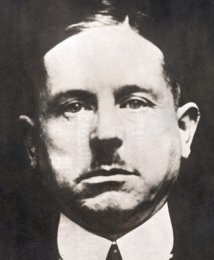
1931: Peter Kürten, the Vampire of Düsseldorf

On this date in 1931, the “Vampire of Düsseldorf” was beheaded for that city’s most infamous serial murder binge.

It was, perhaps, the logical end of a terrible journey.

A factory moulder and World War I deserter in his late forties, Peter Kürten commenced a series of uncommonly bestial rape-murders in early 1929 … the harvest of a lifetime’s twisted brutality.

He’d been the oldest of 11 children stuffed in a hellish one-room apartment with a violent drunk of a father who battered the children and openly raped their mother. Well, “if they hadn’t been married, it would have been rape,” in Peter’s words.

The future vampire took his refuge turning his own abuse on younger siblings and, with the help of a degenerate dogcatcher in the neighborhood, on obliging animals he could lay his hands on — which creatures he was soon learning to torture, and to rape, alongside more conventional human delinquencies like arson and burglary.

Kürten is known to have strangled at least one ten-year-old prior to World War I (he would also claim to have surreptitiously drowned a couple of school chums in his boyhood) but it was on the far side of the Great War — which he’d spent mostly in miserable prisons, nursing increasingly twisted fantasies of vengeance — that the beast truly emerged.

The spree that carried him to these pages began in Febuary 1929, when he slew an eight-year-old, attacked a middle-aged woman, stabbed a mechanic to death. Kürten’s crimes were irregular, but distinguished by a fiendish wrath: he abducted one young woman and hammered her to death in the woods outside town; he stabbed a five-year-old to death with scissors as he achieved his orgasm; he asked a teenager to run off and get him some cigarettes, so he could use her absence to slit her younger sister’s throat; he stabbed strangers randomly.

“I derived the sort of pleasure from these visions” of mayhem and cruelty, he said, “that other people would get from thinking about a naked woman.”

Düsseldorf endured a year of terror, finally aborted when Kürten’s own wife — whom he seems to have loved genuinely — turned him in, at Kürten’s own request, for the reward money.

At a packed trial, the accused’s accumulated hatred for the sadistic world poured out in words just as it had done in deeds over the months preceding.

I said to myself in my youthful way ‘You just wait, you pack of scoundrels!’ That was more or less the kind of retaliation or revenge idea. For example, I kill someone who is innocent and not responsible for the fact that I had been badly treated, but if there really is such a thing on this earth as compensating justice, then my tormentors must feel it, even if they do not know that I have done it …

Never have I felt any misgiving in my soul; never did I think to myself that what I did was bad, even though human society condemns it. My blood and the blood of my victims will be on the heads of my torturers. There must be a Higher Being who gave in the first place the first vital spark to life. That Higher Being would deem my actions good since I revenged injustice. The punishments I have suffered have destroyed all my feelings as a human being. That was why I had no pity for my victims.

-Kürten

Amateurs though we are, we incline to doubt the sufficiency of the tit-for-tat explanation. Kürten might well have believed that about himself, but the “vampire” moniker gets at an essential, organic sensuality about his crimes whose roots go quite a bit deeper than revenge.

“Tell me,” the doomed murderer is supposed to have asked a prison doctor shortly before facing the guillotine, “after my head has been chopped off will I still be able to hear; at least for a moment, the sound of my own blood gushing from the stump of my neck?”

The doctor indeed thought it possible the head might survive a few seconds.

“That,” mused the killer, “would be the pleasure to end all pleasures.”

Kürten is one of several predatory sex-slayers — also see the likes of Fritz Haarman and Carl Grossman — who prospered in interwar Germany, and helped to inspire Fritz Lang’s cinematic classic M. (Kürten is often thought the most direct model for that movie’s murderer, played by Peter Lorre. Lang denied that was the case, but in some countries’ releases it went out under the title not of M, but of The Vampire of Düsseldorf.)

Sources:

Murderpedia

TruTV

On this day..

1943: Marianne Elise Kurchner condemned for a joke

(Thanks to Meaghan Good of the Charley Project for the guest post. -ed.)

Sometime in the summer of 1943 in Nazi Germany, a young woman from Berlin named Marianne Elise Kürchner was guillotined for telling a joke.

Kürchner, who worked at an armaments factory, told the following joke to a coworker who denounced her:

Hitler and Göring are standing atop the Berlin radio tower. Hitler says he wants to do something to put a smile on Berliners’ faces. So Göring says: “Why don’t you jump?”

Not exactly a side-splitter. More like a neck-splitter: making jokes at Hitler’s expense was, in theory at least, a capital crime.

Mind you, most people who made nasty wisecracks about the Nazis faced no consequences at all. They were rarely denounced, and if they did come before a court they were usually given a warning, or at most a few months of “re-education” in Dachau.

The Nazis did occasionally use sedition as an excuse to arrest and execute people who’d gotten on their bad side for one reason or another, but ordinary Germans initially had little to fear.

However, as the tide of war began to turn against Germany, the punishments for sedition became ever more severe.

Marianne was called up before the People’s Court, whose president, Roland Freisler, was famous for both his long raving speeches berating defendants, and his death sentences. She admitted to making the joke but said she hadn’t been herself at the time, feeling bitter about the recent loss of her husband at the front.

Freisler would have none of it. In fact, he considered Marianne’s status as a war widow to be an aggravating factor. “The People’s Court,” Rudolf Herzog said of this case in his book Dead Funny: Humor in Hitler’s Germany, “made it a point of pride to take no account of individual suffering.” In his ruling, Friesler wrote:

As the widow of a fallen German soldier, Marianne Kürchner tried to undermine our will to manly defense and dedicated labor in the armaments sector toward victory by making malicious remarks about the Führer and the German people and by uttering the wish that we should lose the war … She has excluded herself from the racial community. Her honor has been permanently destroyed and therefore she shall be punished with death.

The People’s Court’s judgment was rendered on June 26, 1943. Marianne lost her head shortly thereafter.

On this day..

1804: Georges Cadoudal, Chouan

On this date in 1804, royalist counterrevolutionary Georges Cadoudal was guillotined in Paris with eleven of his chouan brothers-in-arms.

Cadoudal (English Wikipedia entry | the much more detailed French) was the French Revolution’s ultimate antagonist, a Breton notary (and commoner, obviously) who obstinately resisted the bloody progress of those years to the last of his strength.

His decade of royalist adventures (French) reads* like an adventure novel, a mind-bogglingly perilous series of revolts, captures, escapes, rappelling, martial exploits, diplomatic intrigue, terrorist plotting, high principles, low politics … a desperately heroic (or anti-heroic) struggle using every resource of a changing world to claw back the lost age of Bourbons.

After that dynasty’s last (up until then) king was guillotined in 1793, the intrepid Cadoudal staked his life to the 1793 Vendee rising, mounted an insurrection at Brest, and became one of the principal leaders of the anti-revolutionary Chouannerie fighting les bleus around northwest France through the 1790s.

Beaten but not bowed, Cadoudal took refuge in England when those campaigns came to grief following the royalist debacle at Quiberon, but he was never one to retire to the exile social circuit. Cadoudal remained an active schemer against the France of a rising Napoleon Bonaparte, and he was backed now by Britain’s statecraft … and her gold.

Spurning a proffered arrangement with the Corsican — who, say what one will, could recognize ability when he saw it — Cadoudal instead oversaw a dramatic 1800 assassination attempt on Napoleon that didn’t get the dictator but blew a bunch of Parisian bystanders to smithereens.

This effort having failed, our persistent intriguer slipped back into France to attempt an even bolder venture to kidnap Napoleon and elevate the Duke of Enghien — the going Bourbon candidate, who lurked on the French frontier to rush into the power vacuum.

This didn’t work either. As outlandish as the idea seems with benefit of hindsight, it was hardly a crackpot plan — as attested by the credentials of its participants.

“All Europe laughs at the conspiracy in Paris; it was, however, a well-built machine. Men, money, everything was ready. Bonaparte was to be taken alive and carried out like lightning from one post to the sea and the English fleet … I am inconsolable that it missed its mark. Those who criticize the French princes that they do not risk themselves while others fight for them, they will be the first to cry: What madness! How childish! [that d’Enghien risked himself] That is how men are made.”

Joseph de Maistre (Source)

Which is a long way of saying that it still comes down to wins and losses.

Having lost, the Bourbon pretender (he’s a pretender because he lost, of course) d’Enghien was arrested and immediately shot for his trouble; Cadoudal, taken on the streets of Paris,** was around long enough to see the hated Bonaparte take sufficient warning from the conspiracies against him to vest his governance in the imperial dignity. That was proclaimed on May 18. (The famous coronation wasn’t until December.)


Happy now, Georges? Napoleon on his Imperial throne, by Jean-Auguste-Dominique Ingres.

“We have done better than we hoped,” the doomed Cadoudal remarked caustically from his dungeon. “We intended to give France a king, and we have given her an emperor.”

He was rock-ribbed in his royalism to the very last.

He’d met Napoleon face to face years before in an abortive parley — when Cadoudal was offered, and rejected, the bribe of a lucrative Republican military commission — and now Cadoudal’s proposed victim let it be known to him that mercy was his for the asking. The indignant Breton scorned as dishonorable the very idea of supplicating Napoleon, even when the invitation was refreshed as he underwent the fatal toilette on his final day. His dozen-strong party went to their deaths this date taking heart from following the very footsteps of their martyred king.


The Execution of Georges Cadoudal, by Armand de Polignac … who portrayed several scenes of the conspirators.

A very lovely mausoleum in his native village of Kerleano preserves Cadoudal’s remains (reburied honorably there after his Bourbon Restoration finally came to pass), and his memory.

* A descendant wrote this now-public-domain book about our man.

** Reproached for orphaning a policeman’s family as he resisted capture, Cadoudal sneered, “then you should have sent a bachelor.”

On this day..