On this date in 1600, the emergent Tokugawa Shogunate beheaded three men as rebels in Kyoto after they lost one of the pivotal battles in Japanese history.
The Battle of Sekigahara, on Oct. 21 of that same year, had pitted the shogunate’s founder Tokugawa Ieyasu against a coalition known as the Western Army.
This was the culmination of Japan’s bloody process of national unification.
The preceding ruler, Toyotomi Hideyoshi, had more or less unified Japan under central authority to end a century of civil war. But when Hideyoshi shuffled off leaving a five-year-old heir, a squabbling coterie of regents began elbowing for position.
The political scene eventually crystallized into one of those regents — the said Tokugawa Ieyasu — against all the others. Give yourself a gold star if you guessed that the guys who had their heads lopped off by the Tokugawa Shogunate played for the “all others” team.
Ishida Mitsunari
Ishida Mitsunari, a daimyo who served the late national unifier Hideyoshi, became the focal point of the opposition to Ieyasu.*
Mitsunari failed in a 1599 assassination bid on Ieyasu, and so the two came to outright warfare the following year — a war that Ieyasu economically won by routing Mitsunari at the Battle of Sekigahara.
That, in turn, cleared the way for Tokugawa Ieyasu eventually to take the title of shogun and found his eponymous dynasty — a dynasty whose intellectuals circled that decisive battle as the keystone in the arch.
“Evildoers and bandits were vanquished and the entire realm submitted to Lord Ieyasu, praising the establishment of peace and extolling his martial virtue. That this glorious era that he founded may continue for ten thousands upon ten thousands of generations, coeval with heaven and earth!”
From the Birmingham (England) Daily Post, Nov. 1, 1893 (and also reproduced here)
A WOMAN BEHEADED IN GERMANY.
The Berlin correspondent of the Daily News telegraphs that on Monday, for the first time in many years, a woman was beheaded in Germany. The prisoner had murdered her husband by poisoning him, after he had brutally ill treated her and her children. At the trial the woman said she would reserve her defence, but she was sentenced to death, and the Emperor confirmed the sentence. Yesterday the woman, whose name was Zillmann, was informed that she was to die. She had hoped to be pardoned, and burst into tears.
She was on Sunday taken to Plotzensee, where the execution took place. There she asked for coffee and a well-done beefsteak, saying, “I should like to eat as much as I like once more.” To the chaplain the woman declared her innocence to the last moment. In the night she spoke continually of her miserable married life, and of her five children. On Monday morning, however, she was quite apathetic while being prepared for the execution. Her dress was cut out at the neck down to the shoulders, and her hair fastened up in a knot, her shoulders being then covered with a shawl. At eight the inspector of the prison entered Zillmann’s cell, and found her completely prostrate, and not capable of putting one foot before the other. Two warders raised her up, and led her to the block. Without a sound she removed the shawl from her shoulders, and three minutes after eight the executioner had done his work.
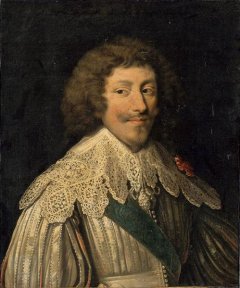
On this date in 1632, French noble Henri II de Montmorency was beheaded at Toulouse for rebellion against Louis XIII.
The lordly Montmorency (English Wikipedia page | French), sister to a famous knockout whom Henri IV wooed, was a Grand Admiral for his achievements knocking heads during the 1620s’ Huguenot rebellions. (It was Montmorency who, in the naval battle to capture Re Island, commanded the English ships controversially supplied by the Duke of Buckingham.)
The red eminence had just attained his rank as Louis XIII’s consigliere, and set about using it to centralize the state in the king’s hands.
Toward that end, Richelieu pressed Montmorency to give up his “grand admiral” title, fearing that “grand” military generals running around the realm were liable to become a locus of sedition sooner or later. Similarly, Richelieu reduced Montmorency’s power as governor of Languedoc.* He wanted, altogether, fewer stumbling-blocks of leftover feudal authority laying about his absolute monarchy.
Orleans fled the country, not half so committed to his revolt as Montmorency — who assailed the king’s lines practically alone. The latter, captured wounded on the battlefield, was attested to have given a ferocious account of himself in a hopeless cause: “seeing a single man charge through seven ranks and still fight at the seventh, he judged that that man could be only M. de Motmorency.”
Jolly good show, and all the more reason for Richelieu to take his head, to make an example of the man to other powerful men who demanded clemency for the rebellion as if it were Montmorency’s birthright. Richelieu would argue in his memoirs that this pitiless act to pacify the realm at the risk of his own popularity was the height of patriotism.
Plaque at the spot of Montmorency’s execution in Toulouse. Image (c) [Cova] and used with permission.
The Montmorency title eventually became that of the Dukes of Enghien, in which guise it’s associated with an altogether more famous execution.
* Among Montmorency’s other titles, less obnoxious to Richelieu, was viceroy of New France — that mysterious land across the Atlantic. There’s a Montmorency Falls in Quebec, named for him by Champlain.
On this date in 1449, Timurid sultan and astronomer Ulugh Beg was beheaded at the order of his son.
Ulugh Beg and his famous astronomical observatory, depicted on a Soviet stamp.
Grandson of the conquerorTimur (Tamerlane), Ulugh Beg had hitched along on some of those legendary military campaigns.
As power passed to Ulugh Beg’s father Shah Rukh, our man settled in as governor of the silk road city of Samarkand, in modern Uzbekistan — and turned it into an intellectual capital of the empire.
A great patron of the sciences, Ulugh Beg was a brilliant astronomer in his own right, nailing NASA-quality precise calculations of heavenly bodies’ positions and the revolutions of the earth a century ahead of the likes of Copernicus.
An inscription on the madrasah he erected summed up the city’s philosophy under its philosopher-prince: “Pursuit of knowledge is the duty of each follower of Islam, man and woman.”
Wedding scientific genius to political power enabled Ulugh Beg to build a great observatory in Samarkand. Though this structure unfortunately did not outlive Ulugh Beg himself, it made Samarkand the world’s astronomical capital in the 1420s and 1430s.
But the flip side of wedding scientific genius to political power was that the guy had to govern — which wasn’t his strong suit. Within two years of his father’s 1447 death, Ulugh Beg had been overthrown by his own son* and summarily beheaded.
* The son became known as “Padarkush”, meaning “parricide” … and appropriately, he was overthrown by his own cousin within months.
Graf was a conscientious Catholic whose disaffinity for Naziism manifested in an early refusal to join the Hitler Youth: he did a short stint in prison in 1938 for having continued associating with a banned Catholic youth league.
This subversive fellow might have been destined for the chop regardless in the black years to come, but for a thoroughgoing radicalization, he was drafted into the army as a medic and got a front-row seat on the Holocaust and the horrors of the eastern front.
He was arrested within months and condemned on April 19, 1943 to die as a traitor — though actual execution of the sentence waited several months on the Gestapo’s vain exertions to extract from their prey actionable information on other collaborators.
A number of schools around Germany are named in Graf’s honor.
When this missionary bishop to Paris got the Roman chop* for his conversions sometime after 250, he scooped up his own severed noggin and carried it to his preferred burial spot.
(Denis is also sort of the namesake for the Parisian hill Montmarte where he’s supposed to have been put to death: “mountain of Mars” in heathen times, it Christianized to mons martyrium, “Martyrs’ Mountain”.)
While many Christian martyrs carry the instruments of their martyrdom in iconography, and a few others roll with the bits of severed flesh exacted by those martyrdoms, Denis is only the most notable of an entire designated sub-class who carry their own heads: cephalophores.
This subject, seemingly tailor-made for a They Might Be Giants song, finally got one in 2011: “You Probably Get That A Lot”.
A most profane footnote was appended to our holy man’s legend during the French Revolution.
Journalist Camille Desmoulins once recklessly sneered of Robespierre‘s vain lieutenant Saint-Just, “He carries his head like a sacred host.”
Saint-Just is supposed to have retorted upon hearing the slight, “I’ll make him carry his like Saint Denis.” He did it, too.
* Two companions, Rusticus and Eleutherius, were doing the same conversions and suffered the same execution. Nobody named cathedrals after them.
On this date in 1816, Spain hanged the leaders of a breakaway former New World possession in a vain effort to maintain control of what is now Colombia.
The United Provinces had leave of several years for this foolishness before the Peninsular War ended with the restoration of Ferdinand VII, who promptly dispatched a massive expedition under the notorious command of Pablo Morillo to bring these disobedient satellites to heel … and to hemp.
The gentlemen whose death-day we commemorate today were the ones at the seat of government when the music stopped playing. Those positions, and even the forms of government itself, had been regularly reshuffled in the Patria Boba as federalist and anti-federalist, republican and royalist, threw their respective weights (and armies) around.
Morillo, who is still infamous in Colombia for his cruelty, had the most weight of all.
As Morillo’s reconquista invaded the Provinces, Camilo Torres (English Wikipedia page | the much more detailed Spanish) resigned the presidency. Torres is best-remembered now as the author of the Memorial de Agravios (Spanish link; it translates as “Memorial of Grievances” or, more Office Space-ishly, “Memorandum of Grievances”).
This incendiary document prophetically insisted that
the union between America and Spain [rest on] the just and competent representation of its people, without any difference among its subjects that they do not have because of their laws, their customs, their origins, and their rights. Equality! The sacred right of equality. Justice is founded upon that principle and upon granting every one that which is his.
Torres, his predecessor and vice president (same guy) Manuel Rodriguez, and several other ministers of state were nabbed together trying to make an escape to sea.
Morillo had them subjected to a snap trial, and Torres and Rodriguez were executed this date along with Pedro Felipe Valencia (Spanish link) and Jose Maria Davila; simultaneous property confiscation left the men’s survivors penniless. (Later, Simon Bolivar would personally support the widow Torres.)
Once hemp got through with the necks this day, old-fashioned blades did their redundant work: Torres’s head was hewed off and mounted in Bogota for public viewing.
It’s noteworthy that the author of this sort of nasty warning to the public would later sign his name opposite his New World antagonist Simon Bolivar in a Treaty of Armistice and Regularization of War (more Spanish) undertaking to stop murdering prisoners and non-combatants and fight only “as do civilized peoples” — one of the seminal documents in the development of human rights and the law of war.
Spanish speakers may appreciate this timeline site on the life and times of Camilo Torres.
* Torres, that Colombian Tom Paine, took some overt inspiration from the recent American Revolution, arguing that “to exclude the Americas from such representation … would forever alienate their desires for such a union.” After all,
If the English government had taken such an important step, perhaps today it would not rue the separation of its colonies. But a feeling of pride and a spirit of vanity and superiority led to the loss of those rich possessions.
Young Cristovao would be ground up in this conflict whose mixture of geopolitics and sectarianism overtly smacked of those old-time Crusades.
After a jaunt to India in the train of his older brother, appointed the Portuguese governor of India, Cristavao was sidetracked on a return voyage for an intervention on the Christian side in a raging local war. For Europeans who for generations had trafficked in the vague and fantastical rumors of mythical Abyssinian ruler “Prester John”, putting a thumb on the scale for Ethiopian Christians against the rampant Arabs must have been nigh irresistible.
Joao III and his government, faced with mounting debts as the costs of military operations in the East steadily grew, were now forced to re-evaluate their global commitments … the new viceroy, Estevao da Gama, was ordered to destroy the Turkish fleet in Suez …
Estevao da Gama’s raid into the Red Sea became one of the best remembered episodes in the history of the Portuguese Estado da India. The fleet assembled at Massawa on the African shore and then proceeded to Suakin which was burnt and plundered. Part of the fleet then returned to Massawa while the rest sailed on to Suez where the Turkish ships proved to be securely based and inaccessible. On the shore of Sinai, as close to Jerusalem as the Portuguese were ever to come, Estevao da Gama enacted some of the rituals of crusading chivalary and made a number of knights before returning to Massawa. Meanwhile, Dom Joao de Castro, who accompanied the expedition, used the time to produce his famous guide to the Red Sea, the Roteiro do Mar Roxo, complete with the meticulous drawings of the ports and anchorages, a masterpiece of Portuguese Renaissance geography and science.
One of Joao de Castro’s drawings. (Source, a Portuguese pdf)
Meanwhile the Portuguese at Massawa had suffered extreme privations and a hundred of them had deserted, having been persuaded by [untrustworthy Potuguese-descended Ethiopian ambassador Joao] Bermudes of the richness and wealth of the interior. Their fate was to be captured and massacred by Ahmed Gran. Estevao da Gama now dispatched a force of four hundred soldiers under the command of his brother, Cristovao da Gama, into the interior to assist the Ethiopian king. Cristovao da Gama advanced from the coast with a force much the same size as that which Cortez had led into Mexico in 1519. He had with him horses, arquebuses and eight small cannon. His first objective was to link up with the fugitive Ethiopian king and his followers, but da Gama got separated from his supplies and was forced to fight a superior Somali force supported by Turkish mercenaries. The result was catastrophe. The small Portuguese army was badly mauled and da Gama himself fled wounded from the battlefield and was taken prisoner.
The capture of the viceroy’s brother, son of the great admiral, carried with it huge importance for the Turks. After being ritually humiliated (his beard being set on fire and his face buffeted with the shoes of his negro servant) Cristovao da Gama was beheaded.* For the Portuguese this was a disaster, the symbolic significance of which far transcended the military consequences of the defeat. However, the Christian church had long experience of turning catastrophe into triumph and, soon after the news of Cristovao da Gama’s death reached the outside world, rumours of miracles began to circulate.** Da Gama became one of the first martyrs of the new church overseas which in a hundred years of expansion had had all too few heroic deeds to celebrate.
After the death of their commander fewer than two hundred of the original army survived, but they were able to meet up with the Christian Ethiopian forces and, when the next campaigning season started in 1542, the combined army inflicted a heavy defeat on the Muslims, a defeat which took on a decisive complexion when it was realised that the leader of the jihad, Ahmed Gran, had been killed in the battle.
Da Gama’s expedition had been mounted from the resources of the official empire and had been commanded by one of the leading fidalgos of the Estado da India. However, few of da Gama’s soldiers returned to India Instead they settled in Ethiopia and married Ethiopian women, establishing a ‘Portuguese’ community that mirrored the ‘Portuguese’ communities in Aythia, Bengal, Kongo and elsewhere where soldiers had offered their military expertise to local rulers an had been content to settle and make their fortures far removed from the jurisdiction of the Portuguese Crown.
Although da Gama’s own end was unfortunate, his surviving force’s exploits on a side badly pressed could arguably be considered the decisive factor enabling Christianity to survive in Ethiopia’s highlands interior. Prester John would have been proud.
* “I write what I heard, it may well be that it was thus, for all that is barbarous and cruel about the Moorish king can be believed. The body, after death, was dismembered and sent to various places … because once when Granha was speaking with Dom Christovao, he asked him: ‘If you had me in your power, as I have you, what would you do to me?’ Dom Christovao, with great resolution and freedom replied, ‘If I had you in my power, I would have you killed, the head I would send to one place and the quarters I would distribute to other places’ (naming them, but I do not recall them). And Granha, they say that it was because he heard this, scattered the body to various places.”
** “Directly they cut off his head, God worked a great and manifest miracle through it, which was, that in the place where they slew him a fountain of running water gushed out, which had never been seen before: its water, through the goodness and power of God, gives sight to the blind, and cures those ill of other diseases. It appears that this miracle is like the one that God did in Rome for His Apostle St. Paul. The remains of the body of D. Christovao smell sweetly, giving forth so delightful an odour, that it seems rather of heaven than of earth.”
On this date in 1510, the new king Henry VIII had his dad’s most hated tax collectors beheaded on Tower Hill.
Better days: Empson (on the left) and Dudley (on the right) pal around with Henry VII.
When Henry Tudor conquered Bosworth Field to emerge from the War of the Roses as King Henry VII, he brought the baggage of being the son of some Welsh squire.
His shaky legitimacy exposed the newborn Tudor dynasty to existential threats from every quarter; even putative allies proved liable to turn against him.
Henry consequently looked for every opportunity to centralize power away from institutions that could check or threaten him and into his own hands — nowhere more notoriously so than in the realm of taxation.* Aggressive tax collection would not only regenerate the crown’s blasted treasury; it would widen his own scope of action.
Whether Henry’s historical repute for cupidity is well-deserved is a topic beyond the scope of this site, but the fact that he does have such a reputation can be attributed in no small degree to this date’s featured players.
These two persons, being lawyers in science, and privy councillors in authority, as the corruption of the best things is the worst, turned law and justice into wormwood and rapine. … Neither did they, toward the end, observe so much as the half-face of justice, in proceeding by indictment; but sent forth their precepts to attach men and convent them before themselves, and some others, at their private houses, in a court of commission; and there used to shuffle up a summary proceeding by examination, without trial of jury; assuming to themselves there to deal both in pleas of the crown and in controversies civil. Then did they also use to inthral and charge the subjects’ lands with tenure in capite, by finding false offices, and thereby to work upon them for wardships, liveries, premier seisin, and alienations … When men were outlawed in personal actions, they would not permit them to purchase their charters of pardon, except they paid great and intolerable sums; standing upon the strict point of law, which upon outlawries giveth forfeiture of goods; nay, contrary to all law and colour, they maintained the king ought to have the half of men’s lands and rents, during the space of full two years, for a pain in case of outlawry. They would also raffle with jurors, and enforce them to find as they would direct, and if they did not, convent [summon] them, imprison them, and fine them. These and many other courses, fitter to be buried than repeated, they had of preyig upon the people; both like tame hawks for their master, and like wild hawks for themselves; insomuch as they grew to great riches and substance.
–Francis Bacon‘s History of the Reign of King Henry the Seventh
Richard Empson and Edmund Dudley were two powerful parliamentarians of less than lordly stature who had been elevated to this bad-cop role for their loyalty and aptitude. There, they became lightning rods for public resentment. It’s a path that had once taken a French counterpart from the common stock to the robes of state to (once his patron monarch died) the scaffold. Empson and Dudley trod it exactly.
Even in Henry’s lifetime, his newly intrusive taxes risked fearful public reaction.
The pretender Perkin Warbeck knocked Henry for the “robberies, extortions, the daily pilling of the people by dismes [tithes], taskes [contributions], tallages [tolls], benevolences, and other unlawful impositions and grievous exactions” he imposed, “agreeable to the meanness of his birth.” Tax backlash helped generate at least some of Warbeck’s popular support.
By the twilight of Henry’s rule in the first decade of the 1500’s, he had mastered these threats and could take advantage of political tranquility to really focus on his accounting. And he’d figured out that by ratcheting up enforcement of already-existing levies, he could avoid the dangerous confrontations that might result from summoning Parliament to ask it for money. It’s from this period most of all that he gets his historical Ebenezer Scrooge image, and the tool he employed for it, the Council Learned in the Law, got its extreme unpopularity.
Henry died in April of 1509 at the age of 52, leaving his son Henry VIII an overflowing treasury and countless grievances against the tax collectors who made it happen.
As the Council Learned’s leading lights, Empson and Dudley — “the king’s long arms with which … he took what was his” — immediately became targets once their royal protector was in the ground. They were hailed before the greenhorn king and the Privy Council to justify themselves within days of Henry VII’s death.
Interestingly, because a royal pardon amnestied all crimes except “felony, murder, and treason,” the malfeasance of these two councilors — whose real offense was unimpeachable loyalty to the last sovereign — had to be exaggerated into rather fantastical charges of treason in order to satisfy petitioners against them while avoiding undue embarrassment for the late king or the other aides who had served him.
In the year or so he lay in the dungeon awaiting his fate, “a pson most ignorant, and being in wordlie vexacon and trowble, also wth the sorrowfull and bitter remembrance of death,” Edmund Dudley wrote a treatise on the right arrangement of a society dedicated to the young new master who held Dudley’s life in his hands. The Tree of Commonwealth can be read here.
Yale professor Keith Wrightson introduces an interesting lecture — “Early Modern England: Politics, Religion, and Society under the Tudors and Stuarts” — with Dudley’s Tree of Commonwealth social schema.
Remember both, since now each thrive,
on perquisite ill gotten,
Empson & Dudleys case survives,
when they’re hang’d, dead, & rotten;
-From an 18th century colonial Virginia ballad titled “Remonstrance”, comparing this date’s centuries-old executed to a contemporary politician (Richard Beale Davis, “The Colonial Virginia Satirist: Mid-Eighteenth-Century Commentaries on Politics, Religion, and Society,” Transactions of the American Philosophical Society, Vol. 57, No. 1 (1967))
Update: The History of England podcast covers these two blokes here.
* The phrase “Morton’s fork” comes from Henry’s extractive machinations. Named for his Lord Chancellor John Morton, the original dilemma was a “fork” the crown used to stick taxpayers: those living high on the hog were made to pay up, since they obviously had enough to spare … and those living modestly were also made to pay, since they perforce must have saved enough to spare.
On this date in 1909, Georges-Henri Duchemin was guillotined in Paris for murdering his mother. It was the first execution in that city in a decade.
An aimless gadabout, Duchemin mostly sponged off his dear mom, and the filial bond of nature proved insufficiently developed to restrain him strangling the old lady when she held out on him one time.
The ungrateful child made off with a couple hundred francs, but his sister knew right where to direct the police.
His lawyer bid to represent the killer as unbalanced (French link; most of the material on this criminal is in French). The general public horror of parricide and the undisguisedly mercenary nature of the murder made it a no-go.
France had taken a death penalty hiatus of three-plus years from late 1905 to early 1909, under the anti-death penalty president Armand Fallieres. But even those in the first half of the decade had been elsewhere than the capital: Paris hadn’t seen the national razor shave a head since Alfred Peugnez in 1899.
“[Juve] led Fandon just behind the guillotine, to the side where the severed head would fall into the basket. ‘We shall see the poor devil get out of the carriage, and being fastened on to the bascule, and pulled into the lunette.’ He went on talking as if to divert his own mind from the thing before him. ‘That’s the best place for seeing things: I stood there when Peugnez was guillotined, a long time ago now, and I was there again in 1909 when Duchemin, the parricide, was executed.-
–Fantomas


 The lordly Montmorency (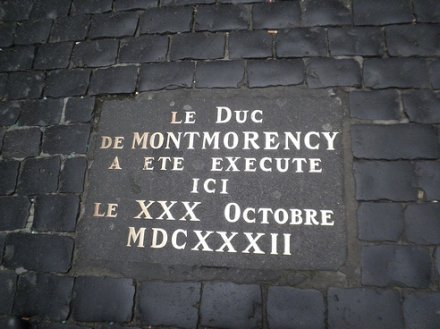

 Graf was a conscientious Catholic whose disaffinity for Naziism manifested in an early refusal to join the


 An aimless gadabout, Duchemin mostly sponged off his dear mom, and the filial bond of nature proved insufficiently developed to restrain him strangling the old lady when she held out on him one time.

