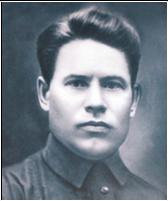
1930: Yang Kaihui, Mao Zedong’s wife

(Thanks to Meaghan Good of the Charley Project for the guest post. -ed.)

On this date in 1930, Yang Kaihui was executed in Changsha, China.

The 29-year-old mother of three was beheaded for her refusal to renounce the Chinese Communist Party and Mao Zedong. She was technically Mao’s second wife; a previous marriage had been arranged for Mao by his parents, but he and the woman never lived together and the marriage was never consummated.

Yang and Mao grew up together in Changhsa — she was the daughter of one of his teachers — and fell in love as young adults. Yang, like Mao, was an enthusiastic Communist. She joined the CCP in 1921, becoming one of its earliest members. She never held any official position in the CCP, however, and wasn’t terribly active in the movement, since she had to raise the children.

Mao and Yang truly loved one another. Phillip Short, in his biography of Mao, writes of this period: “Perhaps for the only time in Mao’s life, he had a truly happy family to come home to … It was a surprisingly traditional Chinese household.”

But Mao became more and more absorbed in dangerous revolutionary work, and he and Yang were often separated when he traveled. The last time she saw her husband was in 1927, the year the Chinese Civil War started and Mao became a guerrilla leader, hiding in the mountains, far from his family. They maintained sporadic contact after that, but often what little she knew about his activities came from the papers.

During the final years of her life, Yang missed her husband desperately and had thoughts of suicide. “No matter how hard I try,” she wrote once, “I cannot stop loving him.”

Yang predicted she might meet with a violent death. She was right: on October 24, 1930, a warlord loyal to the nationalists captured her and one of her sons.

She did not break under threats and torture, and refused to give in and publicly repudiate her husband and Communism, even though her captors offered to spare her life if she did so. She became one of the CCP’s earliest martyrs.

Yang was executed more for being Mao’s wife than she was for anything she’d done herself. She wasn’t the only woman who would be killed for being married to a prominent member of the CCP; the wife of Zhu De had met with the same fate in 1929.

Mao, who had always called Yang his true love, was reportedly devastated by her death and wrote, “the death of Kaihui cannot be redeemed by a hundred deaths of mine!” He wrote a poem about her in 1957 that suggests he still grieved for her even then. But it must be noted that he never tried to rescue her or his sons when he knew their home had turned into a battleground and their lives were in danger.


Propaganda poster of Yang and Mao.

Tragedy followed the lives of Yang and Mao’s three sons.

The youngest boy, Anlong, died of dysentery in Shanghai at the age of four, soon after his mother’s execution. The oldest, Anying, was killed in the Korean War. Middle child Anqing lived to be 83, but perhaps as a consequence of watching his mother being put to death as a youth, he suffered bouts of mental illness throughout his life. He died quietly in China in 2007.

On this day..

1937: Andrei Stepanovich Arzhilovsky, counterrevolutionary kulak

(Thanks to Meaghan Good of the Charley Project for the guest post. -ed.)

On this date in 1937, a 51-year-old Russian peasant by the name of Andrei Stepanovich Arzhilovsky was executed by firing squad, having been convicted of membership in a “counterrevolutionary kulak sabotage organization.”

Arzhilovsky, who had five young children by the time of his death, was evidently a nefarious thought-criminal with a record. He had sufficient literacy to join the regional administration in the nineteen-teens, which led to his arrest in 1919 in the wake of the October Revolution of two years previously.

He denied having ever persecuted Communist sympathizers, but a revolutionary tribunal sentenced him to eight years in prison.

Released after an amnesty in 1923, Arzhilovsky returned home, took up farming again, joined the peasant cooperative and took up a number of other minor civic posts. He owned 8.1 hectares of cultivated land, a house and outbuildings, two horses, two cows and other livestock. He was classified as a farmer of average means — that is, not a kulak or class enemy — but in 1929 he was convicted of “counterrevolutionary agitation” and sentenced to a decade in a labor camp.

In 1936, Arzhilovsky was released from detention early for health reasons. They expected him to go home and die, but instead he took an accounting job at a factory.

Perhaps frustrated by Arzhilovsky’s refusal to expire, the NKVD “uncovered” the “conspiracy” that lead to his death sentence. Under interrogation, he had to admit his opinions weren’t purely Soviet. Perhaps that alone was enough.

Arzhilovsky was a simple farmer, just one of the millions who died during Stalin’s Great Terror from 1936-1938. He probably would have been forgotten entirely today were it not for the forty-page diary he kept during the year prior to his death.

It was confiscated by NKVD agents when they searched his home. The diary was translated and published in 1995 in an anthology of several others from that period, under the title Intimacy and Terror: Soviet Diaries of the 1930s.

On this day..

1969: Joseph Blösche, Der SS-Mann

On this date in 1969, Joseph Blösche was executed in Leipzig, German Democratic Republic, for his part in the Holocaust.


Blösche (far right) chills out at the Warsaw Ghetto with, among others, Jurgen Stroop (fourth from right, in profile).

Blösche (English Wikipedia entry | German) was an SS Rottenführer and a Nazi Party member whose particular contribution to deporting Jews from the Warsaw Ghetto to Treblinka was fitting in some opportunistic rape, typically followed with summary murder. The ghetto’s wards called him “Frankenstein”.

Blösche was eventually captured by the Red Army, which you’d think might augur ill for his survival prospects. However, with the aid of a horrible accident he suffered in a postwar labor camp that helpfully disfigured his face, Blösche managed to fade quietly into East German society, wed, and raise a family.

He would need that facial anonymity, because the un-disfigured version is there full-frontal gazing over his submachine gun in one of the war’s most iconic and chilling images — snapped for the benefit of the Stroop report documenting the ghetto’s liquidation.


An SS trooper, eventually identified as Joseph Blösche, looms over a frightened Jewish boy in the Warsaw Ghetto. (The child might be one of Artur Dab Siemiatek, Levi Zelinwarger, Israel Rondel, or Tsvi Nussbaum)

This photo was published in the U.S. in Life magazine on November 28, 1960. The terrible image haunted Holocaust survivor Peter Fischl into writing his poem “The Little Polish Boy”.

Blösche’s luck ran out when his name came up in a West German war crimes trial in 1961; East Germany’s follow-up eventually zeroed in on the man, and he was convicted in April 1969 for directly killing up to 2,000 people, and participating in deportations that killed 300,000 more. He was executed in Leipzig with a single shot to the neck.

Joseph Blösche is the subject of the German documentary Der SS-Mann (there’s also a book of the same title).

On this day..

1946: Public Execution in Debica

On this date in 1946, market day in the southeastern Polish town of Debica, three captured fighters* from the anti-communist Freedom and Independence (WiN) movement were publicly hanged.

This salutary, and surprise, hanging was a nasty public message during the dirty post-war war to consolidate communist authority in Poland.

The message, however, was not exactly meant for a world wider than Poland itself, so the fact that it was captured in a grainy photograph snapped by WiN agent Józef Stec and subsequently smuggled out to the West was not at all to the liking of Polish authorities.

According to a WiN eyewitness report also presumed to have been filed by Stec,

First the MO [local militia], the UB, and the military occupied the execution square holding their machine guns ready to fire. Then, a car came with uniformed individuals who placed the noose on the hook. After a short time the same car brought three condemned men in white shirts. Their hands and legs were tied with barbed wire. A Jewish prosecutor read the sentence and passed the condemned into the hands of the executioner. Before the execution, one of the condemned yelled: “Long live the Home Army. Long live General Anders and General Bor-Komorowski. Down with the commies. Brothers persevere or you’ll die like us. I swear before God that I have never been a bandit [as communist authorities designated them]. I am dying for the Motherland. Lord forgive them [the executioners] because they know not what they are doing.

* The victims were Józef Grebosz, Józef Kozlowski, and Franciszek Noster, according to the 2003 monograph After the Holocaust: Polish-Jewish conflict in the wake of World War II, by Marek Jan Chodakiewicz. This monograph is also the source for Stec’s quoted report on the hanging.

On this day..

1977: Hu Nim, Cambodian Minister of Information

On this date in 1978, peripatetic Communist intellectual Hu Nim vanished into Khmer Rouge Cambodia’s charnel house along with 126 others at Tuol Seng.

The child of a poor peasant’s family, Nim was a gifted young state worker who studied in Paris in the 1950s, where he met several future Khmer Rouge leaders.

Nim charted an independent — some might say hypocritical — course over the next two decades, serving uneasily as a leftist parliamentarian in Prince Sihanouk‘s nationalist coalition government, fleeing ahead of a conservative purge into the bush to join Communist guerrillas, then returning once more to Sihanouk’s now-leftist Chinese-backed government-in-exile. It’s a period whose interests and alliances don’t map straightforwardly onto the familiar Cold War axis.

Hu Nim’s stature as Minister of Information in the government-in-exile transitioned directly to that same portfolio when the Khmer Rouge came to power.

Maybe those old ties to the ancien regime did him in — Vietnam, after invading Cambodia, would seize on the late minister’s reputation for independence to damn the Khmer Rouge for purging a moderate socialist — but there was no ideological talisman for safety during those terrible years. Hu Nim’s longstanding pro-Chinese position was also a dangerous association come 1977, and Phouk Chhay, a fellow officer of the Khmer-Chinese Friendship Association, was among the batch of prisoners shot along with Hu Nim this date.

Early in 1977, a massive internal purge shook the regime; as many people (some 1,500) went to Tuol Sleng from mid-February to mid-April of that year as had gone in all of 1976.* Almost every one of these humans would be, in the terrible bureaucrat-ese of the security apparatus, “smashed.”

Hu Nim was one of these, a denunciation wrung from a local commander leading to his April 10, 1977 arrest. Under repeated torture over the ensuing three months, the ex-Minister of Information would write and re-write his confession, fashioning himself “a counterfeit revolutionary, in fact … an agent of the enemy … the cheapest reactionary intellectual disguised as a revolutionary,” a stooge of the CIA since the high school, and a skeptic of the disastrous forced agricultural collectivization who had swallowed his doubts lest “I would have had my faced smashed in like Prom Sam Ar.” The confession ultimately tallied 200-plus pages. (Here’s some of it.)

Four days after his arrest, Hu Nim submitted the first of seven draft “confessions” to his interrogator, who appended a note to Deuch, saying: “We whipped him four or five times to break his stand, before taking him to be stuffed with water.” On April 22, the interrogator reported: “I have tortured him to write it again.” Five weeks later, Hu Nim was abject: “I am not a human being, I am an animal.” (Source

* Official count for all of 1977: 6,330 “anti-party” types tortured and executed at Tuol Sleng, as against “only” 2,404 in 1975-1976 combined.

On this day..

1953: 32 merciful Soviet soldiers

(Thanks to Meaghan Good of the Charley Project for the guest post. -ed.)

In June 1953, some discontented young citizens of Magdeburg, East Germany revolted and began demonstrating against the repressive Communist regime. On June 17, in the spirit of totalitarian governments everywhere, the authorities ordered a platoon of soldiers to open fire on a crowd of protesters.

Incredibly, the soldiers refused.

Every one of them vanished shortly thereafter, never to be seen again.

It was long assumed that the entire platoon had been executed for insubordination. This wasn’t confirmed until 1998, however. Four years previously, Magdeburg construction workers digging the foundation for a new building accidentally unearthed a mass grave containing 32 bullet-riddled skeletons. From the condition of the remains, authorities determined the victims — all of them young men — had died sometime between 1945 and 1960.

They could have been the missing Soviet platoon, but they could also have been prisoners executed by the Gestapo mopping up in May 1945, just before the Germans fled the city in advance of the Red Army.

As Jessica Snyder Sachs noted in her 2001 book Corpse: Nature, Forensics, and the Struggle to Pinpoint Time of Death, the victims all had extensive tooth decay and no sign of dental work, which was consistent with Russia but not central Europe. This was hardly conclusive, however.

To solve the mystery, investigators turned to Reinhard Szibor, a biologist at the nearby Otto von Guericke University.

Szibor had helped in criminal cases before and was famous for using pollen to link suspects to crime scenes. Pollen clings to people’s hair, skin and clothes and is, of course, also inhaled. The stuff is nearly indestructible and will remain long after human remains have disintegrated. Authorities hoped Szibor could use pollen samples from the mass grave to determine what time of year the victims died.

Discover Magazine explains how he did it: Szibor rinsed out the skulls’ nasal cavities, had a look, and found pollen from lime trees, plantains and rye, all of which release their pollen during June and July. In other words, the Magdeburg victims had died during the summer months, the time when the Soviet platoon was reportedly executed, and not in the springtime when the Nazis retreated from the city.

Though we still don’t know the precise date of their deaths, and likely never will, the soldiers who paid for their humanity with their lives had finally been identified.

Die Lösung (The Solution)

After the uprising of the 17th of June
The Secretary of the Writers’ Union
Had leaflets distributed in the Stalinallee
Stating that the people
Had forfeited the confidence of the government
And could win it back only
By redoubled efforts. Would it not be easier
In that case for the government
To dissolve the people
And elect another?

-Bertold Brecht

On this day..

1920: Maria Bochkareva, Russian Joan of Arc

On this date in 1920, the Cheka shot famed female soldier Maria Bochkareva (or Botchkareva).

The “Russian Joan of Arc” was a peasant woman from Novgorod by way of Siberia.

She’d been in the workforce since the age of eight, and had passed almost continuously through abusive male relationships (violently drunken father, marriages to two wife-batterers). She’d also in that time shown herself a natural leader, and become a construction foreman.

It seems the great war came for Bochkareva as a liberating, almost redemptive, force: at least, that is the conclusion of hindsight.

In her memoir Yashka: My Life as Peasant, Exile and Soldier (freely available here), she recalls the spirit of patriotism that swept Russians into war, just as it did German and French and British youths.

a gigantic wave of popular enthusiasm, sweeping the steppes, valleys, and forests of vast Russia, from Petrograd and Moscow, across the Ural mountains and Siberia, to the borders of China, and the Pacific coast.

There was something sublime about the nation’s response. Old men, who had fought in the Crimean War, in the Turkish Campaign of 1877-78, and the Russo-Japanese War, declared that they never saw such exaltation of spirit. It was a glorious, inspiring, unforgettable moment in one’s life. My soul was deeply stirred, and I had a dim realization of a new world coming to life, a purer, a happier and a holier world.

“Go to war to help save the country!” a voice within me called.

This dovetailed nicely (we do not say insincerely) with Bochkareva’s own striving for a more meaningful life than was on offer in her second marriage.

To leave Yasha for my personal comfort and safety was almost unthinkable. But to leave him for the field of unselfish sacrifice, that was a different matter. And the thought of going to war penetrated deeper and deeper into my whole being, giving me no rest.

Bochkareva appealed directly to the tsar and secured his personal permission to enlist. She earned several decorations for heroism in the tsarist army … and when the Romanovs fell, the pre-Bolshevik revolutionary government under Alexander Keresnky gave her permission to create an all-female formation: the Women’s Battalion of Death.

(“Of Death” was a bombastic cognomen any unit could receive by pledging never to surrender.)

“Come with us in the name of your fallen heroes,” Bochkareva implored in an appeal to Russian women in June 1917. “Come with us to dry the tears and heal the wounds of Russia. Protect her with yours lives. We women are turning into tigresses to protect our children from a shameful yoke — to protect the freedom of our country.”


Maria Bochkareva, center, supervises shooing practice. (Source)

Some 2,000 answered the summons.

Only around 300 of these could withstand Bochkareva’s iron discipline, and though other women’s battalions would follow (one, for instance, defended the Winter Palace against the Bolsheviks), only Bochkareva’s saw service on the front.


The Women’s Battalion at a Moscow ceremony in the summer of 1917.

Although amenable to Kerensky’s Provisional Government, Bochkareva was an unmitigated anti-Bolshevik.

According to her memoirs, her “tigresses” continued fighting while the rest of the front was fraternizing, and enraged her male comrades by drawing artillery fire. She had to flee male soldiers intent on lynching her when she was still fighting after peace was announced. She had a hard time getting used to the idea of the new Soviet government, and the feeling was mutual: her battalion was soon disbanded and it wasn’t long before she took a steamship into exile.

(Her memoirs contain a harrowing account of her once being detained as a counterrevolutionary and barely avoiding execution.)

That memoir of Bochkareva’s was dictated in New York in 1918, just a few months since she had been in the trenches facing the Kaiser. Clearly she did not believe her mission to “heal the wounds of Russia” had been accomplished, for it was her attempt to return to the fight against the Bolsheviks that doomed her: in spring 1919, she went to the Russian Urals during the civil war to try to form a women’s unit under the White Admiral Kolchak.

But she was captured by the Reds inside of a year, and sentenced as an enemy of the people.

There’s an interesting open-access academic article about Bochkareva and the woman-soldier phenomenon here, as well as a larger bibliography here.

A few topical books

On this day..

1937: Martemyan Ryutin, for his affair

On this date in 1937, Martemyan Ryutin was condemned to death and immediately executed in Stalinist USSR.

Ryutin (English Wikipedia entry | Russian | another Russian bio) was a revolutionary from the Far East who by the late 1920s was in the Bolsheviks’ heretical right wing; his affiliation with Bukharin and Rykov got him temporarily booted out of the Communist party in 1930.

Not content to keep his head safely down as Stalin’s star ascended, Ryutin typed out an anti-Stalin pamphlet and the 200-page “Ryutin Platform” denouncing Josef Djugashvili as “the gravedigger of the Revolution” and urging that he be removed — even by force.*

Weeks after Ryutin began circulating this incendiary samizdat the secret police busted him.

Though open discussion of the so-called Ryutin Affair was nonexistent in the Soviet Union until the Gorbachev era, it was a matter of dire importance for the Politburo in 1932; indeed, fleeting as it was, it’s one of the few organized elite attempts to thwart Stalin discernible during the 1930s. Stalin wanted Ryutin executed, but he was outvoted; this is a small milepost on the way to the Yezhovschina indicating that Stalin’s power still had its limits … and Bolsheviks still recoiled at the prospect of killing other party members.** These constraints were not very long for the scene.

Even so, Ryutin got a 10-year prison sentence and anyone else who had read the Ryutin platform without informing on it to the Party was in seriously hot water. Twenty-four were expelled from the party in October 1932 for this reason, including once-proud and soon-doomed Old Bolsheviks Zinoviev and Kamenev.

Ryutin, for his part, had only a few years to wait before the deteriorating political climate dispensed with those taboos about internecine bloodletting. The Supreme Court signed off on his execution this day with just a few minutes’ hearing, and it was immediately carried out.

Ryutin’s two sons were also executed in 1937, and his wife died in a labor camp. Only his daughter Lyubov survived the Ryutin Affair — which convictions were posthumously reversed in 1988.

* Bukharin’s widow later wrote that Stalin’s agents later added the most inflammatory material — like that violent overthrow stuff.

** Had Stalin had his way in 1932, Ryutin would have had the distinction of being the first Central Committee member to be executed, according to Suzi Weissman.

On this day..

1949: Traycho Kostov, Bulgarian purgee

On this date in 1949, leading Bulgarian communist Traycho (Traitcho, Traicho) Kostov was hanged in Sofia.

A journalist and agitator from way back, Kostov was a casualty of the postwar political chasm between east and west.

He’d been the number three man in Bulgaria’s communist hierarchy at the time of his fall in January of 1949, but had also been considered close to Yugoslavia’s independent socialist leader Josip Broz Tito. Like Tito, Kostov was a little too into his own country’s national economic sovereignty as against the purported greater good of a Soviet-dominated eastern bloc.

Stalin had overtly split with Tito in 1948. Over the next few years, Soviet satellites in eastern Europe would systematically eliminate perceived Titoist elements — and submit to economic integration on Moscow’s terms.

So a propagandist could write, comparing Kostov to the Hungarian minister who had swung for Titoism just weeks before, that

[i]f Laszlo Rajk could be regarded as the right arm of Tito’s plans for Eastern Europe, Traicho Kostov, member of the Bulgarian Politburo and Deputy Premier, was certainly his left arm. I sat in a crowded court in Sofia in December, 1949, heard and watched Traicho Kostov and ten other accused and dozens of witnesses testify to a Yugoslav plan for Bulgaria every whit as diabolical and bloodthirsty as that for Hungary. In reality there was only one overall strategic plan with “Operation Rajk” and “Operation Kostov” as tactical moves.

Specifically, “Operation Kostov” entailed spying for western (plus Yugoslavian) powers and plotting to overthrow the People’s Republic.

Although his enemies had browbeaten Kostov into political self-denunciation at party summits, the man stoutly repudiated guilt at trial — which was not necessarily the norm in the show trial genre.

Kostov’s ten fellow defendants received prison terms rather than the rope, and some of them were alive to enjoy the official rehabilitation that followed Stalin’s death.

On this day..

1937: Peljidiin Genden, former Mongolia Prime Minister

On earth there are two great geniuses – Buddha and Lenin.

-Peljidiin Genden

On this date in 1937, purged former Mongolia Prime Minister Peljidiin Genden was shot in Moscow.

Genden was in the thick of communist authority in Mongolia, including a forced collectivization that provoked resistance sufficient for Moscow to demand the Mongolians lay off the “leftist deviation.” Eyeballing a likely future conflict with Japan, Russia wanted Mongolia as a buffer zone and couldn’t afford gratuitously upsetting the apple cart.

Genden, himself a former leftist deviant, managed an adroit volte-face and got himself named Prime Minister in 1932.

Stalin’s minions would closely meddle in the business of the Mongolian People’s Republic over the 1930s as it rolled out its own eastern policy. Despite the Comintern’s recent turn towards ideological moderation in those precincts, it soon became concerned that Genden was lax in going after the Buddhist element; in fact, he’d openly declared religious toleration in 1932. But this particular enemy Russia could not abide. “The lama regime,” Stalin tut-tutted, “is stronger than the people’s regime.”

Genden had the ill-chosen moxie to push back against Stalin. On one state visit to Moscow, he got liquored up and bellowed,

“You bloody Georgian, you have become a virtual Russian Czar!”

Other plans for Mongolian leadership were soon put in place, the way cleared via the expedient of framing Genden as the mastermind of a fanciful pro-Japanese plot.

This [Genden] “case” led to the deaths of 639 falsely accused people, including 63 percent of the members of the [Mongolian People’s Revolutionary Party] Central Committee and 80 percent of its presidium members … There is evidence that the arrest of many Mongolian leaders on false charges and their “rendition” to the USSR for execution was organized from Moscow by NKVD chief Nikolai Yezhov.

It was estimated that, from 1934 to 1939, about 171 Mongols were arrested in Mongolia but tried and sentenced in Russia. The charges were usually “counterrevolution” or “espionage for Japan.” It is known that 33 were shot near Moscow, 108 received long terms of imprisonment, 13 were released, and four died “under investigation.”

And that’s just on the political side. With Genden out of the way, anti-Buddhist purges really took off in the late 1930s, to the tune of 18,000 lamas killed.

Part of the Daily Double: Stalinism East and West.

On this day..