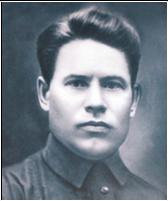
1971: Ousmane Balde, Barry III, Magassouba Moriba, Loffo Camara, Keita Kara Soufiana, and many others in Conakry

On this date in 1971, at least four former members of Guinea’s government were publicly hanged for supposed complicity in the previous year’s Portuguese invasion from neighboring Guinea-Bissau.*

The coup-threatened government of Sekou Toure was trying to send a message:

It did not scruple to make examples of men and women in very high places. Ousmane Balde (or Baldet) was Guinea’s former Finance Minister, Magassouba Moriba an Interior Minister, Barry III (also known as Ibrahima Barry; the link is French) the former Secretary of State. Keita Kara Soufiana had been Chief of Police. Loffo Camara was a National Assembly member.

Besides the quality of its reprisal victims, Conakry went in for quantity, too. Somewhere close to 100 death sentences were handed down with the barest of legal pretense, and the majority of them actually carried out on and around this date.

Personally arranging the grisly tableau for our hanged ex-ministers was a captain, Diarra Traore, who would one day help to overthrow the Guinean government, become Prime Minister … and wind up executed himself for his trouble.

* Guinea-Bissau was at that time still a Portuguese possession, known as Portuguese Guinea.

On this day..

1536: The Münster Rebellion leaders

On this date in 1536, Bernhard Krechting, Bernhard Knipperdolling, and Jan van Leiden were chained to stakes in the Münster public square, tortured with flesh-ripping tongs for more than an hour, killed with daggers thrust into their hearts, and their remains hoisted in cages in the city cathedral as a warning against any kindred misbehavior in the future.


Detail view (click for the full image) of Jan van Leiden et al being put to death in Münster. In the background, the Lambertuskirche spire shows the three cages in which the victims’ remains were gibbeted.

And the point was taken: the appalling deaths of these men also marked the death of early Anabaptism’s pretensions to secular political power.

These three unfortunates were the top surviving leaders of the Münster Rebellion, a revolution that turned that city into an Anabaptist commune for more than a year.

Just a few years before, southern Germany had been shaken by an apocalyptic peasant rebellion led by Thomas Muntzer, a sort of proto-Anabaptist.*

Though northern Germany was spared that particular maelstrom, that same religious tension and social discontent soon blew a hyperborean wind.

In the early 1530s, “Melchiorites” — Anabaptist followers of radical preacher Melchior Hoffman — proliferated rapidly among workers of the long-prosperous but now-waning Hanseatic territories in northern Germany and the Low Countries.

And these converts did not intend the meek example of evangelical martyrdom. They meant to rule.

In 1535, Democratic-Anabaptist types stormed the Amsterdam city hall; in a separate action, others seized and fortified a Friesland monastery before being overrun. An allied movement, less theologically distinct, won temporary control of Lübeck in 1533, before being expelled by force of arms.

Only in Münster did the Anabaptists realize the full flower of their project, albeit for a very brief period of time. Winning power over the course of the year 1533 by dint of internal politicking, energetic recruitment, and fortuitous imperial distraction, Münster Anabaptists booted out the 1% and started turning the place into a visionary “New Jerusalem.”

Among those visions, the most notorious was polygamy (pdf), introduced by Jan van Leiden when he inherited leadership after the charismatic firebrand Jan Matthys died in a sortie against a siege in April 1534. The story has it that van Leiden wanted to marry Matthys’s attractive widow Divara, though whether motivated by considerations of the loins or legitimacy is up to the reader’s good conscience.

There’s quite a controversial historiography surrounding their polygamous turn: while contemporary enemies were pleased to ascribe it to libertine devilries, German Communist intellectual Karl Kautsky vociferously defended the Münster Anabaptists — arguing that they resorted to polygamy for social stability when the gender disparity in the city had fallen past 3:1 owing to the vicissitudes of war.

And war, as Kautsky noted, was the commune of Münster’s essential condition, just like that of Paris.

Community of goods was the basis of the whole Baptist movement. For its sake the great fight was waged at Münster. It was not, however, the chief factor in determining the character of the Münster Baptist government, that factor being the siege. The town was a great war-camp; the demands of war took precedence of all other matters, and sentiments of freedom and equality were active only in so far as they were compatible with military dictatorship.

After a year and more under siege, Munster finally succumbed to Prince-Bishop Franz von Waldeck.

Jan van Leiden, by this time dignified the “King of Jerusalem”, was taken along with two of his chief aides and designated for this superlative punishment (many others less exalted faced less exalted executions, too).


For decades after the execution, the Anabaptists’ remains rotted publicly in cages on the tower of St. Lambert’s — like these still displayed there to this day. (cc) image from Rüdiger Wölk, Münster.

For Anabaptists as a whole this catastrophe commenced a long period of persecution and reckoning. But from such travails would the movement leave its mark. Indeed, it was also in January 1536 that a young Dutch priest named Menno Simons accepted adult baptism … and began a religious career that would make him the founding namesake of the Mennonites.

Dan Carlin’s “Hardcore History” podcast treats the Münster rebellion here.

On this day..

1937: Martemyan Ryutin, for his affair

On this date in 1937, Martemyan Ryutin was condemned to death and immediately executed in Stalinist USSR.

Ryutin (English Wikipedia entry | Russian | another Russian bio) was a revolutionary from the Far East who by the late 1920s was in the Bolsheviks’ heretical right wing; his affiliation with Bukharin and Rykov got him temporarily booted out of the Communist party in 1930.

Not content to keep his head safely down as Stalin’s star ascended, Ryutin typed out an anti-Stalin pamphlet and the 200-page “Ryutin Platform” denouncing Josef Djugashvili as “the gravedigger of the Revolution” and urging that he be removed — even by force.*

Weeks after Ryutin began circulating this incendiary samizdat the secret police busted him.

Though open discussion of the so-called Ryutin Affair was nonexistent in the Soviet Union until the Gorbachev era, it was a matter of dire importance for the Politburo in 1932; indeed, fleeting as it was, it’s one of the few organized elite attempts to thwart Stalin discernible during the 1930s. Stalin wanted Ryutin executed, but he was outvoted; this is a small milepost on the way to the Yezhovschina indicating that Stalin’s power still had its limits … and Bolsheviks still recoiled at the prospect of killing other party members.** These constraints were not very long for the scene.

Even so, Ryutin got a 10-year prison sentence and anyone else who had read the Ryutin platform without informing on it to the Party was in seriously hot water. Twenty-four were expelled from the party in October 1932 for this reason, including once-proud and soon-doomed Old Bolsheviks Zinoviev and Kamenev.

Ryutin, for his part, had only a few years to wait before the deteriorating political climate dispensed with those taboos about internecine bloodletting. The Supreme Court signed off on his execution this day with just a few minutes’ hearing, and it was immediately carried out.

Ryutin’s two sons were also executed in 1937, and his wife died in a labor camp. Only his daughter Lyubov survived the Ryutin Affair — which convictions were posthumously reversed in 1988.

* Bukharin’s widow later wrote that Stalin’s agents later added the most inflammatory material — like that violent overthrow stuff.

** Had Stalin had his way in 1932, Ryutin would have had the distinction of being the first Central Committee member to be executed, according to Suzi Weissman.

On this day..

2011: Ryu Kyong, Kim Jong-un rival

Sometime in early January — nobody seems to know quite when — North Korean intelligence official Ryu Kyong disappeared, apparently executed.

The number two man, and perhaps de facto number one man, in the State Security Department and a longtime Kim Jon-il ally, Ryu was reportedly “summoned by Kim Jong-il in early January and on his way to Kim’s residence, was arrested by members of the General Guard Bureau. He was interrogated and secretly executed.”

Speculative reason: the Leader viewed Ryu as having grown too powerful, and therefore as a potential rival to a clean succession for Kim Jong-un.

“With Ryu, many others were purged at the State Security Department,” a Seoul analyst said. “We can say that as he gained control of the department, Kim Jong-un needed to give jobs to people loyal to him.”

On this day..

1543: Andrei Shuisky, gone to the dogs

On December 29, 1543, Ivan the Terrible arrived — with the summary execution of hated boyar Andrei Shuisky (Shuysky).

Call it Ivan’s rite of passage.

The 13-year-old Ivan IV had technically “ruled” Russia since toddlerhood, when his father died suddenly in the prime of life.

But in reality, the “ruler” was not the master of his domain.

The powerful boyar nobles ran roughshod during his minority, scrapping for power, poisoning off his mother,* and behind the Kremlin’s closed doors overtly treating the kiddo’s regal person like a redheaded stepchild.

“What evil did I suffer at [the boyars’] hands!” Ivan later remembered of these years in his hostile correspondence with the exiled noble Kurbsky.

we and our brother … remained as orphans, [having lost] our parents and receiving no human care from any quarter; and hoping only for the mercy of God … our subjects had achieved their desire, namely, to have a kingdom without a ruler, then did they not deem us, their sovereigns, worthy of any loving care, but themselves ran after wealth and glory … they began to feed us as though we were foreigners or the most wretched menials. What sufferings did I endure through [lack of] clothing and through hunger! For in all things my will was not my own; everything was contrary to my will and unbefitting my tender years. (Source)

Ivan’s indomitable personality and mercilessness, later the stuff of legend, make their first appearance in these formative years. Biding his time, nurturing his hatred, he survived his humiliations and designed a show-stopping vengenace. “Then,” remembers Ivan, “did we take it upon ourselves to put our kingdom in order.”

In the span of a single feast on this date in 1543 the young prince elevated himself from abused orphan to feared sovereign when he unexpectedly accused the attending boyars of mismanagement and had the greatest man among them — Andrei, of the mighty Shuisky family, the de facto head of state** — arrested and brutally put to death.

(The most colorful versions of this have it that Shuisky was thrown to the dogs to be devoured; I’m inclined to suspect this is embroidery upon the chronicler’s report that it was mean little Ivan’s kennel-keepers who were the men tasked with arresting and beating to death the nobleman.)

Sergei Eisenstein dramatized the terrible tsar’s backstory of violently overturning his childhood abuse in part two of Ivan the Terrible. (Masterful review.)

With his terrible blow, Ivan — still only an (unusually warped) adolescent after all this time — freed his hands and truly began the strange and cruel reign that would earn him the awestruck sobriquet Grozny, “terrible”. He got the ball rolling by purging a couple dozen other Shuisky loyalists.

While Ivan Grozny had his way in his reign’s political conflicts with Russia’s nobility, the violent monarch also shockingly killed his own son during a fit of rage — effectively destroying his own lineage. In the Time of Troubles invited by the resulting power vacuum, Andrei Shuisky’s grandson briefly claimed the throne as Tsar Vasily IV.

Though this power grab didn’t work out any better than had his grandfather’s, Vasily was the last [legitimate] product of the Rurik dynasty† dignified as Tsar of Russia, before the Romanovs were elevated to that station.

* Allegedly. Ivan certainly thought so.

** Andrei’s brother Ivan, equally loathesome to the tsar, had passed on the Big Man in Russia mantle to Andrei when he died a couple of years before.

† The Shuiskies were merely a junior branch, but they were a branch.

On this day..

2010: Two Iranian political prisoners

Two politically sensitive cases, otherwise unrelated to one another, were joined in hanging at Iran’s Evin Prison on this day last year, possibly in a tit for tat following the November assassination of a nuclear physicist.

Ali Saremi

Ali Saremi cut the highest profile of the two, a 63-year-old member of the People’s Mujahedin of Iran (PMOI, aka MEK or MKO).

The PMOI/MEK/MKO, originally a Marxist revolutionary group opposing the dictatorship of the Shah, split with the theocratic Iranian Revolution.

It’s led an interesting life since then.

After creating the still-extant National Council of Resistance of Iran, the PMOI set up camp in Saddam Hussein‘s Iraq, which readily deployed it in the Iran-Iraq War.

Camp Ashraf was still there when the U.S. invasion rolled into Baghdad in 2003. (As of this writing, it’s only just now being closed.) While MEK has long been considered a terrorist organization, including by the U.S. State Department,* Iraq’s new occupiers also found this nest of exiles a convenient ally for its own campaign against Iran’s mullahs.

The organization has been much in the news of late both as a bargaining chip in regional diplomacy, and for lavishly bankrolling a lobbying campaign to get off everybody’s official terrorism lists — positioning itself as simply an Iranian opposition group. (It claims to have renounced violence.)

From Tehran, of course, there’s much less gray shading: the MEK is an enemy.

Saremi, a longtime member, was arrested four times for his association with the group.

The first time was in 1976; the last, and ultimately fatal, in 2007. He had just returned from Camp Ashraf to visit his son and commemorate the anniversary of Iran’s late-1980s mass execution of prisoners, an atrocity that claimed a large share of MEK sympathizers in apparent retaliation for the organization’s aforementioned wartime aid to Baghdad.

Saremi got the all-purpose mohareb death sentence — roughly, “waging war against God,” which can potentially compass any resistance to the Islamic Republic — basically for having a going association with PMOI. According to NCRI, Saremi’s prosecutor alleged that

[h]e visited Ashraf and during that he received necessary trainings and returned to the country … and eventually he was arrested in August 2007 for his repeated activities and participation in counter revolutionary ceremonies and gatherings in support of PMOI and dispatching reports to this grouplet (PMOI). During a search in his house some CDs, films, pictures from PMOI and hand written organizational documents linked to the grouplet were found and confiscated.

Iran carried out the execution without notice.**

Ali Saremi’s portrait and memory are now powerful props for the MEK terrorism de-listing campaign.

Ali Akbar Siadati

Also hanged this day was a man named Ali Akbar Siadati, about whom only sketchy information appears to be available.

Siadati was condemned for spying for Israel from 2004 until his arrest in 2008, allegedly supplying Iran’s foe a wide range of sensitive military information — a crime to which Siadati confessed, according to the state news agency IRNA.

Who Siadati was, how he had access to military intelligence, and why (apart from money) he might have betrayed it seems to be publicly obscure.

* In fact, the charge of sheltering MEK — guilty of “terrorist violence against Iran” — even appears on the Bush administration’s justification for war with Iraq.

** Iranian law requires 48 hours’ notice of an imminent execution be given to a defendant’s lawyer. This rule is routinely ignored.

On this day..

1949: Traycho Kostov, Bulgarian purgee

On this date in 1949, leading Bulgarian communist Traycho (Traitcho, Traicho) Kostov was hanged in Sofia.

A journalist and agitator from way back, Kostov was a casualty of the postwar political chasm between east and west.

He’d been the number three man in Bulgaria’s communist hierarchy at the time of his fall in January of 1949, but had also been considered close to Yugoslavia’s independent socialist leader Josip Broz Tito. Like Tito, Kostov was a little too into his own country’s national economic sovereignty as against the purported greater good of a Soviet-dominated eastern bloc.

Stalin had overtly split with Tito in 1948. Over the next few years, Soviet satellites in eastern Europe would systematically eliminate perceived Titoist elements — and submit to economic integration on Moscow’s terms.

So a propagandist could write, comparing Kostov to the Hungarian minister who had swung for Titoism just weeks before, that

[i]f Laszlo Rajk could be regarded as the right arm of Tito’s plans for Eastern Europe, Traicho Kostov, member of the Bulgarian Politburo and Deputy Premier, was certainly his left arm. I sat in a crowded court in Sofia in December, 1949, heard and watched Traicho Kostov and ten other accused and dozens of witnesses testify to a Yugoslav plan for Bulgaria every whit as diabolical and bloodthirsty as that for Hungary. In reality there was only one overall strategic plan with “Operation Rajk” and “Operation Kostov” as tactical moves.

Specifically, “Operation Kostov” entailed spying for western (plus Yugoslavian) powers and plotting to overthrow the People’s Republic.

Although his enemies had browbeaten Kostov into political self-denunciation at party summits, the man stoutly repudiated guilt at trial — which was not necessarily the norm in the show trial genre.

Kostov’s ten fellow defendants received prison terms rather than the rope, and some of them were alive to enjoy the official rehabilitation that followed Stalin’s death.

On this day..

1417: The Falstaffian John Oldcastle

On this date in 1417, the heretical knight John Oldcastle was burned at St. Giles Fields.

Oldcastle was a country gentleman who helped King Henry IV put down the Welsh and married up, into the Cobham family. He became good friends on campaign with Henry’s heir, the future Henry V.

Though Oldcastle was a privileged member of medieval England’s 1%, he supported positively dangerous change.

In Oldcastle’s youth, the radical preacher John Wycliffe was abroad in the land, and Oldcastle at some point — nobody seems able to say exactly when — cottoned to the egalitarian movement Wycliffe spawned, Lollardy.

A century-plus ahead of the Protestant Reformation, Lollards challenged the corruption and impiety of the Catholic Church, urging adherents to look to the scriptures themselves.

Protestant writer John Bale later reclaimed Oldcastle as a proto-Protestant martyr.

The truth of it is, that after he had once throughly tasted the Christian doctrine of John Wicliffe and of his disciples, and perceived their livings agreeable to the same, he abhorred all the superstitious sorceries (ceremonies, I should say) of the proud Romish church … He tried all matters by the scriptures, and so proved their spirit whether they were of God or nay. He maintained such preachers in the dioceses of Canterbury, London, Rochester, and Hereford, as the bishops were sore offended with. He exhorted their priests to a better way by the gospel; and when that would not help, he gave them sharp rebukes.

This sort of thing gave right-thinking Christians the vapors. It was in response to this “perverse people of a certain new sect” that England instituted the law authorizing heretic-burning, which would in Tudor hands become such a prodigious maker of martyrs.

Fresh to the throne as a 27-year-old, Henry V didn’t want to consign his old buddy to the flames, and generally stalled prosecution and leaned on his friend as much as he could.

But his friend remained obstinate in his errors, and eventually delivered a confession squarely rejected the Church’s authority.

Doomed as a heretic, Oldcastle busted out of the Tower of London when his sentimental sovereign gave him a lengthy reprieve — whereupon the condemned fugitive began fomenting rebellion with his outlawed movement.

although the King by proclamation promised a thousand markes to him that could bring him forth, with greate liberties to the Cities or Townes, that woulde discouer where hee was: by this it maye appeare, howe greatly he was beloued, that there could not one he found, that for so great a reward would bring him to light.

Holinshed’s Chronicle

It did take some doing but Oldcastle — the Lord Cobham — was finally hunted to ground in November 1417. Upon his return to London in chains, the heresiarch was condemned on the basis of his previous conviction, and “consumed with fire, gallowes, and all.” (Holinshed)

As the late king’s notorious boon companion, John Oldcastle was queued up for immortality in Shakespeare’s Henry IV, part 1. But his part in this buddy play got rewritten at the last minute (and after the first draft) into the fellow we know as Falstaff.* It was reportedly the Lord Cobham of Shakespeare’s time who insisted upon the switch, squandering literary immortality for some passing family pride.** Traces of the original character remain in the text; in the play‘s opening dialogue, Prince Hal calls Falstaff “my old lad of the castle.”

(In part 2, Shakespeare’s epilogue goes out of the way to insist that “Falstaff shall die of a sweat … [while] Oldcastle died a martyr, and this is not the man”. Hal does eventually execute his old buddy, Oldcastle-style, in Henry V: that buddy is not Falstaff, but their mutual drinking companion Bardolph.)


No actual John Oldcastle connection, but if Shakespeare gets to pun around with the name …

* Cadging the name from another Hundred Years’ War soldier, John Fastolf.

** The Lord Cobham whom Shakespeare wished to avoid offending was involved just a few years later in the anti-Stuart Main Plot — and only spared execution by a last-second pardon while he was literally standing on the scaffold.

On this day..

1938: Corneliu Codreanu, Romanian fascist martyr

“In place of the weak and beaten man who bends with every breeze, a man who is all too common in politics and other fields, we must create for this nation a man who does not bend, who is inflexible.”

-Corneliu Codreanu

On this date in 1938, 14 political prisoners of the Romanian Legionary movement were extrajudicially executed — including Corneliu Codreanu, one of the Romanian right’s leading spirits.

The son of a Bukovina schoolteacher in what was then Austria-Hungary, Codreanu came to political maturity in the interwar heyday of Greater Romania. It was a moment of national aspiration — the Romanian state had never before grown so large — but it was abutted by the great threats of Germany and Russia, and haunted by nationalism, economic crisis, shaken political authority, and all the other spooks conjured by the first World War.

For Codreanu as for many at that time it was the stage for a blood-and-soil death struggle against Communist agitators and sinister Jewish financiers.

But his vision was an intensely positive one as well: a valiant new Romania founded by a courageous new man, honorable and true to the virtues of the nation’s noble peasant stock. “We shall create,” Codreanu declared, “a spiritual atmosphere, a moral atmosphere, in which the heroic man may be born and on which he can thrive.”

Codreanu’s vehicle for stamping out these heroic countrymen was the Legion of the Archangel Michael* which our principal founded in 1927. Named for God’s ass-kickingest enforcer, this movement/militia was not above creating its spiritual atmosphere with political assassinations by adherents widely noted for a willingness to die for the cause.

Later known as the Iron Guard, the Legion, in the view of German historian Ernst Nolte, “plainly appears to be the most interesting and the most complex fascist movement, because like geological formations of superimposed layers it presents at once both prefascist and radically fascist characteristics.” (Qutoed here.)

As his Legion’s name suggested, Codreanu was intently religious — virtually a mystic, and a messianic Romanian Orthodox Christianity was essential to his new Romania. His movement took root in a peasant society, not an industrial state with a revolutionary working class to crush or co-opt. Rather, it organized in opposition to a mediocre king and a feckless, heavily non-Romanian oligarchy which maintained its enervating grip on the nation with “endless appeals to the Fatherland which it does not love, to God in whom it does not believe, to the Church where it never sets foot, to the Army which it sends to war with empty hands.”*

And also to the police, which clapped Codreanu and his confederates in prison after the revolutionaries declined the elite incumbents’ offer of political collaboration.

In 1938, Codreanu was hit with a long prison sentence for sedition. Uncowed, the Legion grew ever more overtly aggressive when Nazi Germany successfully dismembered Czechoslovakia; Berlin made the Legions plainly aware that it saw their movement as Romania’s future, German-allied government. Futilely maneuvering for his own scope of action, Carol attempted to decapitate the Iron Guard by having its imprisoned leadership “shot while trying to escape” on this date.

This did not turn out to help the king. Codreanu’s movement traded stripe for stripe with its foes; within two years, Carol had been forced to abdicate and the Iron Guard helped govern (albeit with tension) a fascist state.

The contemporary Romanian right aggressively reclaimed Capitanul, “the Captain”, after the fall of communism. Codreanu is now revered among not only among Romanian nationalists but in fascism’s wider populist Strasserite tradition. (Gregor Strasser, who liked the socialist part of national socialism too much for Hitler’s taste, was among those murdered on Nazi Germany’s Night of the Long Knives.)

* Eugen Weber in Varieties of Fascism, quoted by Anthony James Joes in “Fascism: The Past and the Future,” Comparative Political Studies, April 1974

On this day..

1937: Peljidiin Genden, former Mongolia Prime Minister

On earth there are two great geniuses – Buddha and Lenin.

-Peljidiin Genden

On this date in 1937, purged former Mongolia Prime Minister Peljidiin Genden was shot in Moscow.

Genden was in the thick of communist authority in Mongolia, including a forced collectivization that provoked resistance sufficient for Moscow to demand the Mongolians lay off the “leftist deviation.” Eyeballing a likely future conflict with Japan, Russia wanted Mongolia as a buffer zone and couldn’t afford gratuitously upsetting the apple cart.

Genden, himself a former leftist deviant, managed an adroit volte-face and got himself named Prime Minister in 1932.

Stalin’s minions would closely meddle in the business of the Mongolian People’s Republic over the 1930s as it rolled out its own eastern policy. Despite the Comintern’s recent turn towards ideological moderation in those precincts, it soon became concerned that Genden was lax in going after the Buddhist element; in fact, he’d openly declared religious toleration in 1932. But this particular enemy Russia could not abide. “The lama regime,” Stalin tut-tutted, “is stronger than the people’s regime.”

Genden had the ill-chosen moxie to push back against Stalin. On one state visit to Moscow, he got liquored up and bellowed,

“You bloody Georgian, you have become a virtual Russian Czar!”

Other plans for Mongolian leadership were soon put in place, the way cleared via the expedient of framing Genden as the mastermind of a fanciful pro-Japanese plot.

This [Genden] “case” led to the deaths of 639 falsely accused people, including 63 percent of the members of the [Mongolian People’s Revolutionary Party] Central Committee and 80 percent of its presidium members … There is evidence that the arrest of many Mongolian leaders on false charges and their “rendition” to the USSR for execution was organized from Moscow by NKVD chief Nikolai Yezhov.

It was estimated that, from 1934 to 1939, about 171 Mongols were arrested in Mongolia but tried and sentenced in Russia. The charges were usually “counterrevolution” or “espionage for Japan.” It is known that 33 were shot near Moscow, 108 received long terms of imprisonment, 13 were released, and four died “under investigation.”

And that’s just on the political side. With Genden out of the way, anti-Buddhist purges really took off in the late 1930s, to the tune of 18,000 lamas killed.

Part of the Daily Double: Stalinism East and West.

On this day..