“Above all, there was a belief in the revolution and the future, a feeling of having suddenly emerged into an era of equality and freedom. Human beings were trying to behave as human beings and not as cogs in the capitalist machine.
On this date in 1940, Catalan president Lluis Companys was shot by the Spanish fascists.
Companys had held that notional office for mere hours six years before — but he’s still the last to hold it in any form at all.
Political exile was no unfamiliar terrain for Companys. As a young lawyer, his activism in the first two decades of the century had seen him incarcerated over a dozen times; in fact, his path to political respectability had entailed getting out of a Menorca prison in 1920 courtesy of the parliamentary immunity conferred by winning an election.
And he’d drawn a long sentence for an attempted 1934 rising against a center-right government — the occasion when he had become the President of the Catalan Republic on October 6, and been dispossessed of both office and state by the very next day.
That prison sentence’s reversal by the new republican government in 1936 was a bit of Pyrrhic victory for Companys’s left-wing politics — inasmuch as said republicans’ ascent was also the trigger for the nationalist revolt that resulted in the Spanish Civil War and a military dictatorship lasting until the 1970s.
As the virtual personification of Catalan national aspirations, Companys remained head of the Generalitat de Catalunya from 1933 until his death — in prison, in exile, wherever Companys went he bore along the Catalan cause.
As such, he was in the thick of the civil war’s scrap for control of Barcelona: not only against the fascists but among the left parties whose fractious alliance tore apart in 1937.
It was truly a case of riding the tiger. Companys struggled to maintain the cooperation of his alliance even while the republicans’ Soviet sponsors excommunicated anarchist and anti-Stalinist elements internally. The dreadful spectacle of internecine street fighting among the anti-fascists in May 1937 fills the final tragic pages of Orwell’s Homage, decided by the inescapable materialist circumstances: “the Government could not afford to offend the Communist Party while the Russians were supplying arms.”
Few sources direct much personal blame at Companys for what followed. Under Soviet pressure, he accepted the Communist police raids that had set off the street fighting, accepted the purges and the press censorsip, sacked anti-Stalinist minister Andres Nin from the government. (Nin was later “disappeared” and murdered.)
Who knows but that even these evil days were not still the best that could be made of a bad circumstance: whatever they were, they were not enough for republican Spain or for Catalonia.
When those dreams fell under the fascist advance little more than a year later, Companys couldn’t flee Franco far enough for safety. Soon after his 1939 escape to France, that country was overrun by militaristic rightists from the other direction — and the German occupiers happily handed Companys back to Spain as soon as they got their hands on him.
Condemned after the formality of a perfunctory trial for “military rebellion” conducted on October 14, 1940, Companys was shot the very next morning Montjuic Castle. (See Franco: A Biography)
Spain, where questions of Catalan sovereignty and the Franco years are both sensitive subjects, has never reversed the judgment (Spanish link) against Companys. However, a Barcelona promenade is named in Companys’s honor, as is a major stadium — actually the arena where the anti-fascist 1936 People’s Olympiad in opposition to the notorious master race spectacle of Berlin was to have taken place, before that whole Civil War unpleasantness.
Mukhtar, a religious teacher and follower of the Senussi movement, became the leader of the Libyan resistance that dogged the Italian occupation. Mukhtar proved an energetic and successful desert guerrilla fighter, and he had to be given the Italians’ mechanized military.
The Italians executed an estimated 4,000 Libyans in the 1920s, and drove hundreds of thousands into concentration camps, and gradually, only gradually, gained the upper hand on their adversaries.
Captured in battle after he abandoned a 1929 truce, Mukhtar was denied prisoner-of-war status and subjected to a snap military tribunal in one of the small coastal enclaves actually controlled by Italy — “a regular trial and consequent sentence, which will surely be death,” as the Italian general directed. It surely was.
A national hero for contemporary Libyans across any social divide you’d care to name, Omar Mukhtar was valorized by the rebels who recently overthrew the aforementioned Gaddafi (here’s Mukhtar on a billboard in rebel-held Benghazi). “The whole world knows what Omar al-Mukhtar did,” Mukhtar’s 90-year-old son told media during the civil war. “That’s where they get their energy from. Ask the youth, they’ll tell you they are all the grandsons of Omar al-Mukhtar.”
His steely profile can be seen on Libya’s 10 10 dinar note.
August 21 is the harvest-time feast of Consualia, honoring the Roman god of grain storage, Consus.
We mark on this occasion the legendary capital punishment inflicted by Lucius Junius Brutus when he was consul of the ancient Roman Republic upon two rebels — his own sons, Titus and Tiberius.
The great Brutus had been one of the leaders of the revolt that expelled Rome’s last king, Lucius Tarquinius — reputedly after the king’s son raped Lucius’s kinswoman Lucretia. (Brutus was also Tarquin’s nephew.)
Upon completing his coup, Brutus immediately summoned the populace to swear an oath that no king would ever rule Rome again. So potent was the civic memory of this event that even centuries later when the Republic was well gone, Rome’s emperors dared not appropriate such an incendiary title as “King”.
But that was for a later time, after the winners wrote the history.
The exiled Etruscan king, subsequent Romans’ eternal watchword for tyranny, got the boot about 510 B.C.E., and in 509 was still hanging about looking for an opportunity to re-seat his dynasty. The plot he hatched is known as the Tarquinian conspiracy, and Brutus, to his grief, would discover that his own children had adhered to it. The statesman’s willingness to put his own flesh and blood to death for the security of Rome would long stand as a parable of manful patriotism.
Our account here is from Livy (line breaks have been added for readability), and the excuse to approximate this undated execution to summer’s harvest-time is bolded therein.
liberty was well nigh lost by treachery and fraud, a thing they had never apprehended. There were, among the Roman youth, several young men of no mean families, who, during the regal government, had pursued their pleasures without any restraint; being of the same age with, and companions of, the young Tarquins, and accustomed to live in princely style.
Longing for that licentiousness, now that the privileges of all were equalized, they complained that the liberty of others has been converted to their slavery: “that a king was a human being, from whom you can obtain, where right, or where wrong may be necessary; that there was room for favour and for kindness; that he could be angry, and could forgive; that he knew the difference between a friend and an enemy; that laws were a deaf, inexorable thing, more beneficial and advantageous for the poor than the rich; that they allowed of no relaxation or indulgence, if you transgress bounds; that it was a perilous state, amid so so many human errors, to live solely by one’s integrity.”
Whilst their minds were already thus discontented of their own accord, ambassadors from the royal family come unexpectedly, demanding restitution of their effects merely, without any mention of return. After their application was heard in the senate, the deliberation on it lasted for several days, (fearing) lest the non-restitution might be a pretext for war, and the restitution a fund and assistance for war. In the mean time the ambassadors were planning different schemes; openly demanding the property, they secretly concerted measures for recovering the throne, and soliciting them as if for the object which appeared to be under consideration, they sound their feelings; to those by whom their proposals were favourably received they give letters from the Tarquins, and confer with them about admitting the royal family into the city secretly by night.
The matter was first intrusted to brothers of the name of Vitellii and those of the name of Aquilii. A sister of the Vitellii had been married to Brutus the consul, and the issue of that marriage were young men, Titus and Tiberius; these also their uncles admit into a participation of the plot: several young noblemen also were taken in as associates, the memory of whose names has been lost from distance of time. In the mean time, when that opinion had prevailed in the senate, which recommended the giving back of the property, and the ambassadors made use of this as a pretext for delay in the city, because they had obtained from the consuls time to procure modes of conveyance, by which they might convey away the effects of the royal family; all this time they spend in consulting with the conspirators, and by pressing they succeed in having letters given to them for the Tarquins. For otherwise how were they to believe that the accounts brought by the ambassadors on matters of such importance were not idle?
The letters, given to be a pledge of their sincerity, discovered the plot; for when, the day before the ambassadors set out to the Tarquins, they had supped by chance at the house of the Vitellii, and the conspirators there in private discoursed much together concerning their new design, as is natural, one of the slaves, who had already perceived what was going on, overheard their conversation; but waited for the occasion when the letters should be given to the ambassadors, the detection of which would prove the transaction; when he perceived that they were given, he laid the whole affair before the consuls. The consuls, having left their home to seize the ambassadors and conspirators, crushed the whole affair without any tumult; particular care being taken of the letters, lest they should escape them.
The traitors being immediately thrown into chains, a little doubt was entertained respecting the ambassadors, and though they deserved to be considered as enemies, the law of nations however prevailed.
The question concerning the restitution of the tyrants’ effects, which the senate had formerly voted, came again under consideration. The fathers, fired with indignation, expressly forbad them either to be restored or confiscated. They were given to be rifled by the people, that after being made participators in the royal plunder, they might lose for ever all hopes of a reconciliation with the Tarquins. A field belonging to them, which lay between the city and the Tiber, having been consecrated to Mars, has been called the Campus Martius. It happened that there was a crop of corn* upon it ready to be cut down, which produce of the field, as they thought it unlawful to use, after it was reaped, a great number of men carried the corn and straw in baskets, and threw them into the Tiber, which then flowed with shallow water, as is usual in the heat of summer; that thus the heaps of corn as it stuck in the shallows became settled when covered over with mud: by these and the afflux of other things, which the river happened to bring thither, an island was formed by degrees. Afterwards I believe that mounds were added, and that aid was afforded by art, that a surface so well raised might be firm enough for sustaining temples and porticoes.
After plundering the tyrants’ effects, the traitors were condemned and capital punishment inflicted. Their punishment was the more remarkable, because the consulship imposed on the father the office of punishing his own children, and him who should have been removed as a spectator, fortune assigned as the person to exact the punishment.
Young men of the highest quality stood tied to a stake; but the consul’s sons attracted the eyes of all the spectators from the rest of the criminals, as from persons unknown; nor did the people pity them more on account of the severity of the punishment, than the horrid crime by which they had deserved it.
“That they, in that year particularly, should have brought themselves to betray into the hands of Tarquin, formerly a proud tyrant, and now an exasperated exile, their country just delivered, their father its deliverer, the consulate which took its rise from the family of the Junii, the fathers, the people, and whatever belonged either to the gods or the citizens of Rome.”
The consuls seated themselves in their tribunal, and the lictors, being despatched to inflict punishment, strip them naked, beat them with rods, and strike off their heads. Whilst during all this time, the father, his looks and his countenance, presented a touching spectacle, the feelings of the father bursting forth occasionally during the office of superintending the public execution.
Bummer: Jacques-Louis David‘s 1784 painting, Lictors Bring Home the Sons of Brutus.
This Brutus was an ancestor of the Brutus who helped assassinate Julius Caesar, and that later et tu, Brutus is commonly represented as having been convinced to turn against his friend and patron by, in part, the example of his legendary namesake.
O, you and I have heard our fathers say,
There was a Brutus once that would have brooked
The eternal devil to keep his state in Rome
As easily as a king.
-Cassius to Brutus in Shakespeare’s Julius Caesar (Act 1, Scene 2)
* “Corn” meaning not American maize, of course — which was not available before the Columbian exchange — but the word’s earlier meaning of whatever was the local grain: wheat, barley, and millet in Rome’s case. (The word corn derives from the Latin granum.)
One of the original Apostles (literally, he and his brother John are the first two whom Jesus calls in the Gospels), James also had the distinction of apparently being the first Apostle to die for Christ.** His execution at the hands of Herod Agrippa† is reported in Acts 12:2;‡ it’s the only apostolic execution in the New Testament.
This, of course, occurred on the southeastern fringe of the Mediterranean, so it’s a wonder that James’s bones came to repose at a Spanish city literally situated on Finisterre, the far western edge of the world as far as Europeans saw it. The Lord works in mysterious ways.
It’s certainly plausible — though impossible to substantiate — that James evangelized in Spain prior to his execution. The whole Mediterranean was a Roman lake. More towards the outlandish is the patriotic story (pdf) that James’s relics were miraculously discovered there in 813 at the moment when Muslim expansion into Iberia gave the hard-pressed Christian kingdoms the greatest possible need for a morale boost.§
“A knight of Christ’s squadrons,” Cervantes wrote. “St. James the moorslayer, one of the most valiant saints and knights the world ever had, and that now the heavens have … this great knight with the vermilion cross has been given by God to Spain for its patron and protection.”
James’s martial prowess is entirely posthumous: when the Son of God recruits him, he’s a humble piscator at labor mending his nets (there are some less-bellicose present-day churches going under the name “Saint James the Fisherman”). Gibbon could not but marvel at the “stupendous metamorphosis [that] was performed in the ninth century, when from a peaceful fisherman of the Lake of Gennesareth, the apostle James was transformed into a valorous knight, who charged at the head of Spanish chivalry in battles against the Moors. The gravest historians have celebrated his exploits; the miraculous shrine of Compostella displayed his power; and the sword of a military order, assisted by the terrors of the inquisition, was sufficient to remove every objection of profane criticism.”
But mythmaking exercises a historicity all its own, and the James legends offered a rallying-point for Spain’s Christians. He stands to this day the patron of Spain as well as a number of places colonized by Spain.
Pilgrims have ever since that stupendous metamorphosis of the 9th century made the journey to the apostle’s purported resting-place; this Way of St. James, actually comprising several different possible routes covering hundreds of kilometers on foot, has in recent years emerged as a major tourist draw. The Way terminates, of course, at Santiago de Compostela and the enormous cathedral there where repose James’s relics.
Saint James’s Day, 25 July, is its celebratory culmination.
James so overawes July 25 on the liturgical calendar that it’s a mere footnote to add that this same day also pays homage to Saint Christopher, a historically dubious Christian martyr from the third or early fourth century Roman Empire.
Christopher is rather nifty, because he’s sometimes depicted in iconography as cynocephalic — that is, having the head of a dog. At least the rest of him is human, unlike Saint Guinefort the Greyhound. (No lie. It’s a doggie saint, albeit of the distinctly unofficial variety. To stamp out folk veneration, an incensed preacher “had the dead dog disinterred, and the sacred wood [where it received offerings] cut down and burnt, along with the remains of the dog.”)
* The name “Santiago” derives from our saint’s name in Latin, Sanctu Iacobu. This is also the source, and James the intended honorary, for other places on the map named Santiago, such as Santiago, Chile.
† Herod Agrippa is not to be confused with his grandfather Herod the Great — the Biblical Massacre of the Innocents guy — nor with his uncle Herod Antipas — the guy who punted Jesus’s prosecution back to Pontius Pilate. Three different Herods; three different New Testament heavies.
‡ James’s death in Acts 12 is followed immediately by Saint Peter staging a supernatural jailbreak out of the same prison. The latter goes on to evangelize for another 20-odd years.
§ The holy remains reached that resting point, goes the legend, only by perilously navigating a path of dragons, pagans, and wagons.
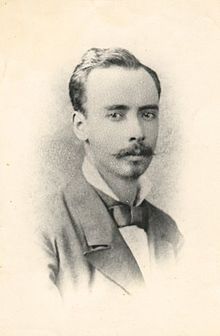
Prado’s father, Manuel Ignacio Prado, was twice the president of Peru (1865-1868,* 1876-1879).
As a military man (Prado’s first presidency was as outright dictator), the old man naturally had his son on a soldierly track as well. Leoncio was all of 12 years old when he took part in the Battle of Callao in 1866, defending that city against a Spanish bombardment during the Chincha Islands War.
That war saw Peru and Chile cooperating against Spain, after the latter seized a lucrative cluster of guano islands.
But different resource rivalries put the two former allies at loggerheads in 1879. When Peru nationalized saltpeter mining in the border province of Tarapaca — dispossessing Chilean interests — and Bolivia took similar measures, the countries fought the three-way War of the Pacific, also known as the Saltpeter War.
Chile would win the war decisively, dramatically reshaping Latin America in the process. Peru lost most of Tarapaca to Chile, devastating Peru’s saltpeter industry and provoking a generation of instability and social crisis. Bolivia fared even worse, losing its only littoral province to Chile: Bolivia remains landlocked to this day.
So it’s safe to say that there was something at stake worth fighting for as hostilities commenced.
As the Saltpeter War got underway, Prado returned from the United States where he was preparing an expedition to help Philippines separatists, and formed a guerrilla force. Though this corps had its highlight moments, it was overwhelmed in a scrap with Chilean regulars in July 1880 and Prado taken prisoner.
Considering his lineage and his exploits, he was an honored captive for the Chileans who repeatedly offered to release him on his honor not to take up arms again.
Prado refused these offers for some time, but he finally accepted his parole at the start of 1882 — a low ebb for Peruvian fortunes, for his father had been deposed by a coup and 1881-82 saw leadership of the country violently contested. Prado’s only thought, notwithstanding his pledge to Chile, was for the defense of his country and he rallied another party of guerrillas to his banner. “The enemy’s bullets do not kill,” he cried. “For to die for the fatherland is to live in immortal glory!”
That has proved to be the case for Prado, who certainly stood out from the politicians of his time for his patriotic heroism.
Captured during the decisive Chilean victory at the Battle of Huamachuco where a grenade shattered his thigh, the crippled Prado was regretfully executed in his bed for having broken his previous parole by resuming arms in the fight.
“We were all crying — all but Pradito,” recalled the Chilean captain tasked with overseeing the nasty business.
On this date in 1644, Joost Schouten, the able merchant and diplomat of the Dutch East India Company, “was strangled and burned to ashes in my presence in Batavia [Jakarta] because of his gruesome sodomy.”
That’s the report of Gijsbert Heeck who, like Scouten, left a noteworthy memoir. Heeck allowed that Schouten “was a man of unusual knowledge and extraordinary intellect,” but despite his gifts remained “in his heart … a hypocritical villain and seducer of many, secretly using his prominence and great authority to force them away from the path of decency into the way of his shameful foulness, seeking thereby to satisfy his devilish lechery.”
Before all that devilish lechery stuff came to light, Joost Schouten (English Wikipedia link | Dutch) had enjoyed a brilliant two-decade career in the Far East, most notably in Siam. There, Schouten ingratiated himself with the Siamese king Prasat Thong,* winning lucrative trade concessions, personal honors, and a seat for himself on the East India Company’s executive organ, the Council of the Indies.
A report that Schouten initially wrote for that company surveying Siam’s geography, people, and politics was published in 1638 and translated into many tongues: he was the first general account of Siam for Europeans. While several others would follow (pdf) in the 17th century, Schouten’s Description remains an essential source for the period.
Schouten himself was no mere observer in the ferociousscramble for colonial position and trade leverage in East Asia. It’s for this august person that the explorer Abel Tasman (as in Tasmania) named Schouten Island (off the coast of Tasmania). That was on the voyage that Tasman undertook to circumnavigate Australia, and discover (for Europeans) New Zealand — a voyage outfitted by Joost Schouten. Given another decade, with Dutch commerce on the come, who knows what heights he might have attained.
But the envoy’s scintillating service record did him little good when a handsome French halberdier repulsed by Schouten’s advances entrapped him in June 1644. This was an offense the Company took incredibly seriously.
Schouten confessed the crime voluntarily, and the only consideration the judges showed him was a pre-burning mercy strangulation. Their verdict, according to Peter Boomgaard, evinced “fear for the punishing hand of God if those who ruled did not take drastic measures.” Schouten was an educated man; indeed, he himself had been a judge. All the worse that, where he had wrought his best service for the Dutch Republic, he had also consciously invited its undoing in a hail of fire and brimstone.
One could, on the other hand, say that it was the Company itself that tempted divine wrath. After all, those in its service routinely spent months in overwhelmingly male environments: ships at sea, and trading outposts that were by now barred to European women. (Local women were a different story, of course.) Nor was Schouten’s particular stomping-grounds of Siam near as virulent in its attitude towards homoeroticism as the Calvinists back home; Schouten’s own travelogue noted that “their Priests, as well as many of the Gentry, are much given to Sodomy, that unnatural passion, being esteemed no sin, nor shameful thing amongst them.” Abroad on the blooming East, coinpurse bursting with the commerce of nations: it must have been a heady experience.
Whether coming around to the Siamese “esteem” or having nurtured it from the start, Schouten had, he said, indulged same-sex encounters** with some 19 different men since putting to sea from a return visit to the mother country in 1637. At least three of those partners — a boatswain’s mate, a soldier, and a burgher — were to their sorrow alive and conveniently identifiable in the Indies.
“Those who were known [to have taken part in his deeds] were, either with him, or later … smothered under water since they were unworthy to continue living among humans,” concluded our eyewitness Gijsbert Heeck. “Which is a fitting recompense and retribution for their gruesome life on earth. In the hereafter, however, the worst is still to come. But it is not for us to judge.”
* Prasat Thong, a law-and-order type, is alleged by the account of another 17th century Dutchman to have personally conducted some executions.
** Schouten, 40ish at his death, said that he was always the “passive” (penetrated) partner in these affairs with much younger men. (This, and all the text that follows it in the post, is also as per Boomgaard.)
On this date in 1762, the Korean king Yeongjo had his son and heir Crown Prince Sado immured in a rice chest — where he would die after eight excrutiating days.
In Lady Hyegyeong’s telling, the tyrannical father warped the sensitive son, sending the latter into a destructive spiral of madness. As the 1750s unfolded, Sado’s behavior grew erratic, violent, and delusional. He was prone to sudden fits of rage, stalked and raped court ladies, and wandered Seoul streets in disguise. He eventually murdered numerous servants, eunuchs, and miscellaneous commoners — even his own concubine. The court lived in terror of the mad prince’s impunity; the ruling dynasty itself stood in peril.
Many years later, the prince’s desperate wife in her autobiography remembered Sado’s own mother finally appealing to the king to do the necessary, unthinkable thing:
“Since the prince’s illness has become quite critical and his case is hopeless, it is only proper that you should protect yourself and the royal grandson, in order to keep the kingdom at peace. I request that you eliminate the prince, even though such a suggestion is outrageous and a sin against humanity.
“It would be terrible for a father to do this in view of the bond of affection between father and son; but it is his illness which is to be blamed for this disaster, and not the prince himself. Though you eliminate him, please exert your benevolence to save the royal grandson, and allow him and his mother to live in peace.
Perhaps to avoid spilling the prince’s blood, the royal lunatic was that very day forced into a sturdy chest in a palace courtyard. The ferocious prince entered it placidly, and his living eyes never again beheld the outside of that box: it was nailed shut and buried. (A recently discovered inscription, however, perhaps implies that the king didn’t actually mean for eight days locked in a box to be fatal. If so, it certainly lends credence to the idea that Sado’s mistreatment in childhood lies behind the later psychotic breaks.)
The royal grandson was indeed spared. When that child, Jeongjo of Joseon, finally succeeded to the throne upon his grandfather’s death in 1776, he wasted little time restoring the honor of his dead father.
The young man striking the dramatic pose is Stjepan Filipovic, an anti-fascist partisan hanged in the city of Valjevo by the Serbian State Guard, a collaborationist force working with the Axis occupation of Yugoslavia.
Filipovic is shouting “Death to fascism, freedom to the people!” — a pre-existing Communist slogan that Filipovic’s martyrdom would help to popularize. Smrt fašizmu, sloboda narodu! … or you can just abbreviate it SFSN!
In the city where Filipovic died, which is in present-day Serbia, there’s a monumental statue in his honor replicating that Y-shaped pose — an artistically classic look just like our favorite Goya painting, poised between death and victory.
Filipovic was a Communist so we’re guessing that he would not have had a lot of truck with the ethnic particularism that’s latterly consumed the Balkans. Times being what they are, however, the national hero to Tito’s Yugoslavia has become a post-Communist nationalist football.
That Valjevo monument — it’s in Serbia, remember — calls him Stevan Filipovic, which is the Serbian variant of his given name. But as Serbia is the heir to Yugoslavia, he at least remains there a legitimate subject for a public memorial. Filipovic himself was Croatian, but his legacy in that present-day state is a bit more problematic: in his native town outside Dubrovnik, a statue that once commemorated Filipovic was torn down in 1991 by Croat nationalists; its vacant plinth still stands sadly in Opuzen. (Opuzen’s film festival, however, awards its honorees a statuette replicating the destroyed monument.)
It might have been May 19, 399 BCE* — and if not, we’re in the neighborhood — that the original gadfly** philosopher Socrates obeyed a death sentence from his native Athens and quaffed a cup of deadly hemlock. It’s one of the most famous executions in history, and arguably one of the most consequential.
Socrates left no original writings that survive for us. Posterity sees him via the works of his students Xenophon and especially Plato, but he was a well-known figure to contemporaries in the polis.
For decades, the man with the method and the familiar daemon had been philosophizing around town. Socrates comes in for mockery in an Aristophanes play lampooning newfangled intellectual trends in the 420s BCE
“Like Ozzy Osbourne, [Socrates] was repeatedly accused of corruption of the young.”
The corrupting-the-young and impiety charges which putatively caused the man’s trial and death sentence have been much-debated in the centuries since. It seems clear that the real crime in the eyes of the hundreds of fellow-citizens who judged Socrates had to do with the students who weren’t reverential successor-eggheads, but toxic contemporary politicians. Socrates tutored the treacherous demagogue Alcibiades, who convinced Athenians to mount a catastrophic invasion of Sicily that cost Athens the Peloponnesian War; he rolled with Critias, one of the notorious tyrants of Athens during the 404-403 Spartan puppet dictatorship that resulted from losing that war.
All the while, Socrates had openly preached a dim view of the Athenian democratic system. Again, we don’t have the master’s direct words here, but something like the dialogue presented by the Socrates character in Plato’s allegory of the cave — in which non-philosophers are a lot of purblind morlocks — is difficult to square with anything but an elitist take of civilization. There’s a reason this could be a bit of a sore subject in a city that had just seen the glories of its late imperial apex possessed by Spartan hoplites, especially when espoused by a guy who rubbed chitons with the tyrants themselves.
Even so, Socrates was only narrowly convicted. Once convicted, the legal game had both the prosecution and the defendant propose a punishment, and the jury select one.
Were this system still practiced somewhere, game theorists would have a field day with it. But Socrates just opted out of the match by proposing that he be “punished” with a public pension for his services to the polis. There’s being a gadfly, and then there’s telling your jury to go take a long walk off a high rock: he was death-sentenced by a larger margin than had voted to convict. Plato makes this a much more martyr-like scene than Xenophon; the latter emphasizes that the septuagenarian chin-waggler didn’t much mind being excused from the frailties of advancing age.
Plato used Socrates repeatedly in various dialogues, and it goes without saying that these are cornerstones of the literary canon. The dialogues of most relevance† for his execution specifically are:
the Apology, Plato’s account of the defense Socrates mounted at trial: it’s in this text that Socrates is reported to utter the words, “the unexamined life is not worth living.”
Crito, a conversation between a wealthy guy of that name and the condemned Socrates in which the philosopher expounds his theory of citizenship and social contract in refusing Crito’s blandishments to escape before execution.
the Phaedo, in which Socrates argues for the immortality of the soul, and then gets down to the business of swallowing his fatal draught.
Soon the jailer, who was the servant of the Eleven, entered and stood by him, saying:—To you, Socrates, whom I know to be the noblest and gentlest and best of all who ever came to this place, I will not impute the angry feelings of other men, who rage and swear at me, when, in obedience to the authorities, I bid them drink the poison—indeed, I am sure that you will not be angry with me; for others, as you are aware, and not I, are to blame. And so fare you well, and try to bear lightly what must needs be—you know my errand. Then bursting into tears he turned away and went out.
Socrates looked at him and said: I return your good wishes, and will do as you bid. Then turning to us, he said, How charming the man is: since I have been in prison he has always been coming to see me, and at times he would talk to me, and was as good to me as could be, and now see how generously he sorrows on my account. We must do as he says, Crito; and therefore let the cup be brought, if the poison is prepared: if not, let the attendant prepare some.
Yet, said Crito, the sun is still upon the hill-tops, and I know that many a one has taken the draught late, and after the announcement has been made to him, he has eaten and drunk, and enjoyed the society of his beloved; do not hurry—there is time enough.
Socrates said: Yes, Crito, and they of whom you speak are right in so acting, for they think that they will be gainers by the delay; but I am right in not following their example, for I do not think that I should gain anything by drinking the poison a little later; I should only be ridiculous in my own eyes for sparing and saving a life which is already forfeit. Please then to do as I say, and not to refuse me.
Crito made a sign to the servant, who was standing by; and he went out, and having been absent for some time, returned with the jailer carrying the cup of poison. Socrates said: You, my good friend, who are experienced in these matters, shall give me directions how I am to proceed. The man answered: You have only to walk about until your legs are heavy, and then to lie down, and the poison will act. At the same time he handed the cup to Socrates, who in the easiest and gentlest manner, without the least fear or change of colour or feature, looking at the man with all his eyes, Echecrates, as his manner was, took the cup and said: What do you say about making a libation out of this cup to any god? May I, or not? The man answered: We only prepare, Socrates, just so much as we deem enough. I understand, he said: but I may and must ask the gods to prosper my journey from this to the other world—even so—and so be it according to my prayer. Then raising the cup to his lips, quite readily and cheerfully he drank off the poison. And hitherto most of us had been able to control our sorrow; but now when we saw him drinking, and saw too that he had finished the draught, we could no longer forbear, and in spite of myself my own tears were flowing fast; so that I covered my face and wept, not for him, but at the thought of my own calamity in having to part from such a friend. Nor was I the first; for Crito, when he found himself unable to restrain his tears, had got up, and I followed; and at that moment, Apollodorus, who had been weeping all the time, broke out in a loud and passionate cry which made cowards of us all. Socrates alone retained his calmness: What is this strange outcry? he said. I sent away the women mainly in order that they might not misbehave in this way, for I have been told that a man should die in peace. Be quiet then, and have patience. When we heard his words we were ashamed, and refrained our tears; and he walked about until, as he said, his legs began to fail, and then he lay on his back, according to the directions, and the man who gave him the poison now and then looked at his feet and legs; and after a while he pressed his foot hard, and asked him if he could feel; and he said, No; and then his leg, and so upwards and 118upwards, and showed us that he was cold and stiff. And he felt them himself, and said: When the poison reaches the heart, that will be the end. He was beginning to grow cold about the groin, when he uncovered his face, for he had covered himself up, and said—they were his last words—he said: Crito, I owe a cock to Asclepius; will you remember to pay the debt? The debt shall be paid, said Crito; is there anything else? There was no answer to this question; but in a minute or two a movement was heard, and the attendants uncovered him; his eyes were set, and Crito closed his eyes and mouth.
Such was the end, Echecrates, of our friend; concerning whom I may truly say, that of all the men of his time whom I have known, he was the wisest and justest and best.
A few books about the death of Socrates
* The Phaedo places Socrates’ trial on the day after Athens consecrated a ritual boat for its annual pilgrimage. (This was supposed to be the very boat that the hero Theseus had sailed back after defeating the minotaur in time immemorial, and the Athenians maintained it for centuries in a seaworthy state to make ceremonial voyages to the island of Delos, a sanctuary for Theseus’s patron Apollo. This is also the very conveyance in question in the “Ship of Theseus” paradox, a philosophical conundrum proceeding from the question of whether the thing was still “Theseus’s ship” if every single component of it had been replaced in the intervening years.) Anyway, Theseus aside, that mention of the consecration gives us Mounichion 7 on the confusing lunisolar Attic calendar for the trial of Socrates.
During the ship’s sacred voyage, Athens was to remain ritually “cleansed.” This condition included not conducting any executions. A date for the death of Socrates is established by Xenophon and Seneca reporting that the boat returned after 30 days — which was about twice as long as ordinarily required, but the archaic craft was very vulnerable to bad weather. 30 days is an eminently doubtable nice round number, but where ancient dates are concerned, we takes what we can gets.
“Counting inclusively, as was then the custom, Socrates died on Thargelion 6, which is the very day recorded for his birth,” notes Reason and Religion in Socratic Philosophy. It’s possible that Socrates’s birthday became associated with Thargelion 6 because Thargelion 6 was associated with Socrates via his execution … but Thargelion 6 became known as man’s execution date. It also happened to be the Athenian festival “Thargelia” (and the day before Plato’s Thargelia 7 birthday).
There are other dates out there. In particular, a number of easily accessible pages claim that the hemlock was downed on May 7, 399. I’m not positive, but it appears to me that this might have originally been arrived at by counting 30 days exclusively from Mounichion 7 to reach Thargelion 7, then noticing that Thargelion typically began sometime in May, and smushing together “May” and “7” from alien calendars … after which it’s been repeated on the basis of previous source’s authority. If there’s better support for this date than I infer, I welcome correction.
For my part, I’ve dated this entry based on the astounding Hellenic Month Established Per Athens calendar, specifically its dates for Thargelion of the 1st year of the 95th Olympiad. Thargelion 6 corresponded to May 18/19, says HMEPA — Greek days began at sundown — and since Socrates died at the end of daylight, just before sunset, that’s a Gregorian May 19th. Again, though, all this is built upon a chain of questionable inferences based on a few questionable passing remarks from just a couple of ancient sources. In the end, one just can’t know for sure.
** Plato reports in the Apology Socrates characterizing himself as such this way — “a sort of gadfly, given to the state by God; and the state is a great and noble steed who is tardy in his motions owing to his very size, and requires to be stirred into life” by his stings — bequeathing to us the evocative metaphor.
† Find these essential execution-related dialogues here, here, or here, or just the highlights here.
On this date in 1928, Chinese journalist and social activist Shao Piaoping was shot at Beijing’s Tianqiao execution grounds — fulfillment of his lifelong motto, “To die as a journalist.”
The intrepid Shao blazed a trail for print media in his native country, bucking a prejudice that mere journalism was a bit on the declasse side.
He co-founded and edited Hanmin Daily in 1911, just in time to get his support for the Xinhai Revolution into newsprint.
But Shao was no propagandist, and, post-revolution, was repeatedly arrested for his scathing critiques of Yuan Shikai and the various other illiberal strongmen taking roost. He had to duck out to Japan twice during the 1910s; there, he kept cranking copy, now as a foreign correspondent for Shanghai’s top newspapers. As the decade unfolded, he also became a theoretician of journalism without abating his prodigious ongoing output.
“I saw my role as that of helpful critic and believed it wrong to praise petty people simply to avoid trouble,” this pdf biography quotes Shao saying of himself. “I was determined not to dispense with my responsibility.”
By the late 1910s, he was publishing his own capital-city newspaper, Jingbao (literally “The Capital”) and developing his academic thought as a teacher at Peking University. He was perhaps China’s premier journalist; even so, he still had to slip into exile in Japan in 1919 after openly supporting the May Fourth student movement.
Shao left an impressive mark on his students, perhaps none more so than a penniless young leftist working in the university library, Mao Zedong.
As a guerrilla, Mao — still at that time an obscurity to most of the outside world — remembered Shao fondly to journalist Edgar Snow. In contrast to many other Peking University scholars who gave the provincial twentysomething short shrift, Shao “helped me very much. He was a lecturer in the Journalism Society, a liberal, and a man of fervent idealism and fine character.” Word is that Shao even loaned Mao money.
But the martyr journalist’s heroic career — not to mention his accidental link with the future Great Helmsman — insured his elevation into the pantheon, even though Shao’s underground membership in the Communist party was not known for decades after his death. Mao personally declared him a hero of the revolution, and intervened to see that his widow and children were cared for. China has any number of public monuments in Shao’s honor.

 Companys had held that notional office for mere hours six years before — but he’s still the last to hold it in any form at all.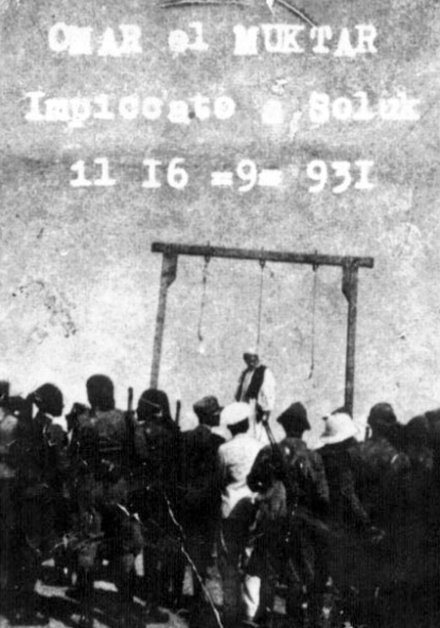
 Mukhtar (


 Prado’s father,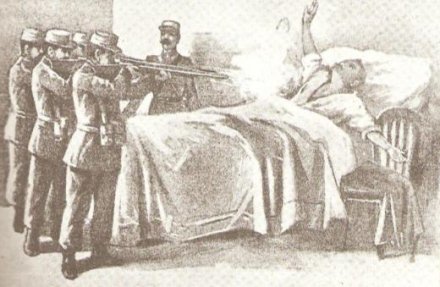
 This bizarre incident,


 The intrepid

