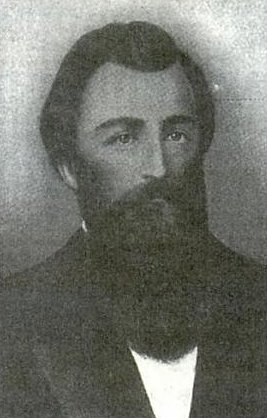
1537: Robert Aske, for the Pilgrimage of Grace

On this date in 1537, Robert Aske was hanged for leading the Pilgrimage of Grace.

The year preceding had been among the most wrenching in British history, and when Henry VIII began shuttering Catholic monasteries, many an egg that would comprise the English Reformation‘s omelette would be shattered.

In the conservative and Catholic-leaning north, Thomas Cromwell‘s reforms (combined with various political and economic grievances) triggered an uprising that soon controlled York.

This fraught situation ended much easier for the English crown than it might have, with a royal negotiating strategy of nominally accepting the Pilgrimage’s terms inducing the massive rebel force to disband, allowing its leaders to be seized thereafter on the first pretext of renewed trouble.

[flv:https://www.executedtoday.com/video/Pilgrimage_of_Grace.flv 440 330]

Robert Aske, the barrister who had come to the fore of the Pilgrimage movement and had personally negotiated terms with Henry, was among about 200 to suffer death for their part in the affair. In Aske’s case, it was against the will of Jane Seymour, Henry’s demure third queen and also a Catholic-inclined traditionalist; she made an uncharacteristic foray into state policy by ask(e)ing for Aske’s life, summarily vetoed by the king’s reminding her the fate of her politically-minded predecessor.*

Here’s Aske hanged at York Castle in The Tudors:

And here’s an inscription on a Yorkshire church reminding one of Aske’s surviving brothers of the events of those pivotal months.

* In other wives-of-the-king developments, Henry’s future (sixth, and final) wife Katherine Parr was taken a hostage by the rebels during the Pilgrimage.

On this day..

1706: Dona Beatriz Kimpa Vita, the Kongolese Saint Anthony

On July 2, 1706, Kimpa Vita, a Congolese noblewoman also known by her baptismal name Dona Beatriz, was burned as a witch in Evululu.

This remarkable woman claimed to be a medium for the spirit of Saint Anthony of Padua, a popular saint in the Catholicized Kingdom of Kongo, and attracted a mass movement in the midst of civil war and social breakdown in the proud Kongo state.

Executed Today is pleased to mark this occasion with an interview with Boston University Prof. John K. Thornton, author of The Kongolese Saint Anthony: Dona Beatriz Kimpa Vita and the Antonian Movement, 1684-1706.


This is a very unfamiliar story to most, as you point out in The Kongolese Saint Anthony. So let’s begin with some orientation — the Kingdom of Kongo is in the midst of a ruinous civil war. Why?

The civil war in Kongo was basically a dynastic affair, that is, a battle between branches of the royal family for control over the throne. Kongo had a very highly centralized political structure, the king and his council had a lot of power not only over who held high office, but also who got what income, because a lot of income derived from holding office. So controlling the kingship and its related patronage was very important.

This story is very complicated, I try to lay it out as simply as possible in Chapter II of my book. To make matters short, by D Beatiz’ day it had two branches duking it out — the Kimpanzu and the Kinlaza, with Pedro IV, conveniently descended from both these families, as a sort of conciliatory figure.

And it’s a highly Catholic country. How did that come to be?

Pretty remarkable story.

Actually I think it’s the only real missionary victory that the Catholic church had in the early modern period. By that I mean that they spread the faith to a completely independent country and not just by conquest.

Officially, it was a series of miracles that both Catholic priests and Kongo elites witnessed in 1491 that led Nzinga a Nkuwu, the king of Kongo to become a Christian and be baptized on May 3, 1491 (my birthday is May 3, 1949 which I have taken to be a sort of sign that I should be studying Kongo).

However, it was Nzinga a Nkuwu’s son Afonso (ruled 1509-1542) that really established the church. Afonso provided for the funding of the church, created schools for teaching literacy and Christian religion for the nobility, had children educated in Portugal and returned to the country, and working with his own educated people and Portuguese priests also figured out how to blend the two traditions into a religion that was acceptable in the country. It’s no wonder the Church called him the “Apostle of Congo”.

The kings who followed elaborated and extended what Afonso started, especially by creating a network of schools all over the country. By and large Rome and Portugal collaborated and blessed the project, so the Pope allowed Afonso’s son Henrique to be the first Sub-Saharan African bishop in 1518, and assigned him to extend the church in Kongo (Henrique died in 1531). In 1596 the Pope made Kongo’s capital city the seat of the Bishop of Congo and Angola.

The Church grew again in the late sixteenth century when a series of kings named Alvaro (I and II, father and son, in particular) went a lot farther than Afonso had in Europeanizing Kongo. They gave the nobles titles of nobility in European fashion (Counts, Dukes and Marquis), the brought in relics from Europe (bones of martyrs, for example), established an embassy in Rome, renamed the capital city as Sao Salvador, and so on. The Kongolese ambassador to Rome, Antonio Manuel, who died in 1608 and is honored in a wing in the church of Santa Maria Maggiore in Rome, left personal papers when he died now found in the Vatican archives. They show the sort of culture a person educated entirely in Kongo could show, in addition to a fascinating array of Kongolese administrative documents — the only ones we have. He also studied Carmelite mysticism, and had correspondence from many different people all over Europe. He was clearly at home among elite Europeans and was regarded by those who met him as a cultured individual in a period when extra-Europeans were not always seen that way.

The Jesuits established a college in Kongo in 1624 and it provided advanced education along European lines until it was close just about the time that Beatriz was active. Kongo had a library, in fact, though no trace of it exists any more, found on the second floor of the Jesuit college.

So in short, the answer is that the political elite of the country decided in the sixteenth century to make their country a Catholic one, and they took vigorous steps to make it happen.

They put teachers out all through the country, visiting priests from Europe constantly met these teachers in the rural areas, they were usually literate and possessed a good deal of knowledge of European culture, some had even lived in Europe. These schoolmasters were the soul of the church; they instructed the people (using a catechism in their own language after 1624), prepared them for the sacraments and led weekly prayers at places of worship, usually large wooden crosses erected at key points all around the country.

So there’s a religious penetration that on the face of it might seem to be a religion of colonization, of foreign domination. But that’s clearly not the way most Kongolese thought about it.

It was never a religion of conquest, and for that reason, the Kongos managed to make it their own without feeling they were abandoning or being forced to give up something. In the sixteenth and seventeenth centuries foreign visitors often commented on how proud the Kongos were, of their country, their language, their food and the like, thinking that they were the best people in the world. “Congo arrogance” was a common epithet that the Portuguese who built the colony of Angola on Kongo’s southern border used to describe them.

And it’s still very true today. I go to Angola quite a bit and have been to Mbanza Kongo twice. You can feel and hear that pride even now. During the colonial period (roughly 1885 to 1975 in that area) the Portuguese tried very hard to replace indigenous languages with Portuguese and to erase African culture in a systematic way, especially after 1926. But the Kongos simply refused to be erased: they continued their language secretly, kept their special foods and taught their children that they were still the best. It worked.

Today in Angola, you see in so many places that Portuguese is the language of daily life — even street kids shout at each other in Portuguese in Luanda and the land east all the way to Malange. But in Mbanza Kongo and elsewhere in the north, the language of daily life is Kikongo, the ancient language of the country. Their pride has been a problem for Kongo, too. In 1992 a lot of them were massacred in Luanda, partially for political reasons that are very complicated, but also I think because other Angolans resent this pride. But enough on that.

Anyway, the Kongolese were proud to be not just Christians but Catholics. The Portuguese tried to invade Kongo from Angola several times, first in 1622, then again in 1657, and finally in 1670. Each time they were decisively defeated. On the other hand, the Kongos were also unable to invade Angola, as they were repelled there also, first in 1580 and again in 1665 (when the famous Battle of Mbwila was fought on the border between the two domains of Angola and Kongo).

This led to great hostility between Kongo and Portugal and especially its governors of Angola. Portuguese were massacred in the wake of the 1622 invasion and after the Battle of Mbwila in 1665, and by the 1670s they had been effectively forced to leave the country, trading their only with Africa servants called pombeiros who represented their interests. (Priests were an exception).

Yet this history didn’t impact on the way Kongos saw themselves as Catholics. King Garcia II (1641-1661) famously wrote a letter in which he proudly stated that they obeyed the Pope, vicar of Christ on earth, even though the Portuguese, whom they hated, had introduced them to the religion. Indeed, the only thing that we see in the correspondence of Kongolese kings that they do say good about Portugal was that it introduced them to the religion.

The idea of a Catholic Kongo was reinforced when Kongo made an alliance with the Dutch. This took place in 1622 in the aftermath of the failed Portuguese invasion. Pedro II, the king, sent a letter to the Dutch States General proposing an alliance in which the Dutch would send a fleet to attack Angola by sea, and Kongo would send an army by land. The first attempt to do this in 1624 failed, in part because the Portuguese went out of their way to conciliate Kongo, but the second attempt, in 1641, succeeded and for a time the Kongo-Dutch alliance (joined by the formidable Queen Njinga of Ndongo-Matamba who was also at war with Portugal) nearly drove the Portuguese out of Angola.

The Dutch hoped to use this opportunity to also convert Kongo to the Calvinism of the Dutch Reformed Church and they even had special literature designed to convert Catholics who spoke Portuguese to Calvinism. But Garcia II would have none of it, and had the books burned (it was the seventeenth century after all), and forced the ministers to leave. He wrote a letter to the Dutch Estates General protesting the attempt and in it he made the statement I summarized in the paragraph above.

Kongo tried to make contact with Dutch speaking Catholic countries in the aftermath of the third failed Portuguese invasion in 1670. It seemed like a good compromise though the Dutch never did come back to Angola to fight, and the Catholic parts weren’t part of the Dutch program.

So, that’s background — now, who is Dona Beatriz Kimpa Vita?

She was the daughter of a noble Kongo family from the region right around Kibangu, a flat-topped mountain that lays some distance east of the capital of Mbanza Kongo (on a clear day you can see that mountain from Mbanza Kongo).

She seems to have had spiritual gifts even as a youth, and had dreams of playing with angels and visions and the like. Not surprisingly, she turned to religious pursuits, becoming a nganga Marinda, a spiritual person whose role the Catholic missionaries did not like, but was widely accepted in the Kongo as legitimate. She was probably too spiritual and independent to be married, since she had two failed marriages by the time she began her prophecy.

Her movement combines both a religious renewal and a national restoration. Should one think of her as a religious person whose cause happened to have political implications, or someone who’s very intentionally trying to alter the balance of power? Is it even right to separate the secular and the religious dimensions?

I think Beatriz was trying to end war as much as anything else. This was at the height of the slave trade: thousands of people were being exported annually to Brazil, to the Spanish Indies, to Suriname, and some even to South Carolina.

The slave trade was one of the byproducts of war (along with death and destruction), and because slavery was lucrative, it helped to continue the wars in a vicious cycle. As Beatriz understood it, the solution was to end the civil war and restore the kingdom. None of the pretenders to the throne seemed able to do that.

She thought that he had sent Saint Anthony do to that, and he had come to earth and chose to be incarnate in her. It harmonized with Kongos’ belief that they were God’s chosen people (he had created Kongo himself, sending his angels to create the rest of the world), and he would intervene to set things right.

And who exactly are her followers?

Beatriz had followers from all ranks and walks of life. Pedro IV had her burned, but his own wife Hipolyta became a devotee. Pedro was intrigued by her message himself. A number of the top contenders also were either tempted or became her followers. The most notable of her followers was Pedro Constantinho da Silva, one of Pedro’s generals who saw allying with her as a chance to become king. Along with the political guys was a great mass of peasants, who really hoped for a better time and thought that Beatriz’ movement could restore the kingdom.

It was the politics of her movement that got her in trouble. Once Beatriz threw herself in with Pedro Constantinho she was doomed because the other contenders became her enemies. It was Pedro IV who managed to capture her, and he had her burned as a heretic and witch. Before she went over to Pedro Constantinho, Pedro IV had been very interested in her mission and protected her.

Dona Beatriz? Kimpa Vita?
What’s In A Name?

Kongos in those days usually had at least two names.

The first one was a zina dia santu (Saint’s name), given as a Portuguese name though often pronounced as in Kikongo and always incorporating “Dom” or “Dona” as part of the name. So someone named Joao would be called Ndozau, and someone named Miguel would be Ndomigel.

Their second name was a Kikongo name, like Mpanzu, Nkuwu, Vita, Nzinga and so on. As far as I can tell people got both names from their parents when they were born, and they probably started using the zina dia santu even before baptism. If people had two Kikongo second names, the second one was the father’s first name, sort of like the Scandanavian system where a Johan’s child is named Johansson.

Beatiz’ second names mean “scheme” or “plan” (Kimpa), and “war” (Vita). It might be because she was born in a war and this was added, or it might just be her father’s first Kikongo name. King Antonio I had Vita as an element in his name; some people use this as evidence she was descended from this king who was killed in the Battle of Mbwila in 1665. I think such a fact would have been noted at the time and I doubt it.

Nowadays, people in Angola and DRC tend to look down on the zina dia santu, which they view (wrongly, I believe) as a remnant of the colonial past. Many Angolans believe that somehow the Portuguese organized all that Christian stuff in Kongo and the local people resisted or rejected it.

I think the reason for this is twofold: first, because that’s what the Portuguese claimed during the colonial period, that they really more or less created the Kingdom of Kongo, which is totally untrue. A second reason is because most Angolans with any nationalist feeling don’t like to be identified with Portugal and so look to a non-Portuguese past. Hence, D Beatriz is rather militantly known as “Kimpa Vita” in Angola and one does not often hear her Christian name, though of course people know it.

-J.K.T.

Dona Beatriz rejects or alters a number of religious practices we might think of as essentially Catholic, like the iconography of the cross, but she’s not doing it in the name of rejecting Catholicism — she’s doing it in the name of Saint Anthony of Padua. Was there simply a pent-up need for renegotiating the way the faith worked for Kongolese? If so, did it happen in some other way after she was executed?

I think she was concerned that Christianity was too European, and one of the things she chided the missionaries about was that they did not represent any black saints.

She had direct revelation from God on her side, she died every Friday and spent each weekend in Heaven conferring with the Heavenly Father about the affairs of Kongo and so what she got there was pretty much undeniable. From these sessions in Heaven she learned the stories about Jesus being born in Nsundi, baptized in Sao Salvador and Mary being a slave of a Kongo marquis. There was probably a lot more richness to these stories that our accounts tell us.

Kongos were pretty sure, I think, that God was an African and their pride also gradually placed stories in Africa, so in this way Beatriz was confirming what people believed or wanted to believe. After her death, we find a lot of art objects, particularly crucifixes, in which Jesus is shown as an African (his features are African) and is wearing a cloth with a specifically Kongo design. Cecile Froment has recently competed a wonderful Ph.D. thesis at Harvard on this art which I think will really demonstrate how much the Church in Kongo incorporated Kongo concepts. I don’t know if Beatriz’ movement inspired this art directly, but her movement and the art together represent what many people were thinking.

An aside here. From Afonso’s time onward, there was a desire to make an independent Kongo church under its own bishop and with its own clergy. They had the educational resources to support this, so they felt they should. Alvaro II entertained ideas that he could control such a church, that the king was “vicar of his kingdom” and could appoint clergy at will. This wasn’t canonical and the church didn’t support it, even going to far as to try some of those who advised him on this through the Inquisition. But even when Kongo got its own bishop in 1596, the kings of Portugal managed to get control of appointment and put Portuguese in there.

This was the cause of endless conflicts between the kings and the bishops, particularly because of the hostility between Portugal and Kongo over Angola. Finally, a compromise was worked out. While the bishop ended up residing in Angola, and he refused to ordain many Kongolese, the priestly needs of Kongo were to be met by missionaries, who weren’t really there to spread the faith (it had already spread) but to perform the sacraments that an ordained priest could. Because Portugal didn’t want Kongolese clergy, and Kongo didn’t want Portuguese clergy, the compromise was to chose Italian clergy who were from neutral states (mostly Florence, but others as well). These priests came from the Capuchin order, a strongly Counter-Reformationist order that wanted to purge Kongo’s Catholicism of its local elements in the name of purifying the faith. That didn’t go so well, and the struggle over just how Kongo the church could be was waged along these lines.

Beatriz came into this struggle on the Kongo side. While not denying the Capuchins their place as priests, she contended with them over the theological questions. She lost this round, mostly for political reasons and not theological ones. Maybe the African Jesus of Froment’s thesis was the theological victory of Beatriz or at least her followers.

She occupies the ruined former capital. What’s the significance here? Had she remained unmolested, what trajectory might her movement have been on?

I think that messianic religious leaders like her in a politically charged environment don’t have much chance unless they are very astute or their supporters are strong. Of course occupying the capital was vital. It had been abandoned in 1678 and was in ruins, yet it was the very symbol of Kongo. The kings were all buried there, the cathedral was there. Holding the city was in effect restoring the kingdom and presumably ending the civil war.

She could only have remained in power if she had stayed with Pedro Constantinho and if his forces had been enough to protect her and to fend off the inevitable attacks that the other two primary contenders, Joao II of Bula and Pedro IV of Kibangu, would mount. Pedro ended up beating both of these two, first Pedro Constantinho in 1709 and then Joao. So with Pedro Constantinho as patron she could not have survived.

She also made the political mistake, which we can only put down to overconfidence or naivete, of going back home to her parents who lived in Pedro IV’s domain to have her baby. Having the baby also upset her, and made her feel guilty since as a saint she should not have done this.

But let’s be a bit speculative and say that Pedro IV didn’t capture her, or he decided to follow her and put distance between himself and the Catholic clergy who were obviously opposed to her. What might have happened? Perhaps he would have re-founded the church in Kongo with a new relationship to Rome, and decided to have Kimpa Vita and some sort of apostolic succession from her ordain priests and bishops. These would clearly have been drawn from the schoolmasters who ran the church in Kongo anyway. A good number of them did become Antonioans and they would have created a new church. It would have had some of its own new traditions, like the stories that Beatriz told about Jesus’ birth in Nsundi and baptism in Mbanza Kongo, or the descent of kings and the like. These might have been written since the chruch was literate and perhaps formed a new scripture. And perhaps they might have found, in time a way to reconcile this with Rome, but maybe not. It would have been an independent church as we see all over Africa now.

What exactly leads to her execution? Cui bono?

Her execution was done following her capture as described above. She was tried in a civil not an ecclesiastic court under Kongo and not church law. Kongo law prescribed punishment for witchcraft and heresy and those were the charges against her.

We don’t know what happened in her trial since the record has not survived (my dream is to find it, since there probably was one once, and who knows, it might have been sent to the Inquisition in Portugal or Angola). But all we know is what the Italian priests, Bernardo da Gallo and Lorenzo da Lucca told us, and they were not invited to the trial (fine by them; they didn’t want to be too closely associated with the results). They questioned her about her beliefs, and da Gallo’s account of that inquiry is our basis for knowing what she believed. But they could do no more on that end than hear the result. They were happy for it since that’s what they wanted too.

Her movement isn’t destroyed by her execution. What happens over the next 2 1/2 years before the Battle of Sao Salvador? And what happens after that battle: What was Dona Beatriz’ immediate legacy? Was she remembered, was her name invoked? What became of her followers?

We know the movement remained very strong in Mbanza Kongo after her death, and that Antonian prayers were shouted out by the defenders of the city in 1709. But there is not documentary mention of them further after that. But don’t read too much into this, since the documentary record becomes very, very quiet after 1710 or so — we just don’t have any details about it from any source. In fact, until I discovered a kinglist written in 1758 (I think by a Kongo) we weren’t sure how long the reigns of the kings were for the next fifty years or even what order they ruled in. It is possible that the movement survived even there.

We also know that the movement had very strong bases in the southwest part of Kongo, in lands belonging the the Kimpanzu faction that had been headed by Suzanna de Nobrega. This faction was not involved in the war in 1709 and thus would not have suffered the inevitable persecution that took place in Mbanza Kongo.

But Manuel II, the king who followed Pedro IV after his death in 1718, came from that faction and region. He had abandoned the Antonians to join Pedro, and perhaps he also suppressed the movement back home. We have a couple of letter from him, written early in his reign and dealing with ecclesiastical matters, but the question of Antonians doesn’t come up in them.

After my book was published, Simon Bockie, a librarian at Berkeley and an excellent ethnographer of Kongo (he’s a Kongo himself) wrote a critical review. He claimed that I had not made use of abundant oral traditions that he had heard in his youth about Kimpa Vita in writing my book and thus I had written an account based on only the testimony of her enemies.*

I had searched published sources in French, Portuguese and Kikongo for traditions that I could relate to Beatriz when I did my research, and I did make as much use of these as I could when I wrote. But at the time I had not been able to do research in Mbanza Kongo and so had to let that aspect go. When my wife, Linda Heywood and I went to Mbanza Kongo in 2002, we specifically asked about traditions concerning Kimpa Vita (as she is usually called today) and were taken to a man who claimed to be the local expert on her. He asked us if we wanted to hear the tradition in French, Portuguese or Kikongo (Mbanza Kongo is very near the border of the Democratic Republic of the Congo and probably half the population is trilingual). We said Kikongo, which he proclaimed to be the right answer. He then went into a half-hour or maybe forty-five-minute discourse on the question. He had some interesting things to say. First, I noticed that he gave dates in his account, but he stated them in French. Likewise, he mentioned the names of the missionaries and the Christian names of Kongo kings in French also. I thought this was strange and concluded that he had received a “fed back” tradition, meaning that he had combined what he might have known from oral sources, such as his parents or elders, with written sources that drew on the movement which was described in French at least as early as 1953.

I might have easily concluded that both his traditions and those Bockie heard as a youth were simply feed back stories made to surround an event known only from modern historical reconstruction. You can hear such a tradition and have no idea that it is of modern creation, since you might not know its sources and even the one telling you might have heard rather than read it. Personal elaboration around a few set facts is a common point of oral tradition, and thus explaining things one receives from tradition or even from books can be expanded this way.

But having said that I was very intrigued by other elements in the story which were purely Kikongo. The most important was the very significant role played in the story I heard in Mbanza Kongo by Beatriz’s mother (ngudi andi Kimpa Vita), to the point where much of the inspiration of the movement was in fact from the mother, and moreoever, the mother continued the movement after her daugher’s death.

The traditionalist went on to link modern religious movements through the descent of this mother. Was it possible that the movement did live on? I can’t say. I do know that several independent churches claim Kimpa Vita as their founder, or claim to be heirs to her message, most notably some branches of the Kimbanguist church (founded in the 1920s by a prophet named Simon Kibangu) and the Bundu dia Kongo, a rapidly growing church founded by Mwanda Nsemi in the 1960s. It could be true, or it could be simply propaganda of these movements, also fed back into tradition.

Was it unusual that this movement was led/instigated by a woman? Or would that not have been consequential to her followers and opponents?

The movement was led by Saint Anthony; D Beatriz was only his earthly form. Why he chose a woman is harder to say.

Did it make a difference that he did? Probably. Beatriz realized that the woman/man thing was a problem. When Pedro’s soldiers arrested her they challenged her, asking how Saint Anthony, who was a man, could have a baby. Her only answer was that she didn’t know, only that it had come from Heaven. She certainly was attentive to women; for example, she could make the barren bear children, and women were among her close followers.

I don’t think, though, that we should read too much into the sex issue. There were also a number of very powerful women in Kongo at her time: Queen Ana Afonso de Leao all but ruled the southeast, and Queen Suzanna de Nobrega ruled the southwest. Although Joao II ruled Lemba, everyone knew that his sister, Elena was the real ruler of that territory. There were provisions in Kongo law allowing women who reached a certain political level to have male concubines and treat them more or less as men treated female concubines.

Finally I confess that I didn’t do as much as I wanted to or could about the question of women and females in Kongo life when I wrote the book, and sacrificed some analytical asides in the interests of narrative. I tried to remedy this ever so slightly in an dense and technical article I published in the Journal of African History, called “Elite women in the Kingdom of Kongo”, not for the faint-hearted, that addressed the question of female power. I had also addressed female power in the life of Queen Njinga, who ruled in the Kimbundu speaking area south of Kongo, in another article some twenty years ago, and I hope to write more about women in the future.

Has there been a reclamation or rediscovery of her in the postcolonial period? How does Dona Beatriz/Kimpa Vita read in Angola now?

As long ago as 1996 there was an official decision to erect a statue to her somewhere in the country. There is an image of her, drawn by Bernardo da Gallo from life, on the cover of my book, so it wouldn’t be hard to do. This would be the “book” D Beatriz Kimpa Vita, with the full apparatus of scholarship, as opposed to the “tradition” Kimpa Vita, supported by the oral traditions and independent churches. It will be interesting to see how these two versions, my book, and Kongo pride run into each other.

* Canadian Journal of African Studies, Vol. 32, No. 3 (1998), pp. 645-647, in which Bockie writes,

As a child growing up in the Lower Congo listening to tales from our oral history, I heard many times about the exploits of Kimpa Vita, who was still remembered after 250 years as a major cultural heroine … It was something of a shock to find that Thornton has chosen to present his account almost exclusively through the eyes of her enemies and killers … there remains no convincing Kongo voice or presence in this book.

On this day..

1578: Five sodomite monks, by Calvinist Ghent

On June 28, 1578, five Catholic monks were burnt to death in Ghent for homosexuality.

The five holy men being prepared for execution, in this drawing by Franz Hogenberg. (Click for larger view.)

At our scene in the Spanish-controlled Low Countries, the revolt that would become known as the Eighty Years’ War and secure Dutch independence still had about 70 of those years to run.

Stadtholder William of Orange, aka William the Silent, has his hands full with the Habsburg forces determined to crush their disobedient subjects.

Half civil war, half proto-nationalist revolution, this conflict overlaid disputes over both political and religious authority, complicated by a catastrophic Spanish bankruptcy.

Of this compelling history much beyond our scope, the piece of most moment for our unfortunate monks was a grudging agreement to chill out the sectional suppression as part of a temporary truce between the warring sides. Said “slackening of persecution inspired Reformed public worship and attempts to topple the Catholic stewpot.” (Source)

Late in 1577, a political coup in the commercial powerhouse of Ghent did just that, part of a mini-Renaissance of Calvinist city-republics that Spanish arms would truncate in the 1580’s. But here in the 1570’s, the newly elevated slate of Calvinists implemented a “Reform” agenda that included aggressive moves against Catholic authority.

On 18-22 May [1578], the Reformed launched an attack on the four mendicant monasteries. Their churches were purified and made ready for Reformed worship. On 1 June the first public preaching was organized in the Dominican and Carmelite churches. (Source, a pdf)

Rumors of homosexuality in the religious orders swept the overheated city (assuming they were not put about intentionally), and this day opened a summer’s terror that saw 14 monks burned (pdf) for the love that dare not speak its name.

Kenneth Borris translates the inscription on the Franz Hogenberg image linked above thus:

“five monks are being burned in Flanders, in the city of Ghent. Four are Franciscans (Minnenbruder*) and the fifth Augustinian. Also three have been quickly flogged with switches on the market square as they deserve, because of their outrageous sexual offenses (unzuchtt) that greatly offended the authorities. That is why the four mendicant orders have now been driven out of Ghent.”

William the Silent, made of more statesmanlike stuff than these zealots, would actually enter Ghent himself the next year to disarm the ruling clique, realizing that firebrands were driving Catholic cities back into Spanish arms.

But he could not contain the schism. Spain ultimately kept the Catholic-leaning territories that today comprise Luxembourg and Belgium (including Ghent), while the Protestant Netherlands fought onward to independence.

* “Minnenbroder,” Borris explains, “may be a satiric pun on the word minne (which had come to mean debauchery), suggesting ‘brothers in lust’ as opposed to brotherly love. Hogenberg connects sodomy with ‘godlessness,’ as was common.”

On this day..

1574: Gabriel de Lorges, accidental regicide

On this date in 1574, Gabriel de Lorges was beheaded in Paris for treason.

Known by the time of his death as the Comte de Montgomery (English Wikipedia entry | French) — though the title was punitively stripped from the man and his heirs, causing him to spit at the scaffold, “tell my children, if they are not able to reclaim their position, I curse them from the grave” — Lorges’ treason was going Protestant and fighting for the Huguenots in the wars of religion ravaging France.

But his claim to fame, and indeed (if quite unjustly) one of the explicit charges laid against him, was a regicide that fueled those wars and helped bring down the Valois dynasty.

The ol’ lance-in-the-eye

The vigorous 40-year-old French king Henri II seemingly had the Valois in good shape and anti-Huguenot policy firmly in the saddle.

In 1559, though, the sporting monarch put his own butt in the saddle at a joust with our day’s principal, then a captain of Henri’s Scots Guards (and a Catholic).

Gabriel’s shattered lance somehow found a chink in the king’s visor and managed to tolchock the royal gulliver just beside the eye.* After a week and a half in agony, Henri succumbed to the injury.**

Henri’s sudden death was bad news for France, because the oldest† of his seven children was only 15 years old, and feeble. He died the next year.

As the widowed Italian queen Catherine de’ Medici struggled over the ensuing decades to find a stable Valois heir among her brood, the aggressively Catholic House of Guise‡ flexed its political muscle to the resentment of the Bourbons and the Huguenot lords, and pitched France towards civil war.

Our errant knight, meanwhile, although forgiven by the dying Henri II, had despairingly retired and hurled himself into study that soon converted him to the Protestant party.

Quickly distinguishing himself as perhaps the ablest Huguenot commander, Montgomery was in Paris in 1572 during an ostensible truce for interparty dynastic nuptials when the Catholic faction sprang the St. Bartholomew’s Day massacre.

Though Montgomery was a specific target for assassination that day, he somehow managed to escape. He gave the Catholics fits for the two years left him, enough that the crown tried to buy him off. (Like most Protestants, he was distrustfully defiant after the horrors of St. Bartholomew’s Day.)

He was finally overcome in 1574; as Henri’s second son had just kicked the bucket without an heir, Catherine assumed the regency while a third boy was fetched from Poland, and got herself some gratifying but untoward revenge on the inadvertent author of her family’s unfolding ruin.

No time was lost in condemning [Montgomery] to the penalties of high treason; he was beheaded at the Greve, his body quartered, and his family degraded from their nobility. Previous to his execution, he was cruelly tortured to make him confess the existence of the late admiral‘s conspiracy, but the pain drew no such acknowledgment from him, and mangled and wounded as he was, he went to the scaffold with remarkable serenity. We have an account, given by a contemporary, of his steady attachment to his principles: “He would not confess to the Archbishop of Narbonne, who went to him in the chapel to admonish him; nor would he take or kiss the crucifix, which is usually presented to those who are being led to execution; nor in any way attend to the priest, who had been placed in the cart by his side. A cordelier thinking to draw him out of error, began to speak to him, and said that he had been abused. Looking at him steadily, he answered, ‘How! abused? and if I have been it is by those of your order: for the first person who ever handed me a Bible in French, and made me read it, was a cordelier like you; and therein I have learned the religion which I hold, which alone is the true religion, and in which, having since lived, I wish now by the grace of God to die.'”

(Some sources place Montgomery’s execution on May 27, which I believe confuses his date of death with his date of capture.)

Just like Montgomery himself, the Huguenot cause proved resistant to every policy of Catherine or the Guises; this day’s execution only screwed up the nerve of a party that had been given notice on St. Bartholomew’s Day that their lot must be to conquer or die. Since Henri II’s boys could neither, over 30 years’ time, produce an heir nor master their foes at arms, the Huguenots conquered when the throne finally passed to a Bourbon.

A public-domain biography of Gabriel de Lorges, comte de Montgomery, can be enjoyed by French-speakers here. For the English-speakers, Alexandre Dumas’ fictionalized treatment, The Two Dianas, is freely available in translation.

* French surgeon Ambroise Pare attended the dying monarch. Pare’s grim description of the king’s injuries appears in this biography of the physician, which also reports that Henri’s caregivers

secured the heads of four criminals that had been beheaded and experimented upon them with a lance in order to ascertain the probable course of the splinters.

** The fatal joust is alleged to be one of the vindicated prophecies of Nostradamus. Prophecy or no, the family had bad luck with sports; Henri came in line for the throne when his older brother dropped dead after playing tennis.

† Henri II’s immediate heir Francis II was married to Mary, Queen of Scots. After the death of her husband, she unhappily shipped back out to Scotland to contest the English throne, with unsatisfactory results.

‡ More about the House of Guise before, during and after this period from this public domain text.

On this day..

1579: Hatano Hideharu, en route to the Tokugawa Shogunate

On this date in 1579, the treacherous execution of a rebellious Japanese lord set events in motion that would shape the nation’s destiny.

For two centuries, Japan had been shaken with civil strife in the Sengoku, or “Warring States”, period.

Hatano Hideharu, chief of the minor Hatano clan, got himself on the outs with powerful daimyo Oda Nobunaga. Nobunaga’s samurai general Akechi Mitsuhide forced Hideharu’s capitulation, convincing him to lay down his arms by offering his own mother as a hostage.*

And here’s where the bodies start piling up.

Nobunaga overruled Mitsuhide’s promise of safe conduct and had Hatano Hideharu put to death.

Outraged, the Hatano clan retaliated by crucifying Akechi Mitsuhide’s mother.

Since Mitsuhide suffered the consequences for the bad behavior of his boss, this tit-for-tat left a bit of tension between the two. (The Hatano were done as a factor in Japanese politics, so having served to poison this relationship, our story takes its leave of them here.)

Perhaps as a result — there’s no single agreed-upon reason, but the personal vendetta has drawn the most commentary — Mitsuhide himself rebelled and forced Oba Nobunaga to commit seppuku.

It probably wasn’t exactly like this fanvid of Samurai Warriors 2 scenes.

Mitsuhide’s betrayal opened the door for another Nobunaga retainer, Toyotomi Hideyoshi, to in turn crush Mitsuhide,** and seize power for himself.

From that station, Hideyoshi completed the national unificiation that Nobunaga had commenced and set the stage for the Edo period under the shogunate founded by his successor, Tokugawa Ieyasu.

And maybe — with a stretch — they owe it all to Hatano Hideharu.

* The online sourcing on the death of Makiko, Akechi Mitsuhide’s mother, is a bit inconsistent; some suggest that the Hatano didn’t have her a hostage, but found a way to kidnap her for revenge.

** Mitsuhide’s daughter Hosokawa Gracia, became a legendary Christian convert after his death.

On this day..

1867: Emperor Maximilian I of Mexico, “Archdupe”

On this date in 1867, a firing squad disabused a Habsburg heir of his pretensions to the throne of Mexico.

A little bit loopy, a little bit liberal, and fatally short of common sense, Ferdinand Maximilian Joseph* decamped from the easy life at his still-under-construction dream palace outside Trieste for an exalted title that really meant playing catspaw for Napoleon III‘s Mexican land grab.

(To assuage the pangs of imperial adventurism upon our tender-headed hero, Maximilian had been “invited” to assume the Mexican throne by a convention handpicked to do just that.)

There the puppet emperor with the silver spoon in his mouth found himself pitted in civil war against the Amerindian peasant from the school of hard knocks: Benito Juarez, one of Mexico’s great liberal statesmen.

As the tide turned in favor of Juarez and the liberals, and Napoleon’s attention increasingly fixated on problems closer to home, the French threw in the towel.

But Maximilian had too much honor or too little sense to heed his patron’s advice to get out while the getting was good; sticking it out with “his people,” he was captured in May, 1867.

Juarez desiring to give any future bored European nobles second thoughts about New World filibustering, Maximilian got no quarter.**

While Louis Napoleon emceed a world’s fair on the other side of the planet, Maximilian was shot with two of his generals, Miguel Miramon and Tomas Mejia.


Manet’s The Execution of Maximilian, showing an obvious compositional debt to Goya’s Executions of the Third of May. Further analysis: written English; video Spanish.

Maximilian’s widow Charlotte — “Carlota”, when trying to blend with her adoptive subjects — descended into a long-lived madness back in the Old World, but was rumored to have borne with one of Maximilian’s French officers an illegitimate child who would go on to become an infamous Vichy collaborator.

Books about Emperor Maximilian

This sensational affair attracted plenty of coverage in the ensuing years; as a result, there is a good deal of topical material from near-contemporaries now in the public domain. Maximilian in Mexico: A Woman’s Reminisces of the French Intervention 1862-1867 (Gutenberg | Google Books) is a zippy read.

* Brother to Austrian Emperor Franz Joseph.

** Spanish trial records are here. European appeals for clemency poured in, but Maximilian had doomed himself with the “Black Decree” of 1865, ordering summary executions of captured Republicans.

The time for indulgence has gone by: it would only encourage the despotism of bands of incendiaries, of thieves, of highwaymen, and of murderers of old men and defenseless women.

The government, strong in its power, will henceforth be inflexible in meting out punishment when the laws of civilization, humanity, or morality demand it.

Juarez answered the clemency appeal of Princess Salm-Salm with solemn words:

If all the Kings and Queens in Europe [pled for Maximilian] I could not spare that life. It is not I who take it; it is the people and the law, and if I should not do their will the people would take it and mine also.

On this day..

1389: Saint Tsar Lazar, after the Battle of Kosovo

On this date (by the Julian calendar then in use) in 1389, Stefan Lazar Hrebeljanovic — that’s Tsar Lazar to you — led the armies of Moravian Serbia against the expanding Ottoman Empire at the Battle of Kosovo.

The Serbs were defeated — thereby plunging, in the national mythology, into a half-millennium of Turkish domination. Lazar was supposedly* captured and beheaded.

For a generation, Lazar had firmed up his authority as the most significant Serbian autocrat outside the Ottoman orbit. The gravity of that orbit, however, grew more powerful with each passing year; soon, it would devour Byzantium.

Here in the 14th century, the Turkish expansion took on vassals in southeastern Europe. For a prince in the marches, a reckoning had to come due.

Of course, some Serbian lords and other Christian rulers were prepared to owe fealty to the Turks.

In the national epic poem The Battle of Kosovo, our day’s hero receives divine visitation charging him to choose between the treasures of earth and those of eternity, perhaps the author’s critique of European nobles who joined the infidel.

‘Lazar! Lazar! Tsar of noble family,
Which kingdom is it that you long for most?
Will you choose a heavenly crown today?
Or will you choose an earthly crown?
If you choose the earth then saddle horses,
Tighten girths- have your knights put on
Their swords and make a dawn attack against
The Turks: your enemy will be destroyed.
But if you choose the skies then build a church-
O, not of stone but out of silk and velvet-
Gather up your forces take the bread and wine,
For all shall perish, perish utterly,
And you, O Tsar, shall perish with them.”

Lazar built the church.

This particular battle grew into one of mythic importance in the national memory of Serbia: the sacred apogee of national honor, even the bulwark of Christendom upon which the Islamic wave broke.**

Its site, “Kosovo Polje” or the “Field of Blackbirds” near Pristina, is a monument to the Serbian and Orthodox cause; that it is located, as its name suggests, in the province forcibly detached from Belgrade by NATO during the Kosovo War makes it a politically touchy bit of topography. Nationalist outfits like the Tsar Lazar Guard are violently displeased with Albanians having say-so about the place.

Not surprisingly, the record of the time suggests less a Balkan Thermopylae than that old historical standby — shifting relationships of collaboration, resistance, and negotiated boundaries amid Ottoman advances and (sometimes) reverses.

Lazar’s own son and heir Stefan Lazarevic became an Ottoman ally; when the Ottomans were themselves invaded, he shifted his alliance to a different regional power, Hungary. His successor, Durad Brankovic, became estranged from that alliance and eventually fought against the Hungarians in the Second Battle of Kosovo … as an Ottoman vassal.†

Be that as it may, St. Vitus’ DayVidovdan in Serbo-Croatian — which is now observed on its Gregorian calendar date of June 28th, remains one of the most sacred days on the Serbian calendar (it’s also the feast day of Lazar, a saint in the Orthodox tradition).

Vidovdan obtained another layer of meaning in 1914, for it was June 28 that Yugoslav nationalists then under the heel of a Christian empire assassinated Austro-Hungarian Archduke Ferdinand and ignited the First World War.

* It’s the predominant version of legend but not a settled historical fact that Lazar was actually beheaded as a prisoner. He may have simply died in battle, or of wounds taken sustained in the fight.

** Subject, like all good myths, to opposing interpretations.

† At the Second Battle of Kosovo, Serbian forces captured the fleeing Hungarian ruler, John Hunyadi, and his eldest son, Laszlo.

On this day..

1942: The village of Lidice, for the assassination of Reinhard Heydrich

On this date in 1942, the Germans visited upon the Czechoslovakian village of Lidice one of the most notorious butcheries of World War II: the physical destruction of the town, and the execution of most of the adult population, in revenge for the assassination of Reichsprotektor Reinhard Heydrich.

Heydrich had power of life and death in Nazi-occupied Bohemia and Moravia, and did not scruple to use it.

“The Hangman of Prague” was no mere functionary, but a Nazi grand wizard from way back, who’d had a hand in the Third Reich’s most terrifying greatest hits — the Night of the Long Knives, Kristallnacht. Just four months before this date, Heydrich had chaired the Wannsee Conference.* (Watch Kenneth Branagh as Heydrich ride herd over a gaggle of bureaucrats to get the Final Solution up and running in Conspiracy.) Hitler called him his “man with the iron heart.”

So he was a natural target for the Czechoslovakian army-in-exile and their British handlers, made more so by his lordly disdain for common-sense security safeguards.

Zipping along a predictable route in an open car, he was a sitting duck for a hit squad, who gave the Nazi bastard a mortal shrapnel wound from a grenade that had him lingering painfully at death’s door for several days before he finally died of blood poisoning.

The 1964 Czechoslovakian film Atentat (“Assassination”) chronicles the plot to kill Heydrich and its aftermath.

For this effrontery, Czechoslovakians would pay a dreadful price.

Naturally, the Nazis mercilessly hunted down and slaughtered those with any connection to the plot.

But the Reich also exacted collective reprisals to make plain that the entire “protectorate” could be considered hostage against such plots in the future.

Special transports of Jews marked “Attentat auf Heydrich” were shipped to the camps, and 152 were executed on the day Heydrich succumbed. But then, the Nazis were brutalizing Jews anyway. Something more headline-grabbing would be needed.

Enter Lidice.

After gaudy funerals for the slain Reichsprotektor, the Reich settled upon the small town of Lidice north of Prague — trumping up a few connections to resistance to “justify” collective punishment.

On this date, German troops stormed it, summarily executed all the men and boys** old enough to bear arms and a fair number of women, deported the others, and then physically destroyed and buried the town.

Lidice was intended as a demonstration — boldly published to the world as proof against a repeat,† it became the byword of Nazi cruelty towards subject nations. Though not by quantitative standards the greatest crime of the occupation, not even the greatest crime in reprisal for Heydrich, its three syllables distill all the evil of Hitler’s conquest for Czechoslovakia.

Lidice did live, and does yet, as an emblem par excellence those terrible years.

Less alive: Heydrich’s right-hand man Karl Hermann Frank, who was hanged in Prague after the war for engineering this monstrous crime. Those survivors of Lidice able to make the trip enjoyed priority seating.

* Heydrich’s aide at the Wannsee Conference, and taker of cleaned-up minutes, was Mr. Banality of Evil himself, Adolf Eichmann.

** Only three men of Lidice survived the destruction: two who were in England at that time, and one who was imprisoned in Prague for killing his son. The sentence for this crime, it turned out, was life.

† An effective proof — the calculated wholesale slaughter apparently did cool both the conquered populace and the enemies of Germany on enthusiasm for further assassinations.

On this day..

1405: Richard le Scrope and Thomas de Mowbray, without color of law

On this date in 1405, Henry IV had two rebellious peers beheaded on his authority at York.


The lower panels of this stained glass in St. Andrew’s Church, Bishopthorpe, depict the trial of Archbishop Scrope. Image (c) Roger Walton and used with permission.

Richard le Scrope, Archbishop of York, and Thomas de Mowbray, Earl of Norfolk, had both become estranged from Henry Bolingbroke, the noble who had wrested control of the English crown as Henry IV.

Since Henry’s legitimacy was dubious, he faced even more than a monarch’s usual ration of plots and rebellions — most famously that of young Sir Henry Percy, remembered as “Hotspur” in Shakespeare’s Henry IV part 1.

That particular enemy met his end in 1403, but old man Percy was soon back to fomenting from his expansive holdings in the north.

Mowbray, a disaffected teenager, and Scrope, a seasoned prelate who should have known better, were drawn into the next intrigue — by “the odor of French promises or rewards,” their enemies charged. A noble loyal to Henry intercepted their modest force and (so the story goes*) by representing to accept Scrope’s offer to parley induced the rebels to disband, whereupon the ringleaders were arrested.

Henry demanded their immediate condemnation; Chief Justice William Gascoigne insisted upon their right to be judged by other peers of the realm (and upon the inviolability of the archbishop**). The hot-blooded† Henry was inclined not to bother, and simply had their heads lopped off on his own authority.

Shakespeare treats this episode in Henry IV, part 2:

HASTINGS [another rebellious lord, who shared the same fate]

Our Army is dispers’d:
Like youthfull Steeres, unyoak’d, they tooke their course
East, West, North, South: or like a Schoole, broke up,
Each hurryes towards his home, and sporting place

WESTMORLAND

Good tidings (my Lord Hastings) for the which,
I doe arrest thee (Traytor) of high Treason:
And you Lord Arch-bishop, and you Lord Mowbray,
Of Capitall Treason, I attach you both

MOWBRAY

Is this proceeding just, and honorable?

WESTMORLAND

Is your Assembly so?

BISHOP SCROPE

Will you thus breake your faith?

JOHN

I pawn’d thee none:
I promis’d you redresse of these same Grievances
Whereof you did complaine; which, by mine Honor,
I will performe, with a most Christian care.
But for you (Rebels) looke to taste the due
Meet for Rebellion, and such Acts as yours.
Most shallowly did you these Armes commence,
Fondly brought here, and foolishly sent hence.
Strike up our Drummes, pursue the scatter’d stray,
Heaven, and not wee, have safely fought to day.
Some guard these Traitors to the Block of Death,
Treasons true Bed, and yeelder up of breath.

(See this scene played here.)

Scrope’s execution in particular played very badly as an arrogation of secular power over the ecclesiastical authorities. The pope was persuaded not to excommunicate Henry — that step would be reserved a later King Henry — but many contemporaries viewed the monarch’s subsequent (and ultimately fatal) bouts with disfiguring “leprosy” as a judgment from above St. Peter’s throne.

This Google books freebie has much more on the cast of characters at the center of this day’s action.

* This popular version has its opponents; the rebels may have simply surrendered when they recognized their hopeless military disadvantage.

** Interestingly, the very uncle of the noble who effected the arrest of Scrope and Mowbray had been implicated a traitor a generation before by the Merciless Parliament. Unlike many, Alexander Neville was spared a death sentence for his perceived proximity to Richard II … because he was, as Scrope would become, the Archbishop of York.

† Henry was making noises about destroying York altogether as punishment for its disloyalty as he rode there following the “Battle” of Shipton Moor. Residents of that northern city met him in poses of desperate submission — dressed in sackcloth, ropes about their necks, offering up their weapons.

On this day..

1862: William B. Mumford, flag desecrator

On this date in 1862, a 42-year-old gambler hanged at the New Orleans mint where, six weeks before, he had pulled down the Stars and Stripes of the arriving Union occupiers to the delight of a Confederate mob.

Moving to secure the Mississippi, Northern forces had the Big Easy encircled and about to surrender when, an advance team landed in the undefended city and pulled down the Stars and Bars over the mint on Esplanade Avenue.

William Bruce Mumford was among the Confederate loyalists who took exception to the Yankee flag, so he chopped it down and dragged it through the street (provoking a cannonade from a Union warship). The flag was little but tatters by the time he had through with it.

Although the city was not officially occupied at the time of this incident, the mint was a federal building. Army General Benjamin Butler resolved to make a salutary example out of the incident to quell any possible civil unrest.

I find the city under the dominion of a mob. They have insulted our flag — torn it down with indignity. This outrage will be punished in such a manner as in my judgment will caution both the perpetrators and abettors of the act, so that they will fear the stripes, if they do not reverence the stars of our banner.

Butler, it should be allowed, had some reason for this conclusion. The Picayune exulted the act as, well, a call to resistance.

The names of the party that distinguished themselves by gallantly tearing down the flag that had been surreptitiously hoisted, we learn, are W. B. Mumford, who cut it loose from the flag-staff amid the shower of grape. Lieutenant N. Holmes, Sergeant Burns and James Reed. They deserve great credit for their patriotic act. New Orleans, in this hour of adversity, by the calm dignity she displays in the presence of the enemy, by the proof she gives of her unflinching determination to sustain to the uttermost the righteous cause for which she has done so much and made such great sacrifices, by her serene endurance undismayed of the evil which afllicts her, and her abiding confidence in the not distant coming of better and brighter days — of speedy deliverance from the enemy’s toils — is showing a bright example to her sister cities, and proving herself, in all respects, worthy of the proud position she has achieved. We glory in being a citizen of this great metropolis.

This free book argues that Butler’s clemency a few days before to a group of condemned southern enlisted men made mercy politically impossible in the Mumford case, lest the citizenry interpret executive weakness as an invitation to lawlessness.

If that was Butler’s calculus, Confederate die-hards did not appreciate it.

Accordingly, when Mumford was “hung … from a flag-staff projecting from one of the windows under the front portico” of the mint, he won promotion into the pantheon of southern martyrs.

Confederate President Jefferson Davis issued an order condemning General Butler, and even his officers, to death, along with some outsized bluster about embargoing prisoner exchanges that the Confederacy had not the manpower to seriously intend:

William B. Mumford, a citizen of this Confederacy, was actually and publicly executed in cold blood by hanging alter the occupation of the city of New Orleans by the forces under the command of General Benjamin F. Butler when said Mumford was an unresisting and non-combatant captive, and for no offense even alleged to have been committed by him subsequent to the date of the capture of the said city …

the silence of the Government of the United States and its maintaining of said Butler in high office under its authority for many months after his commission of an act that can be viewed in no other light than as a deliberate murder, as well as of numerous other outrages and atrocities hereafter to be mentioned, afford evidence only too conclusive that the said Government sanctions the conduct of said Butler and is determined that he shall remain unpunished for his crimes:

Now therefore I, Jefferson Davis, President of the Confederate States of America, and in their name do pronounce and declare the said Benjamin F. Butler to be a felon deserving of capital punishment. I do order that he be no longer considered or treated simply as a public enemy of the Confederate States of America but as an outlaw and common enemy of mankind, and that in the event of his capture the officer in command of the capturing force do cause him to be immediately executed by hanging; and I do further order that no commissioned officer of the United States taken captive shall be released on parole before exchange until the said Butler shall have met with due punishment for his crimes.

And whereas the hostilities waged against this Confederacy by the forces of the United States under the command of said Benjamin F. Butler have borne no resemblance to such warfare as is alone permissible by the rules of international law or the usages of civilization but have been characterized by repeated atrocities and outrages

… (examples of atrocities omitted) …

I, Jefferson Davis, President of the Confederate States of America and acting by their authority, appealing to the Divine Judge in attestation that their conduct is not guided by the passion of revenge but that they reluctantly yield to the solemn duty of repressing by necessary severity crimes of which their citizens are the victims, do issue this my proclamation, and by virtue of my authority as Commander-in-Chief of the Armies of the Confederate States do order-

1. That all commissioned officers in the command of said Benjamin F. Butler be declared not entitled to be considered as soldiers engaged in honorable warfare but as robbers and criminals deserving death, and that they and each of them be whenever captured reserved for execution.

2. That the private soldiers and non-commissioned officers in the army of said Butler be considered as only the instruments used for the commission of the crimes perpetrated by his orders and not as free agents; that they therefore be treated when captured as prisoners of war with kindness and humanity and be sent home on the usual parole that they will in no manner aid or serve the United States in any capacity during the continuance of this war unless duly exchanged.

3. That all negro slaves captured in arms be at once delivered over to the executive authorities of the respective States to which they belong to be dealt with according to the laws of said States.

4. That the like orders be executed in all cases with respect to all commissioned officers of the United States when found serving in company with armed slaves in insurrection against the authorities of the different States of this Confederacy.

The Confederates never got a chance to enforce the order; he resumed his colorful political career and died in 1893 hailed as Massachusetts’ greatest citizen-soldier. Complain (pdf) as they might of his iron-heeled rule, the residents of New Orleans had good cause to appreciate the relatively early and orderly occupation of their city, which spared it the flames visited on more recalcitrant rebel strongholds.

For the South, the loss of its largest city and the gateway to the Mississippi was a severe blow. As the rebel position crumbled in the months to come, Jefferson Davis must have had a worry for his own neck.

Somehow, he and every other Southerner escaped execution for their treasonable design, which leaves William Bruce Mumford, the riverboat gambler who tore down Old Glory, as the only American since at least the War of 1812 to be put to death for treason against the United States.*

* Anti-slavery rebel John Brown was hanged for treason in 1859, but it was treason against the state of Virginia — not against the U.S. Julius and Ethel Rosenberg were electrocuted for espionage, not treason.

On this day..